May 30th, 2026
A few months ago, I had signed up for a three part workshop on photographing birds of prey (eagles, hawks, owls, etc) through a local camera store (Mike’s Camera). Part 1 was a live class (on Zoom) with an instructor who specializes in bird photography, followed up by a photo session at a local falconry organization – four hours photographing a variety of birds which were either rescued and rehabilitated, or were raised specifically for falconry. The last part of the worksho was another session with the instructor, to review our best images from the photo shoot.
The initial class was great – I learned quite a bit on the best camera settings for photographing birds in flight ( I have to stop using “shooting”, especially with animals and of course, people) as well as some features of my Sony A7R which I had not used yet. The live photo session was orignally scheduled for the following week, but was rained out – the birds don’t particularly enjoy flying in heavy rain, nor do any of the attendees want to stand out in the rain with their expensive gear. The session was rescheduled to May 29…yesterday. And it was worth the wait.
West Coast Falconry
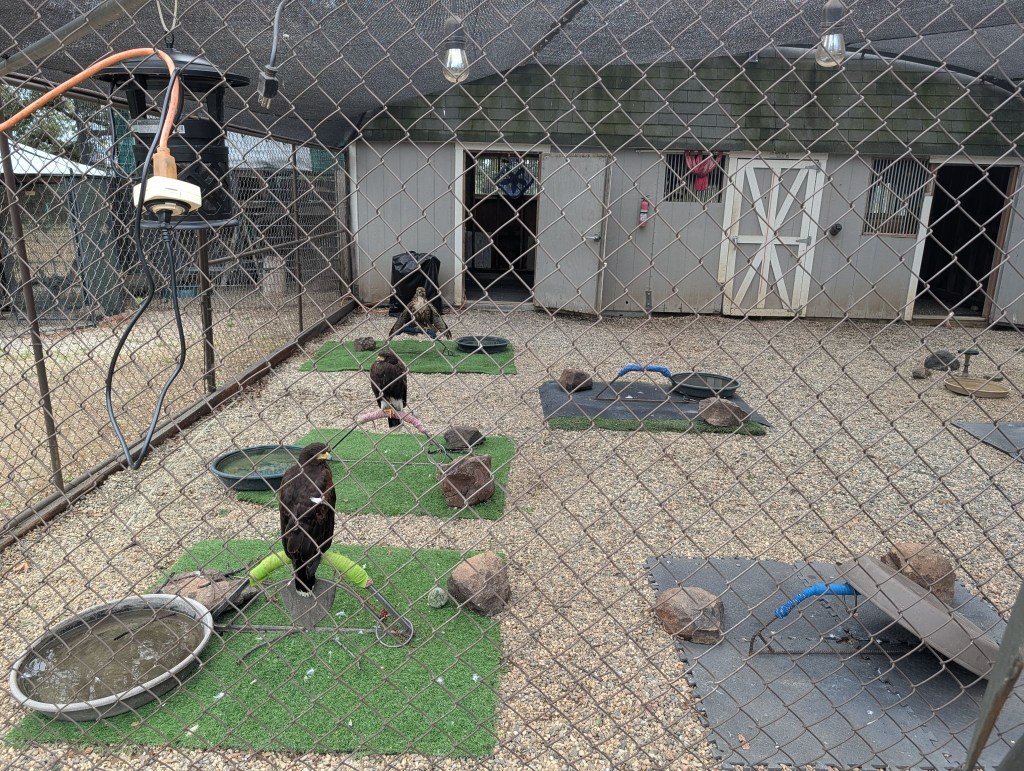
The falconry facility is located in the foothills east of Marysville, an hour or so drive north of Sacramento. Their website describes the organization as “a resource for a full range of hands-on raptor and falconry classes and services”, which includes educational opportunities to learn about the birds and falconry as well as workshops for photography groups. They are located in a beautiful wooded, hilly area, and have a variety of hawks, falcons and owls, all of which are well fed and maintained by the owner and staff. Some of these are rescue birds, some raised for falconry, and a few wild birds as well. The handlers are all experienced falconers, and manage the workshops so that the birds are never stressed or overworked. It’s all about the birds at this place. It takes a lot of time and patience to work with these wild creatures, and the handlers have gained the trust of the birds. That’s a good thing – the big birds have extremely large, sharp talons and can tear their prey apart with their beaks. Handle with care.
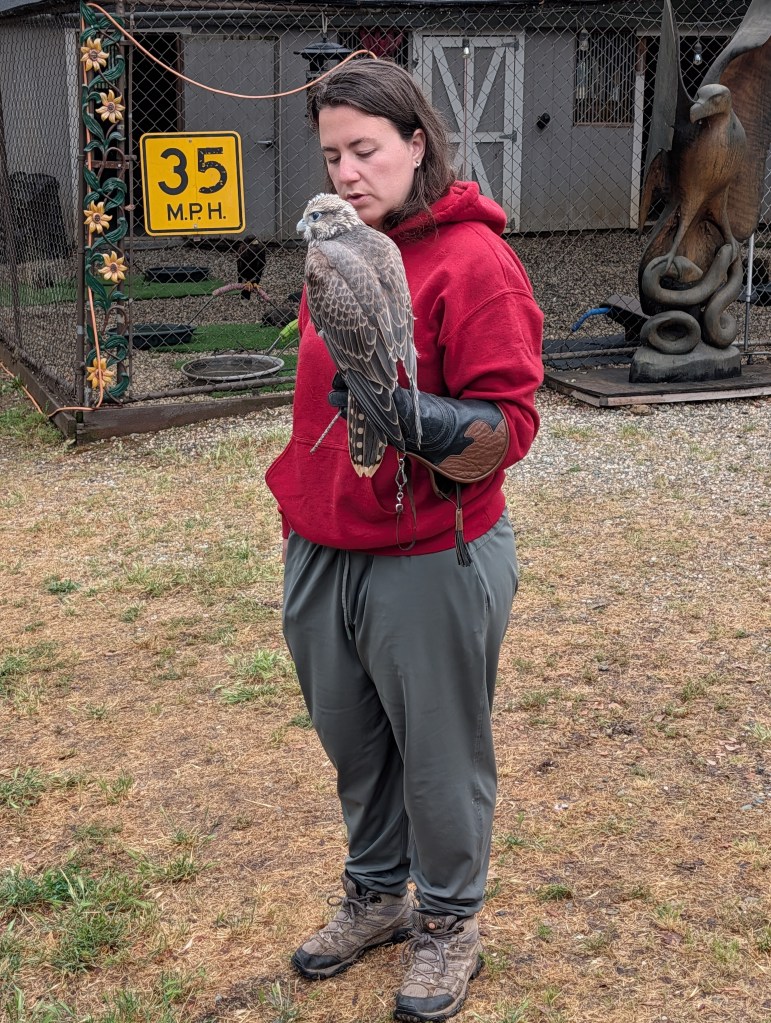
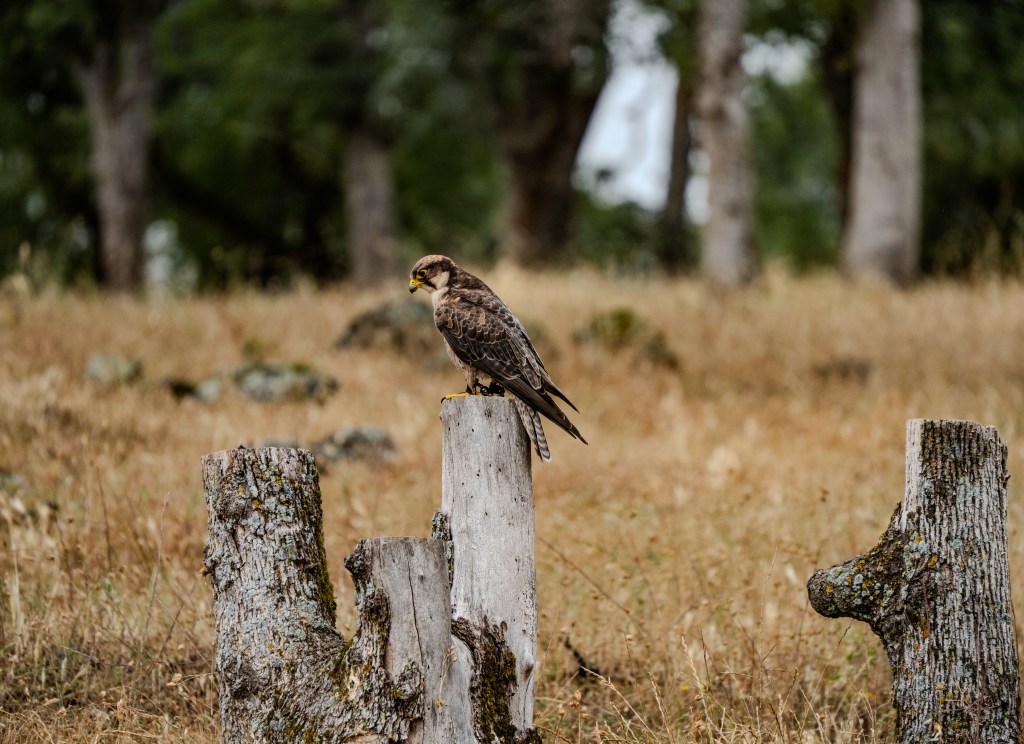
Once our group arrived and set up their gear (lots of serious photographers), we were introduced to the owner and handlers, and did some static shots of a really cute, immature falcon.
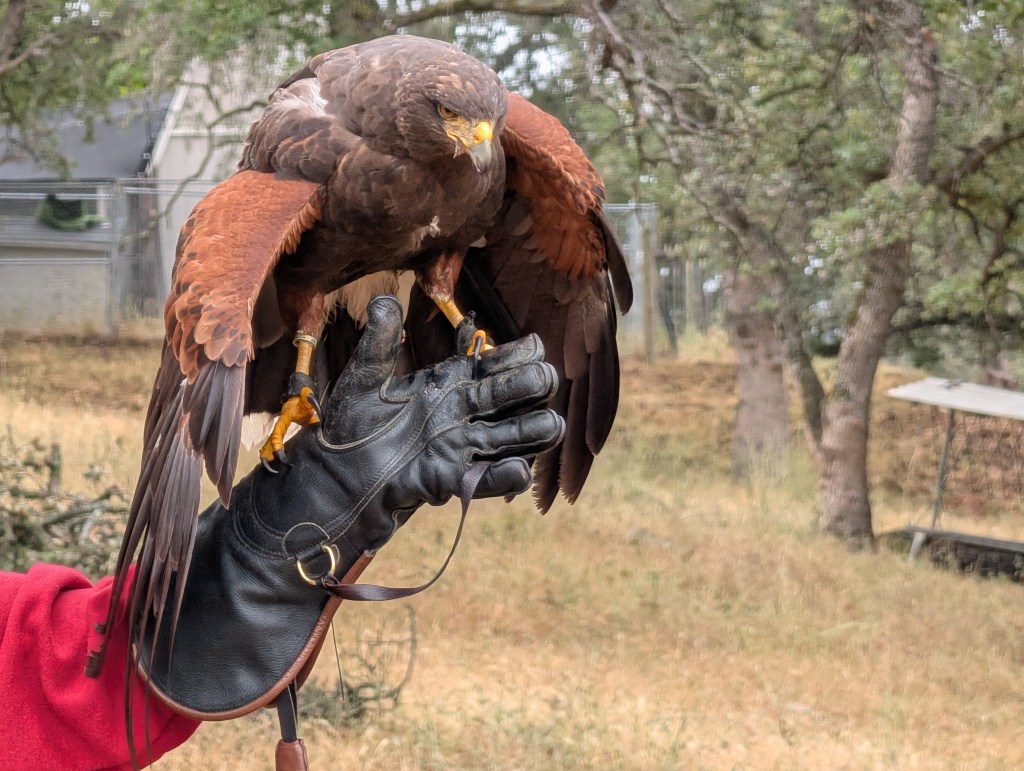
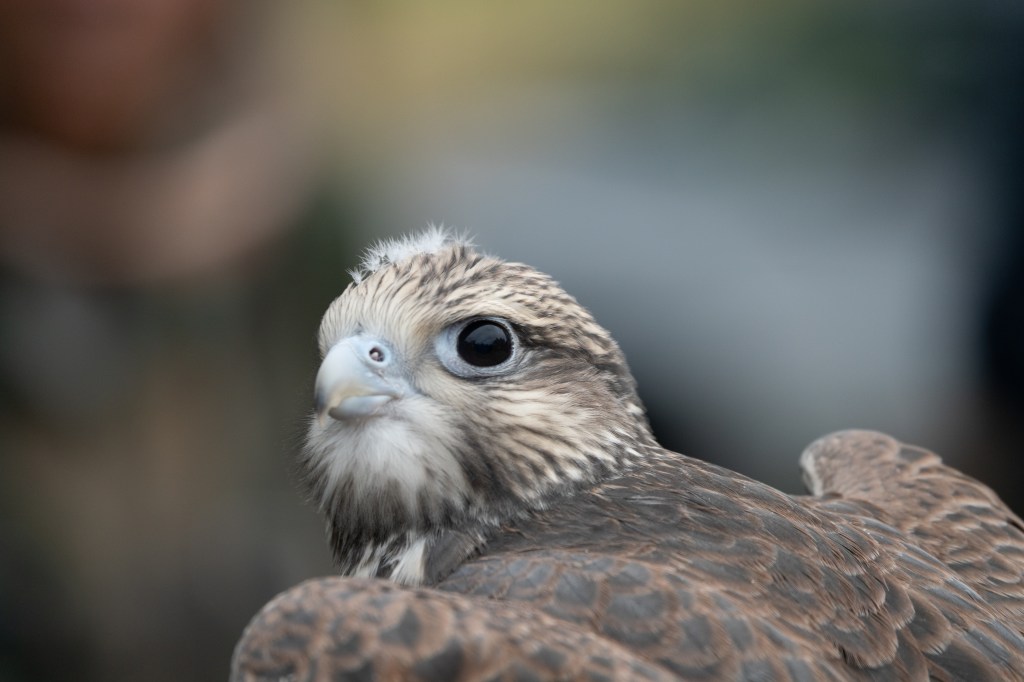
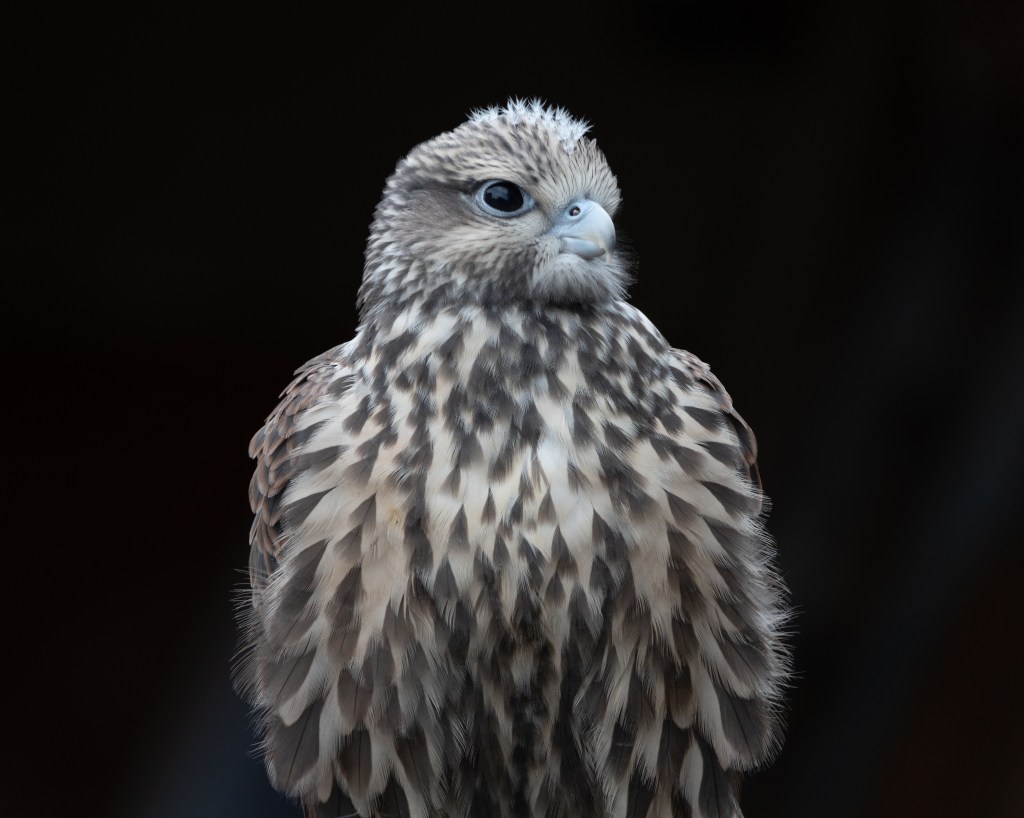
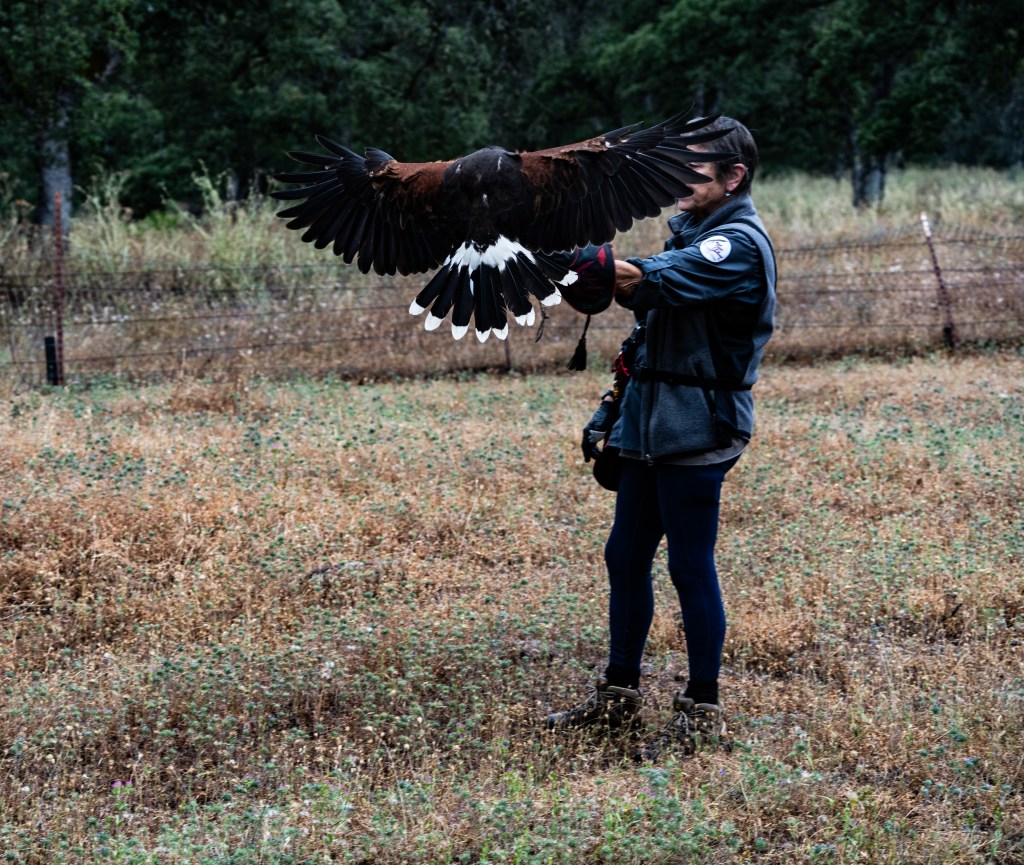
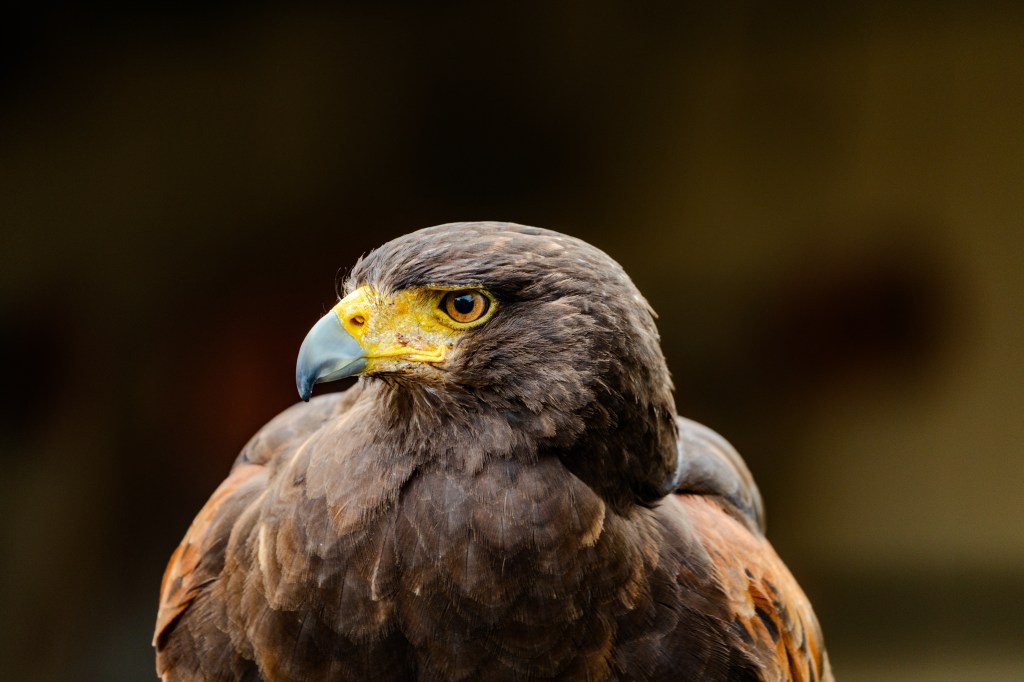
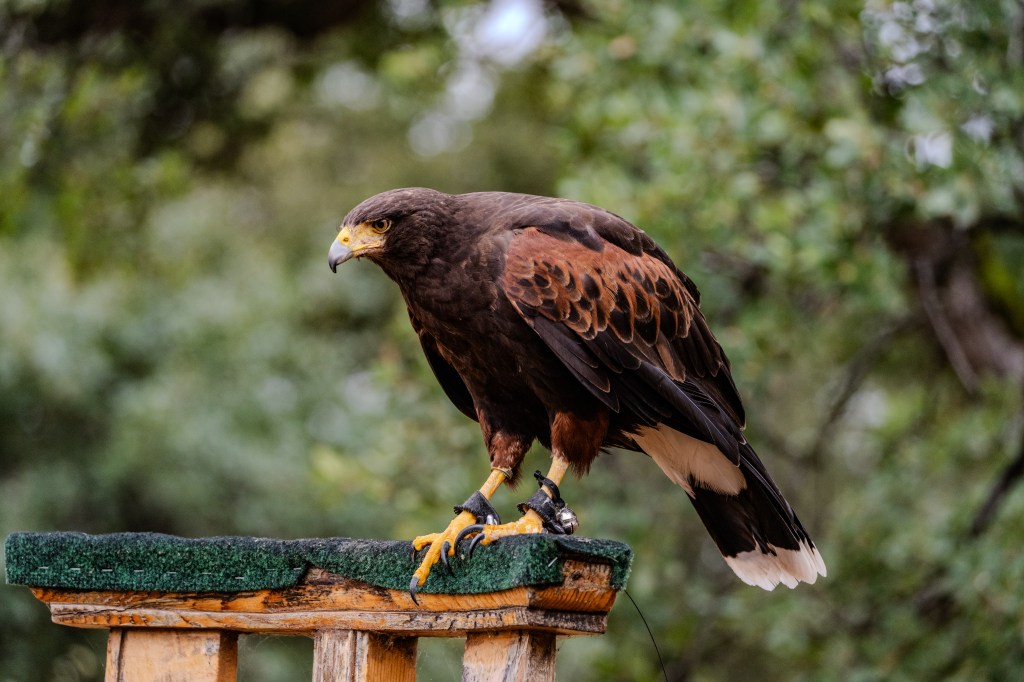
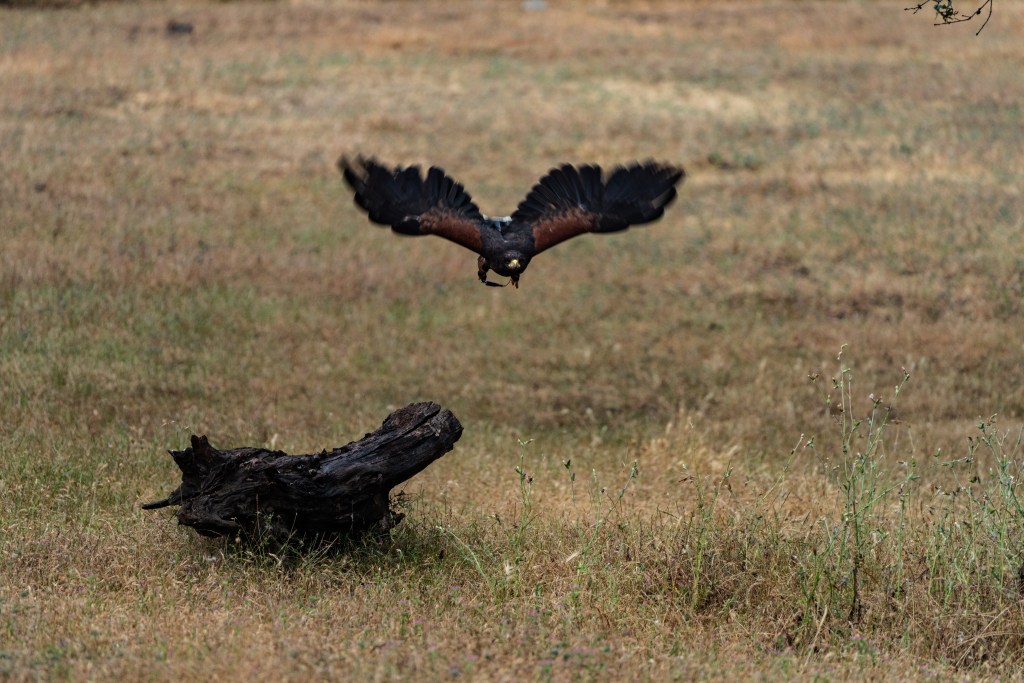
We then headed off up a hill for a working session with a Harris Hawk – a big, beautiful bird.
The handlers use food as the lure to get the birds to either perch somewhere for static shots, or to get them to fly up or down an open area on the hill side. The group then spreads out along the flight path, and does their best to try and get the bird in flight. You basically set your camera for the highest possible shutter speed, and frames per second, point where you want to start capturing and image, and then hope for the best. The Harris Hawk was pretty slow, but still hard to capture in flight and get a sharp image especially in relatively low light conditions (very cloudy). But it was fun either way.
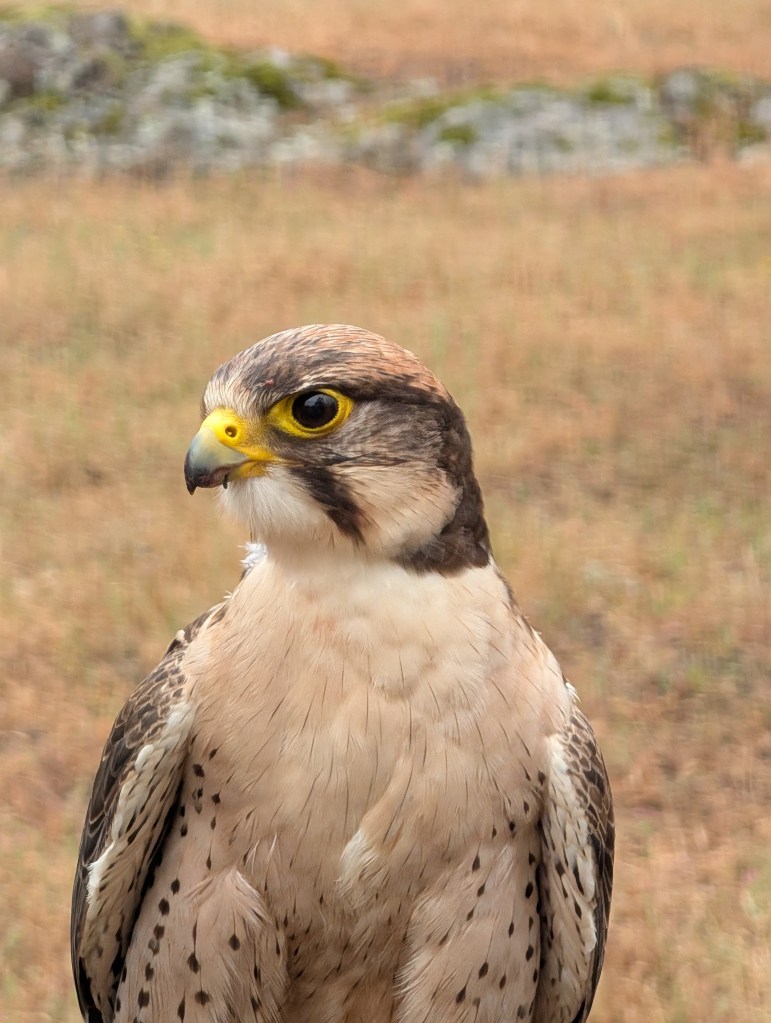
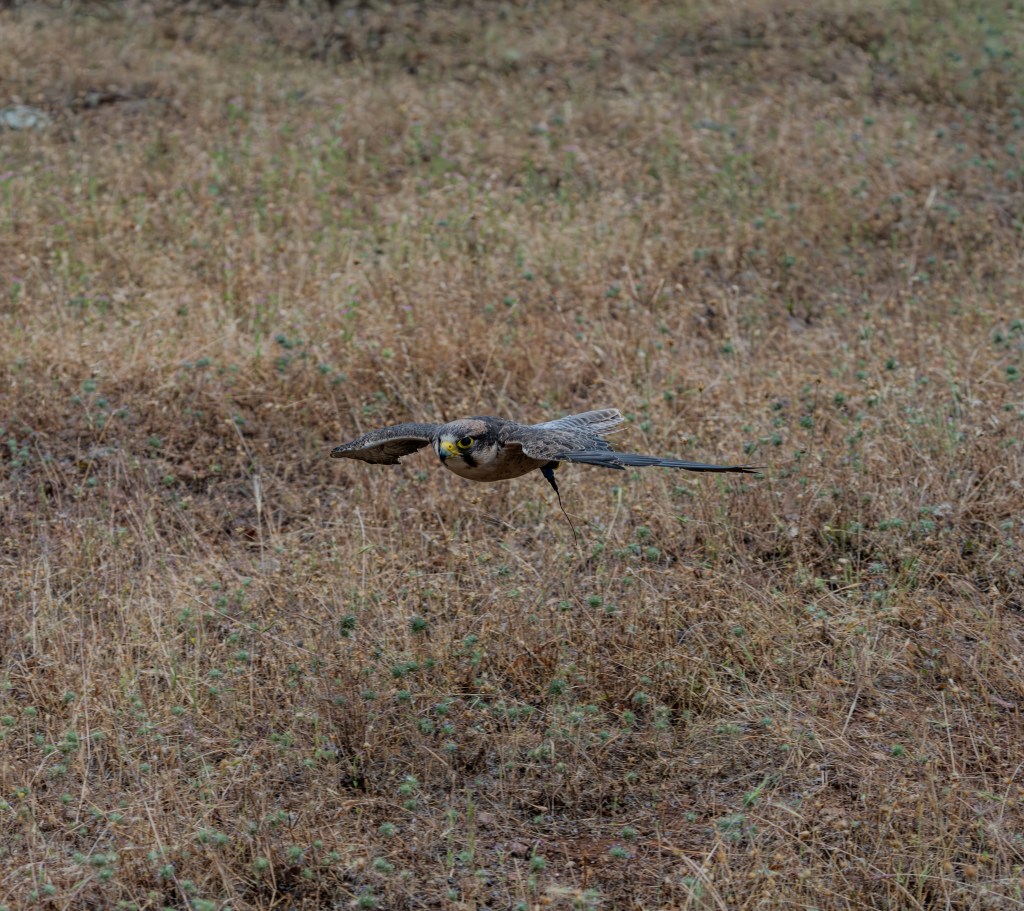
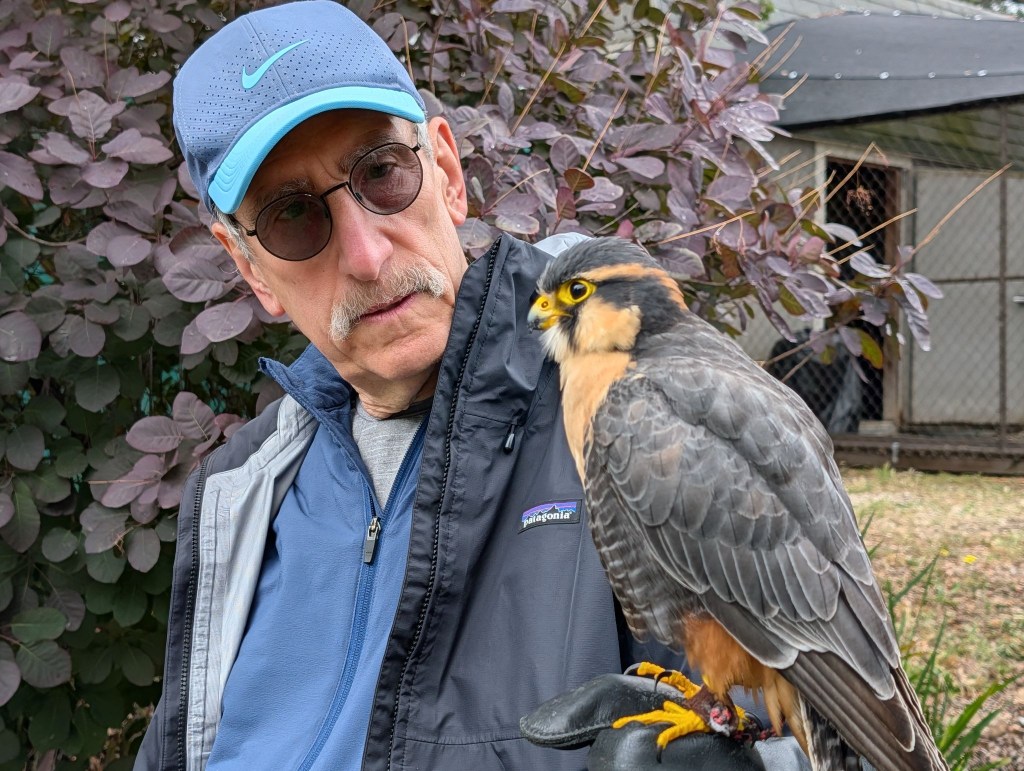
The next bird they brought out was more of a challenge to photograph – an Aplomado Falcon. Beautiful bird, but really fast. The handler said the bird comes into their glove sometimes at 30MPH.
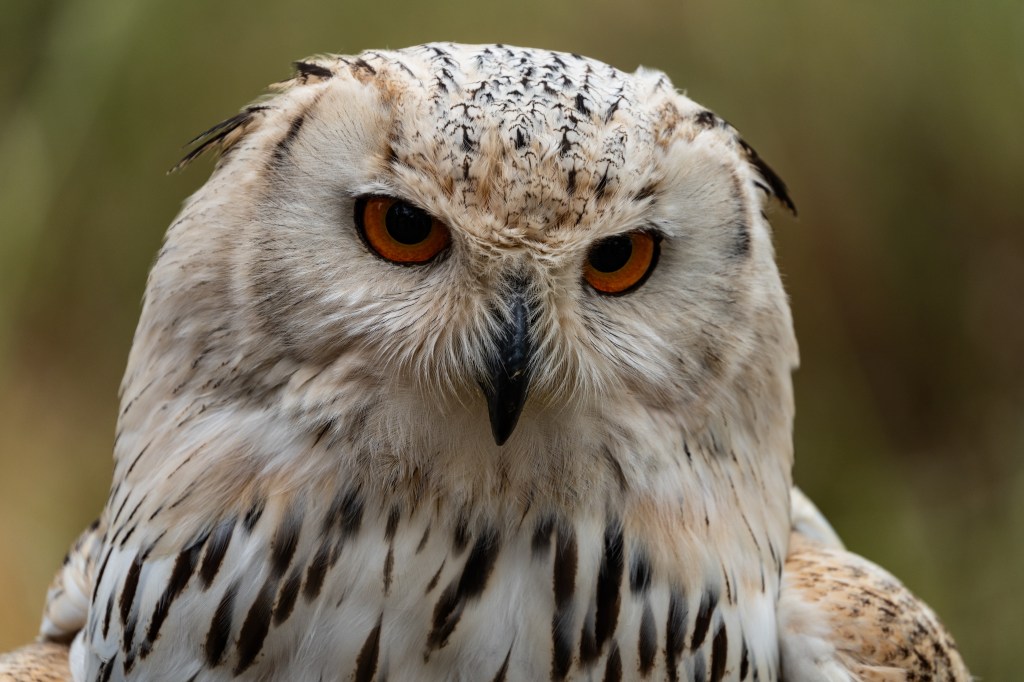
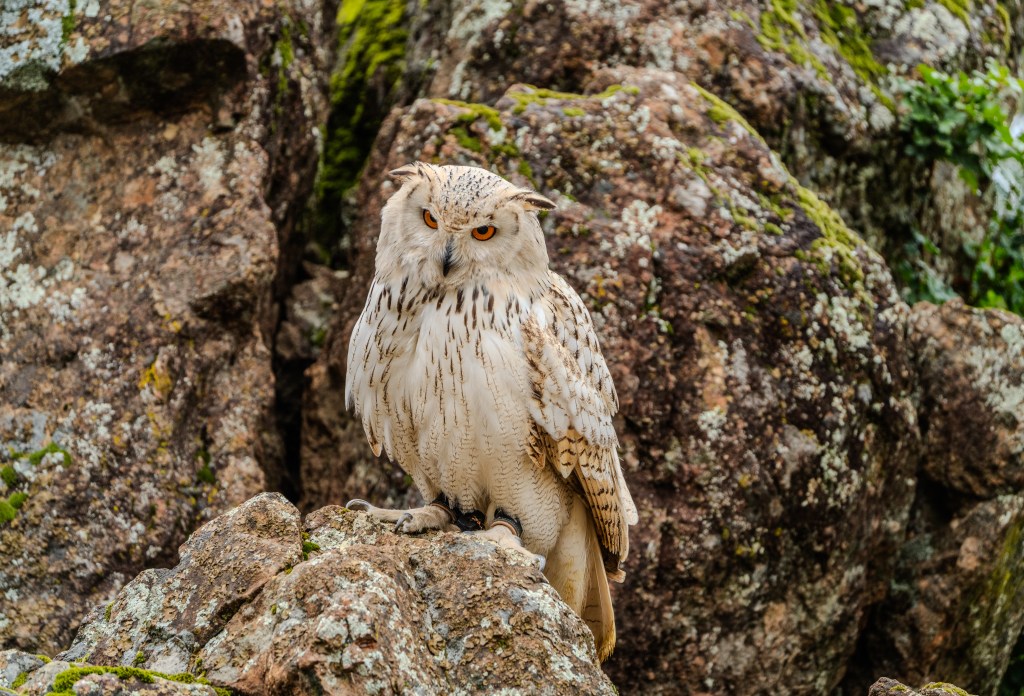
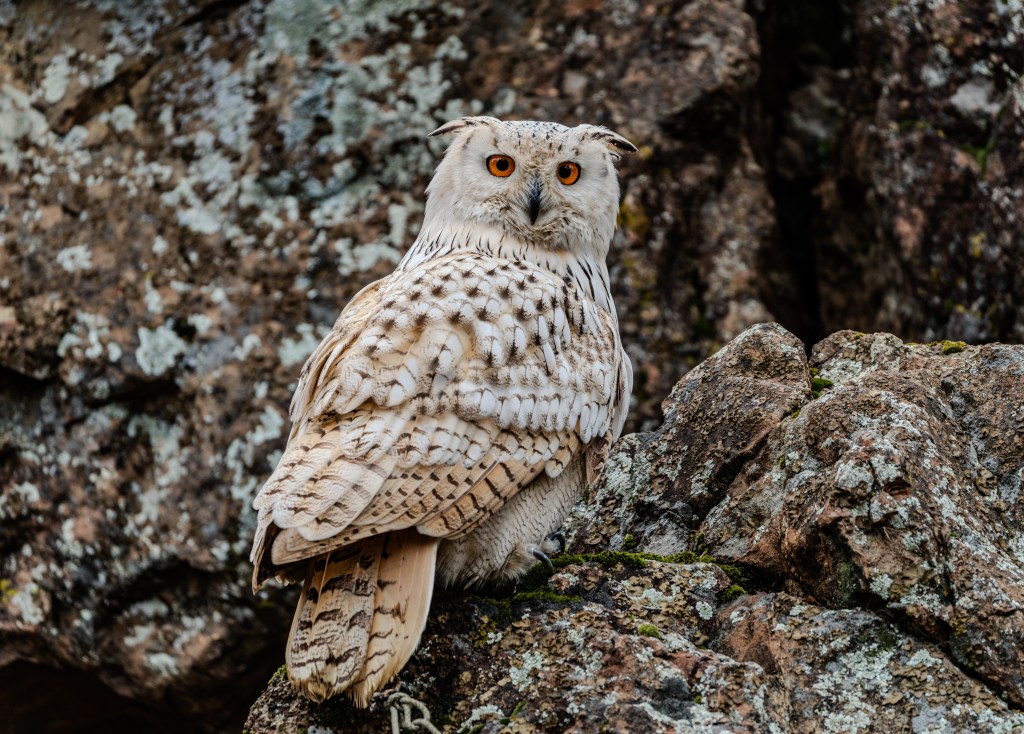
The next three birds they brought out were for mostly static shots. The birds were tethered to a line, which allowed them fly a bit around the rock outcrop. First was a European Eagle Owl – unbelievably large, beautiful owl.
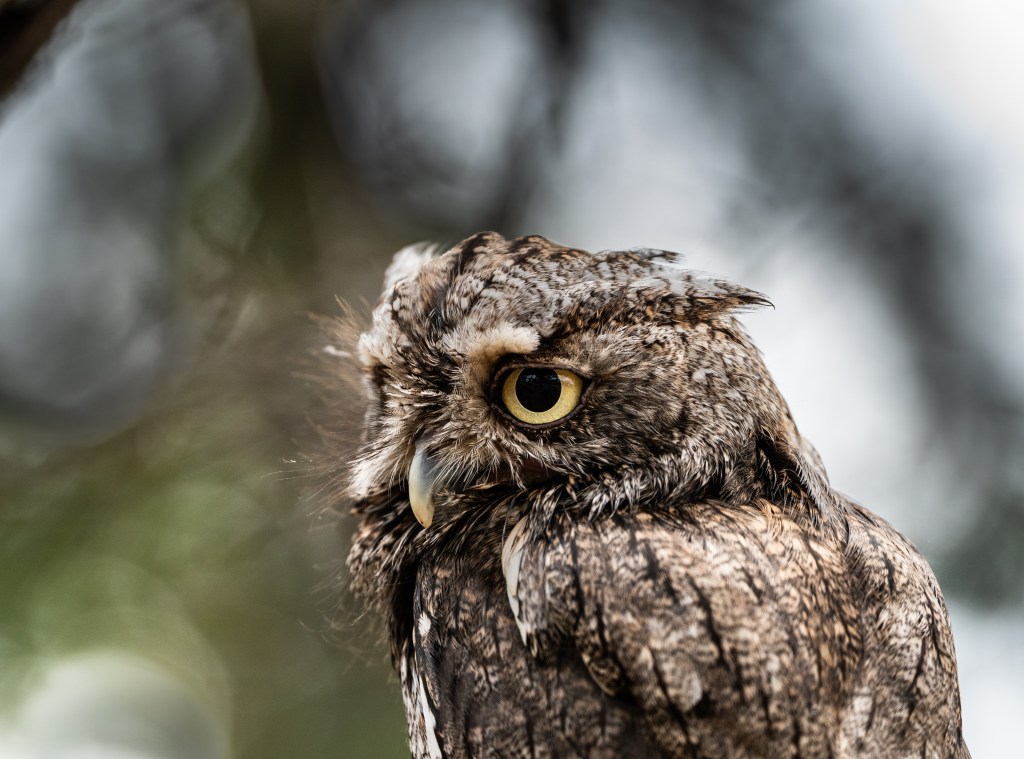
They followed that one up with my favorite bird- a little Eastern Screech Owl. We have the Western version in the nature areas behind my house – you never see them since they are tiny and blend in with the trees, but their call is this cute sort of chortle. My wife loved to hear them at night.
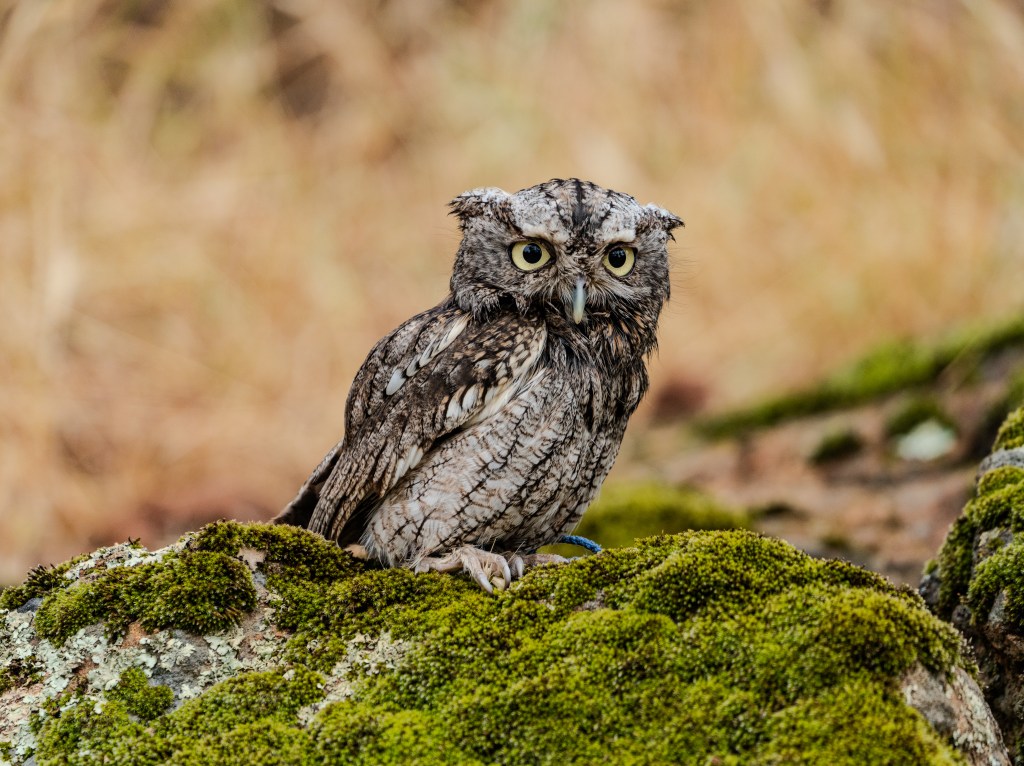
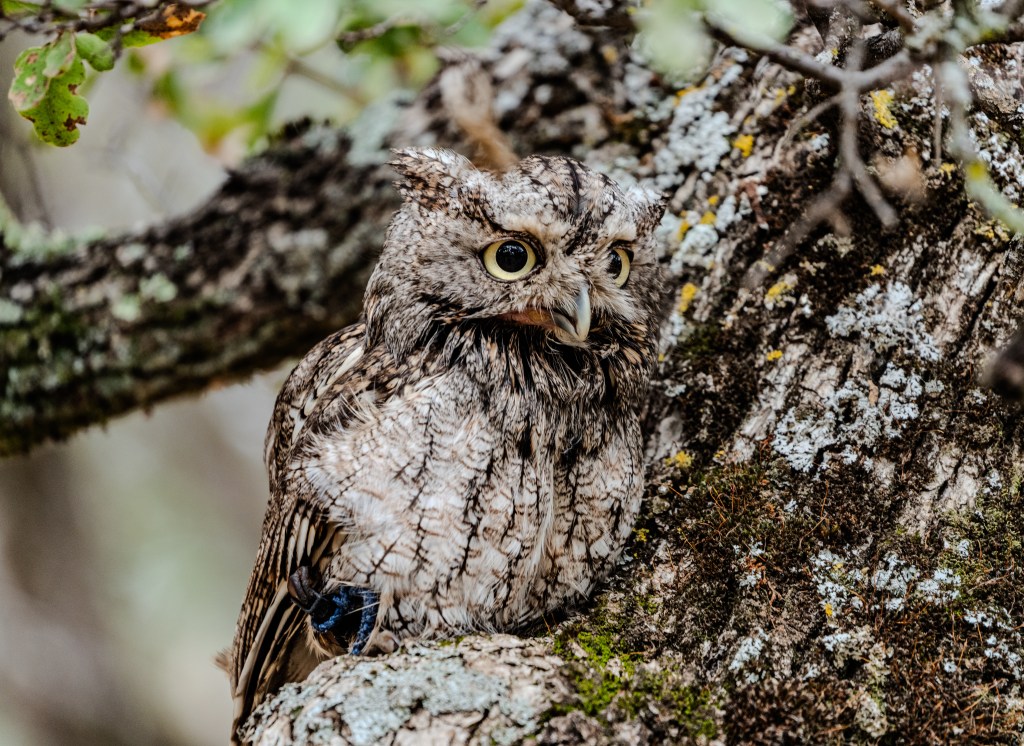
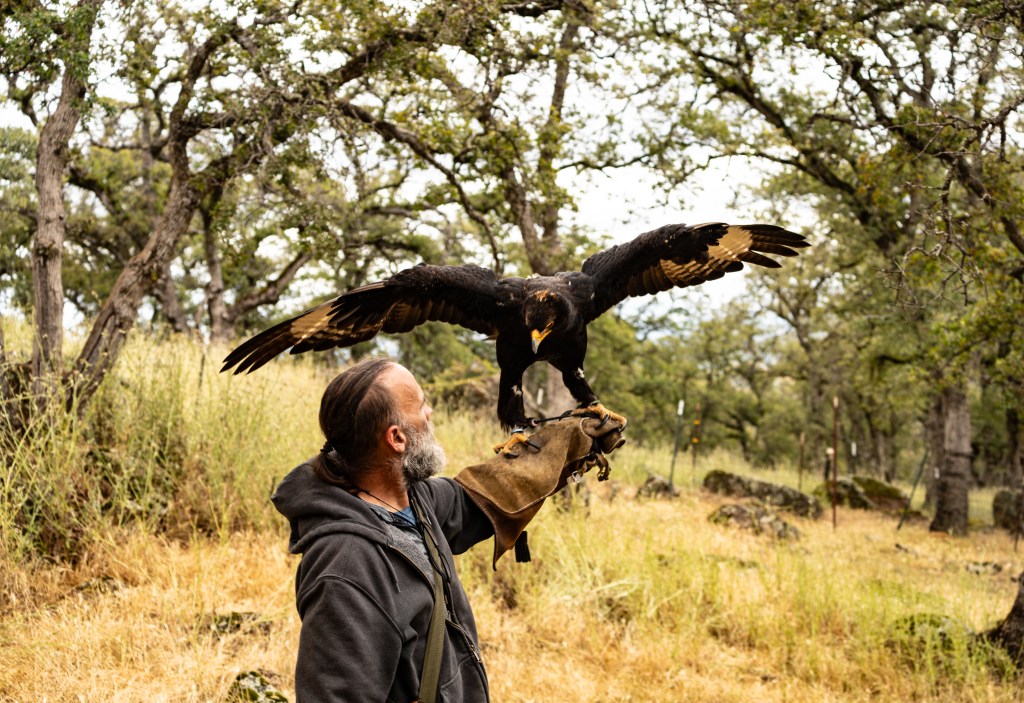
The last “display” birds were another hawk, and some type of eagle….I think. Whatever…it was huge. I think I was getting tired of standing and holding the camera by then.
We wrapped up the day with selfie shots with one of the birds ($20…which goes to buy food for the birds). I chose the falcon. Less chance of having my nose torn off.
Overall, a really enjoyable morning, and a great learning experience as well – most of my static shots and close-ups came out the way I wanted them. What did not work was getting crisp shots of the birds in flight – you need a fast lens if you are photographing fast moving objects in relatively low light conditions. I opted for travel weight when I bought the two long lenses, and you give up a stop or two for the lighter, less expensive lenses. Maybe I’ll invest in a really good long lens someday. And then hire someone to carry it for me.
One sad note on West Coast Falconry – they had a break-in recently by an animal activist group. The facilities were heavily vandalized, and they released eleven of the birds. Fortunately, most of the birds stayed close to “home”, and were safely retrieved. In my opinion, the activist group does not seem to understand that most of these animals have never had to fend for themselves in the wild since they were bred in captivity. They are well fed and taken care of by the staff, and most live much longer that they would in the wild.

 The Traveling Widower