The good news is I have been able to fog a mirror every morning since my inglorious return from Baja. My new Spanish phrase of the week when asked how I’m doing is “Estoy muy preocupado por mi corazon”. I did meet with my cardiologist this week, and it went relatively well. Sort of. There are no indications of what is causing my high blood pressure, BPM (beats per minute) and heart palpitations. But something is obviously not working the way it should. So I’ll be getting some tests and have to wear a monitor for a bit. We discussed my upcoming trips – he did not really want me to go next week, but understood my need and desire – I got nothing else going on in my life but travel – I’ll go absolutely bonkers if I have to sit at home. So, I promised to do the following (really, I actually had to say ‘I promise’):
1 – No alcohol (that’s a hard one…they have great bars on the ships). I’ve been cutting back on wine for a while, so I’ll survive.
2 – Stay hydrated – that was likely one of the triggers, the other being alcohol. They have hydration stations all over the ship, and I’ll be getting yet another nice water bottle. I’ll use it.
3 – Take a second blood pressure pill only if I have another incident. I’ll be bringing extras on this trip just in case.
4 – Take it easy, especially on the activities. I’ll stick to easy trail hikes and zodiac rides, and avoid kayaking and snorkeling. Bummer. But I can focus on photography…not so bad.
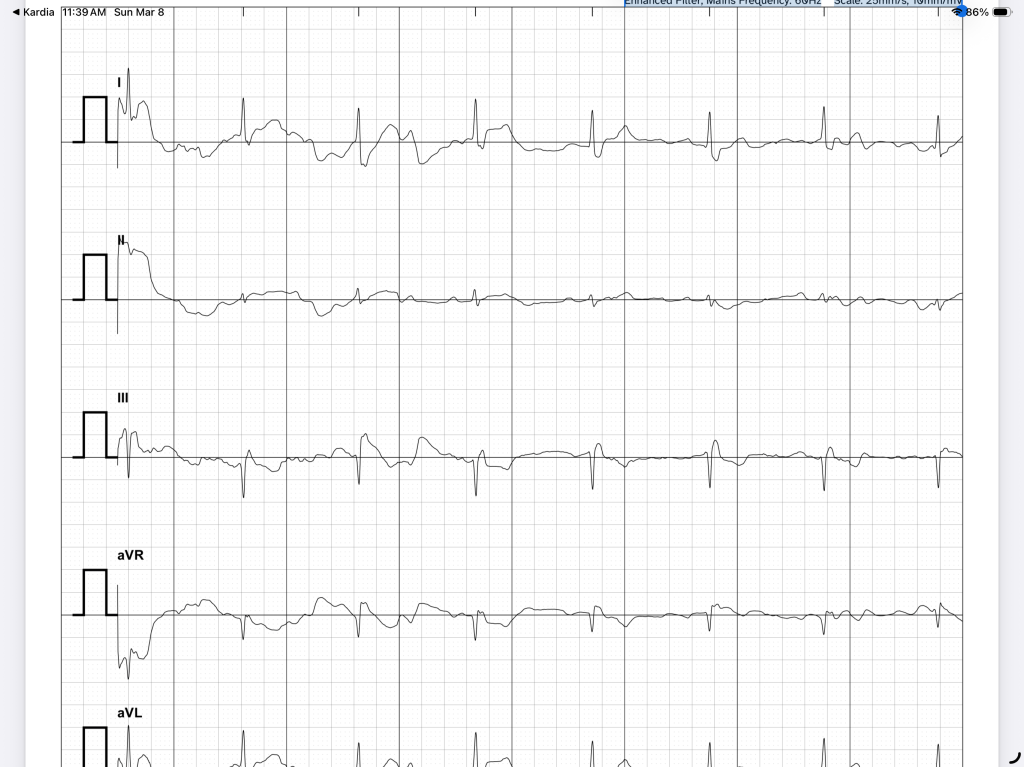
I’ll also bring my little Kardia device along for EKG’s, and maybe a blood pressure cuff. There’s a doctor on board, but I’d rather not advertise my little problem. They might send me home – once was enough.
So the good news is that I will be going on the Panama/Costa Rica trip in 10 days, and have already started accumulating my stuff for the inaugural packing test. This trip will be easy to pack for, since it’s a tropical climate – no snow, temperatures in the 90’s, no heavy clothes at all. Plus, they have laundry service on the ship – I’ve started relying on that to reduce the amount of stuff I have to bring along.
Photography on this trip should be interesting – a mix of city shots the first two days in Panama City, landscapes all along the way, and birds and mammals (monkeys..but sadly, no Penguins!) in the nature preserves. And I’ve heard that the trip through the canal has some unique photo-ops, especially at night. I’ll be packing my usual kit for this trip – two Sony bodies, the big lens for wildlife, and the new 25-200 for everything else. Plus the magic monopod. Can’t wait.
Hopefully, I won’t be introducing myself to the ship’s physician on this trip. OK…positive thinking, positive thinking. I’ve only got 18 days when I return from this trip, before I leave for the astrophotography trip in Moab. So I hope this one goes well.
It was not easy getting up early on Tuesday – I was still tired from my late night E/R experience on Saturday/Sunday, and had to get up at Oh-Dark-Thirty on Monday for the trip to Ensenada, so a 5:45 AM wake-up was tough. But, I managed to stumble off for breakfast at 6:15, and had everything ready to go for loading up the vans for the short drive to the dock.
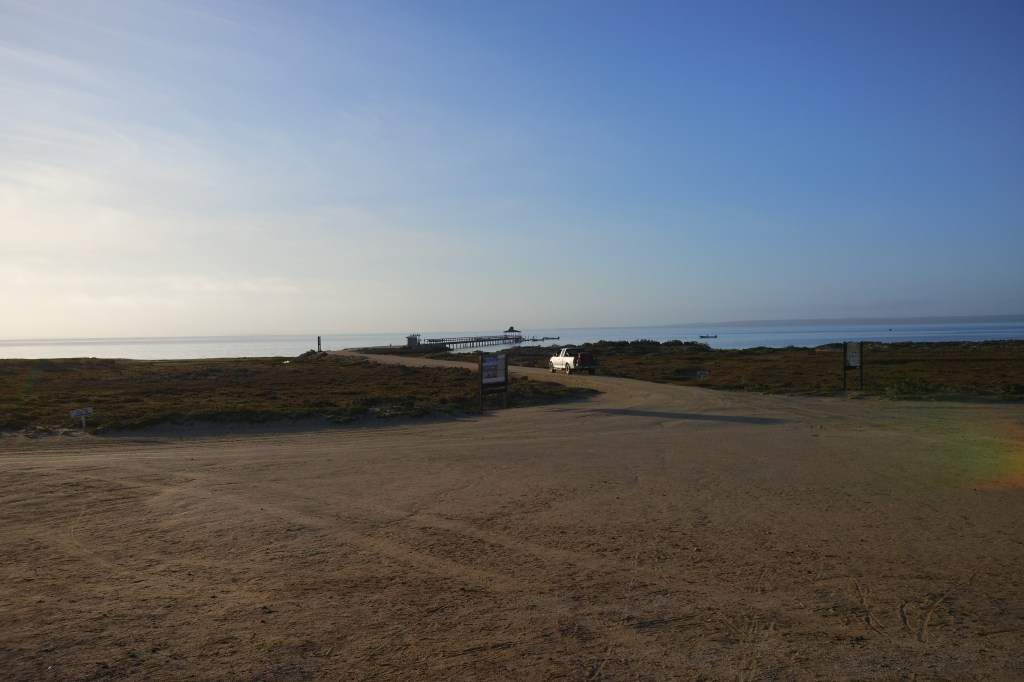
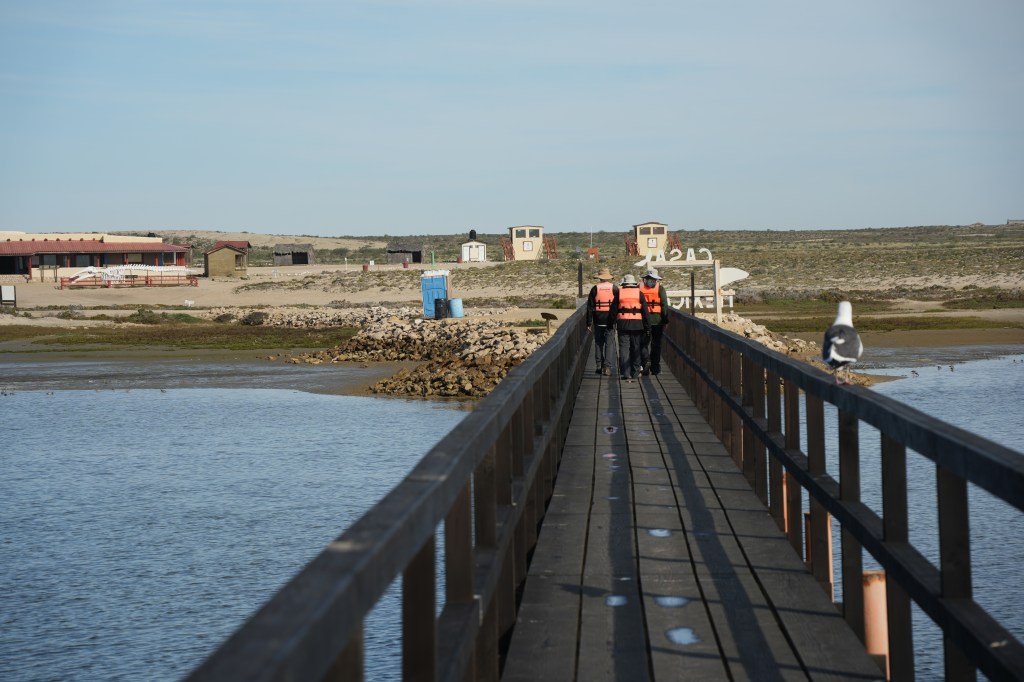
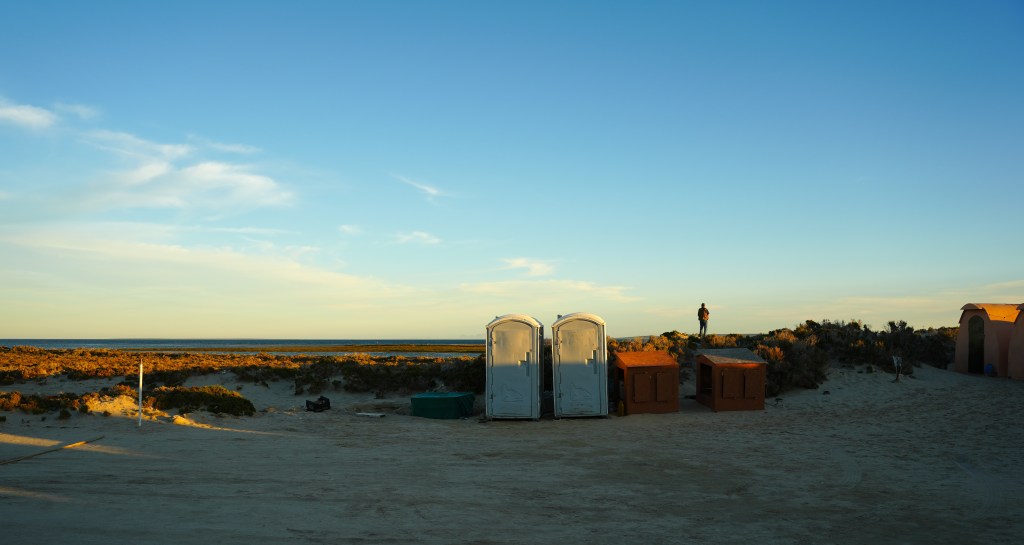
The “visitor center” for the whale watch tours consisted of an office for buying tickets (which we did not have to do), a small cafe and gift shop, and a room where you get your life vest. And a few port-a-potties back in the parking lot. After getting the vests, we all headed out on the long dock to load on to the boats (Panga’s) – the loading dock was kind of fun since it floats and rocks, so boarding the boats can be a challenge. The first boat out only had four passengers while mine had 7. Not crowded, but I’d rather have been in the first boat.
My plan for this first trip was to get the lay of the land so to speak for photography. I had three cameras plus my phone, and I wanted to experiment and find out what worked best for the remaining 5 trips out to the lagoon. After all, I’ve never photographed whales from 6 inches away before.
This was absolutely a perfect day – just warm enough, no wind, and the water was really calm. We saw lots of whales as soon as we headed out. The first boat was far ahead, and already had a bunch of whales surrounding them, so we went over to share. No whale hogging allowed on this trip. That was not a problem as it turned out.
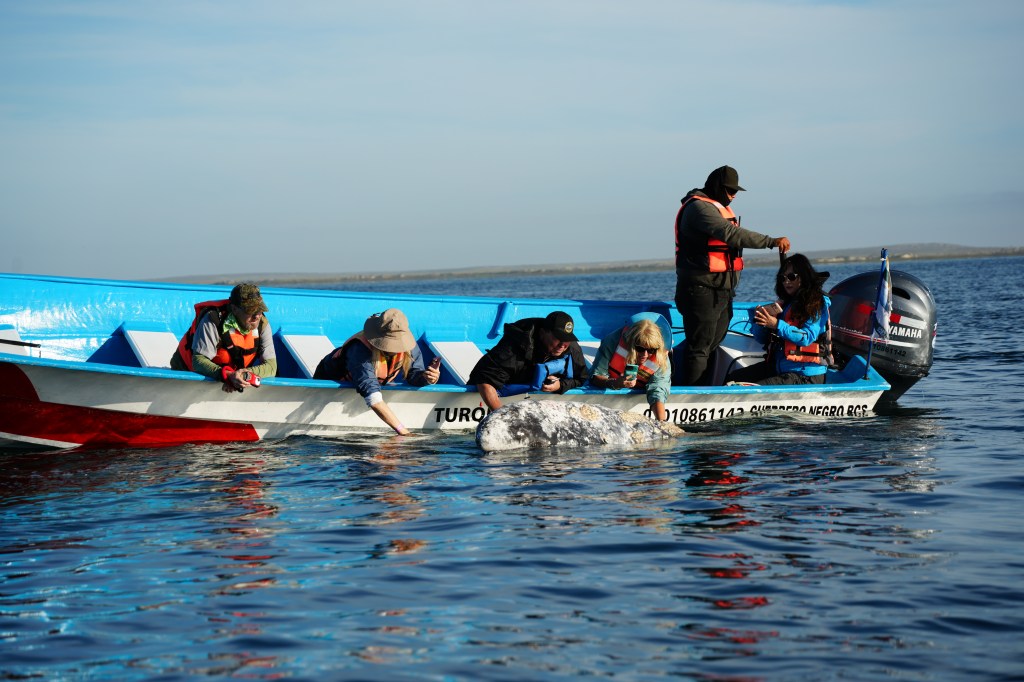
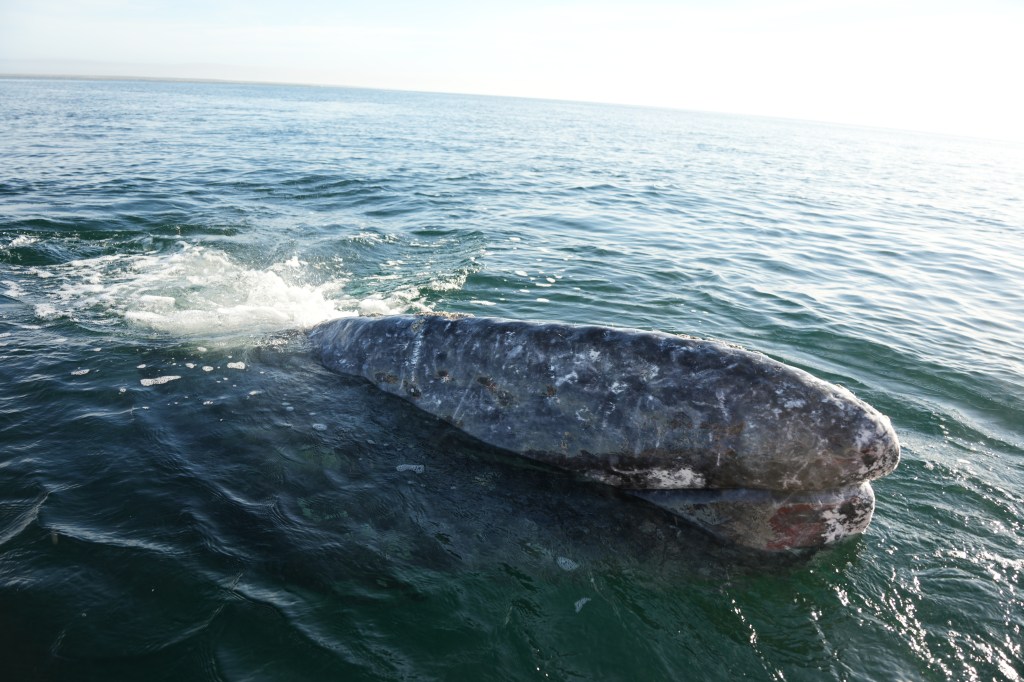
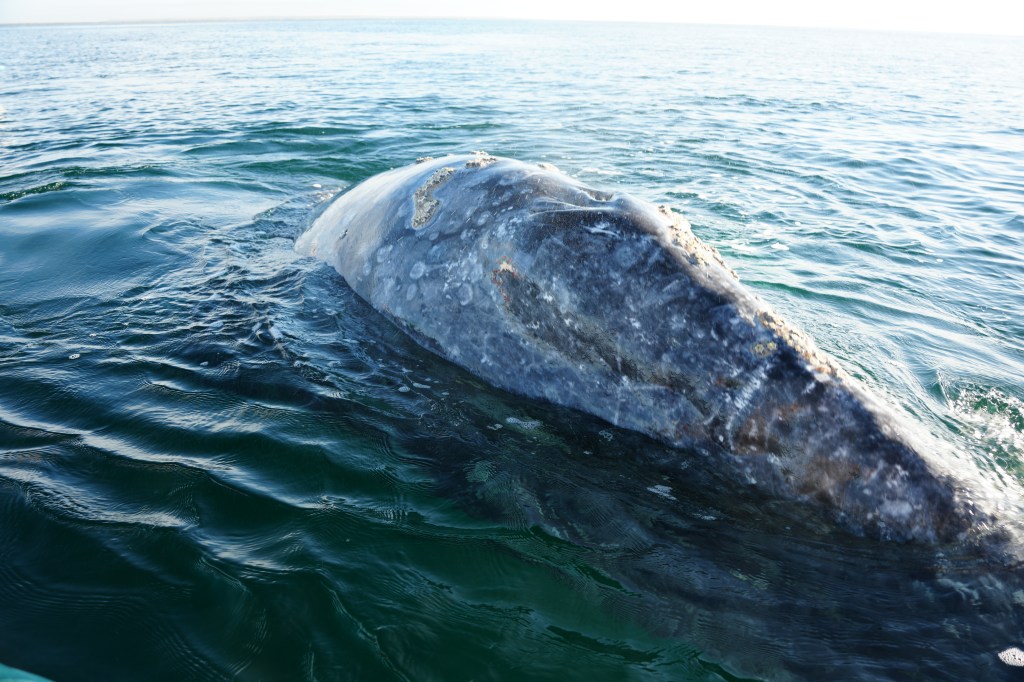
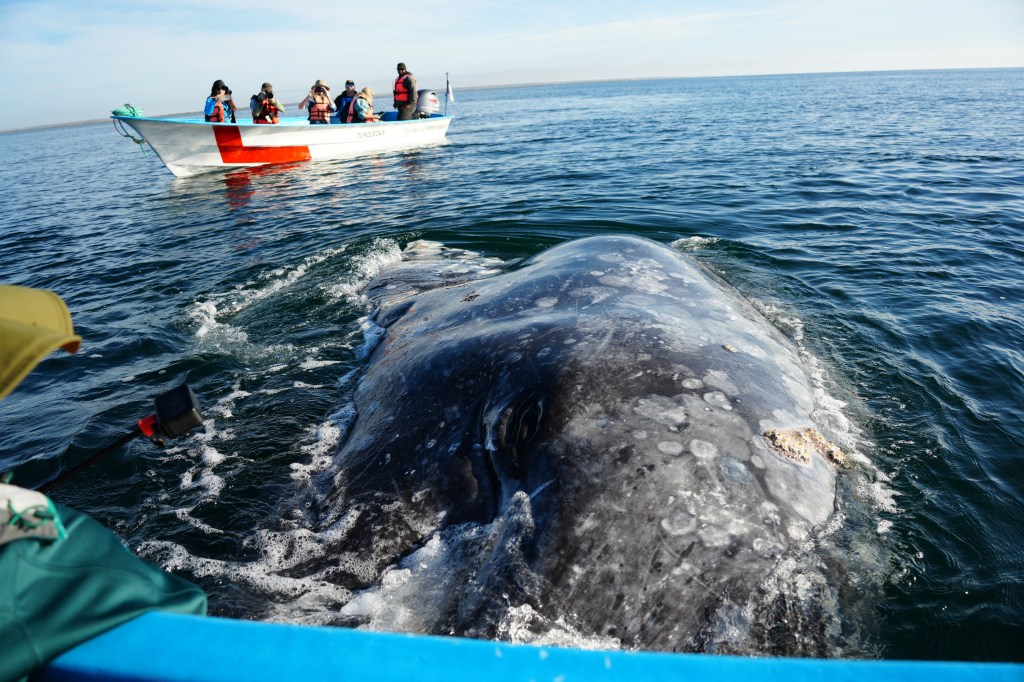
It was an amazing experience. We had 3 or 4 whales coming right up to the side of the boat, rolling over like Golden Retrievers. Yes, I did rub one of them – really soft skin. And no, I did not kiss them. Other people in our group did that. At one point, we had two adults and one baby on one side of the boat, and one swam under, scraping along the bottom of our boat. It was impossible to get a full photograph of the whales – just whatever portion of their body that was sticking up next to the boat. They move around quickly, so it is pure luck on what you capture with the camera.
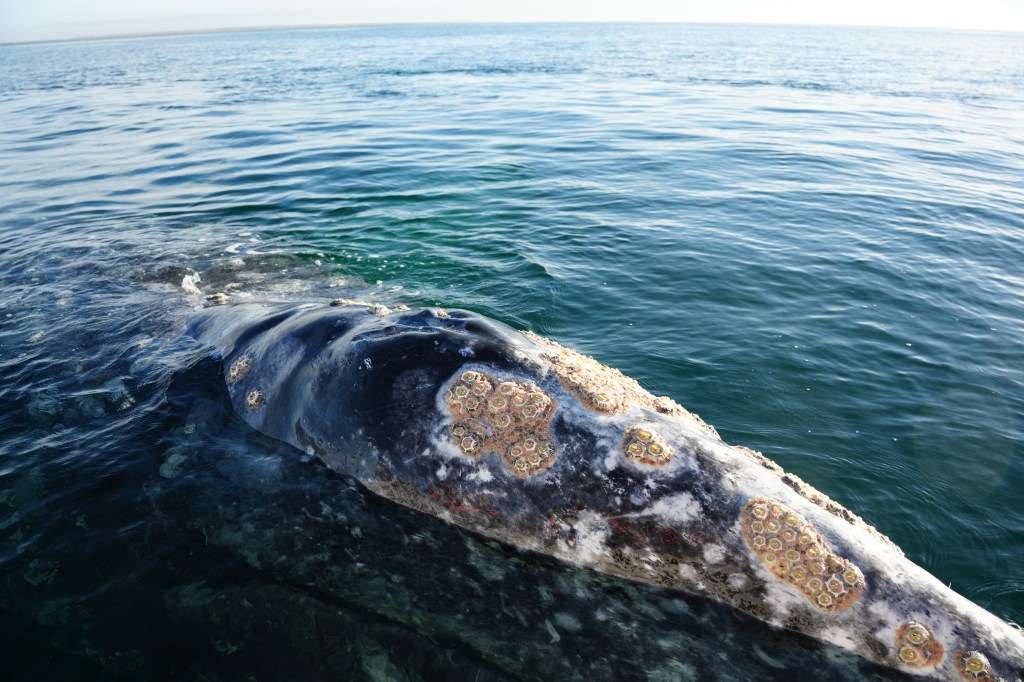
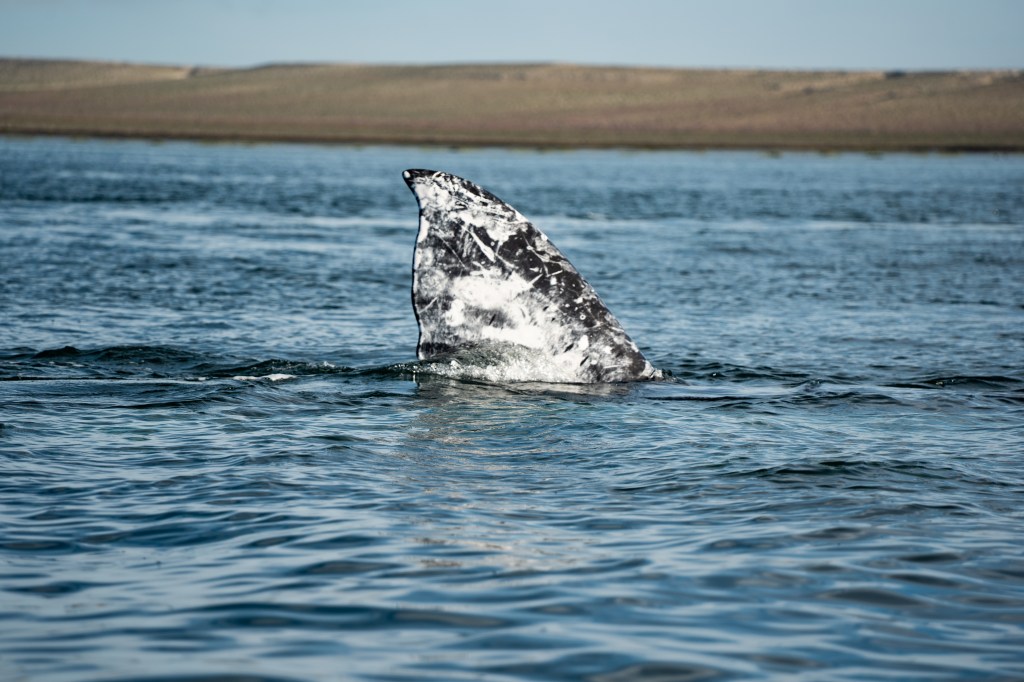
I started out photographing with the Sony when the whales were over by the other boat, but quickly switched to the GoPro when three or four whales approached our boat. I wish that I had just used my phone for the close up. I totally gave up on the other underwater camera I had brought along. One other challenge was the other passengers in the boat – I wound up with a lot of heads, arms and other body parts in my photo’s – not much you can do about that. Not everyone is focused on photographing the whales. So, here are a few of the still shots I made that morning – mostly close-ups of the head and blow holes.
I did luck out with some of the GoPro videos – this one is the best. I managed to get most of a whale, including the eye. I have a few more clips I’ll put on the next post.
All good things come to an end unfortunately – the boat drivers have to be back after 2 hours, so we left our friendly whales and headed back to the visitor center. I was pleased – I figured out what I would do in the afternoon session – just use my phone and the GoPro, and maybe switch out the wide angle for the regular lens on the GoPro. Once we got to the dock, I managed to get out of the boat without falling in the water, and made it back to the center to turn in my vest.
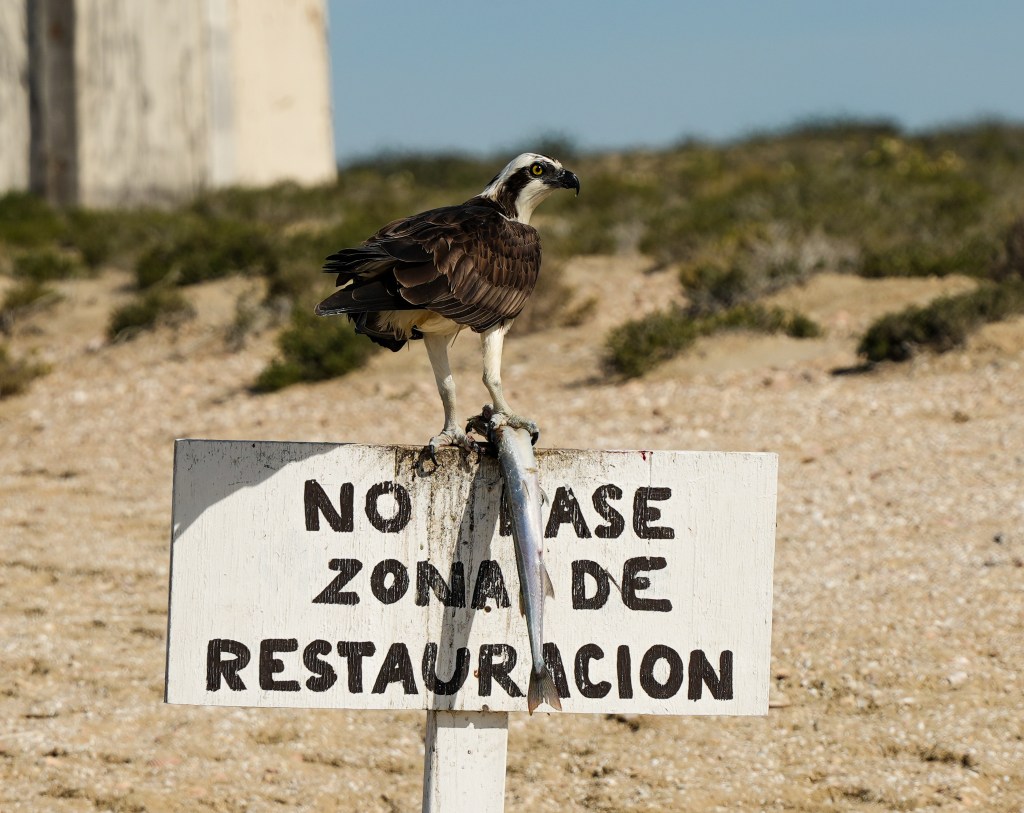
On the drive back, we noticed an Osprey having lunch, sitting on a sign. These birds are all over the place – they build huge nests on top of the port-a-potties, or any other structure convenient for them. This turned into a great photo-op for me with the Sony camera
Once back at the camp, we all headed over for lunch, and had about an hour afterwards to rest before we went back to the visitor center for our next outing. I went back to my cabin and started checking out the battery levels in my cameras, when all of a sudden, the world started spinning around, and my heart was pounding. Crap – this was just like what happened on Saturday night. Once again, I tried to just calm down, but my BPM was way over 100, and I staggered every time I stood up. I realized that going out on the next whale trip was not going to happen, and that maybe I should get some help. Calling 911 was not going to work this time. Fortunately, the door to my cabin was open, and I must have looked like I needed help – I soon had three staff members asking what was wrong, and one of them rushed over with a blood pressure cuff. Way high, not too surprising. The van drivers were hanging around waiting to see what I was going to do, so I told them I’d stay behind, and the group headed off for the boats.
One of the staff members came back with a home made Gatorade mix, since I was probably still dehydrated from the previous days, and they set me up in a shady spot where I could rest. I was not sure what to do – I was scheduled to take the van ride back to San Diego on Friday, and maybe switching to the plane would be a smarter move. Or maybe I could switch to Thursday instead. I still wanted to get a few more cracks at photographing the whales. I passed this request on to the staff, to check with Keith (the owner). Needless to say, I was really depressed, stressed and a bit panicked now.
I rested for a while, and then walked up the hill to the dining hut for a refill of the Gatorade mix, and to have someone to talk to. Keith was already there, waiting for me. He first said that there was no room on any of the flights out. And then he lowered the boom – he was very concerned about my condition and put it bluntly to me. If anything serious happens, I will die there. There are minimal medical services in Guerrero Negro, and there is nothing close by that can handle heart related issues. He told me I should get back to the US ASAP – he could get a car to drive me back later in the day, or early tomorrow. It was my choice, but that was his recommendation.
I gave it some thought for a few minutes – part of me REALLY wanted to stay. The intelligent voice, and probably my wife’s as well, was saying…”Idiot, get your ass back to the states!!!” Intelligence won the argument. It was not just the risk, but also the impact I could have on everyone else. What would happen if I had one of these incidents while we were out in the lagoon? I guess they could just push me overboard. At any rate, I told Keith I’d leave and he went off to make the arrangements. I finished another glass of the homemade gatorade, and pondered my fate. Lots of bad words. This was a really bad day to have given up drinking alcoholic beverages.
After a while, the dizziness was gone, and my BPM was down to something more reasonable, so I decided to take a long walk along the beach, and find someplace to sit and relax. And curse and cry in privacy By the time I got back to my cabin, Keith had everything set – I would leave early the next day – the driver would arrive at 5:30 AM. Another very early morning. The driver did not speak English, but we would switch cars close to the border, with a driver who could get across the border, and also spoke English. I could hardly wait. I enjoy adventures, but this was one I could have lived without.
So, I had a nice dinner with the group, enjoyed watching them play some very strange game which involved eating poisoned jelly beans (not really, but it was peculiar and funny), and wandered back to my hut. Such a shame – I was really enjoying this trip – what a fun group of people, and incredible staff.
My favorite all-round photo from the trip (not really):
One more post after this…I promise. I like to draw out the story.
If you are interested in this type of adventure, here is a link for the Baja Jones whale camp: wwww.graywhalewatching.com I really enjoyed my brief stay – it seems a bit primitive, but the staff is wonderful, the cabins are comfortable, and the trip down to Guerrero Negro may seem complicated, but it turned out to be a fun experience. And seeing (and touching) these beautiful animals so close, was absolutely incredible. I will hopefully be able to go again.
 The Traveling Widower