Category: Camera gear

  • How do you pack for Antarctica?

    I’m less than 3 weeks away from Penguin Day (November 16th), and I just completed my first test pack. I’m in big trouble. I’ve got too much stuff. Way too much for the suitcase I’ve used on every other trip so far. How come you might ask. Well, it’s complicated. First of all, I’ll be gone for almost 2 full weeks, so you need all the basics like underwear, shirts and socks (I plan on using the laundry service which helps a bit)

    And then there’s that weather thing. I’ll start out flying from Sacramento, to Los Angeles, and then on to Santiago where temperatures are similar to where I’m starting – high in the low 80’s. The next day, we fly to Ushuaia, Argentina where we spend the day cruising around the fjords before boarding the Resolution to head off to Antarctica. The weather in that port city can vary between 80 and 50 this time of year, and it will probably be nippy cruising around. I’ll probably want to wear a few layers, and heavier pants since we will be spending time out in the open, photographing the scenery and wildlife. 

    Then we board the ship and spend the next two days at sea navigating the infamous Darwin passage. It will be nice and cozy warm on board. There’s no dress code on National Geographic cruises, but I really don’t want to dress like a complete slob. Jan would be very unhappy if I go back to my old wardrobe habits (jeans, t-shirts, sweat shirts). And there will be times (many I hope) when we will be out in the viewing areas when there are photo opportunities of ocean beasties. Time to don windproof/waterproof layers. 

    Once we get to Antarctica, the fun begins. This is spring time in the land of ice and penguins, with temperatures averaging in the low 20’s (F). That’s really cold, but not that different from skiing in the Rockies. Activities will include kayaking on open inflatable kayaks, cruising in open Zodiac boats to view wildlife and scenery, and on shore “hiking” (snow shoes or cross-country skiing) to commune with the wildlife. Here’s where the packing challenges begin. This is sort of like packing for a ski vacation in, say, Canada, where you are flying to your destination, thus limiting what you can bring along. NatGeo provides the outer layer – a waterproof, hooded shell with a heavy fleece jacket. So you do not need to include that on the way there, but you get to take it home (if you want). Those will take up a lot of luggage space. Or I could just wear them on the plane. That could happen. Good thing I’m flying 1st class and will not have to battle for overhead luggage space.

    All the additional, required winter layers take up a lot of room in luggage. Insulated, waterproof pants are a must for most every activity. Those theoretically could be used for kayaking, but ski pants were not really designed for being immersed in water (which hopefully will not happen), so waterproof kayak pants are a better choice for that activity. And it would be nice to have something else to wear on board for evening gatherings. So that makes a minimum of three pairs of pants, other than what you wear for travel. I went a bit crazy shopping for this trip (hard to believe…it’s become a new hobby for me) – I bought North Face insulated pants, and a pair of fleece pants at the Colorado REI, and already had the kayak bottoms, and a pair of winter weight hiking pants that Jan bought me years ago. So that makes four for packing, although the fleece pants are also a thermal layer. And then I found a really nice pair of fleece lined pants, on sale, the other day. That would be overkill. Darn. I’ll save those for my January trip to Yosemite. 

    My pants dilemma – way too many!

    Thermal layers are thin, but still take up a lot of room in luggage unless you are a small size, which I’m not (tall, not wide!). You need more than one pair of each unless you want to do sink laundry, which is difficult in a small cabin, with a tiny bathroom. A couple of fleece sweaters for wearing on board take up a bit more space. And you need heavy, waterproof gloves, a hat, scarf/buff, and heavy boot socks – no flip flops on this trip. And, it would be nice to have another pair of lightweight, comfortable shoes for wandering around on the ship..sneakers would be a good choice since there is a nice gym on board. 

    And you still need room for all the odds and ends everyone carries on trips (meds, toiletries), and I’ll probably have some overflow from the camera bag. That’s almost worth another post, but I’ll spare you from another boring description of camera gear. Oh yeah, I also need to stuff a small pack in there somehow.

    This is why I always start packing a few weeks before the flight – I have plenty of time to reconsider what I really need for the trip, and can pare down to basics if need be. I do have one larger suitcase, and my next test will be to repack into that one, before I start eliminating items (except for the comfy lined pants….already out). We bought this particular piece of luggage for our one and only cruise so I know it will fit under the bed in my cabin. As long as the weight is under 50lbs, I’m good to go.

    My trips to warmer locals have been a lot easier to pack for, even with cramming snorkel gear into the suitcase. No gloves, heavy sweaters or thermal layers – just shorts, some shirts and a pair of beach shoes. The Alaska trip was relatively easy as well – just rain gear and the kayak stuff. I did bring my down sweater along, but never wore it. With the exception of the Churchill (Northern Lights) trip in 2027, all of my future adventures will be to relatively warm climates, so packing will be easier. Iceland will be in mid-summer – it may be wet, but not freezing cold. Patagonia will be a lot like the Alaska trip – possibly wet, but not freezing. Both the Baja Jones and the Run-from-the-bears Kodiak trips will be easy to pack for since there are limitations on luggage size and weight in the small single engine planes. I’ll be packing a duffel bag for clothing. 

    Since travel has become the focus of my life (Bromberg 2.0), I’m going to have a lot of opportunities to improve on my packing skills. My house will likely continue to develop into an REI outlet store as I find more specialized toys and clothing for the specialized requirements for each adventure. I’ve already got my eyes on a line of hard duffel bags for the Kodiak trip. I’m waiting for someone to invent spray on clothing. It could happen. 

  • I Need More Toys

    This post is about photography technology and my latest obsession with acquiring new toys for my hobby. So, you can ignore this if you want. Just a heads up.

    The last time I bored my faithful viewers with a post about photo equipment, I may have said that I was through making major purchases after buying the Sony 7 IV. Well, it turns out I was just kidding.

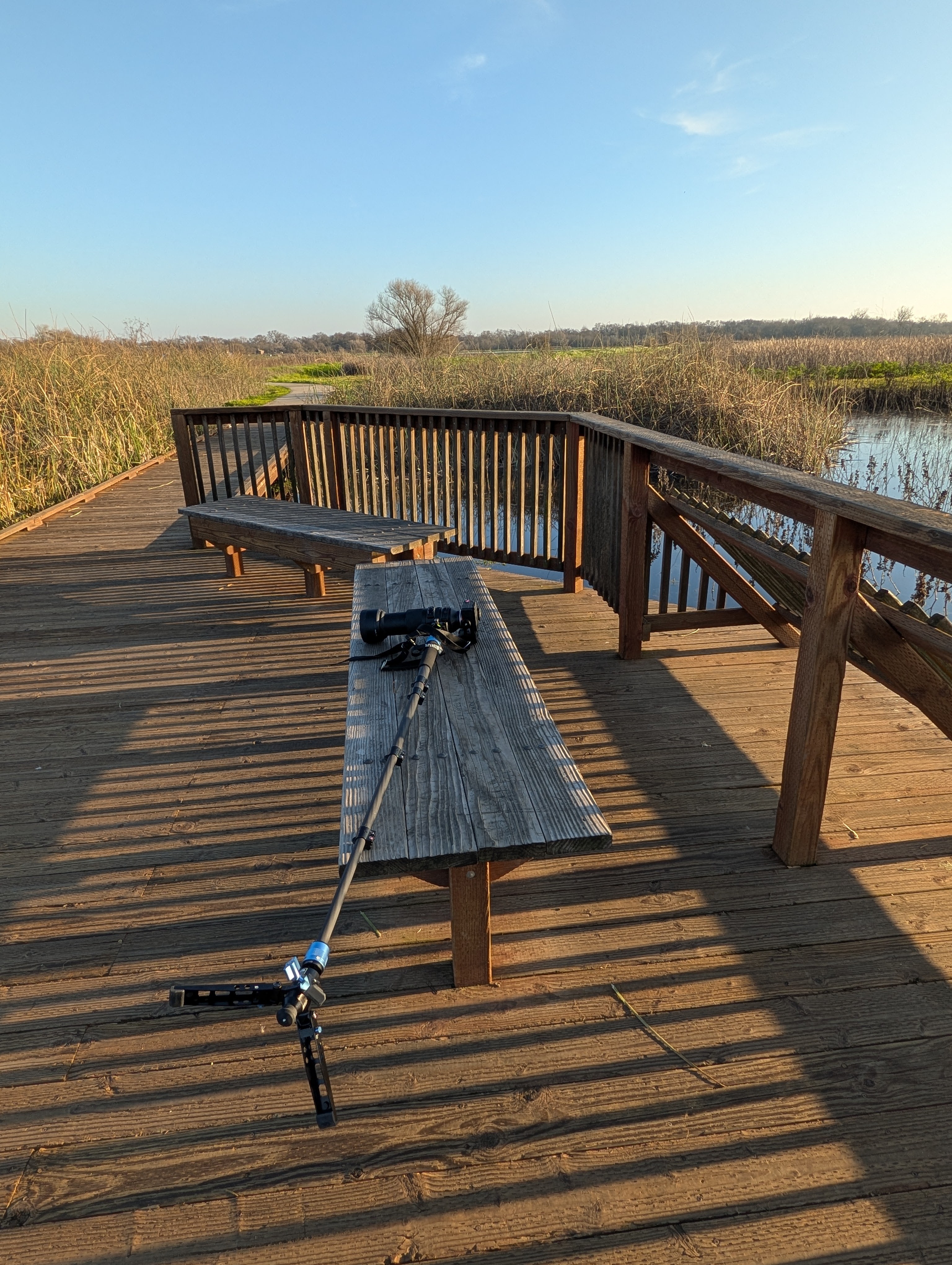
    I had figured that I would be relying on the new Sony A7 IV as my primary camera, and I could bring the older A7R II along if I wanted to have a backup on longer trips. That worked fine for singular focused (more unintentional puns) trips, like whale watching or hummingbirds, where all I needed was the new long lens. The Alaska trip was more of a problem. Most days there was a mix of wildlife and landscape photo ops, so I had to either change lenses on the fly, or rely on my phone for the landscape shots. Zodiac photography made things worse – trying to change lenses in a crowded, small, wet boat introduced a high risk factor of dropping the camera either in the wet boat bottom, or worse, the very wet ocean. In Antarctica, it will be a lot of fun trying to change lenses in the cold weather either in the boats or on the shore…standing on ice and snow. With penguins pecking at my boots.  And if you own a mirrorless digital camera, you have probably already experienced the joy of trying to clean a dirty sensor. 

    For all of my upcoming trips I will have that same mix of landscape/close-up vs. longer distance wildlife photography, and was considering using my very old Sony 7R II for landscape (shorter lens), and the new A7 IV with the long telephoto for wildlife. That would work of course, but now I’d have to lug two different sets of batteries and chargers along. Plus, and now for the real reason, this gave me the opportunity to trade in the old camera (10 years) for a new one. Camera shopping!!!! Off to Mike’s Camera!

    Actually, I did a lot of research first. If I was going to make a major investment in another camera body, I wanted to make sure it was the right one. I had been considering a different line of cameras which use a different, smaller sensor technology than the A7 line, the APS-C  versus full-frame. The Sony cameras are a bit smaller, lighter and a bit less expensive than the full-frame line like the A7 IV. They also have a completely different set of lenses that are designed for the smaller sensor, although the full-frame lenses can be used as well. The problem, for me at least, with the APS-C cameras is the cropping factor – the smaller sensor limits the scope/breath of the image, so you are effectively increasing the length of the lens by 1.5X. That’s great if you want more of a telephoto effect, which is not what I’m looking for with landscape photography. So for example, a 24-70mm lens loses the wide angle, since the crop factor makes this a 36-95mm lens. 

    When I got to Mike’s, I was able to try this out with a few of the smaller sensor cameras. I liked the smaller body size, but the cropping did not work for me. What I really wanted was the top-end full-frame camera, the A7R V. And as it turns out, Sony was having an incredible sale on this camera. And with the trade-in for my old camera, it was less than the APS-C bodies I was looking at. And I would not need to buy new lenses either.  Simple decision – convincing myself took about 5 seconds. Now all I have to do is figure out how to use it before I leave for Antarctica. Plenty of time for that – I’m sure I can fit that into my incredibly busy schedule of doing nothing. I’m sure I’ll be able to talk myself into spending some time playing with the new camera.

    Speaking of lenses, now that I have a long telephoto (500mm), I would really like to get to a point where I only need to carry two lenses – the big zoom for wildlife, and an all-purpose zoom for everything else, something like a 20-150mm. This would give me coverage for just about every situation, with just the two camera bodies. Currently, I have a 24-105mm, and a 17-24mm wide angle. I do not really shoot too much at the lower wide angle range, so if I had a 24-200mm for example, I’d just have to lug two lenses along on trips. Well, Mike’s Camera is having a sale in November, with that exact lens. So I may not be done with my toy obsession just yet.

    Two last comments on photo equipment (if you are still awake reading this…zzzzzz). First – I did mention the use of my phone for landscape photography. The new Pixel 10 has an excellent camera, and I’m finding that in some cases, I’d rather just use the phone instead of the heavy digital camera. Cave tours are a good example – it’s difficult enough just winding your way through tight and/or low passages. It is hard maintaining your balance and keep the camera from banging against rocks at the same time. The same goes for kayaking – I have a waterproof case for the phone (and the GoPro too), so I do not have to worry about trying to keep the expensive Sony out of the water. And then there are crazy hikes like the Manitou Incline. The phone was all I could handle. I did not see anyone with anything other than phones or GoPro’s on that little adventure.

    The second and thankfully last point, is why am I taking photo’s with the big, hi-tech cameras at all. I’m finding of late, that rather than using the blog to describe the images I’m creating with the high-end camera’s, the images are secondary to writing the stories of my travels. I’m using more of the jpeg images from my phone than the higher quality raw photos I take with the digital cameras. But I still want to continue submitting photos to contests, and go on tours focused on wildlife photography, like the Kodiak bear trip or an African safari. If I ever get to the point where all I’m doing are cruises, I may have to rethink my priorities when it comes to photography. Hopefully it will be a long time until I have to make that decision. Besides, the phone technology will probably make full frame digital cameras obsolete by then.