
I do have one more trip scheduled in October (another cavern…woot! And more stairs for Moro Rock… boo hiss) but the remaining big one for the remainder of this year is Antarctica, the land of penguins (and a lot of ice). I am really looking forward to this one. But first I have to prepare…..time to gear up once again. And that’s what this post is about. So go take a nap if you are not interested. Or read this to take a nap. Whatever works for you.
Sorry, but when you do all kinds of strange trips, you are constantly thinking about the gear you need. My garage now has a row of hooks for the 5 or 6 packs I now own, I have converted one closet into my camera gear storage, another shelf has my four camera bags, and then another few shelves are reserved for the varied gear I need for hiking, kayaking and snorkeling. But now I have to deal with really cold weather, and doing some stuff I have not done for quite a few years – snowshoeing, cross-country skiing, and mucking around in snow. Antarctica is a month away. Yikes. Fortunately, gearing up for Antarctica will also be preparation for another cold weather adventure – Churchill Manitoba in 2027. Really cold – -30F at night.
The good news is that most of the “expedition” type tours provide at least some of the cold weather gear – National Geographic/Lindblad provides an outer, waterproof insulated shell (with a hood) as well as an inner fleece jacket. Human Habitat provides all the gear other than the base layer. Not much to pack for that trip. These are not free of course – it’s just part of the package. National Geographic/Lindblad also has an outfit that rents a lot of the other gear – the most important of these are the waterproof, insulated boots. I can’t imagine trying to pack those unless you like traveling in heavy boots. Nope. You can also rent waterproof pants, ski poles and other cold weather gear. I’m going to need a lot of that in the future, and some of which I already have – I used to do a lot of winter hiking, climbing, skiing and snow-shoeing in Colorado, so I already have a lot of that stuff:
- Insulated, water proof gloves/mittens
- Goofy but waterproof/insulated hats.
- Heavy boot socks
- Lots of fleece pull-overs, some from Google (they kept as fed and clothed).
- Heavy kayak pants (yes, we will be kayaking along the ice shelf).
- Waterproof gloves for kayaking.
There were a few missing things from my packing list, so I waited for my trip to Colorado to fill in the few remaining blanks. Why wait for this trip? Denver has a flagship REI which carries has just about everything you would need for any outdoor adventure. What a wonderful store – it used to be the old Forney Transportation Museum, which repurposed the old Denver Tramway Powerhouse building from the early 1900’s. It’s now a wonderland of outdoor gear.
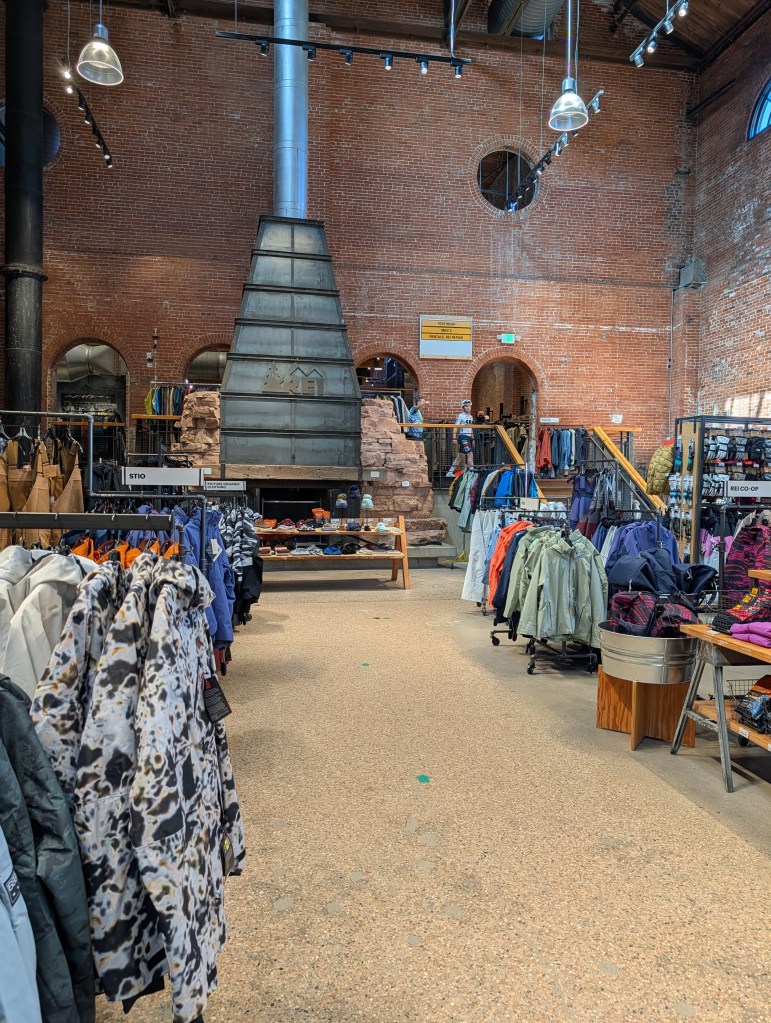
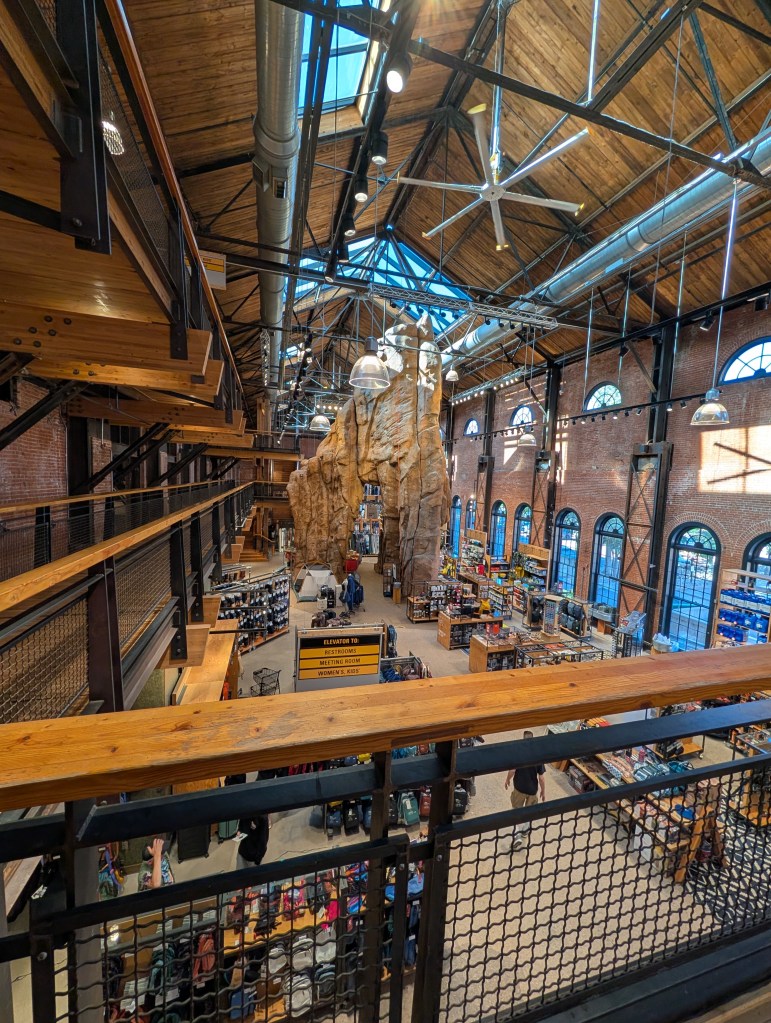
I spent multiple hours wandering through the store, and eventually found the few things I needed:
- Insulated shell pants – good for skiing, hiking, maybe even for Zodiac cruising instead of the kayak pants.
- Heavy fleece pants – wear on board and under outer shell pants
- Winter buff – I think these used to have a different name. It’s basically a neck warmer. I bought a light-weight one in the Galápagos Islands when all the boat drivers had one. Great for wind, spray and sun protection. Never thought there would be specialized neck warmers before.
- Glove liners – you never have too many of those
The only thing I could not find, was a new pair of hiking/travel shoes in which I could fit my Forest Gump brace and my foot. I tried on 6 different brand shoes and none of them worked. It is really a pain having to bring multiple pairs of shoes since I only had one pair of water/beach shoes which I could use with the brace. The good news is I found two pairs, one for serious hiking, at a Merrill outlet store once I got back to good old boring Sacramento. I doubt if I’ll ever be able to hike without that brace, so all my other shoes and boots will be going to charity (Soles For Souls).
So that’s about it for Antarctica clothing. All I have to do now is figure out how to fit all this “stuff” into the same suitcase I’ve been using for the past year. I’m rapidly learning how to slim down what I bring on trips – all the ships do laundry, and most of what I bring can be dumped in with underwear. It’s not that expensive and worth it. Another problem with the Antarctica trip are the “free” jackets – you get to take them home at trips end, but how do you stuff them into your luggage? I’d like to reserve enough free space in the suitcase so I have an option to keep them. The other choice is to leave it, and Nat Geo donates them to charities.
Some of my other scheduled trips will also have luggage related issues as I’ve mentioned before, so this will be a good time to figure out how to travel light. The Baja trip will really be a challenge – 30lbs in luggage, and 6.5 for carry-on. My camera bag weighs over a pound…most of the camera gear will be in my suitcase. Who needs clothing anyway.
The other challenge I’ll have with Antarctica is my photography gear – much like Alaska, I’ll definitely want to carry the big lens as well as a second camera body. I’m guessing that there will be times that I’ll need the long 500mm, as well as a shorter lens for closeups of penguins or landscape shots. Switching lenses in the cold, or on a fast moving Zodiac, is not something I really want to do. Way too risky (for the camera, not me).
And I still have to figure out what to do with my “other” camera – the phone. I had a waterproof case for my Pixel 8, which worked great for bouncing around in small boats or in kayaks. Before I left for Alaska, I bought what seemed to be the perfect solution for the new Pixel 10 XL, though a bit expensive – a flexible plastic sleeve, with a big metal flange and glass lens arrangement that is completely waterproof, and could be used for snorkeling and diving. It was built for regular sized phones, but their support group said it was stretchy material which will fit the larger XL models of phones. This was a lot like a shoe salesman telling you that a wide width size 12 shoe will fit a narrow size 13 foot. Nope. I tried that once and it did not work. Same for phone covers – the metal flange scrapes on the back of the phone. That’s not a good thing. I’m hoping the company (www.Outex.com) agrees. It’s a really nice product, just not meant for larger phones.


So I’m still working on that problem..
That’s enough geek talk on gear. I’ve already got my packing list for Antarctica, and with over a month before leaving, I’ve got plenty of time to begin “test packing”. Expect many penguin photo’s in the near future.



 The Traveling Widower