Category: hiking

  • A Trip To Nowhere, And A Really Big Rock

    All roads lead to nowhere

    I had planned this adventure well before my recent trip to Colorado – Mitchell Caverns was the next to last on my Cave-A-Week tour, and while I was in the vicinity of Sequoia National Park, I figured I could cross Moro Rock off my bucket list, another hike with a bunch of steps. Is this becoming yet another obsession? Moi? Obsessive? Never. I guess I’ll never learn. 

    Fortunately, neither of these little adventures were anywhere near as physically destructive or death defying as the Manitou Incline. But I have to wonder why I decided to do a very long car trip so soon after returning from Colorado (one week). Mitchell Cavern is out in the middle of the Mojave Desert (“The Middle of Nowhere” defined), a 4 hour drive from Bakersfield, which is a 4.5 hour drive from home. There are places to stay in Barstow (only 2 hours from the cavern), but I’m just not into 2 star motels anymore. So I planned on using a nice hotel in Bakersfield as my base, driving 4 hours for a 1 hour cave tour, and then returning back to Bakersfield afterwards. Dumb. What could possibly go wrong with that?  And the next morning, my plan was to drive to Sequoia National Park to hike Moro Rock (2+ hour drive), check out some other touristy spots (more big trees), and then spend the night at another Hilton Hotel in Fresno. Another 2+ hour drive. That leaves me with a 3.5 hour drive home on Monday. Phew. Enough of the introduction…on to the details. 

    Spoiler Alert – Success, but exhausted

    A Cave Way Too Far

    OK, I need to enroll myself in a “Cavern Tour Anonymous”  program. The Cave of the Winds in Colorado likely pushed me into the obsession level, but at least it was only an hour or so drive from where I was staying, in the middle of a major tourist destination. I drove for over eight hours round trip for a 60 minute tour in a relatively small cavern. The tour ended a bit after 3PM, so along with an 18 mile drive on a rutted road to get back to the highway, I wound up driving down a winding mountain highway in the dark, battling big rigs for the left lane, for the last two hours of my ride back to Bakersfield. Ugh. 

    But, the cave was interesting. It is the only public accessible cavern in California that is a state park, all the rest are privately owned except for the one, Crystal Cavern in Sequoia National Park (still on my bucket list). The drive from anywhere to this place is long and once you get off the highway, you are on a rough but mostly paved road which splits off to some interesting camping areas. The cavern was developed by a couple (Jack and Ida Mitchell), who purchased the area with a mining claim, but like most every other cavern I’ve been to this year, they quickly realized there was more value in developing a tourist attraction.

    The state park staff lives on-site in the original stone buildings – there’s a small visitor center, a camping area and restrooms with running water. And a pay phone kiosk next to the restrooms. I think it still works. It may be the last one in the state. Maybe the country.

    There is a half-mile hike down a well maintained trail, mostly level, which has a bridge constructed across a deep wash. Incredible views of the desert. As you approach the bridge, you get your first view of the entry to the cavern. As it turns out there is one at the other end of the tour. This is actually a small cavern compared to the complex ones I’ve been to across the state. There are only a few rooms, and at the end, you can either exit there and walk back along the trail, or just trace your steps back to where we entered. It would be really hard to get lost in this cave. Unless the lights go out.

    The tour guide was a State Park employee, and knew the history, geology and then some, about the cave. The features were for the most part, the same as what you see in any cave. The big difference is that this one is really old – 20 million years, and also dry. It is in the latter stage of cave life, where nothing is growing, but things are starting to break – many of the stalactites are stubbed off. You don’t see that many in younger caves. The tour guide also discussed some microbiology topics which I had never heard about and which I’m now reading about. Mind blowing stuff.

    The other peculiar difference with this cave was that it was actually two different caves. The Park Service drilled a passage between the main cave, and a small, south facing one a few decades ago. The smaller had been used by humans in the past for storage, and was also frequented by ice age beasties. But since it had a south face, it was always warmer, and the temperature difference created a pressure differential, which created a breeze heading into the main cavern. This blew a lot of dust in, and also impacted the overall environment in the main cavern. So, the Park Service eventually installed steel doors at either end of the connection tunnel, Something else I’ve never seen before. 

    The other nice feature in this cave was the lighting – lots of it. The guide was constantly hitting switches along the way. I spent a lot of time figuring out how to capture video on the GoPro camera in low lighting, but did not really need it. 

    And now, for a bunch of photo’s

    The tour ended about 3:00PM, and the walk back to the visitor center was pretty quick. My Forest Gump brace and new hiking shoes, made a big difference in my stability on a trail. I started my drive back to Bakersfield about 3:30PM and made it back after 8PM. If you’ve ever traveled that route, there’s a long uphill and downhill stretch from Barstow to Bakersfield. Not so bad during the day, really tough in the dark when you are tired. Most of the traffic is tractor-trailers. I was really glad to make it back to the hotel. Totally exhausted. A warm Doubletree chocolate chip cookie, followed by a couple of beers helped. Dinner was pretty good too.

    If you are interested in driving to this obscure spot (there are other things to see in the middle of nowhere), here is good site to start with.

    Update: Oddly enough, the San Francisco Chronicle had an article on the Mitchell Caverns in the Sunday paper today (10/26). Maybe the author read this blog?

    I’ve got one more cavern on my California list – Crystal Cavern. It is closed until next summer. That’s a good thing.

    Moro Rock and Gross Bathrooms

    Moro Rock

    In case you are concerned about the title, I did not include any photos in this post of the bathrooms in the national park, nor will I spend much time describing them. Driving interstate highways, and visiting national parks during a government shutdown does make for some interesting and annoying challenges. I have traveled down I-5 and I-15 numerous times, and have regular pit stops along the way. Unfortunately, all the rest stops along the interstates are closed during shutdowns. That really changes everything for older folks who need to stop every 2-3 hours for bio breaks (I know, TMI). What’s definitely worse, are the bathrooms, mostly outhouses, in national parks. During one of the past shutdowns, I visited Joshua Tree. You could not get within 50 yards of any of the outhouses after a week. There was a dead zone of wildlife around each from the odor. Sequoia was just about at that point. But at least the park was open. And there are a lot of really big trees to hide behind – lots of privacy just off the road. 

    Jan and I visited Sequoia the first year we lived in the South Bay. I don’t remember too much about the trip – we stayed in Visalia, and spent one day in the park, just a quick in and out in the northern section. This time I entered through the south end, which seemed to be where most of the large groups of visitors were coming from. Free entry for all (I have one of the permanent senior passes). Without a park map, I had to rely on Google and Android Auto, which tends to not work too well when the internet fades in and out. But, there is just one main road running through the park, so it was not too tough figuring out how to get to Moro Rock. Why was I going there? Beats me. It just seemed like a nice hike, lots of steps, but nothing like the Manitou Incline. 

    I caught sight of this huge granite outcrop early on, and figured that had to be my destination. Getting there was fun – a seemingly endless number of sharp switchbacks, with lots of traffic. I eventually made it to the narrow side roads leading to the trail head parking lot, and found a close spot for the Subaru. And there was one of those toxic outhouses there. Safe for guys only. 

    Moro Rock is definitely one of the most interesting hikes I’ve been on. I do not know much about the history of the trail construction, but some genius engineer made a 5th-class rock climb into a relatively easy, family oriented hike to one of the most stunning overlooks I’ve been to. Sort of like Half-Dome with training wheels. There are 400 steps plus ramps, and railing going up 300’ to a narrow slice of granite, with absolutely incredible views of the surrounding peaks and lower valleys. It is a challenge for some since you are hiking at 6000’, and the exposure probably scares some folks off. But there were gobs of people, some with small children, making their way up to the top.

    After spending time at altitude in Colorado, this was a snap for me, especially with my Forest Gump brace and brand new hiking shoes. Having a stable base really helps. It was amazing on top – very narrow, with a line of people waiting to take selfies and group shots at the narrow end. What amazed me was the warning sign on the railings.

    Was this really necessary? They might have just posted a sign. “Don’t jump off the edge -you will die”. 

    Moro Rock

    I spent a lot of time taking in the view. It was stunning. I had a strange moment or two, but I’ll describe that in the journal. Overall, a great hike. The view from the top was beyond impressive.

    Moro Rock
    Moro Rock

    I was pretty much ready to head back home after making it down through the crowd heading up. I stopped at a few of the tourist spots, and shot a few pictures of the big trees. Definitely more of them here than in the state park I visited a few weeks ago. What was also amazing were the burned areas – there are huge sections of torched forest throughout the park. Most of the sequoias have burn marks at the base of the trees. The Forest Service and fire crews did an amazing job of saving these incredible trees. 

    I had booked a hotel in Fresno when I scheduled this trip, thinking that I would be too pooped from hiking to drive the 4 hours back home from Sequoia. Smart move on my part. I was doing OK and made it to the hotel by 5PM, but I was still tired from all the driving back and forth to the cave. And this turned out to be a really nice hotel. I did not have breakfast or lunch that day, other than a bag of M&M’s, so I made up for lost time at the bar. I do not usually include photo’s from a hotel, but this one (Doubletree Fresno) is pretty amazing.

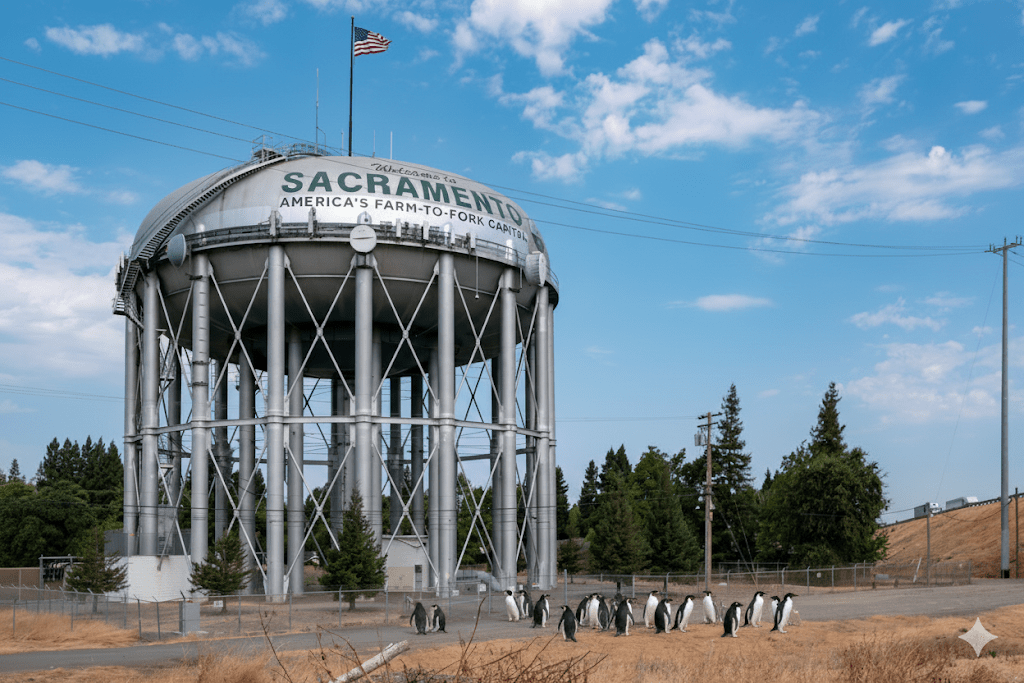
    Overall, it turned into a pretty good trip. But this much driving in three days? Not going to do that again. I plan on taking it easy the next few weeks, before the Antarctica trip in November. I need to be in shape for fighting off the hordes of giant penguins. I wonder if there are any gnomes down there? I hope not.

  • Coming soon – Penguins!!

    Created with Google Gemini

    I do have one more trip scheduled in October (another cavern…woot! And more stairs for Moro Rock… boo hiss) but the remaining big one for the remainder of this year is Antarctica, the land of penguins (and a lot of ice). I am really looking forward to this one. But first I have to prepare…..time to gear up once again. And that’s what this post is about. So go take a nap if you are not interested. Or read this to take a nap. Whatever works for you. 

    Sorry, but when you do all kinds of strange trips, you are constantly thinking about the gear you need. My garage now has a row of hooks for the 5 or 6 packs I now own, I have converted one closet into my camera gear storage, another shelf has my four camera bags, and then another few shelves are reserved for the varied gear I need for hiking, kayaking and snorkeling. But now I have to deal with really cold weather, and doing some stuff I have not done for quite a few years – snowshoeing, cross-country skiing, and mucking around in snow. Antarctica is a month away. Yikes. Fortunately, gearing up for Antarctica will also be preparation for another cold weather adventure – Churchill Manitoba in 2027. Really cold – -30F at night.

    The good news is that most of the “expedition” type tours provide at least some of the cold weather gear – National Geographic/Lindblad provides an outer, waterproof insulated shell (with a hood) as well as an inner fleece jacket. Human Habitat provides all the gear other than the base layer. Not much to pack for that trip. These are not free of course – it’s just part of the package. National Geographic/Lindblad also has an outfit that rents a lot of the other gear – the most important of these are the waterproof, insulated boots. I can’t imagine trying to pack those unless you like traveling in heavy boots. Nope. You can also rent waterproof pants, ski poles and other cold weather gear. I’m going to need a lot of that in the future, and some of which I already have – I used to do a lot of winter hiking, climbing, skiing and snow-shoeing in Colorado, so I already have a lot of that stuff:

    • Insulated, water proof gloves/mittens
    • Goofy but waterproof/insulated hats.
    • Heavy boot socks
    • Lots of fleece pull-overs, some from Google (they kept as fed and clothed).
    • Heavy kayak pants (yes, we will be kayaking along the ice shelf).
    • Waterproof gloves for kayaking.

    There were a few missing things from my packing list, so I waited for my trip to Colorado to fill in the few remaining blanks. Why wait for this trip? Denver has a flagship REI which carries has just about everything you would need for any outdoor adventure. What a wonderful store – it used to be the old Forney Transportation Museum, which repurposed the old Denver Tramway Powerhouse building from the early 1900’s. It’s now a wonderland of outdoor gear.

    I spent multiple hours wandering through the store, and eventually found the few things I needed:

    • Insulated shell pants – good for skiing, hiking, maybe even for Zodiac cruising instead of the kayak pants.
    • Heavy fleece pants – wear on board and under outer shell pants
    • Winter buff – I think these used to have a different name. It’s basically a neck warmer. I bought a light-weight one in the Galápagos Islands when all the boat drivers had one. Great for wind, spray and sun protection. Never thought there would be specialized neck warmers before. 
    • Glove liners – you never have too many of those

    The only thing I could not find, was a new pair of hiking/travel shoes in which I could fit my Forest Gump brace and my foot. I tried on 6 different brand shoes and none of them worked. It is really a pain having to bring multiple pairs of shoes since I only had one pair of water/beach shoes which I could use with the brace. The good news is I found two pairs, one for serious hiking, at a Merrill outlet store once I got back to good old boring Sacramento. I doubt if I’ll ever be able to hike without that brace, so all my other shoes and boots will be going to charity (Soles For Souls).

    So that’s about it for Antarctica clothing. All I have to do now is figure out how to fit all this “stuff” into the same suitcase I’ve been using for the past year. I’m rapidly learning how to slim down what I bring on trips – all the ships do laundry, and most of what I bring can be dumped in with underwear. It’s not that expensive and worth it. Another problem with the Antarctica trip are the “free” jackets – you get to take them home at trips end, but how do you stuff them into your luggage? I’d like to reserve enough free space in the suitcase so I have an option to keep them. The other choice is to leave it, and Nat Geo donates them to charities. 

    Some of my other scheduled trips will also have luggage related issues as I’ve mentioned before, so this will be a good time to figure out how to travel light. The Baja trip will really be a challenge – 30lbs in luggage, and 6.5 for carry-on. My camera bag weighs over a pound…most of the camera gear will be in my suitcase. Who needs clothing anyway.

    The other challenge I’ll have with Antarctica is my photography gear – much like Alaska, I’ll definitely want to carry the big lens as well as a second camera body. I’m guessing that there will be times that I’ll need the long 500mm, as well as a shorter lens for closeups of penguins or landscape shots. Switching lenses in the cold, or on a fast moving Zodiac, is not something I really want to do. Way too risky (for the camera, not me).

    And I still have to figure out what to do with my “other” camera – the phone. I had a waterproof case for my Pixel 8, which worked great for bouncing around in small boats or in kayaks. Before I left for Alaska, I bought what seemed to be the perfect solution for the new Pixel 10 XL, though a bit expensive – a flexible plastic sleeve, with a big metal flange and glass lens arrangement that is completely waterproof, and could be used for snorkeling and diving. It was built for regular sized phones, but their support group said it was stretchy material which will fit the larger XL models of phones. This was a lot like a shoe salesman telling you that a wide width size 12 shoe will fit a narrow size 13 foot. Nope. I tried that once and it did not work. Same for phone covers – the metal flange scrapes on the back of the phone. That’s not a good thing. I’m hoping the company (www.Outex.com) agrees. It’s a really nice product, just not meant for larger phones.

    So I’m still working on that problem..

    That’s enough geek talk on gear. I’ve already got my packing list for Antarctica, and with over a month before leaving, I’ve got plenty of time to begin “test packing”. Expect many penguin photo’s in the near future.