Category: travel

Default category for all travel related posts.

  • The World On Your Wall

    June 14th, 2026

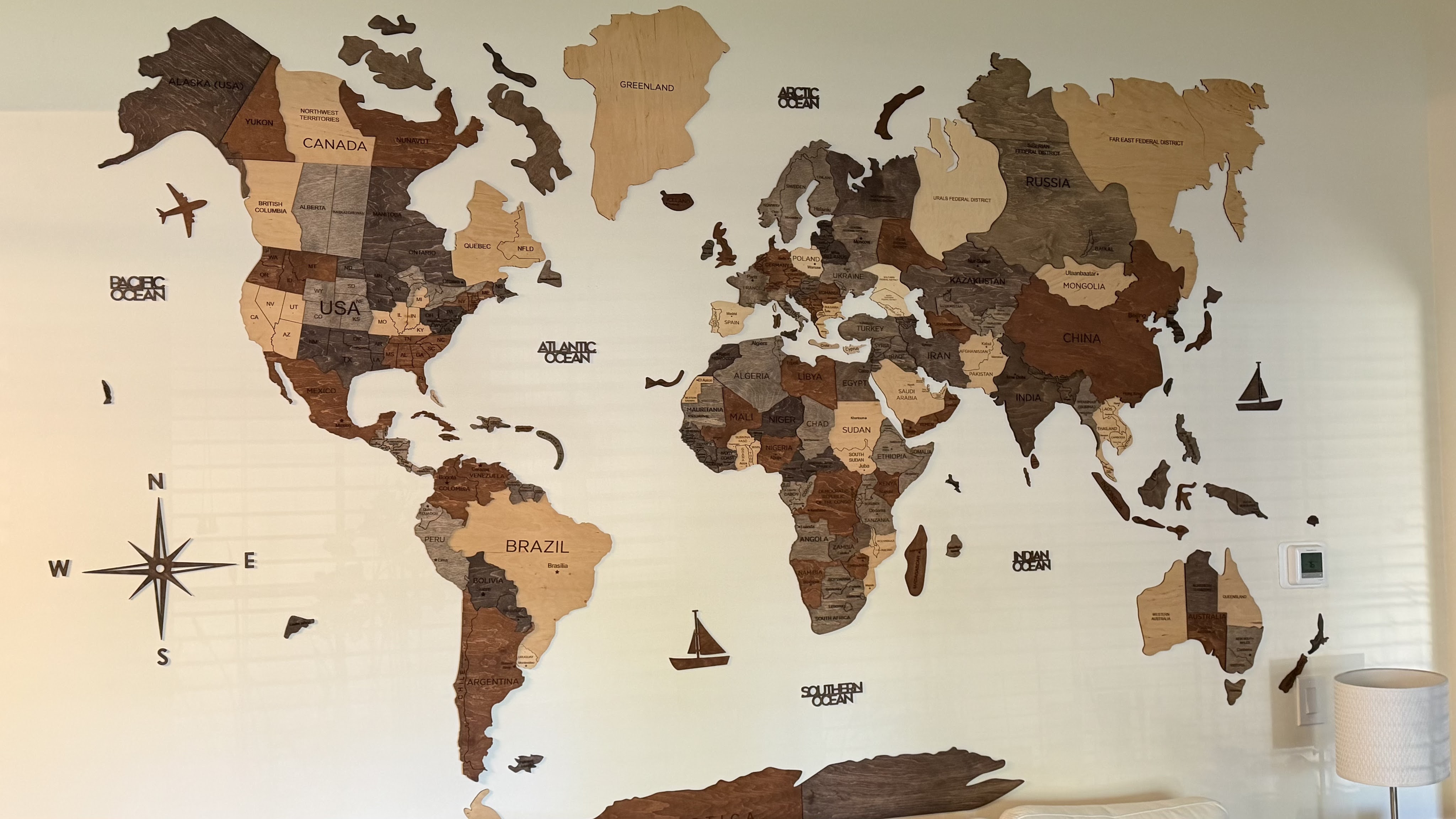
    A detailed wooden map of the world displayed on a wall, showcasing countries and oceans with varying wood tones. Features labels for countries like Canada, USA, Brazil, China, and others, along with decorative elements like airplanes and boats.

    A short post on a fun, sort of travel related experience I had the other day. 

    Some friends of mine (yeah, I still have a few left) recently moved into my community, and after painting, moving in and getting the house livable, decided to install something I’ve never seen before – a world map kit, composed of wooden pieces for all the continents and all the significant islands. I’m not making this up – there was another house for sale in the neighborhood that had one installed. Who knew?

     It’s sort of a puzzle you build on a wall. The kit comes with a seemingly endless number of pieces, two roles of useless double-side tape, and minimal instructions. But it does recommend having a bunch of friends come over to help and most of all, make it a fun experience. Hmmmm. First warning sign. And I was the bunch of friends. Small group, lots of pieces, two ladders. What could possibly go wrong?

    This is definitely the kind of activity that you’d like to have a case of beer, or some quaffable wine available, to consume while you construct the world. Unfortunately, that might lead to a few misplaced pieces….in my case, with enough wine, I’d probably try to create the world as it was 250 million years ago, when the continents were all together. It’s that geology thing – hard to suppress sometimes.
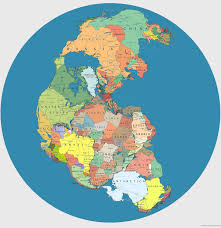
    A colored map of Pangaea, showing continental outlines and labels for various regions, depicting the supercontinent's arrangement.

    That would not look too great on the wall but fortunately, we all stayed sober. Or at least I did….I can’t vouch for my friends’ sobriety after I left, although the finished product appears to be a fairly accurate representation of the land masses (first photo).

    There is some method to the partially documented construction process.It helps to lay it all out on the floor first. But then you have to be careful not to step and break one of the pieces. 
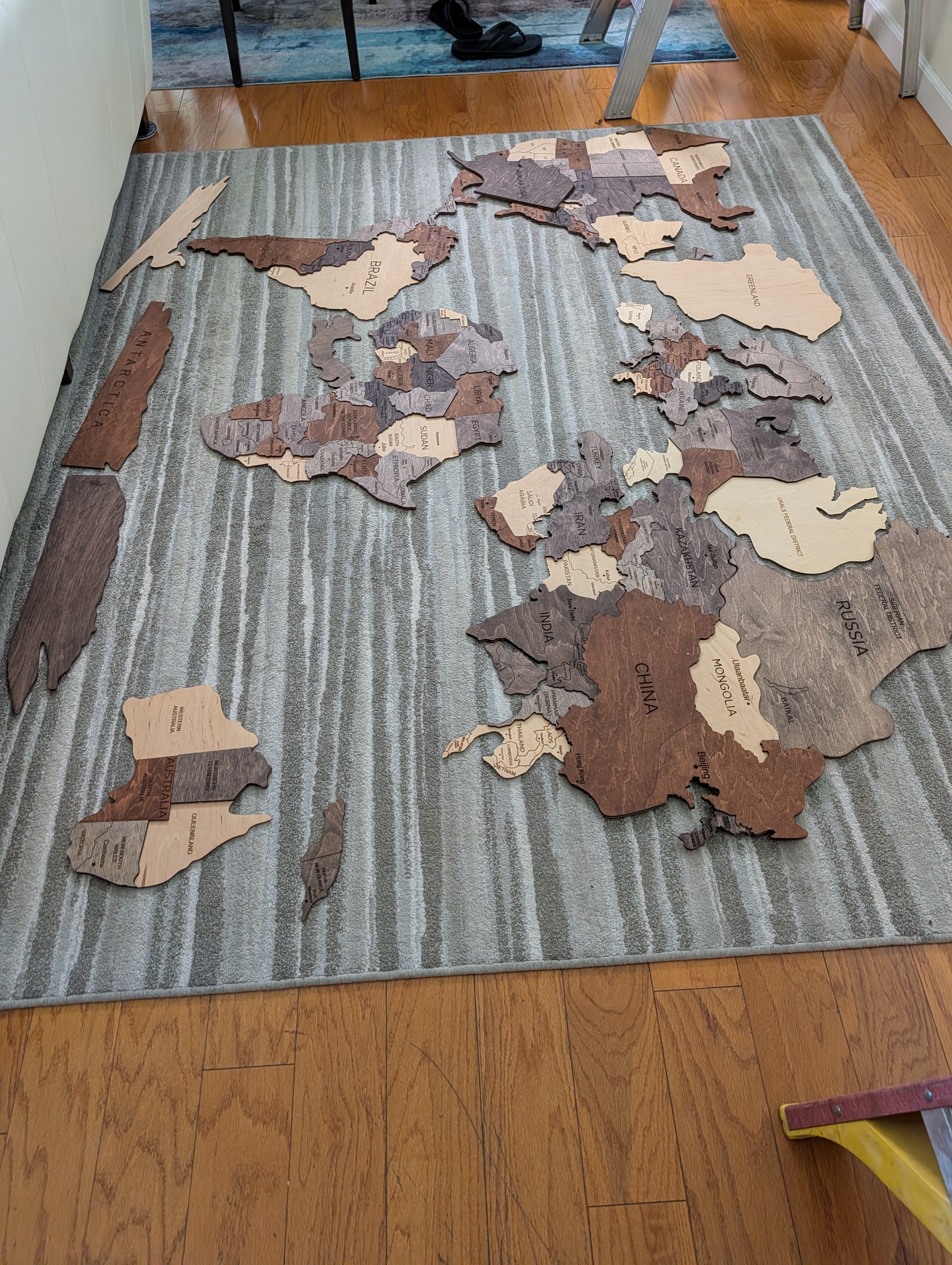
    A wooden puzzle map of the world laid out on a striped rug, featuring labeled countries in different shades of brown and light-colored wood.

    The instructions do give you the vertical and horizontal dimensions for your world although they did not factor in Antarctica. There are  two upper corner cardboard cutouts for placing the first two pieces (parts of Alaska and Kamchatka). If you get those two placed correctly, you’ve got a good start. 
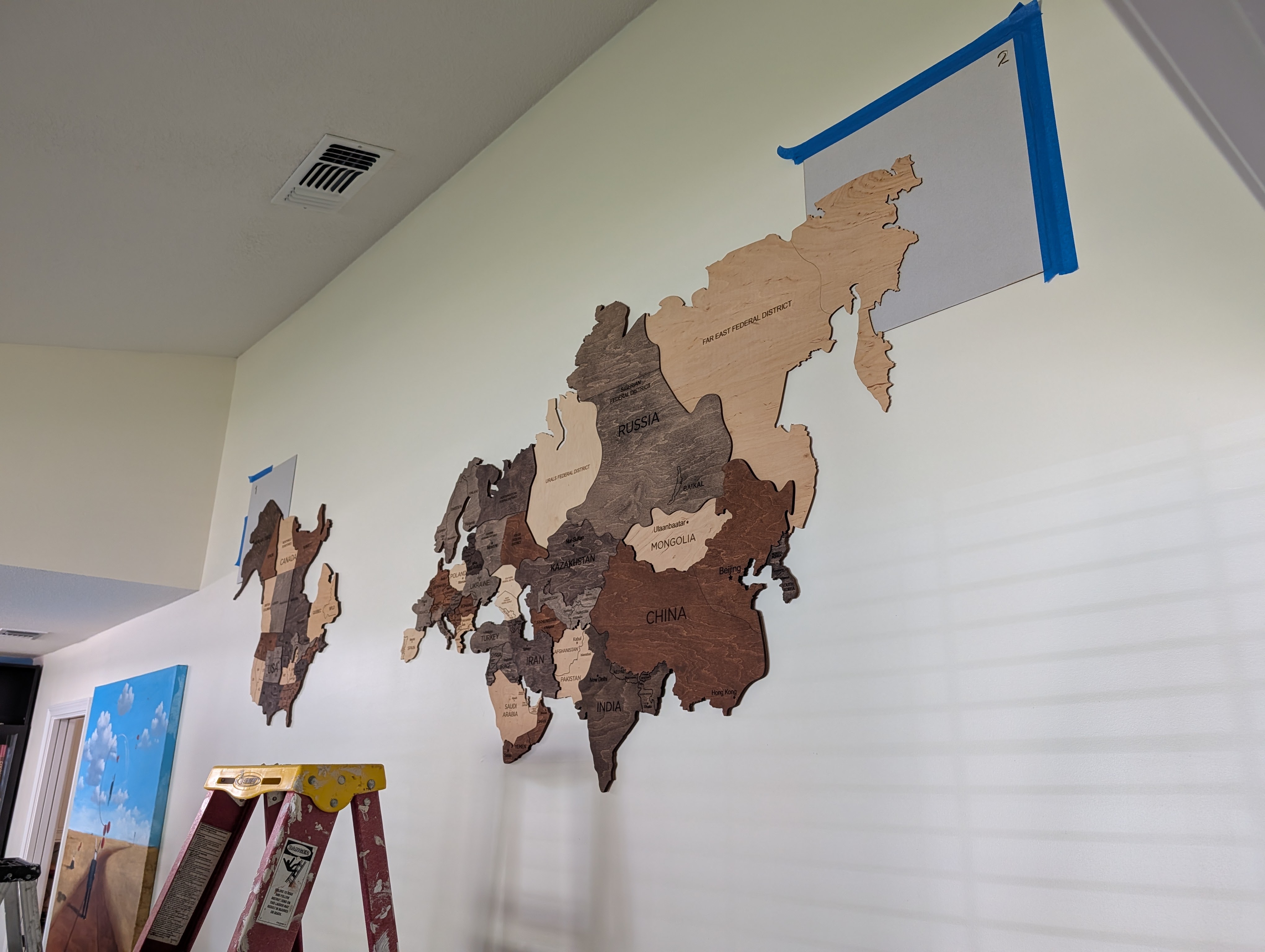
    A partially installed wooden world map displayed on a wall, featuring different shades of wood representing various continents and countries, with a piece of paper outlined by blue tape above.

    The real fun starts after that (and some arguments as well). First you have to find the right pieces for the continents as you build across and down (South). And you have to figure out the distance across oceans and seas, otherwise you might wind up with Pangea. It helps to have an iPad or phone handy, to figure out where some of the more obscure islands  should go, or the relationships between some of the pieces. Do you know where Brunei is? I did not. But I did know from my travels how to place Antarctica below the tip of Argentina. Woo hoo. 

    We did learn something useful early on – there is (or should be) an expiration date on double-sided tape. Over time, a roll of the stuff sort of melts into an unusable mass. A quick trip to Home Depot solved that problem.
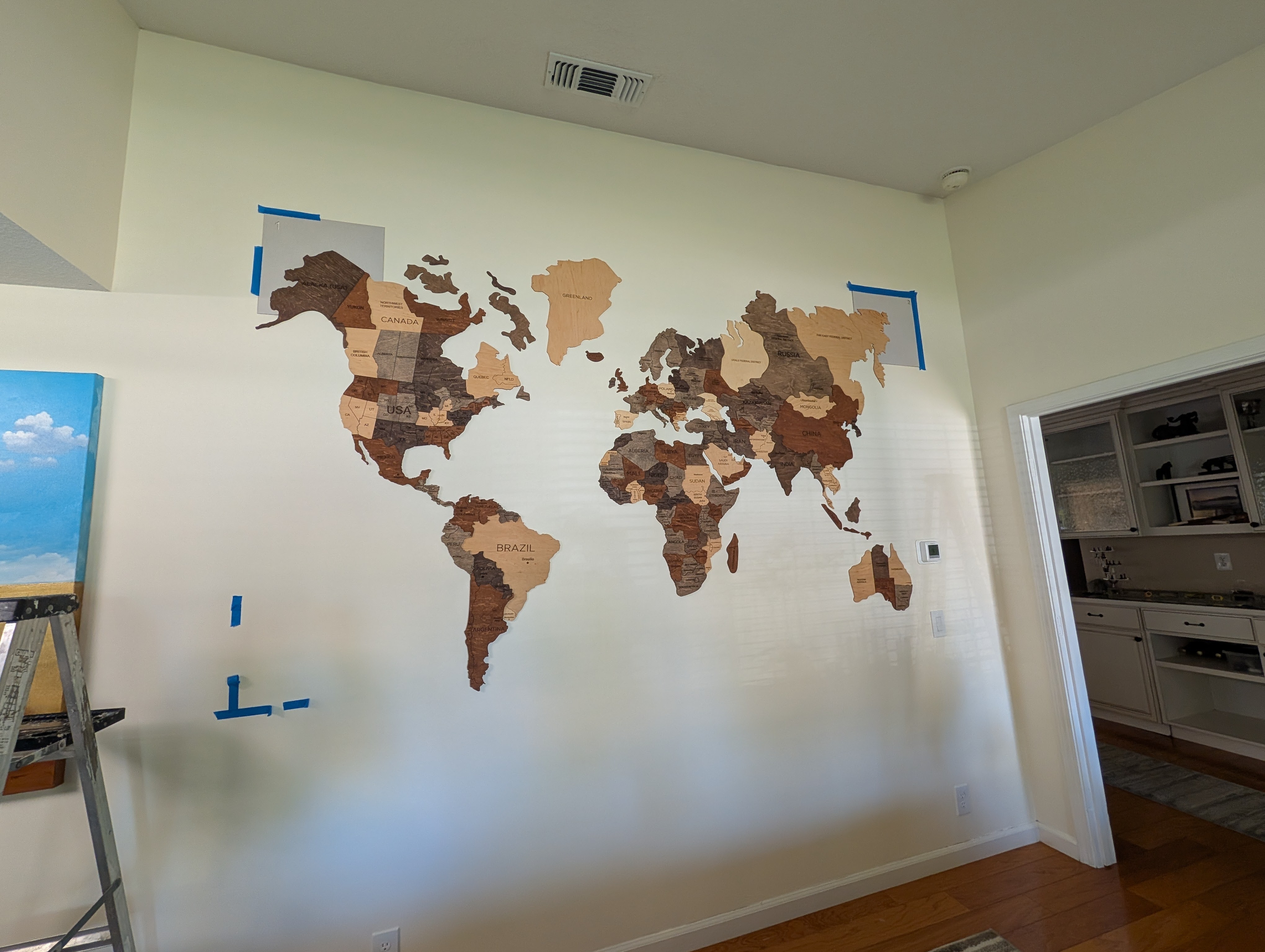
    A wooden map of the world is mounted on a wall, featuring various countries in different shades of wood. Blue painter's tape outlines the area for installation, and a painting of a blue sky with clouds is visible on the left side. A ladder is positioned nearby, suggesting an ongoing installation process.

    Once we had the new tape, building the world map went pretty quick with 2 people taping and one placing, and with a lot of discussion on how each piece should go. That’s where Google maps came in handy. It was fun watching the world appear on the wall – the scale makes you realize how far we are from many of the destinations I’ve been to in the past two years – it’s a long way from here to the bottom of the world.

    My friends finished placing all the little islands and odds and ends after I departed, and the end result looks fantastic! I do not have any room left on my walls since they are now covered with acrylic prints from my travels, so I’ll have to continue relying on Google for my geographic inquiries.

    Even Max had troubles putting this together. The dog wasn’t much help either. 
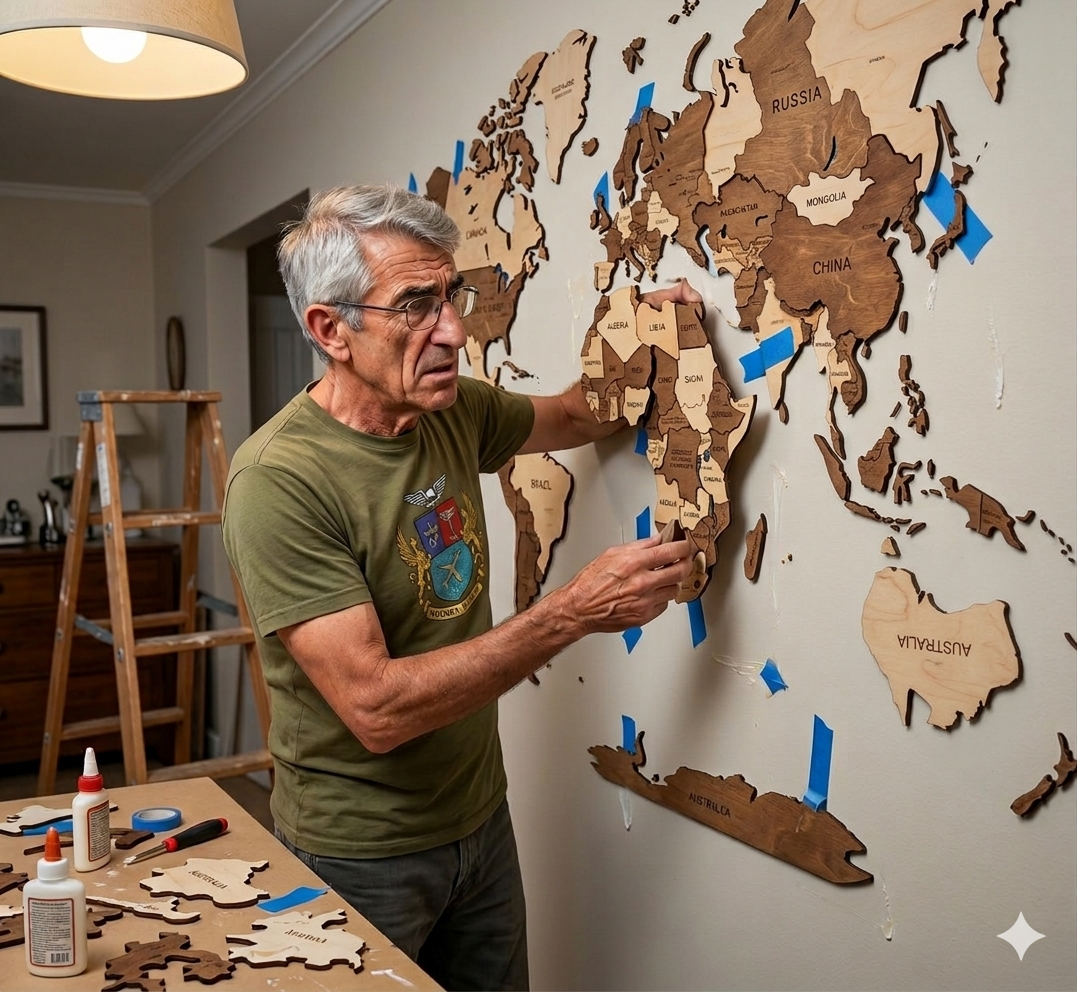
    An older man carefully affixes a wooden map of the world to a wall, focusing on the African continent. The map pieces are held in place with blue tape, and crafting supplies are visible on a table nearby.

    Peace

  • GoPro Mission 1 Pro – My Latest Toy

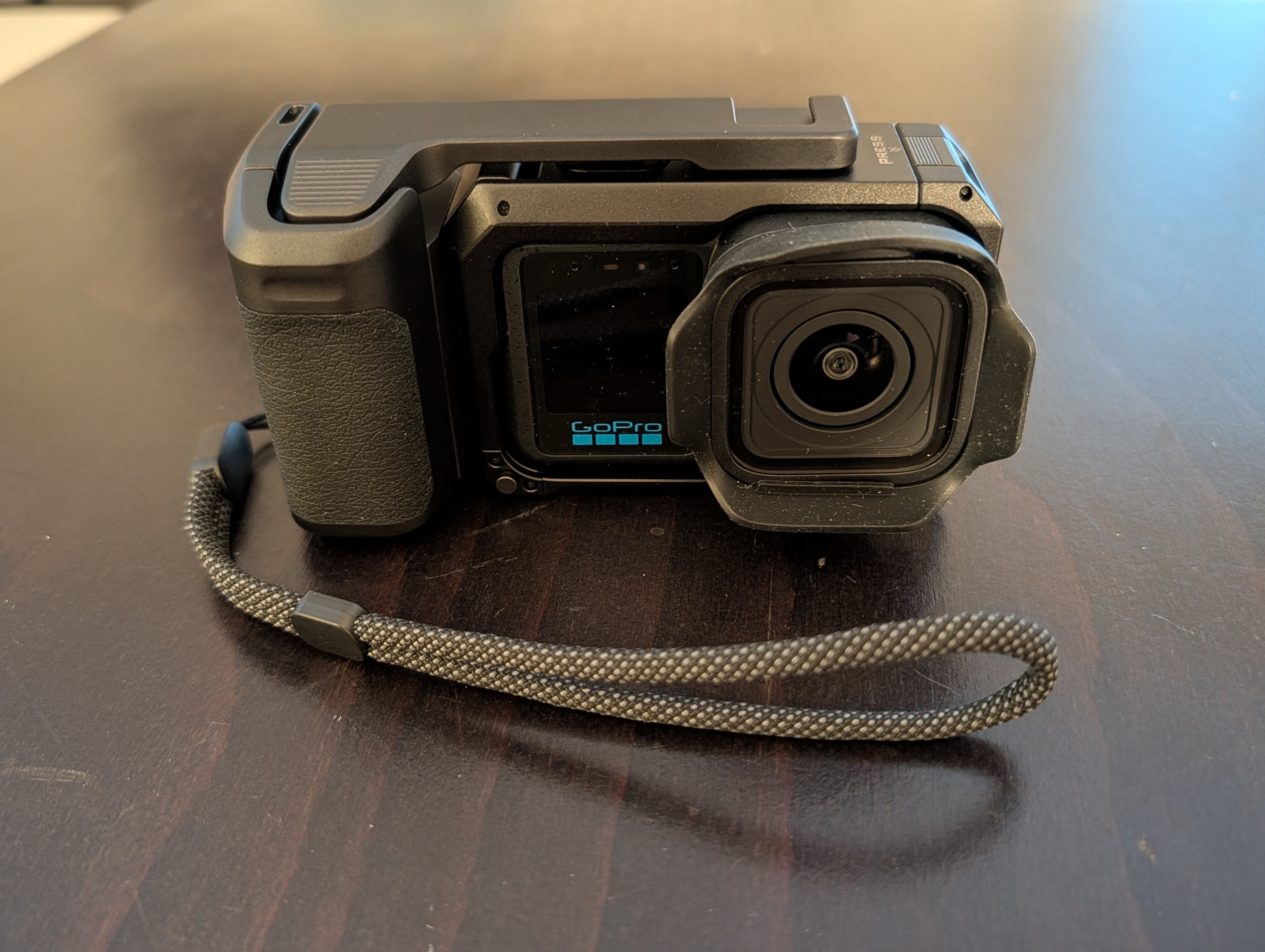
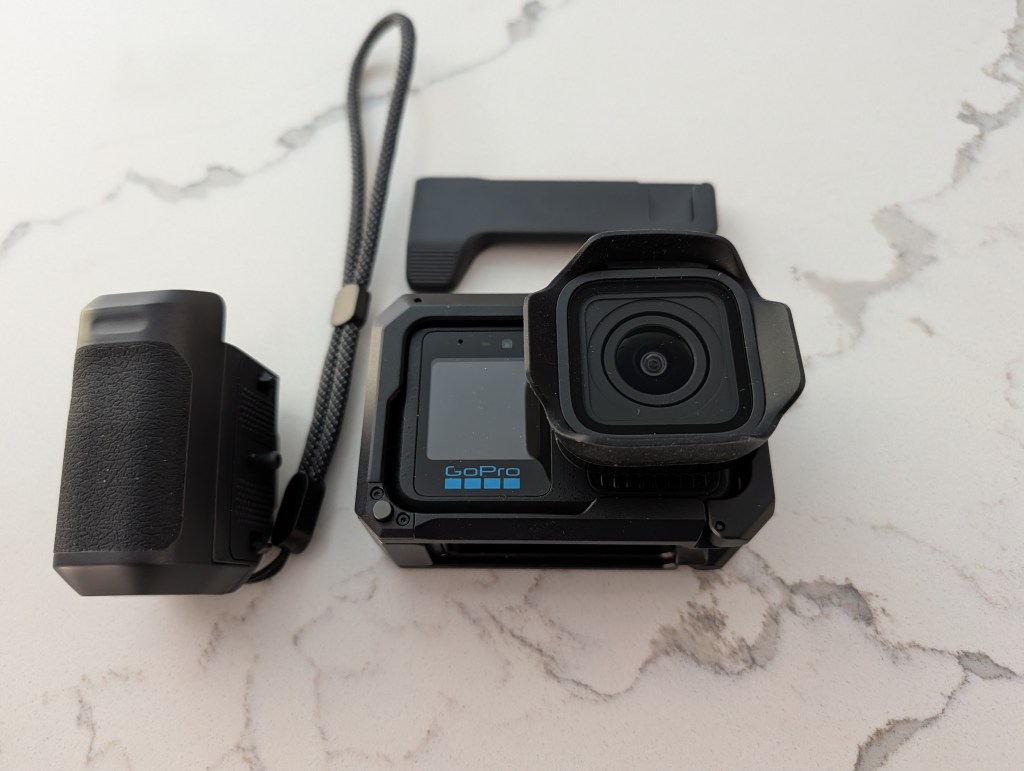
    Front view of a GoPro camera with a protective case and strap, resting on a dark wooden surface.

    I want it all,
    I want it all,
    I want it all,
    And I want it now
    Queen

    June 12th, 2026

    Warning – this is a bit geekish about cameras.

    I’ve been complaining for quite some time (more like whining) about lugging my heavy Sony mirrorless camera around in caves, or other awkward places, such as trying to photograph pretty much anything from a Zodiac (small, rigid, inflatable boat). I’m willing to twist myself into a pretzel with a 500mm lens when photographing whales, bears or sea lions from small boats, but what I really need in most of these situations, is a rugged, waterproof, point and shoot camera, something that would fit more or less in a pocket. I had something close to what I needed with the Sealife underwater camera, but I wound up selling that – the camera technology was dated, it had a small sensor, and you could not buy replacement batteries for it. I also own a GoPro Hero 13, which I have used quite a bit, mostly for snorkeling – definitely waterproof, and has a reasonably sized sensor, but was difficult to use (for me at least) – it was feature rich, but the user interface was difficult to use, mostly due to the small screen size and complex menu system.  

    I had been considering buying the OM System (formerly Olympus) TG-7 – a very rugged, waterproof point and shoot camera, but much like the Sealife camera (same size), it was dated technology with a sensor even smaller than the GoPro. There have been rumors of OM releasing a new, improved version, but not in the immediate future. Bummer. I really wanted something to use for the upcoming Iceland trip (many caves), Patagonia (a very wet waterfall adventure) and for snorkeling in the Sea of Cortez in December. 

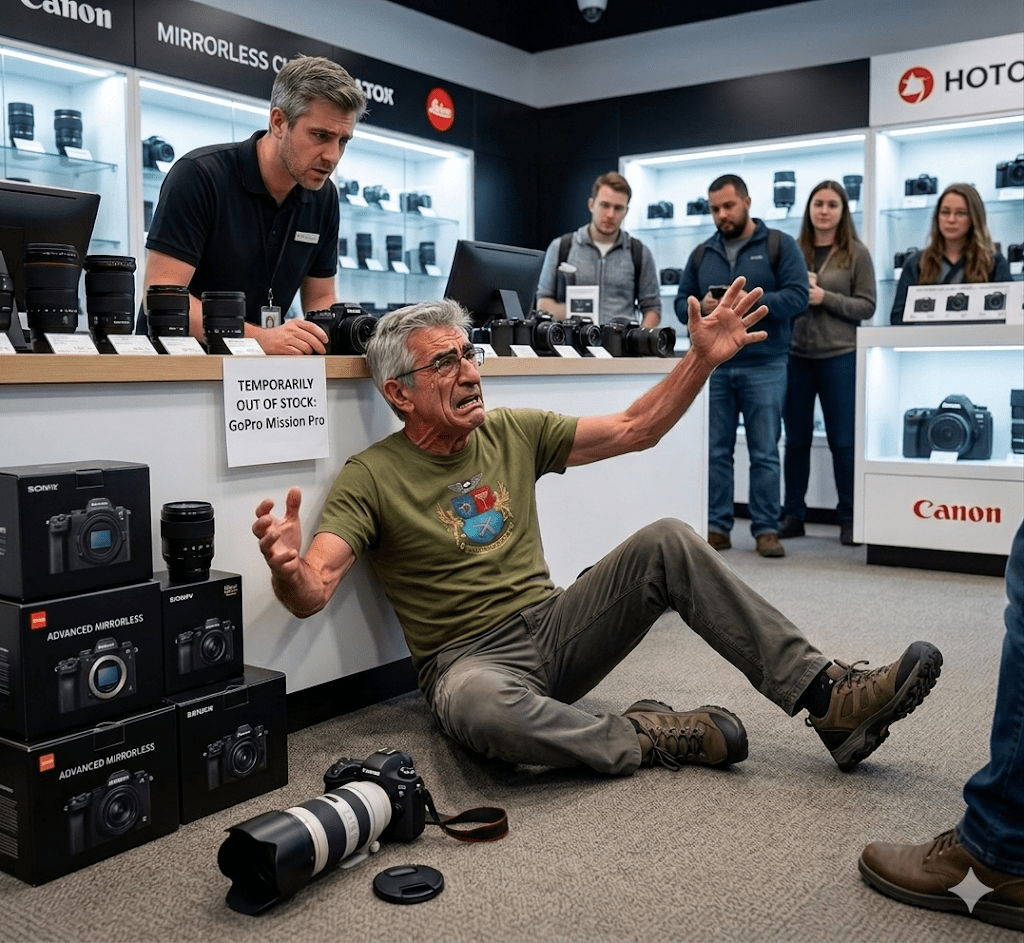
    Waahhh. I want it now!

    An older man sitting on the floor in a camera store, expressing frustration with his hands raised, surrounded by onlookers. A sign reads 'Temporarily Out of Stock: GoPro Mission Pro' near various camera products displayed.

    My temper tantrum worked. GoPro came to the rescue a few weeks ago, when they announced availability of a new product – the Mission 1 series of action cameras. This is a slightly larger version of the Hero product line, with a much larger sensor (1”, 50mph), a larger display screen, and many new features. That sounded interesting but not enough to get me to buy one until I noticed that there were three options for the product, a Pro model with even more features, and which also included a “grip” model. This was a casing that the camera fit into, which basically created a point-and-shoot camera. Bingo! That pretty much covered everything I was looking for – a high-end, rugged, waterproof (up to 60’) action oriented point and shoot camera. So of course, I ordered one.

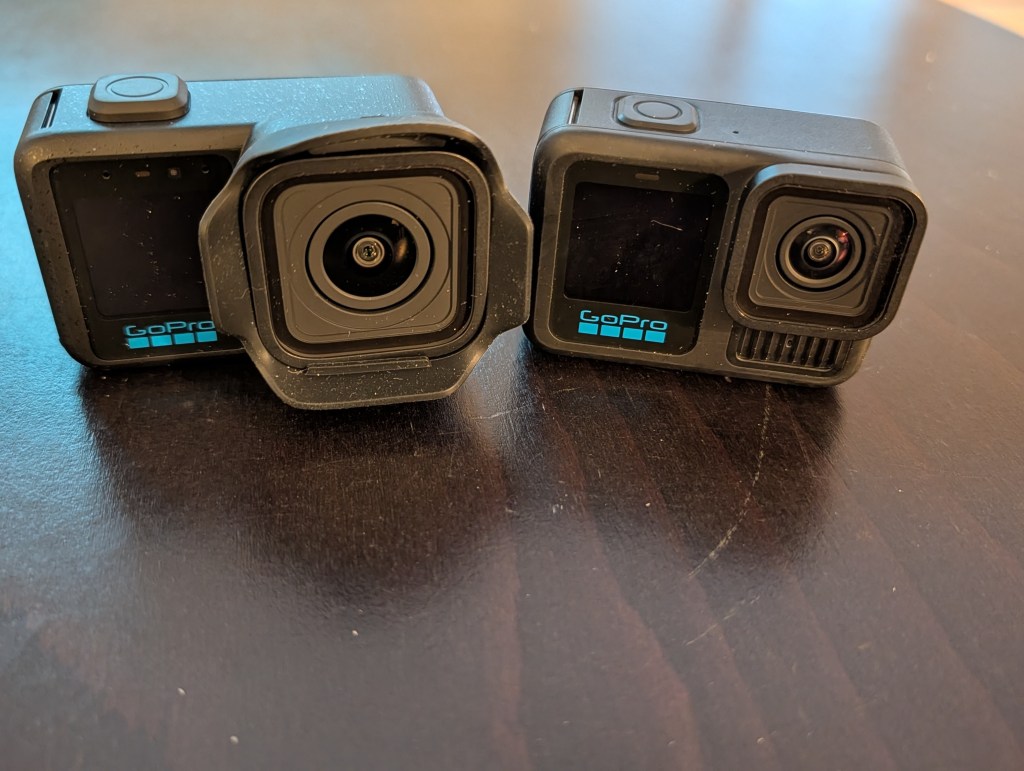
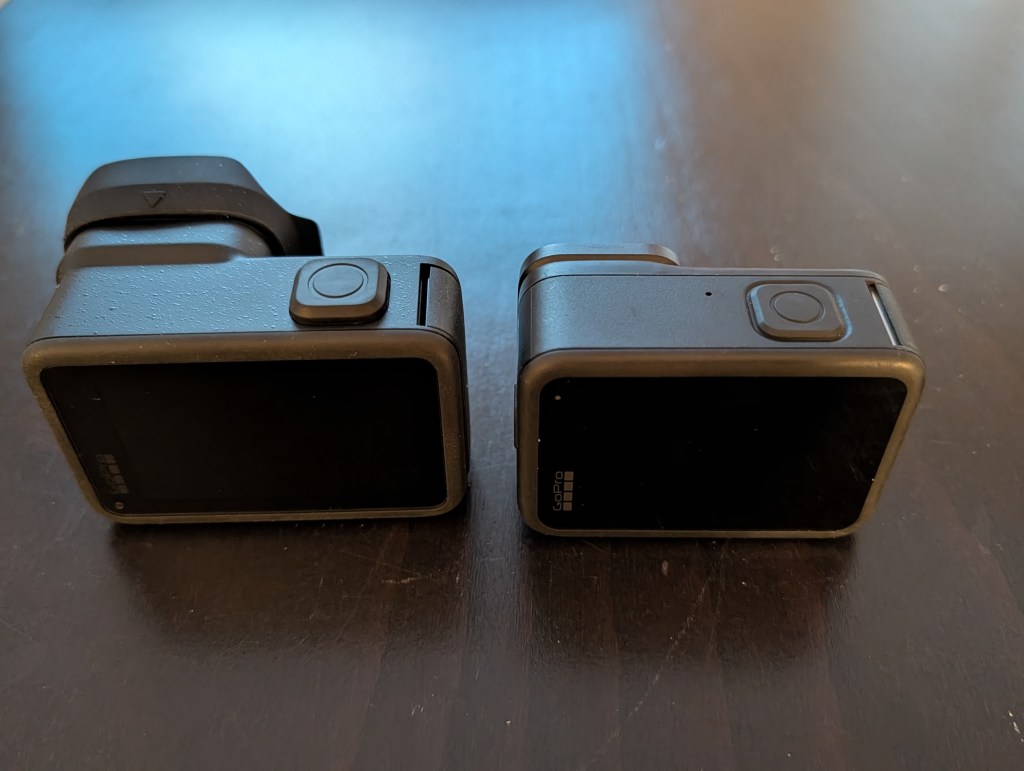
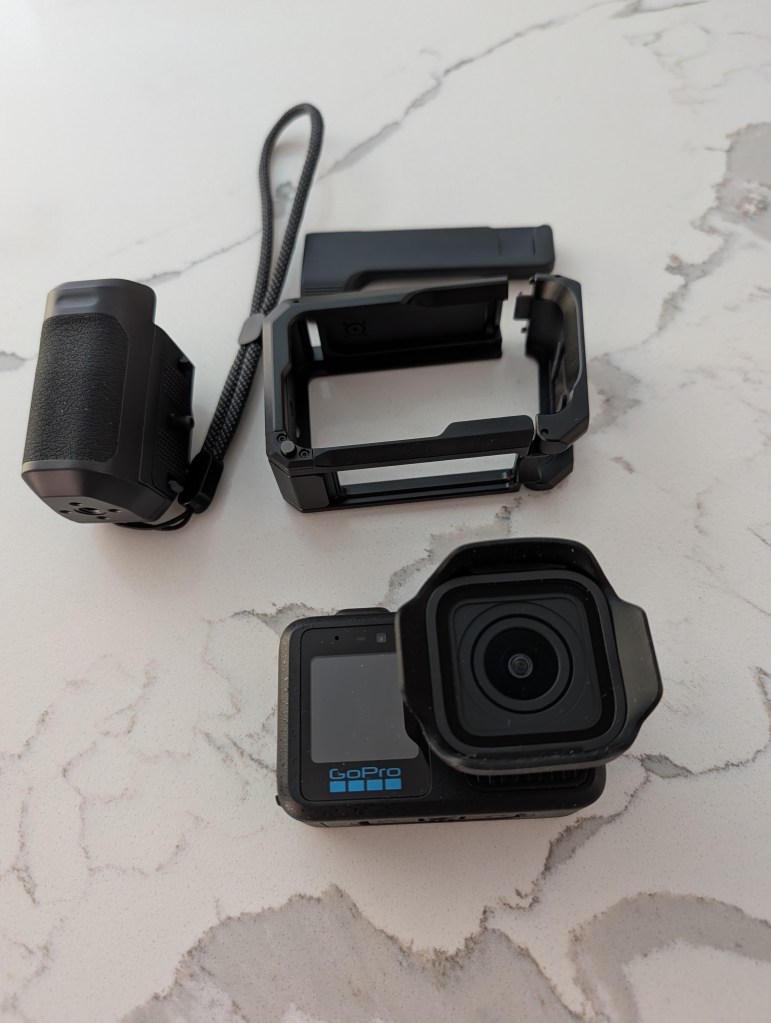
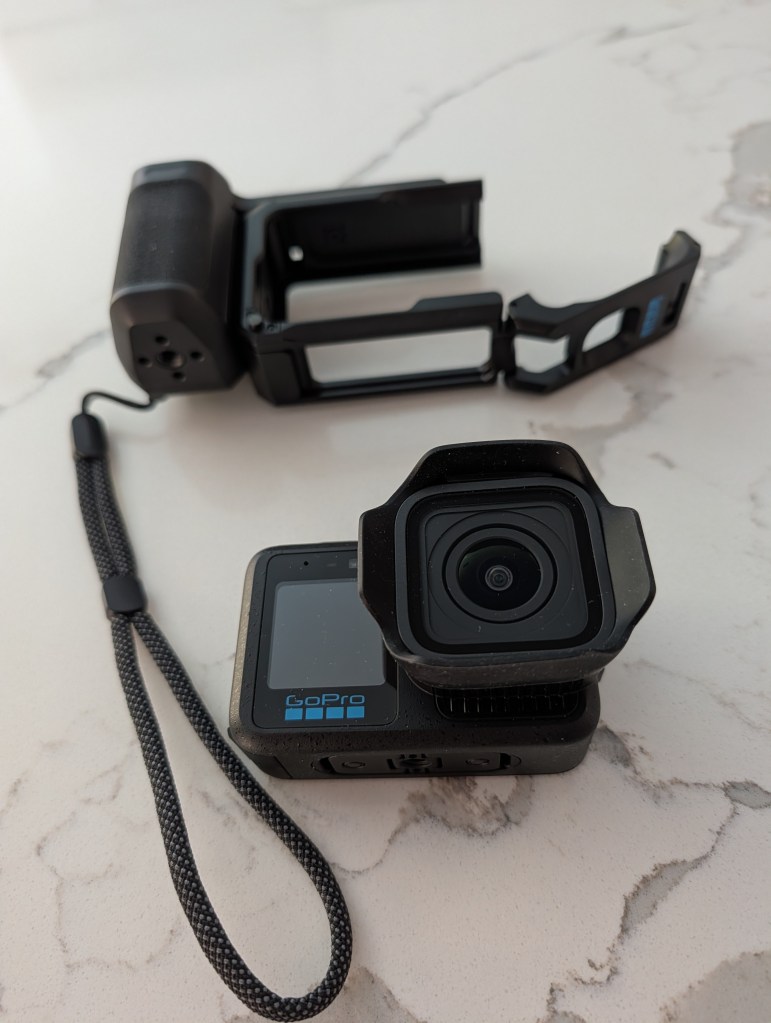
    As with most electronics, there were only limited instructions in the package. Basically, turn it on, and then follow the instructions on your phone or tablet. Better yet, I did a quick search on YouTube and found a few really comprehensive tutorials for this camera, which is amazing since it has only been out for a few weeks. It’s a very feature rich camera, with many configurations for each shooting mode (photo, video, slow-motion, low-light…). The menu is even more complex than the Hero 13, but the larger screen makes it easier to negotiate. The camera alone is a bit larger than the Hero, as you can see in the photo’s below:

    The grip frame is interesting – the camera slides in easily, and has a nice firm feel to it. Just like a “real” camera. The grip also comes apart, making for easy packing…something important for me and all my strange travels. Exactly what I was looking for. There is no view finder – you just use the live screen image on back (or front for selfies) of the camera. A true point-and-shoot.

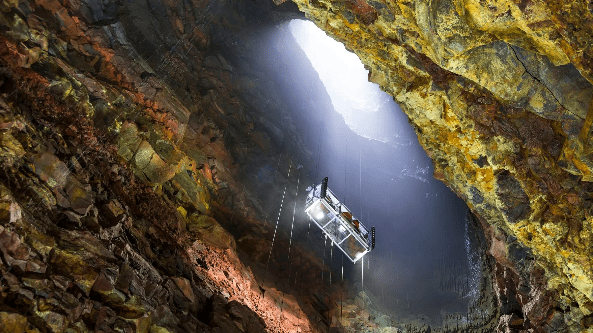
    I plan to have it configured and gain familiarity with it before I leave for Iceland. I am planning to use this in the many caves we will be touring, especially on my solo visit to the big magma chamber (Inside the Volcano) I’ve scheduled for my second day in Reykjavik. 

    A deep mine shaft illuminated by a beam of light, featuring a suspended platform surrounded by rocky walls.

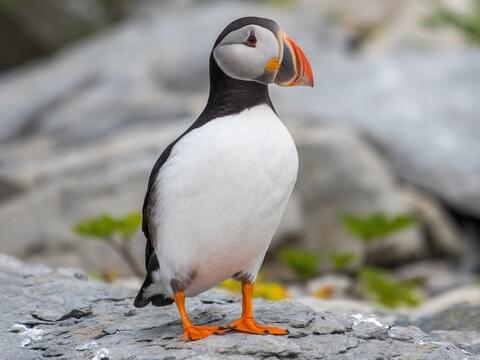
    Speaking of Iceland, I received an updated itinerary and have spent some time going through it. For once, I thought it might be a good idea to be a little prepared for what lies ahead. This should be a crazy trip. My first two days are on my own, and I’m doing a whale/puffin tour from the Reykjavik harbor the morning I arrive in Iceland. The second day will be the “Inside the Volcano” tour. The day after is the start of the National Geographic tour – the other 14 people show up that day, and we head off to the Blue Lagoon for a soak in the thermal pool. There will be two more thermal pool soak opportunities on the trip. The rest of the trip wanders about Iceland by bus, visiting a bunch of well known tourist locations, and some lesser known spots as well. Many waterfalls, volcanic features, lava tubes, two small islands, geysers, many birds, and a whale watching trip. Unfortunately, they dropped my absolute favorite stop – a herring processing plant. I do like pickled herring – I was really looking forward to that. I’ll be consoled if I get to see (and photograph) some puffins. Almost as cute as Screech Owls.

    A puffin standing on a rocky surface, showcasing its black and white plumage and distinctive orange beak.
    Not my photo, I can only hope

    All the hotels have WiFi, so I may do a post or two while I’m there. Unlike the expedition cruises I’ve been on, this trip is not as adventurous – more time to relax I hope. 

    Peace