Tag: bird-photography

  • Plate Tectonics and Midges

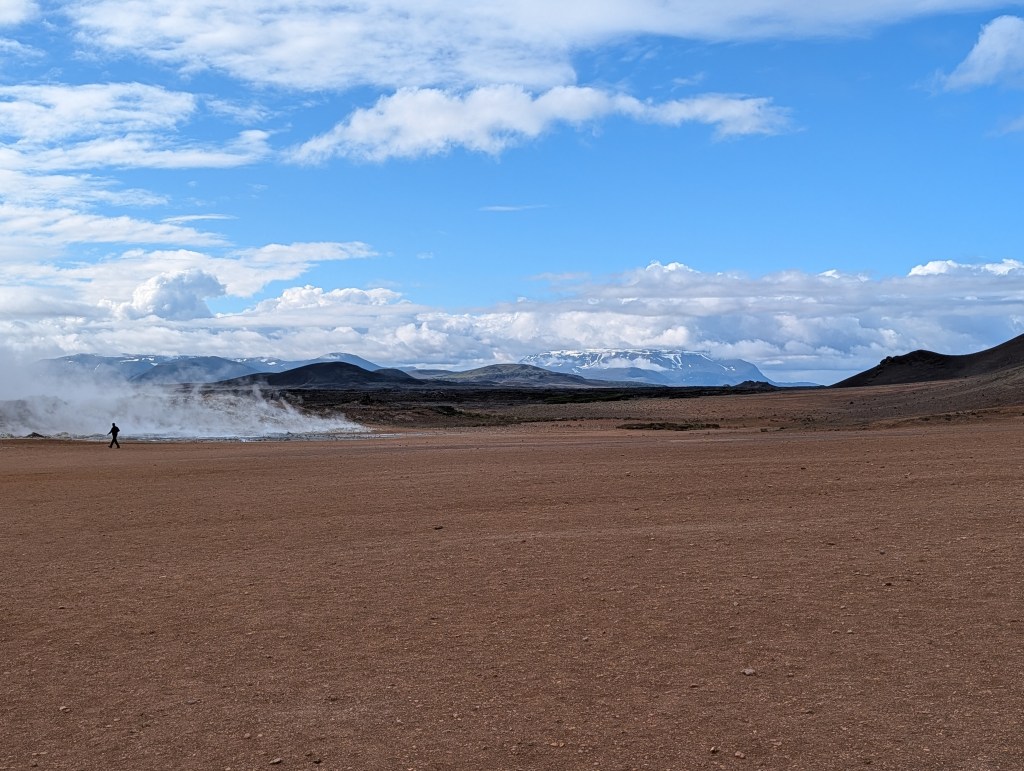
    A lone figure walking across a barren landscape with steam rising in the background, under a blue sky with scattered clouds and mountains in the distance.

    29th June, 2026

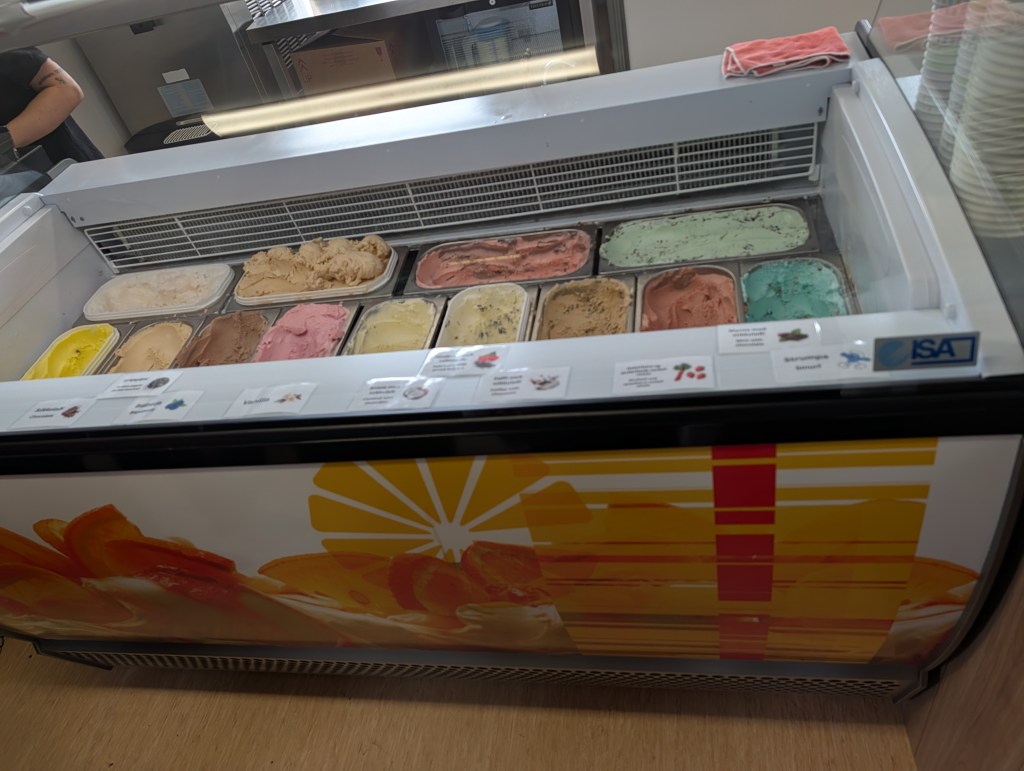
    I think the main difference between this type of trip and the NatGeo cruises that I’ve been on, is that the land based trip do not have any sea time, where you can sleep late, hang in the lounge or library reading, work on photography, or just relax and do nothing. Even the activity days have a lot of rest time in between the morning and afternoon off-ship activities. This trip, you get up, have breakfast, and you are off for the day with multiple stops, a break for lunch, then back in the bus. I’m on day ten, and I’m running on vapors. But at least we had an ice cream stop today – that always helps. One scoop of vanilla and one of banana crunch. Yum!

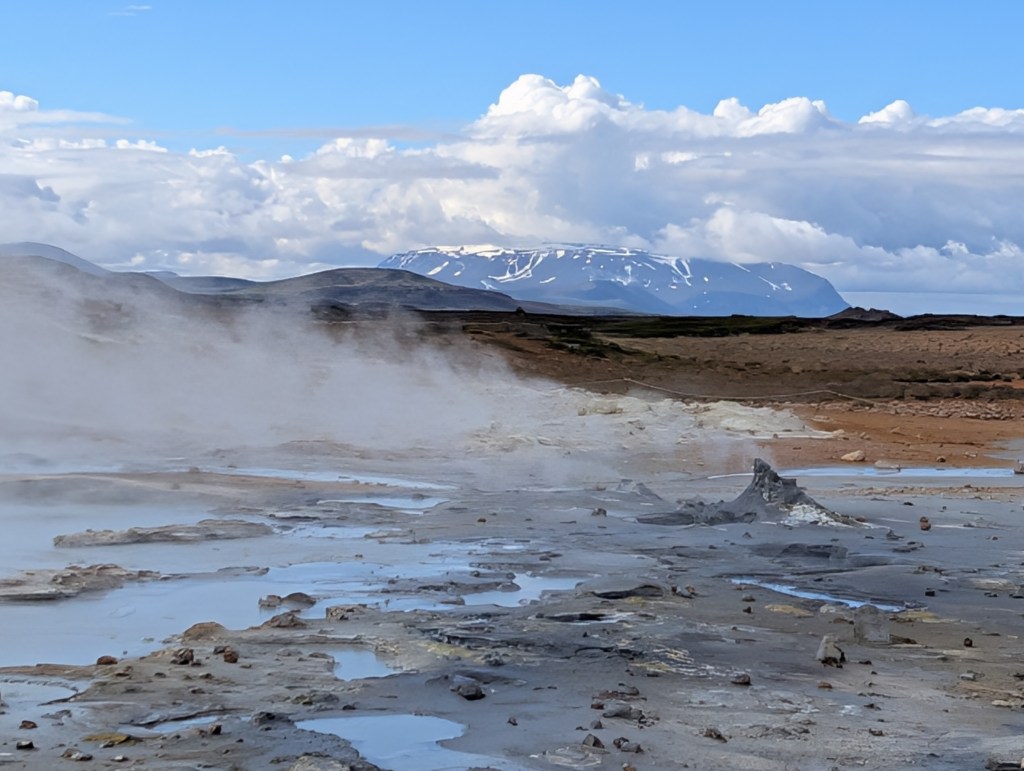
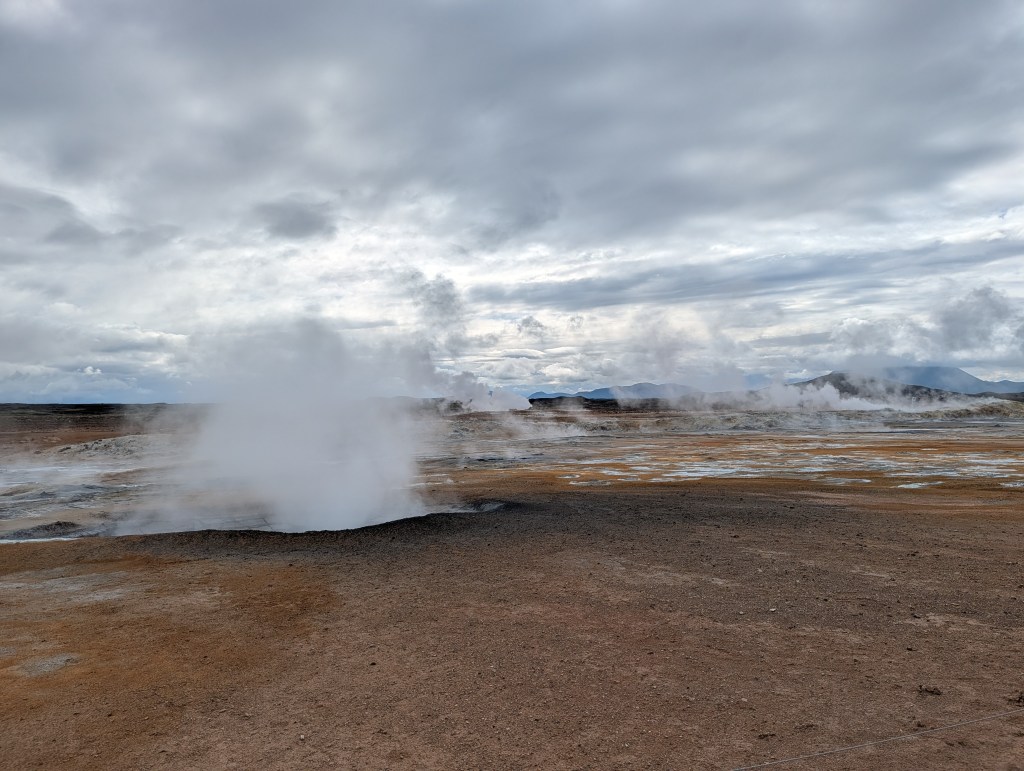
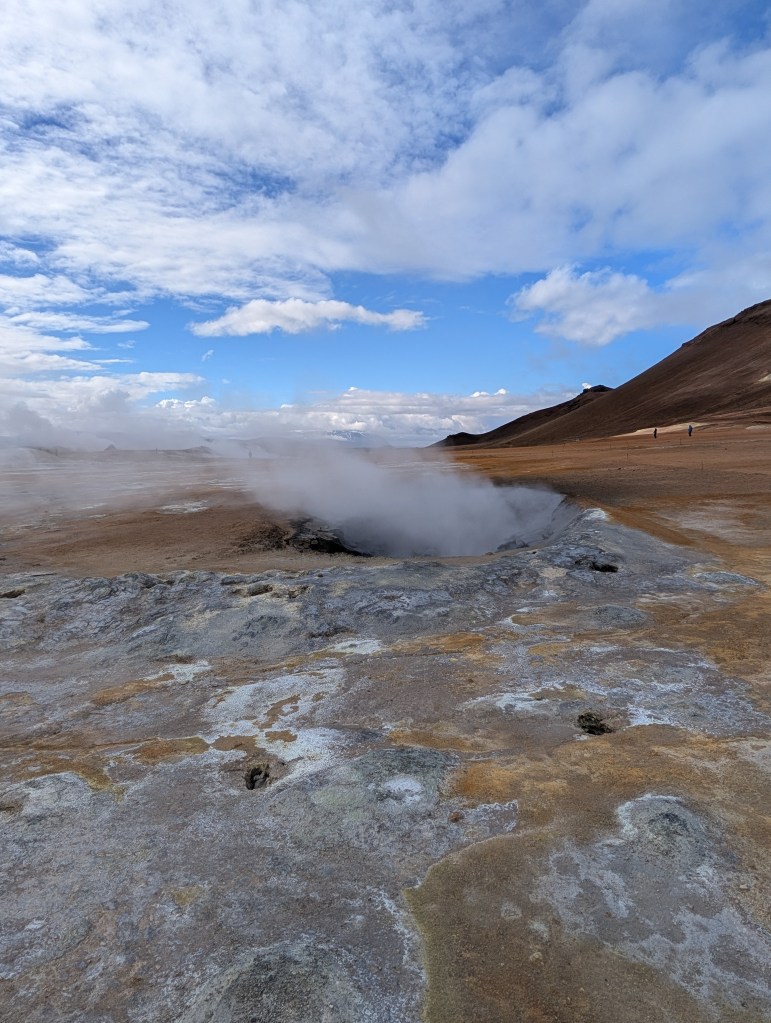
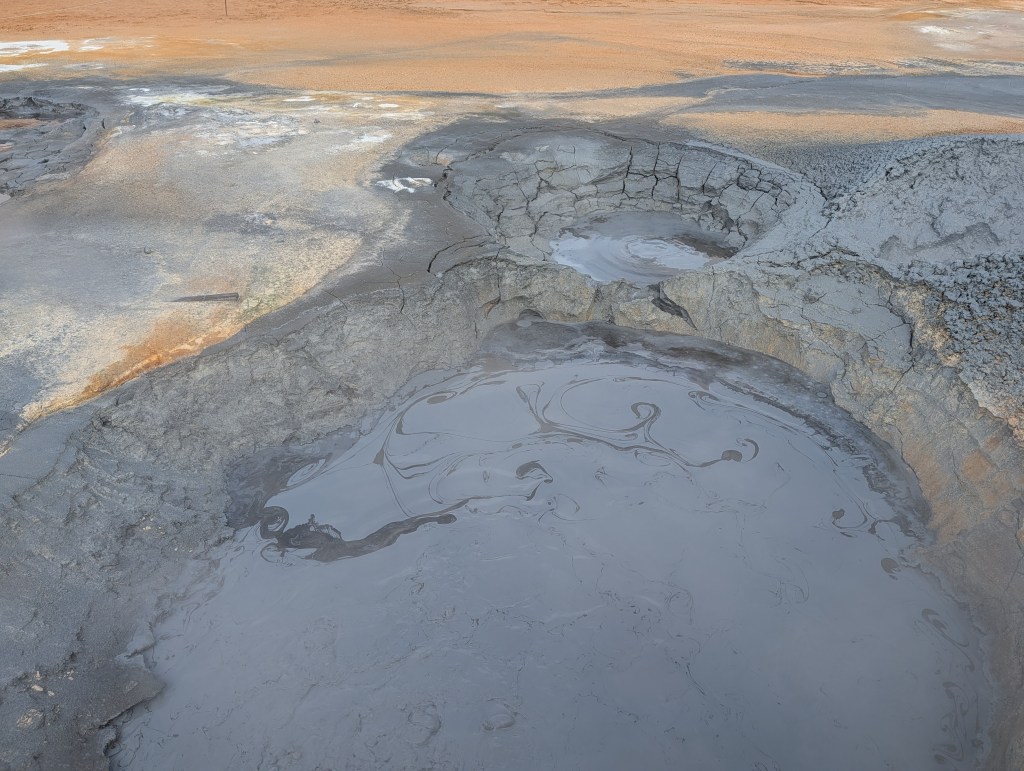
    Today was a hiking day, amid some really interesting volcanic and rift related landscapes. First off was a walk-about at an area with a high degree of geothermal activity – Hverir Geothermal Area. There were lots of stinky, bubbly pools and a lot of smelly steam. Similar to some parts of Yellowstone. Another place where you do not touch the really hot water unless your are missing a few cylinders. This area has had recent volcanic activity, and has a major geothermal plant, with pipes and wells all over the mountain pass. 
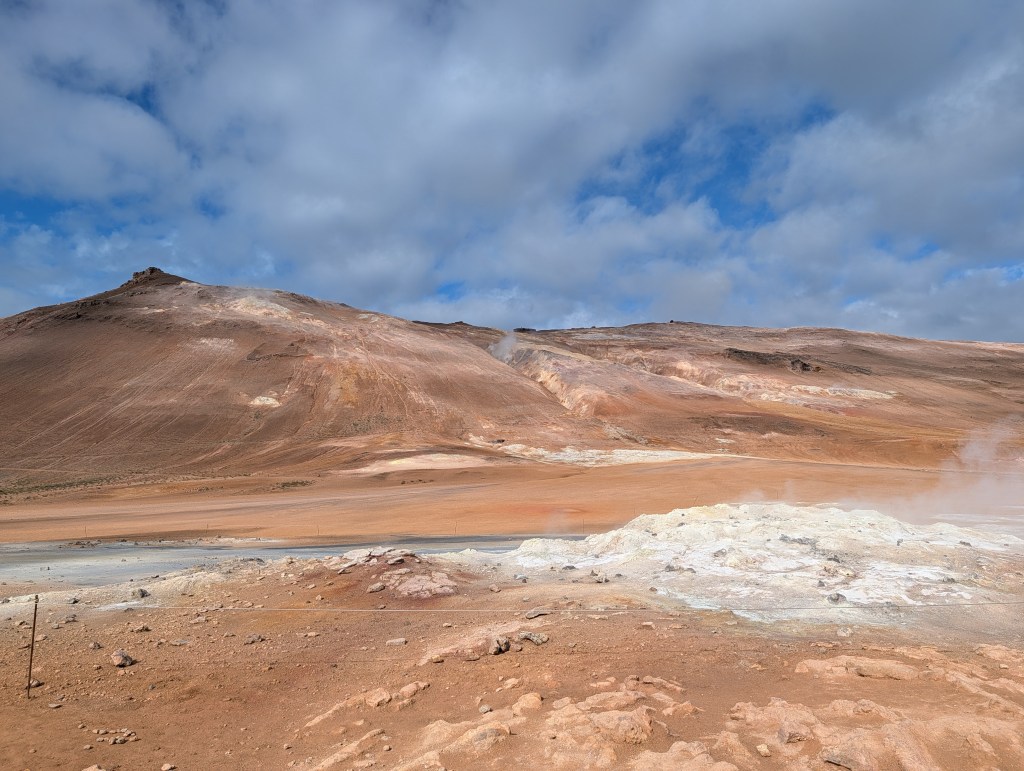
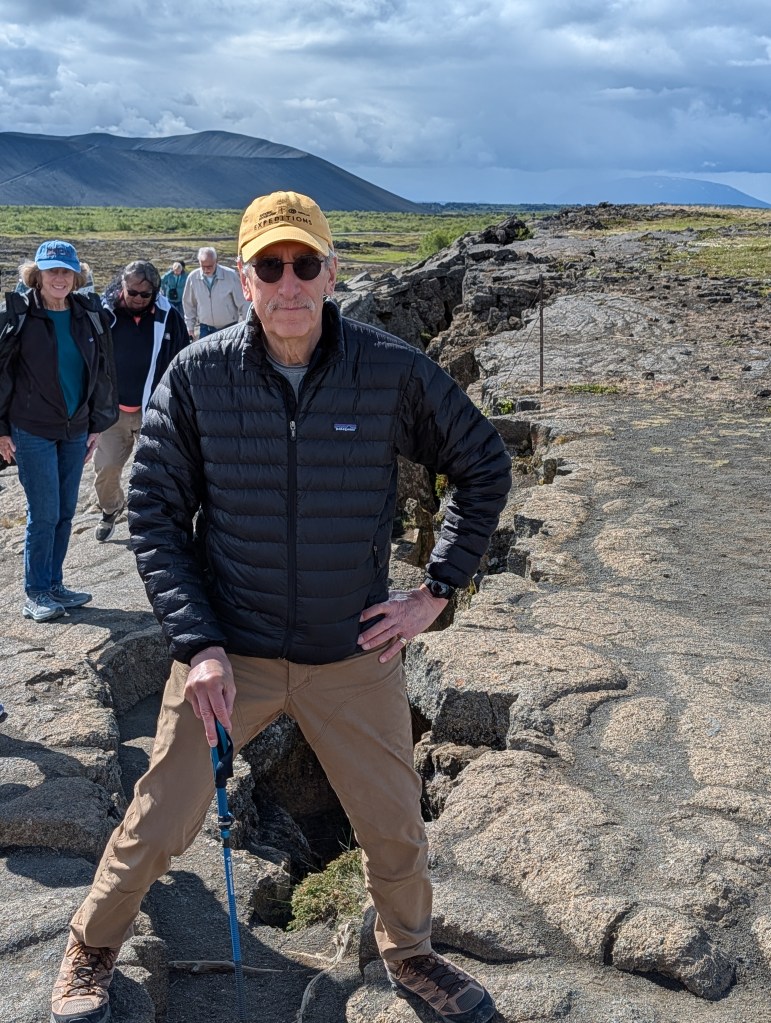
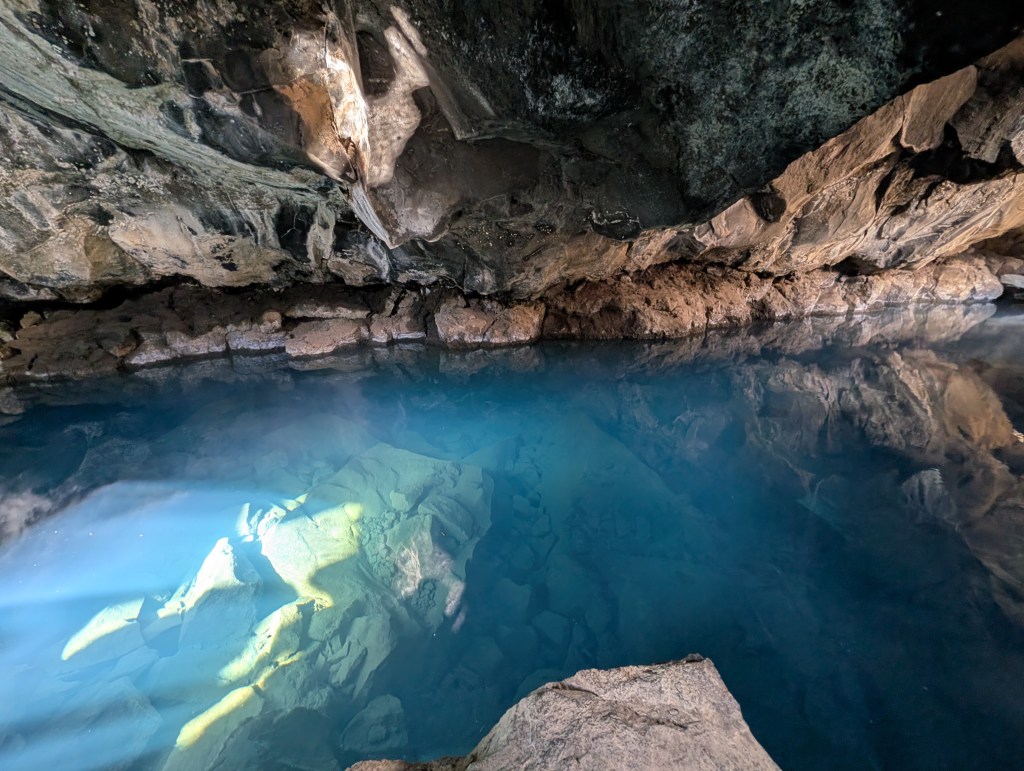
    Next up was a stop at a beautiful underground pool, which was along the actual rift zone (Grjotagja) – there is a large crack where the two plates are separating, so you can stand with one foot on the North American Plate, and the other on the European Plate. Really, I’m not making this up. This region has had a lot of activity along this rift, and the crack can be seen in a number of places. The pool at one time was a popular bathing spot – it’s a little tricky getting down to it, but worth the risk of falling into the water. 
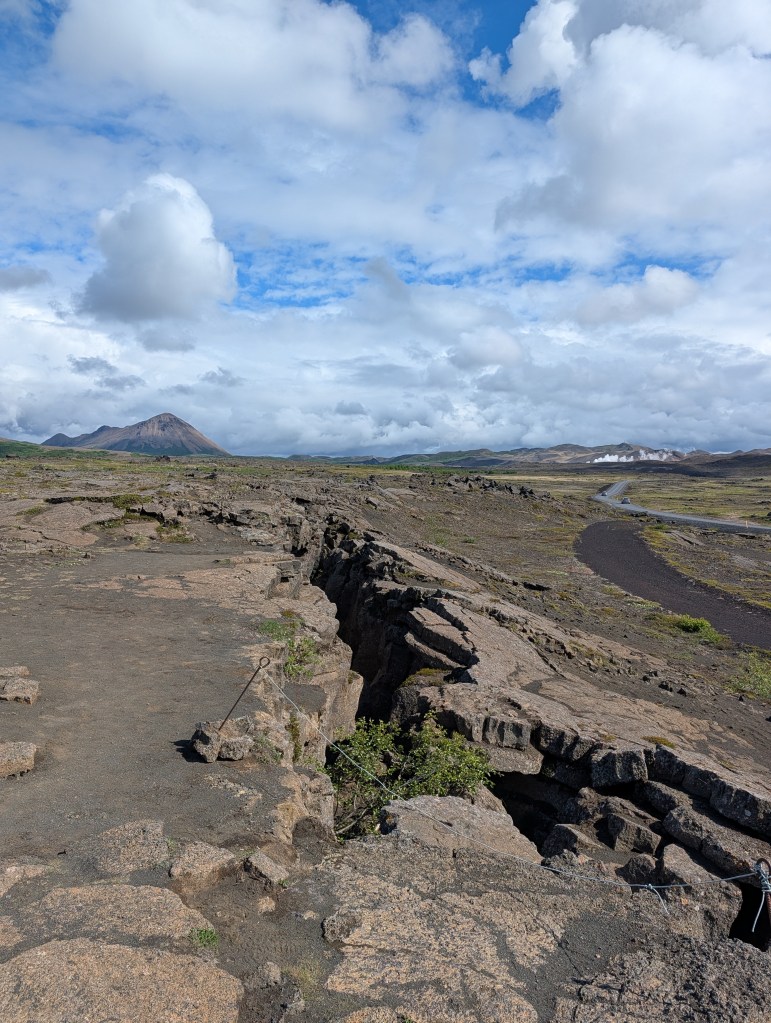
    That’s me straddling the rift zone. Impressive. The crack, not me.

    From there, we took a hike up the remains of a volcano, to see the blue lake in the large crater, created when the volcano blew its top. Something I do not want to ever witness close up. As Jimmy Buffet put it, “I don’t know where I’m gonna go when the volcano blow”.
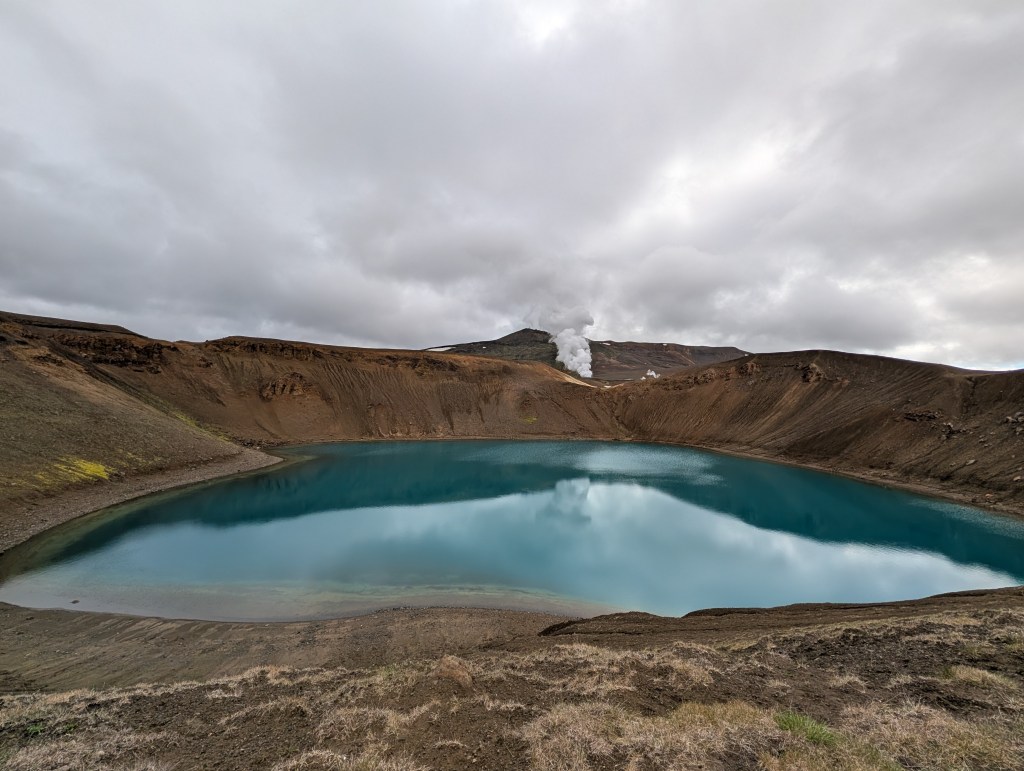
    A serene volcanic crater lake with turquoise water surrounded by brown hills and overcast skies. Steam rises from a distant geothermal area in the background.

    As you can tell, this day so far was all about geology. It’s hard to avoid in Iceland. We had really good weather to this point – the sun was out, temperature relatively warm and not much wind. That’s both a blessing and a curse. In this region, there are swarms of small midges and when the wind dies, they are all over you – all openings on your face are fair game for them. It’s hard not to inhale them. The only thing that helps are head nets, which some of us had. By the time this day was over, we were all wearing one. Most of the food stops sell them. You are still surrounded by clouds of the darn things, but at least they are not crawling in your ears and nose. 

    After the crater hike, we headed off to lunch which also happened to be at the start of our longest hike of the day. The restaurant was packed – there were a few cruise ships docked in Akureyri, including a NatGeo/Lindblad ship. We had already seen a bunch of passengers, all wearing the same blue parka. We felt under dressed for the day. The restaurant was also strange about restroom use – you had to pay, or have lunch there, More on that in a bit.

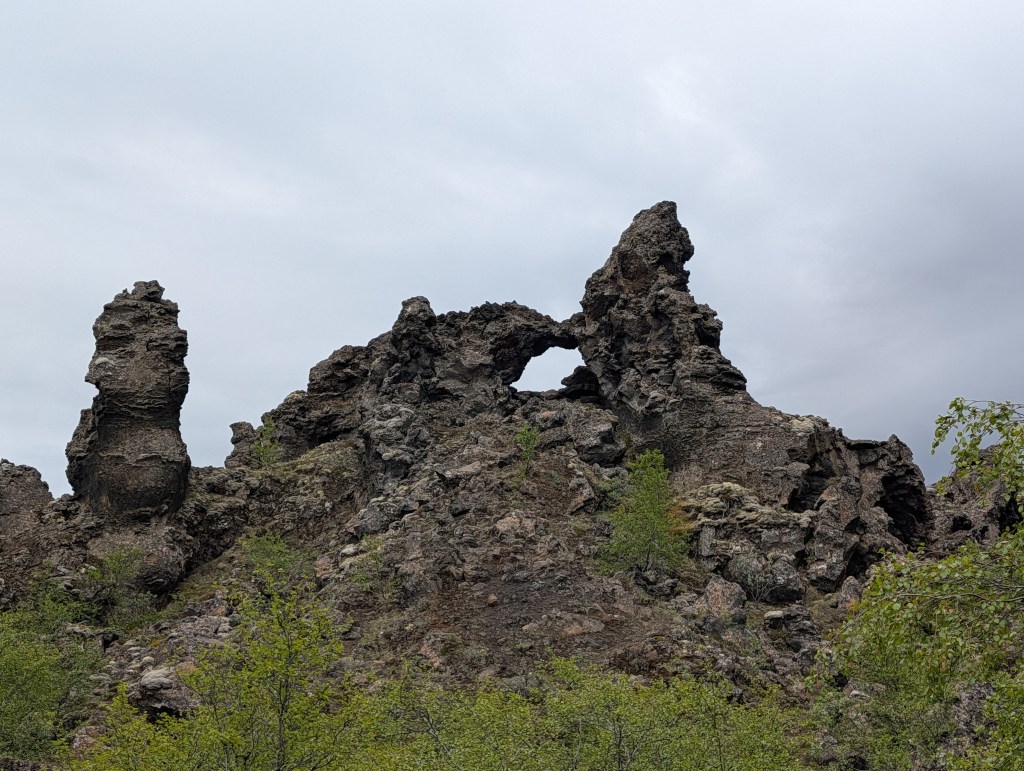
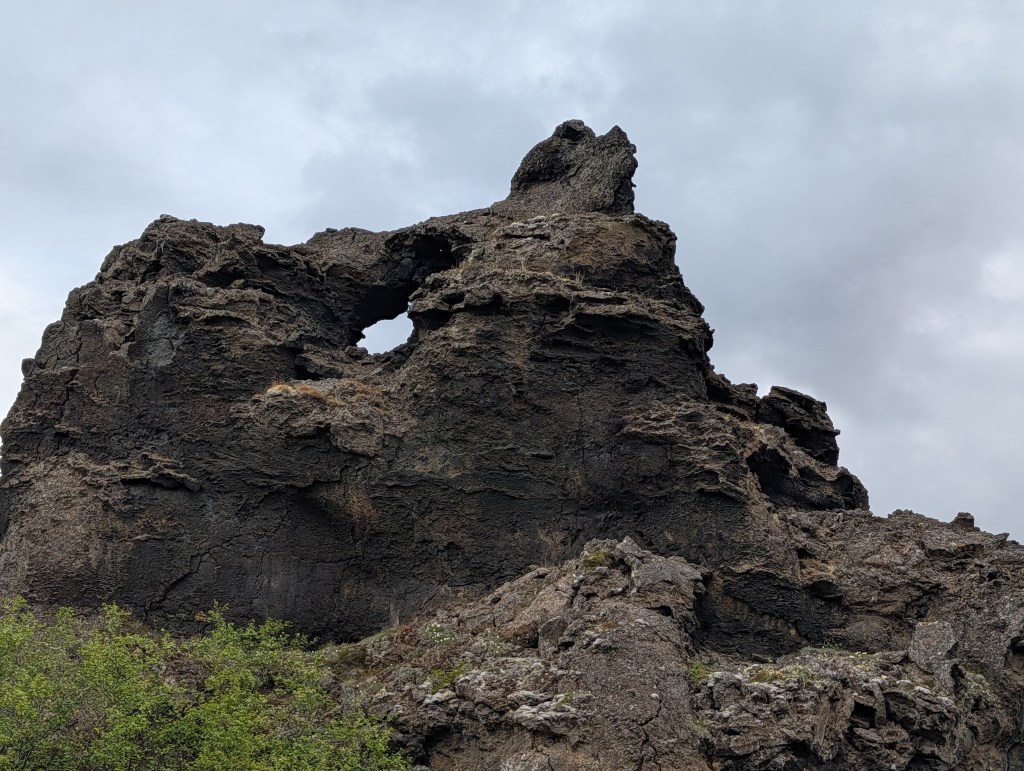
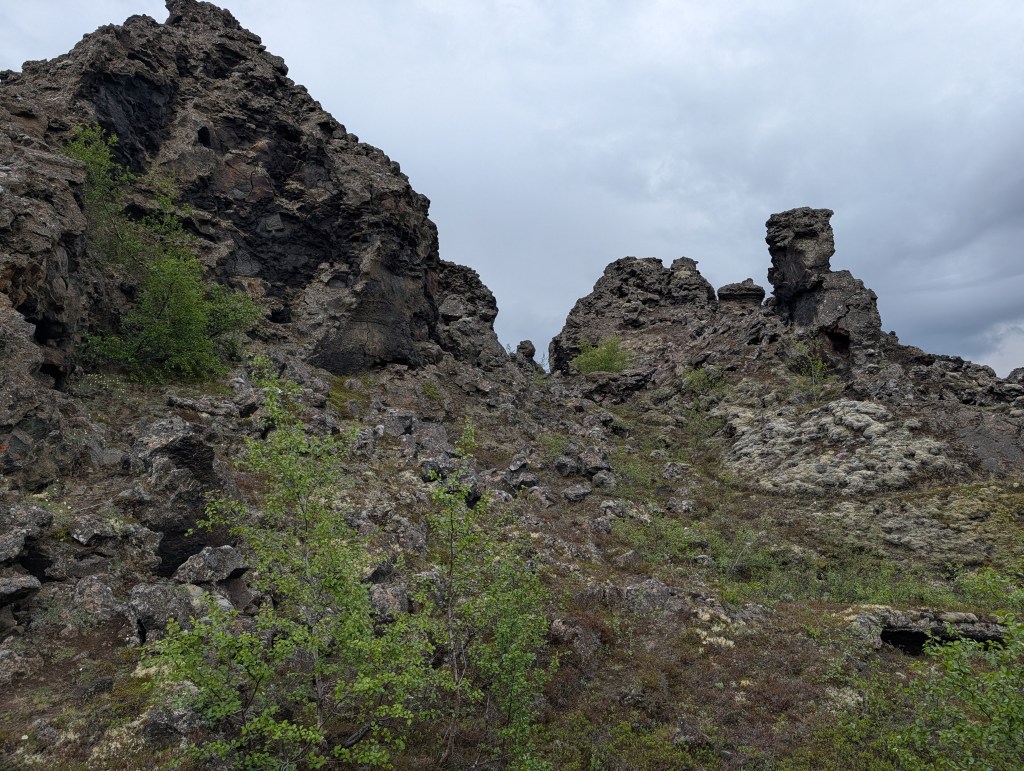
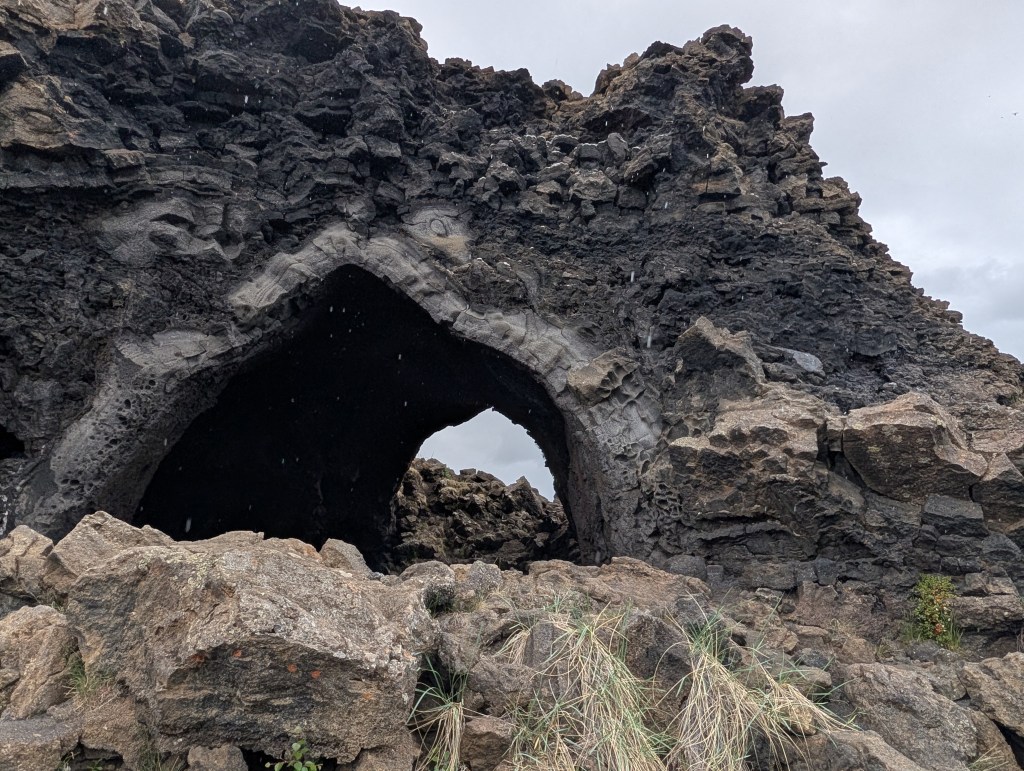
    After lunch, we set off on our 2+km hike through Dimmoborgir, a very weird park with a set of trails which wind through some very bizarre volcanic structures. I won’t bore you with the geology – there are strange towers of basalt, many with holes large enough to walk through. It’s an absolute maze which would be easy to get lost in, but fortunately, the signage is excellent, and points you back to the parking lot. The hike was long enough to feel like it would never end. Fortunately it did. And it was fortunate for some of us that we made it back to the WC’s at the restaurant with time to spare. 
    There was a pretty bird, singing away as we neared the end of the trail. I snapped a few before setting my speed record back to the restaurant.
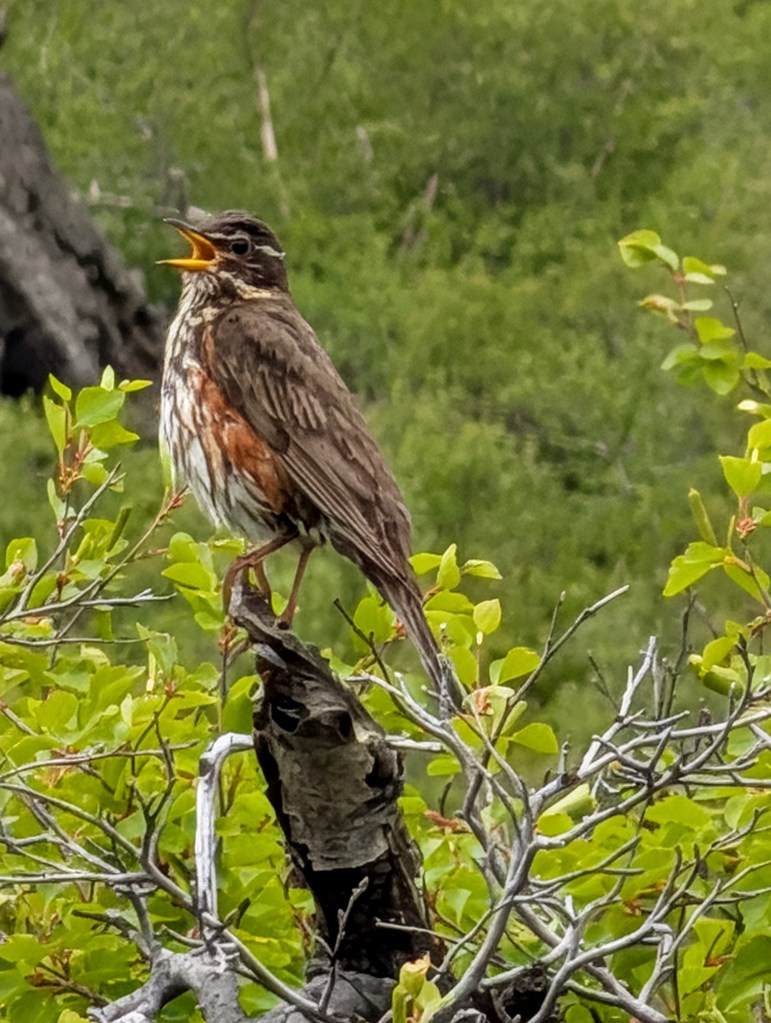
    A bird perched on a branch, singing with its beak open, surrounded by green foliage.

    I was pretty pooped at the end of this little activity and it was still early afternoon. This is where a “sea day” would have come in handy. There were only two more stops to go and I was bound and determined to not sit these out in the bus. The next one was to view, and hike of course, a series of volcanic craters near the South edge of Myvatn – the hike was fairly easy, and scenery was fantastic. The craters reminded me of the Civil War crater at Petersburg National Battlefield. But bigger, and created by nature, not by war. This is where the ice cream stop occurred. My outlook on life improved markedly after the break. It was difficult eating ice cream without ingesting midges – unwanted protein. I found a free corner in the ice cream shop to lean against, and enjoyed the ice cream midge-free.
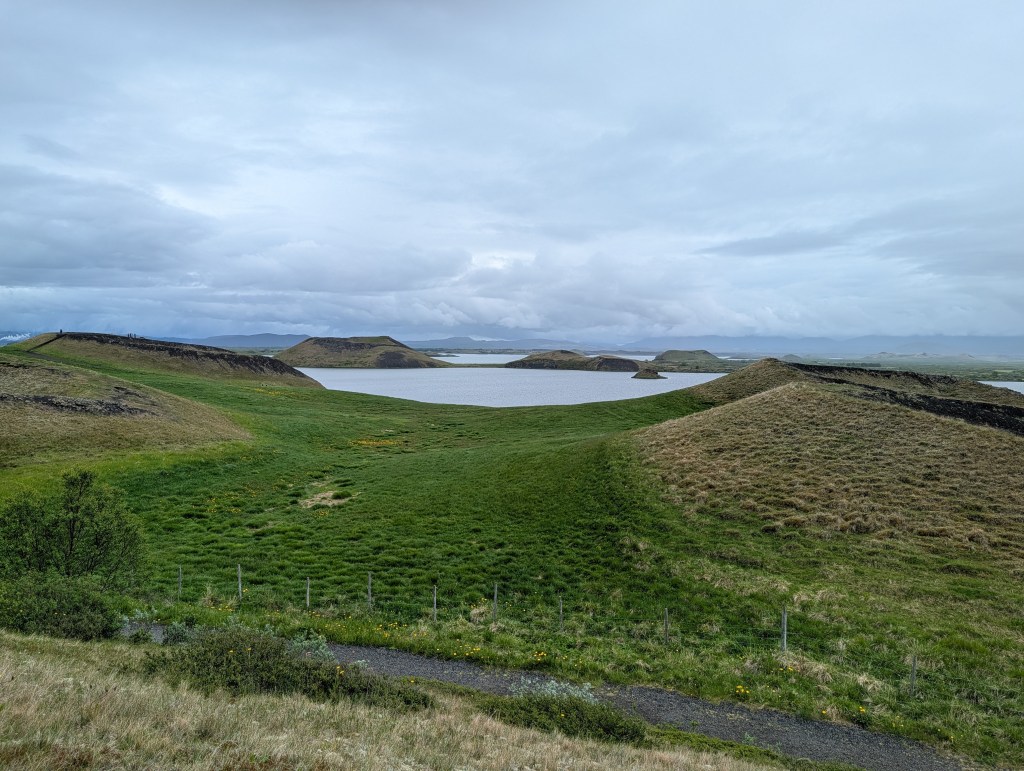
    The very last stop was for some birding along the lake, not too far from our hotel. A short walk on an easy trail – not a lot of birds, but I did get a few nice shots.
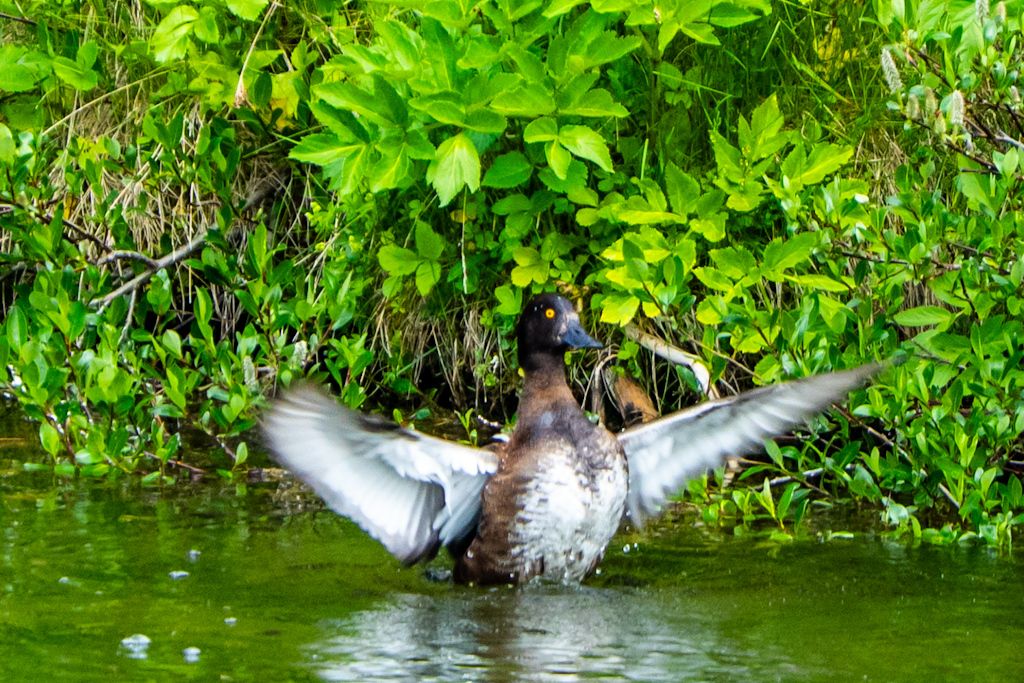
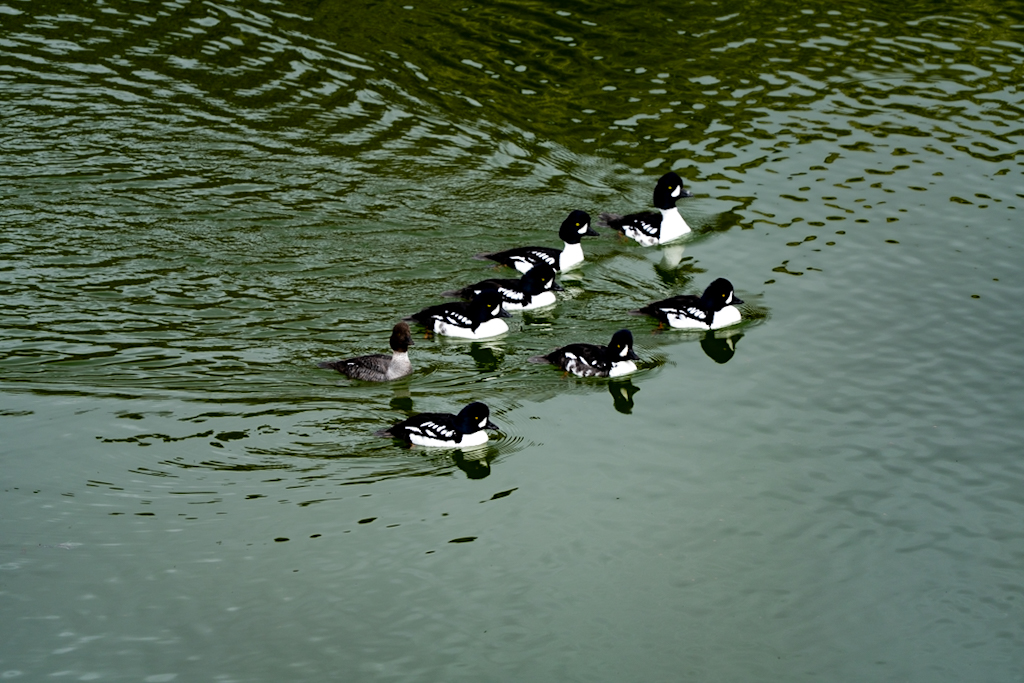
    That was it – 13K steps and about 5.5 miles of walking. I was ready for a nap. I’ve given up on processing photos from the two cameras and phone. I’m doing enough for initial posts to the blog, but any serious sorting and curation will have to wait until I get home. I’ll do a ‘best of’ post once I get settled in.

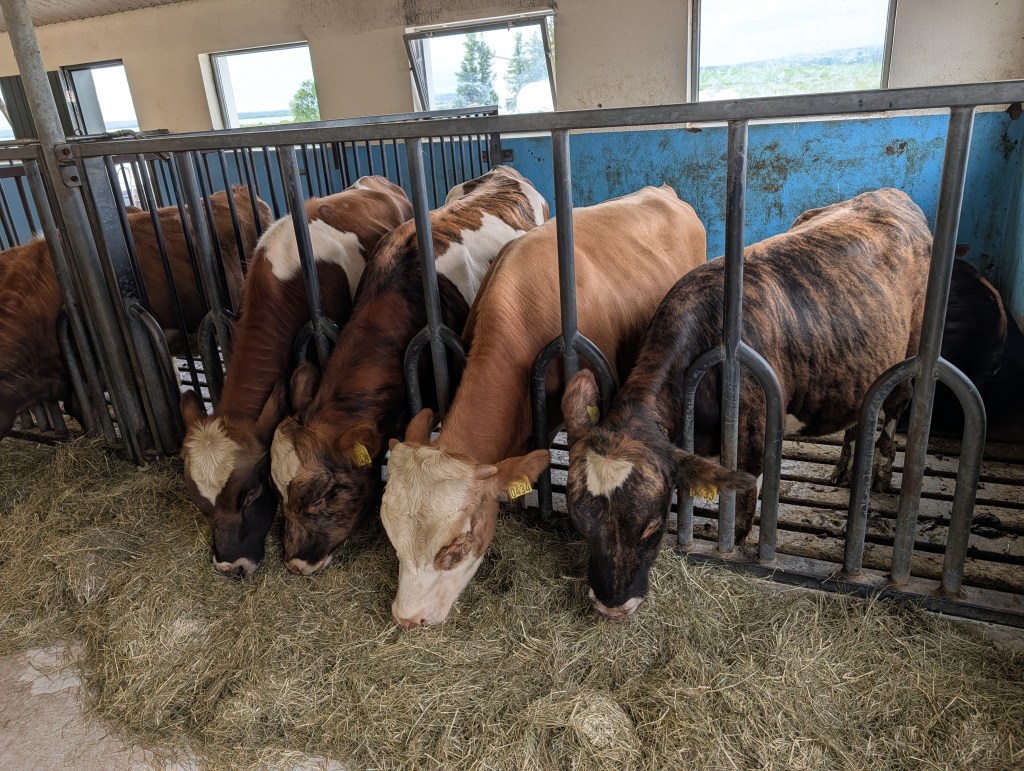
    We did have an interesting dinner later in the evening, at a working farm a short distance from the hotel. The dining area has windows into the barn, so you can see the cows as they are fed and milked. Our table was right next to the windows, and I thought it would be interesting to face the cows while we had our dinner. I did not notice that we were facing the rear ends of the cows in their stalls. That was a very big mistake. You can probably guess why. I did not take any pictures other than this one. Ick. I just focused on my plate.
    Peace.
  • A Birds of Prey Photo Workshop

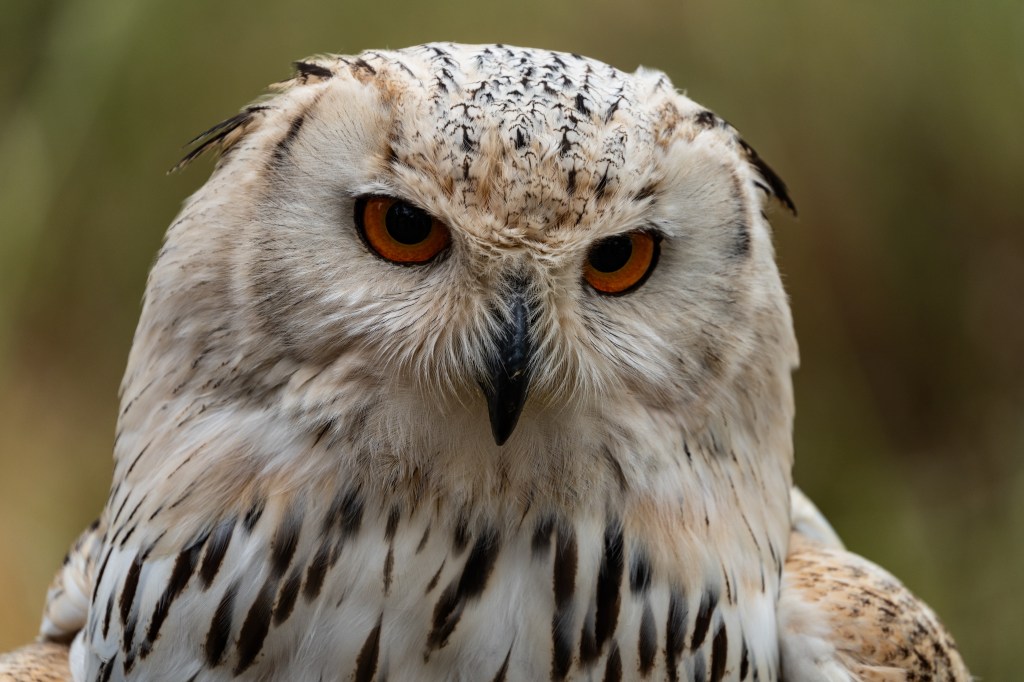
    Close-up of a snowy owl with striking orange eyes and detailed feather patterns, set against a blurred green background.

    May 30th, 2026

    A few months ago, I had signed up for a three part workshop on photographing birds of prey (eagles, hawks, owls, etc) through a local camera store (Mike’s Camera). Part 1 was a live class (on Zoom) with an instructor who specializes in bird photography, followed up by a photo session at a local falconry organization – four hours photographing a variety of birds which were either rescued and rehabilitated, or were raised specifically for falconry. The last part of the worksho was another session with the instructor, to review our best images from the photo shoot. 

    The initial class was great – I learned quite a bit on the best camera settings for photographing birds in flight ( I have to stop using “shooting”, especially with animals and of course, people) as well as some features of my Sony A7R which I had not used yet. The live photo session was orignally scheduled for the following week, but was rained out – the birds don’t particularly enjoy flying in heavy rain, nor do any of the attendees want to stand out in the rain with their expensive gear. The session was rescheduled to May 29…yesterday. And it was worth the wait. 

    West Coast Falconry

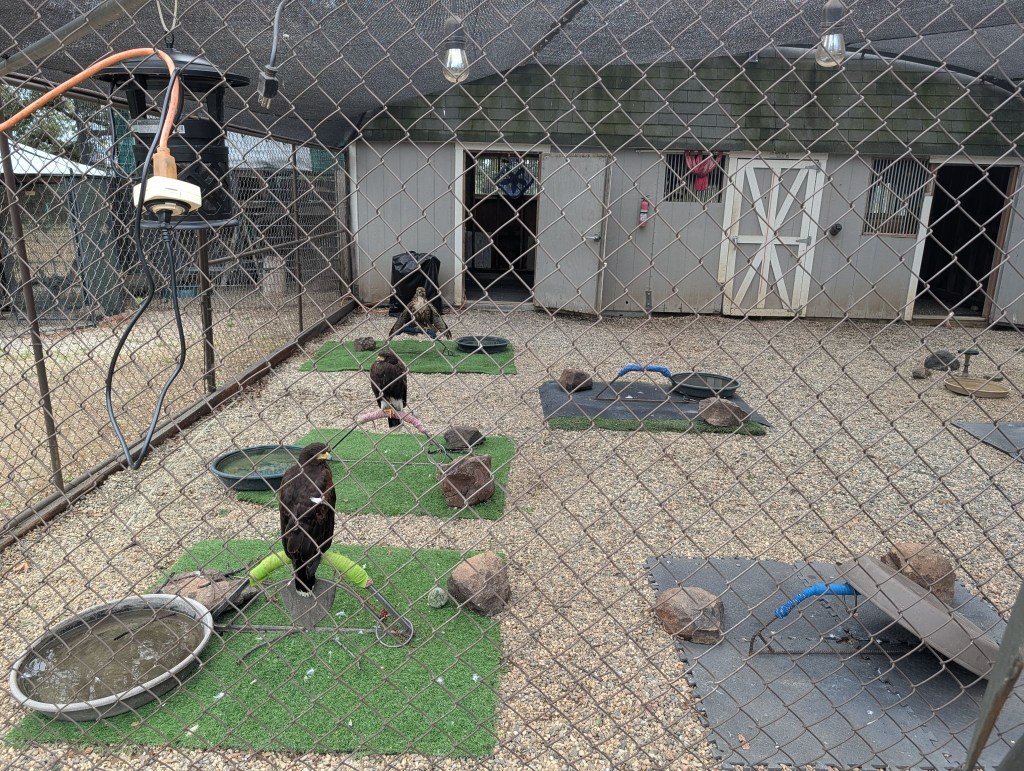
    A fenced enclosure containing several birds of prey, including hawks, sitting on platforms covered with artificial grass and rocks. Water dishes are placed around the area, and a building with multiple doors is visible in the background.
    Bird pen with a bunch of hawks hanging around

    The falconry facility is located in the foothills east of Marysville, an hour or so drive north of Sacramento. Their website describes the organization as “a resource for a full range of hands-on raptor and falconry classes and services”, which includes educational opportunities to learn about the birds and falconry as well as workshops for photography groups. They are located in a beautiful wooded, hilly area, and have a variety of hawks, falcons and owls, all of which are well fed and maintained by the owner and staff. Some of these are rescue birds, some raised for falconry, and a few wild birds as well. The handlers are all experienced falconers, and manage the workshops so that the birds are never stressed or overworked. It’s all about the birds at this place. It takes a lot of time and patience to work with these wild creatures, and the handlers have gained the trust of the birds. That’s a good thing – the big birds have extremely large, sharp talons and can tear their prey apart with their beaks. Handle with care.

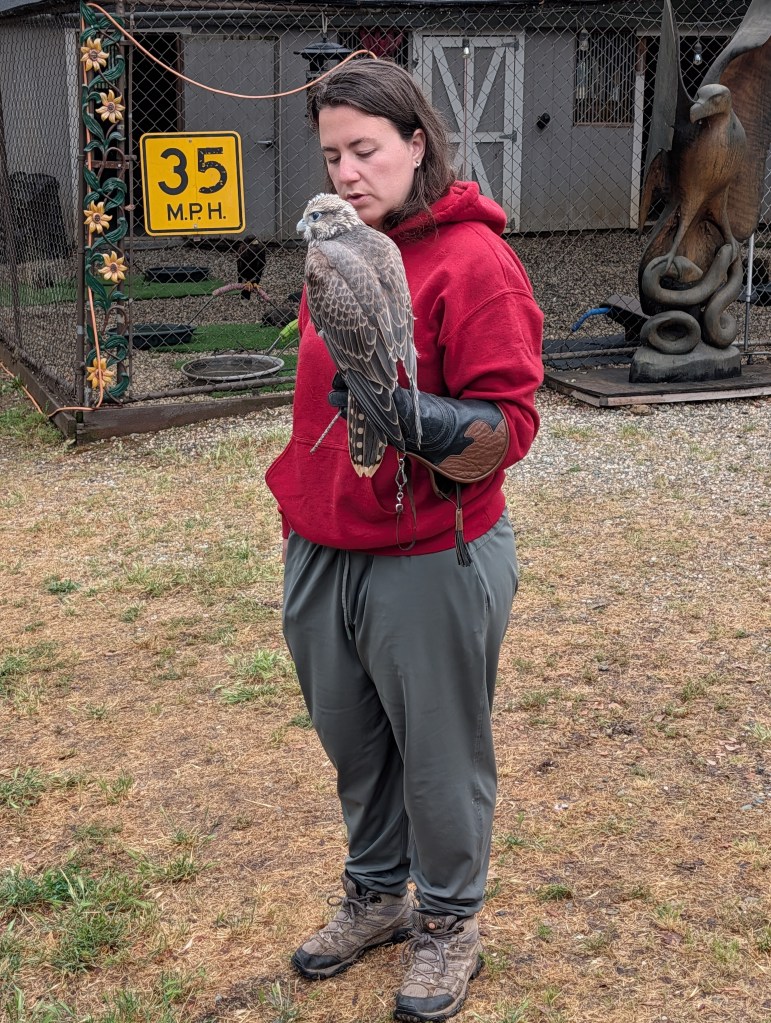
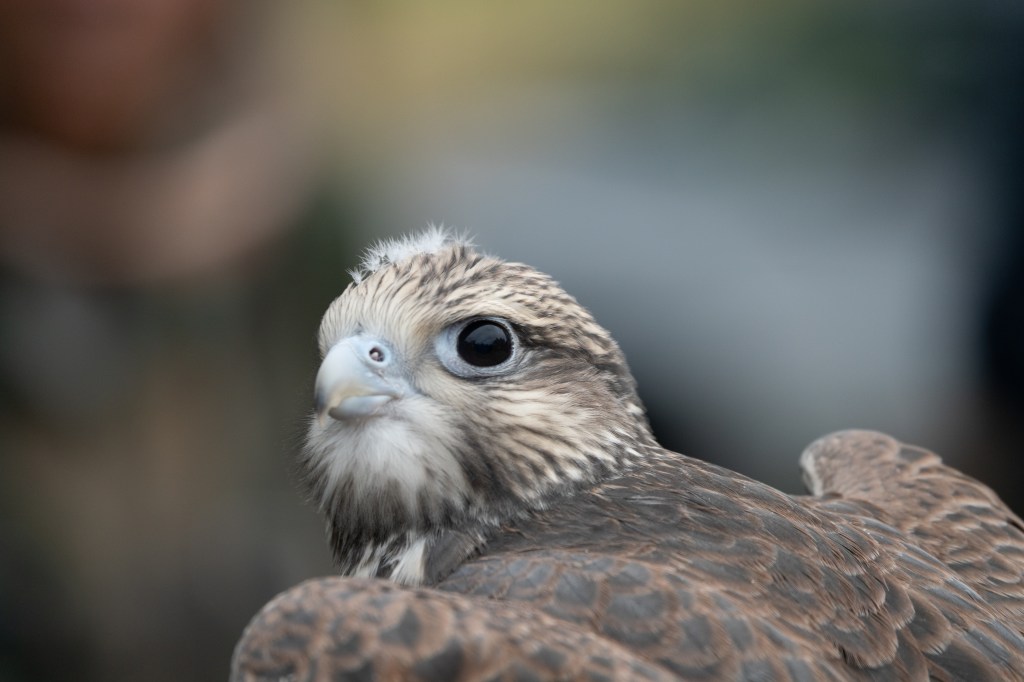
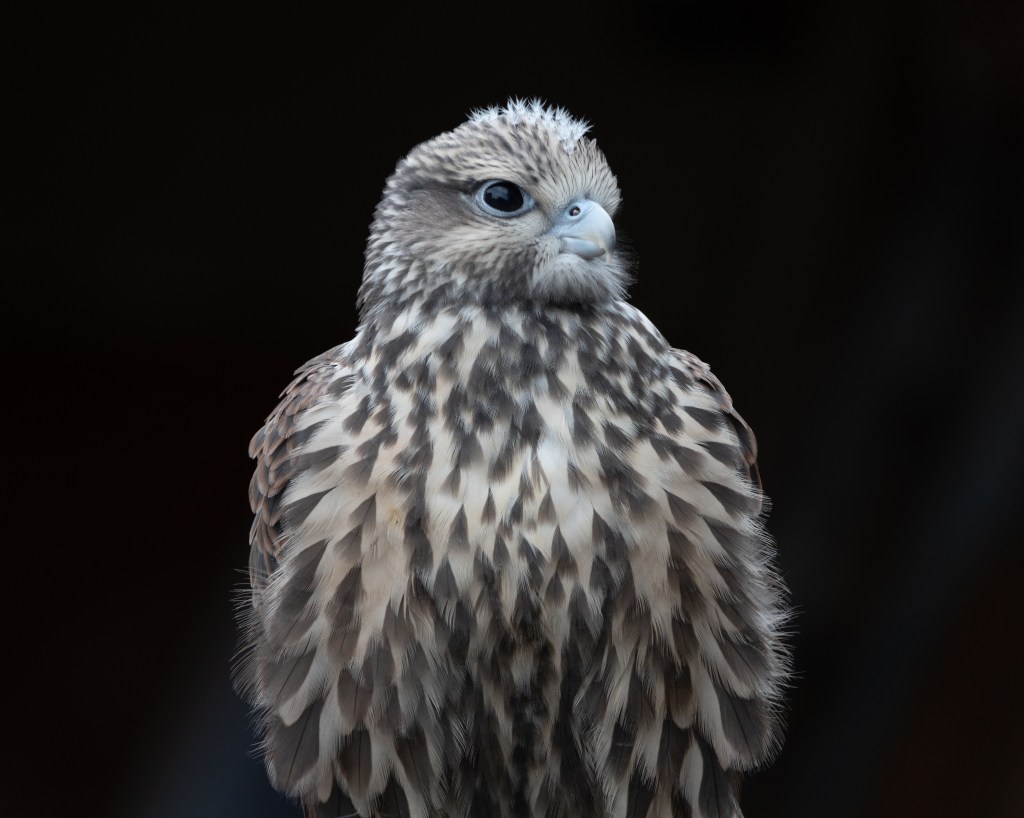
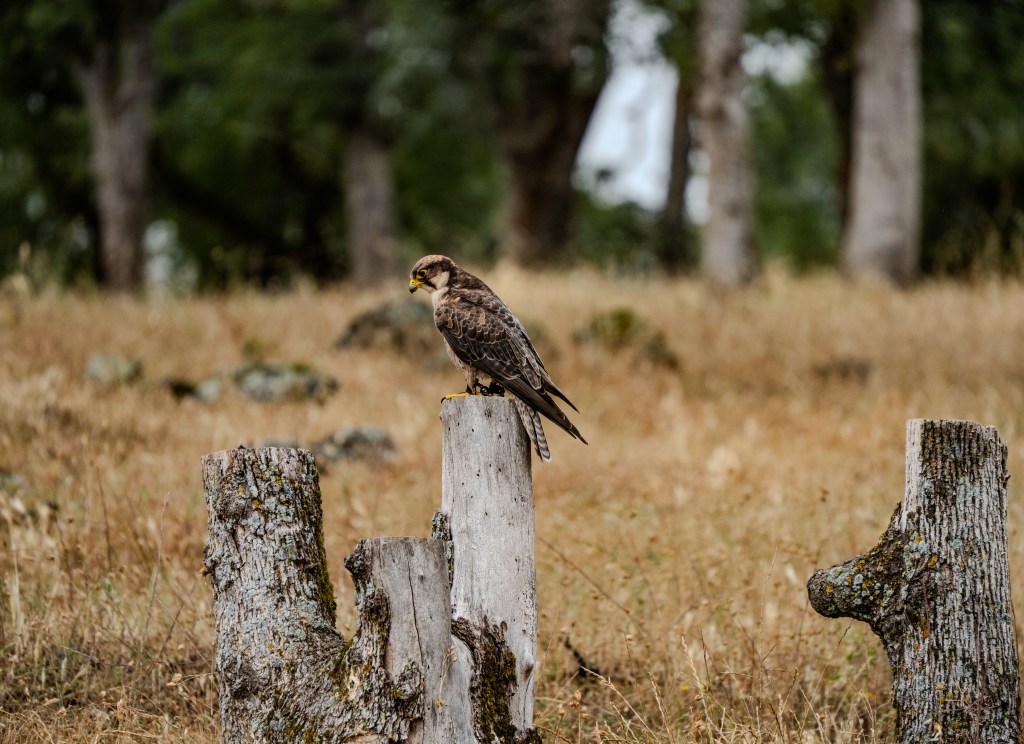
    Once our group arrived and set up their gear (lots of serious photographers), we were introduced to the owner and handlers, and did some static shots of a really cute, immature falcon. 

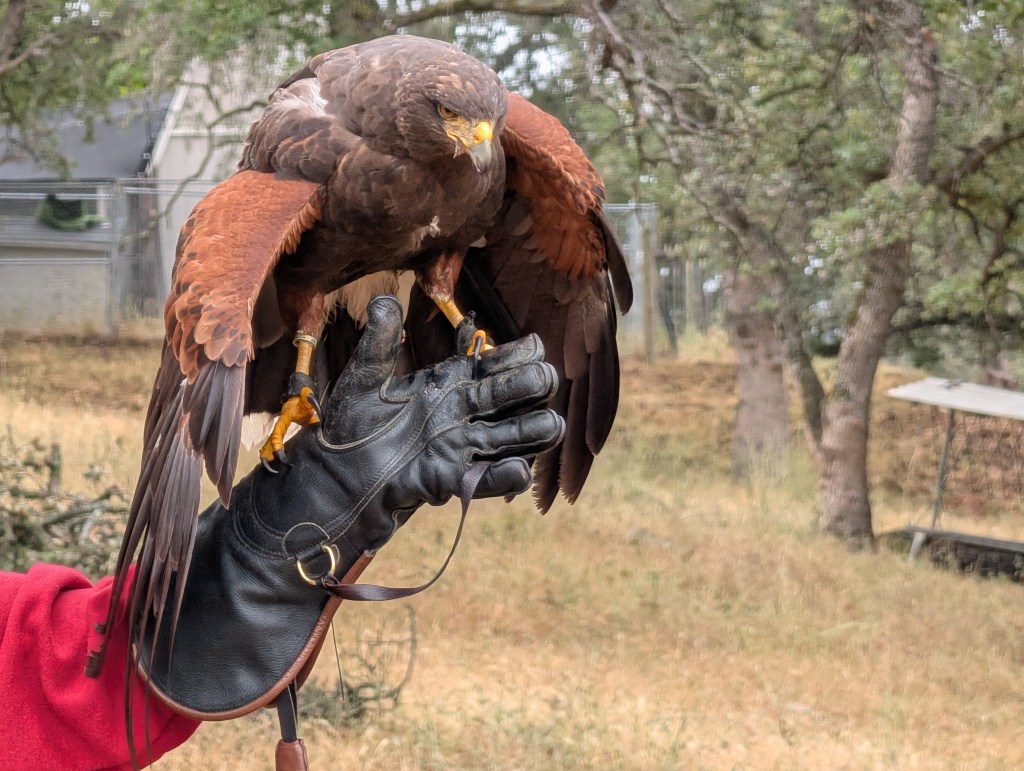
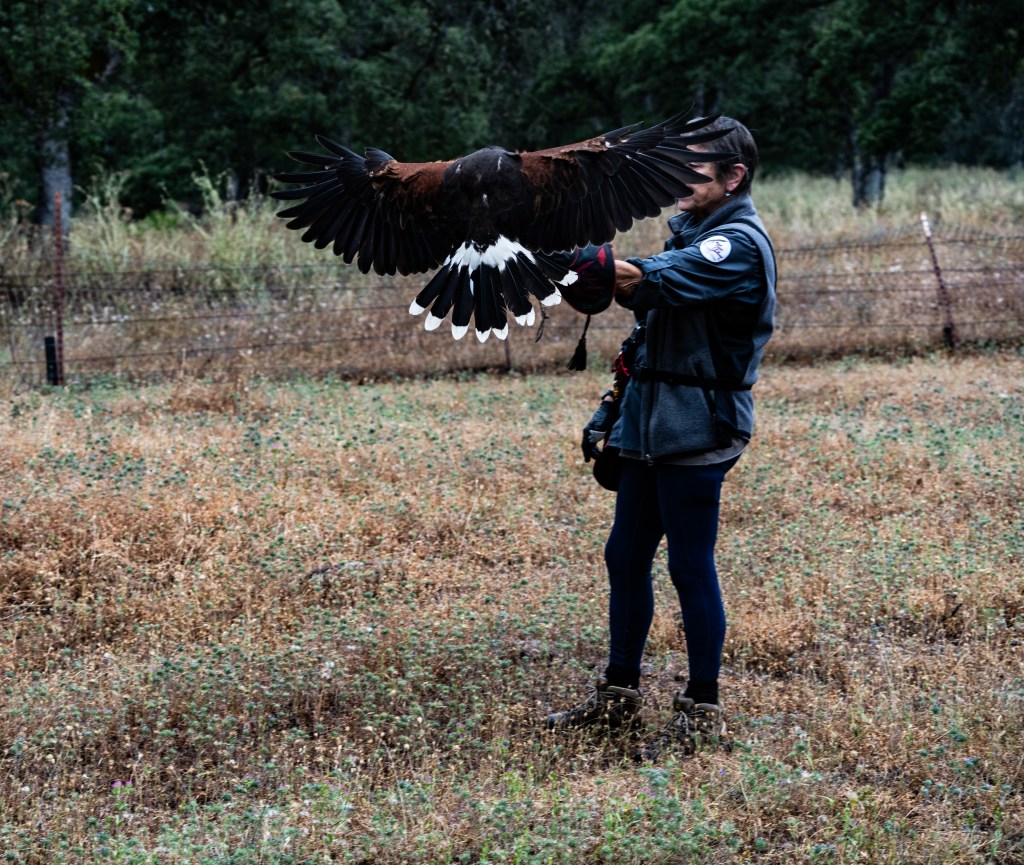
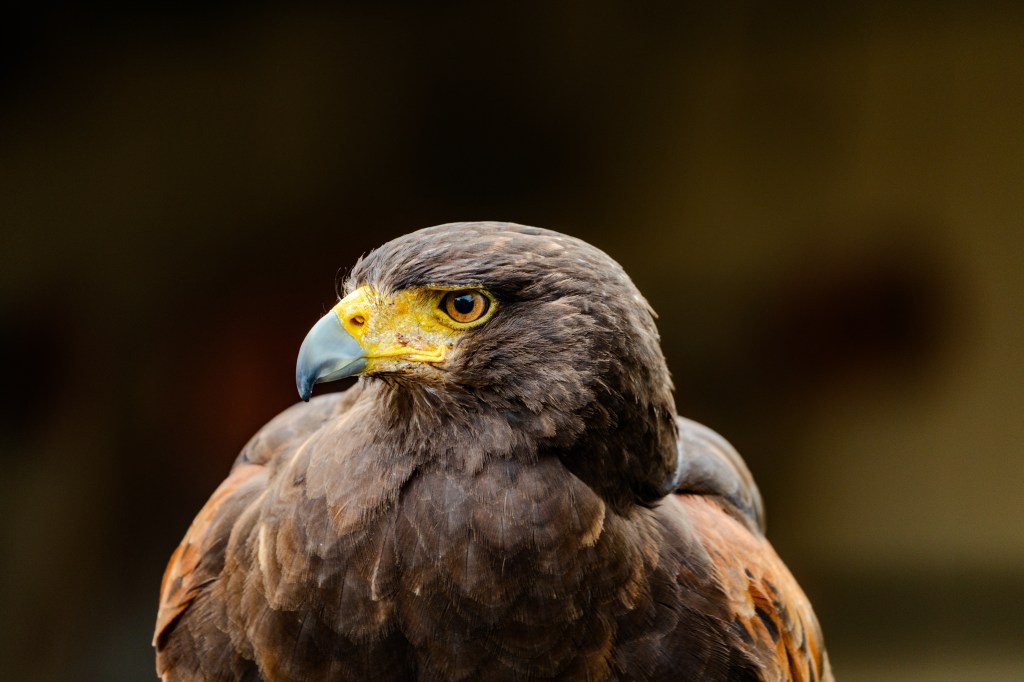
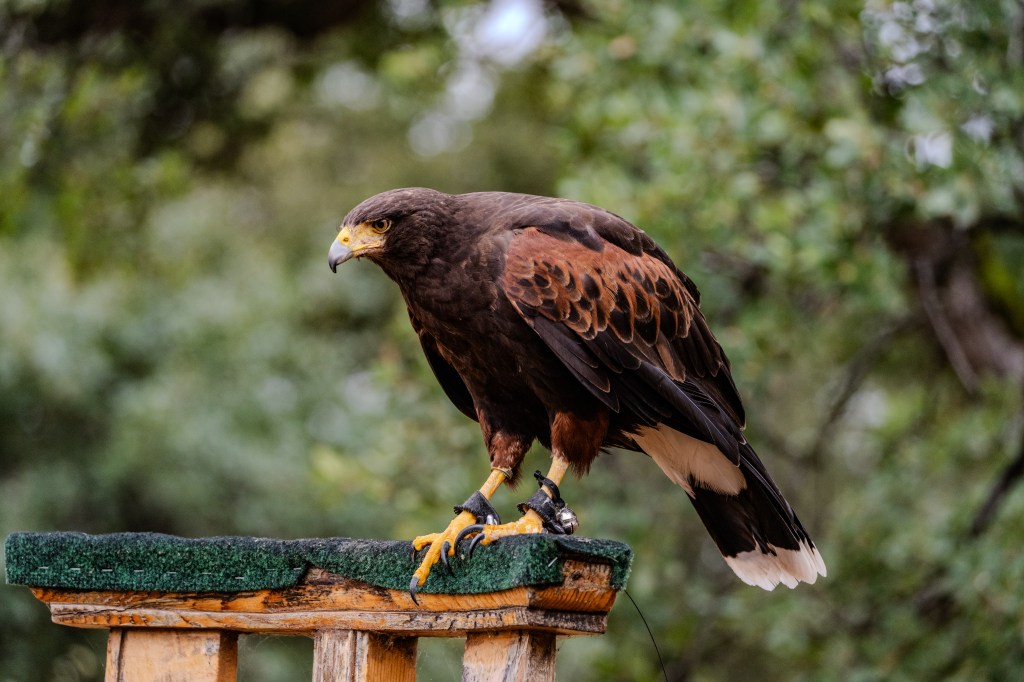
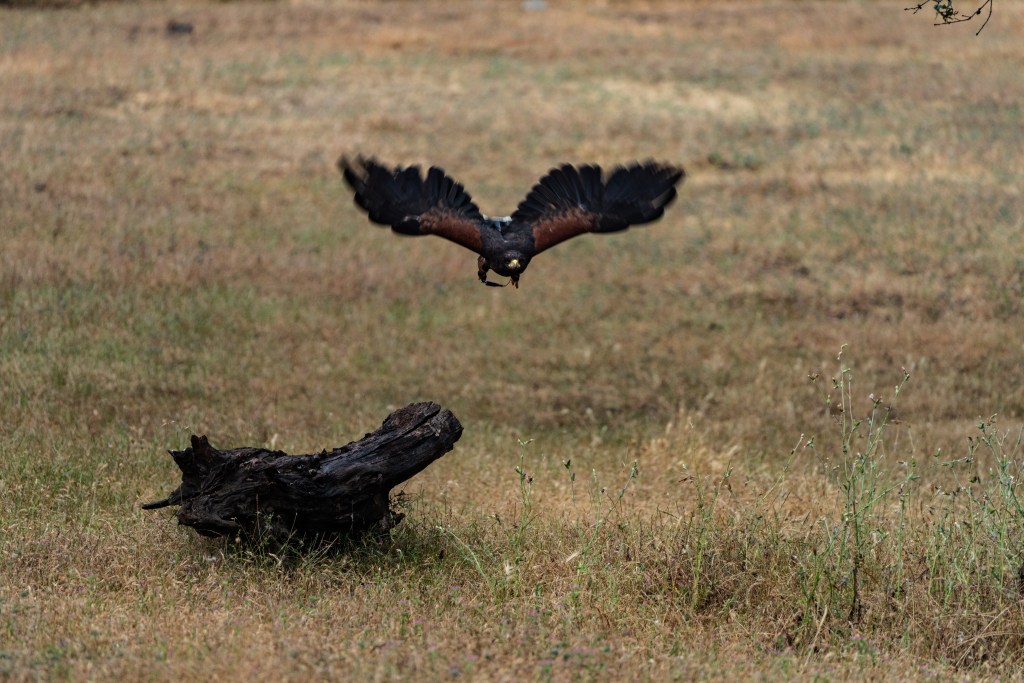
    We then headed off up a hill for a working session with a Harris Hawk – a big, beautiful bird.

    The handlers use food as the lure to get the birds to either perch somewhere for static shots, or to get them to fly up or down an open area on the hill side. The group then spreads out along the flight path, and does their best to try and get the bird in flight. You basically set your camera for the highest possible shutter speed, and frames per second, point where you want to start capturing and image, and then hope for the best. The Harris Hawk was pretty slow, but still hard to capture in flight and get a sharp image especially in relatively low light conditions (very cloudy). But it was fun either way.

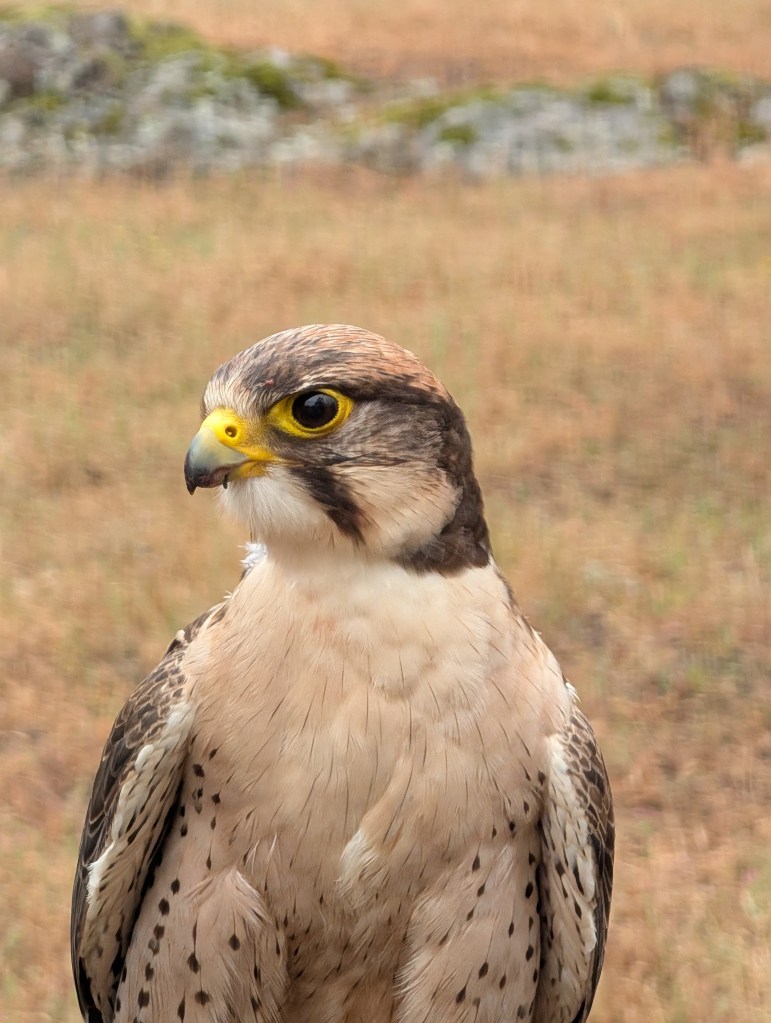
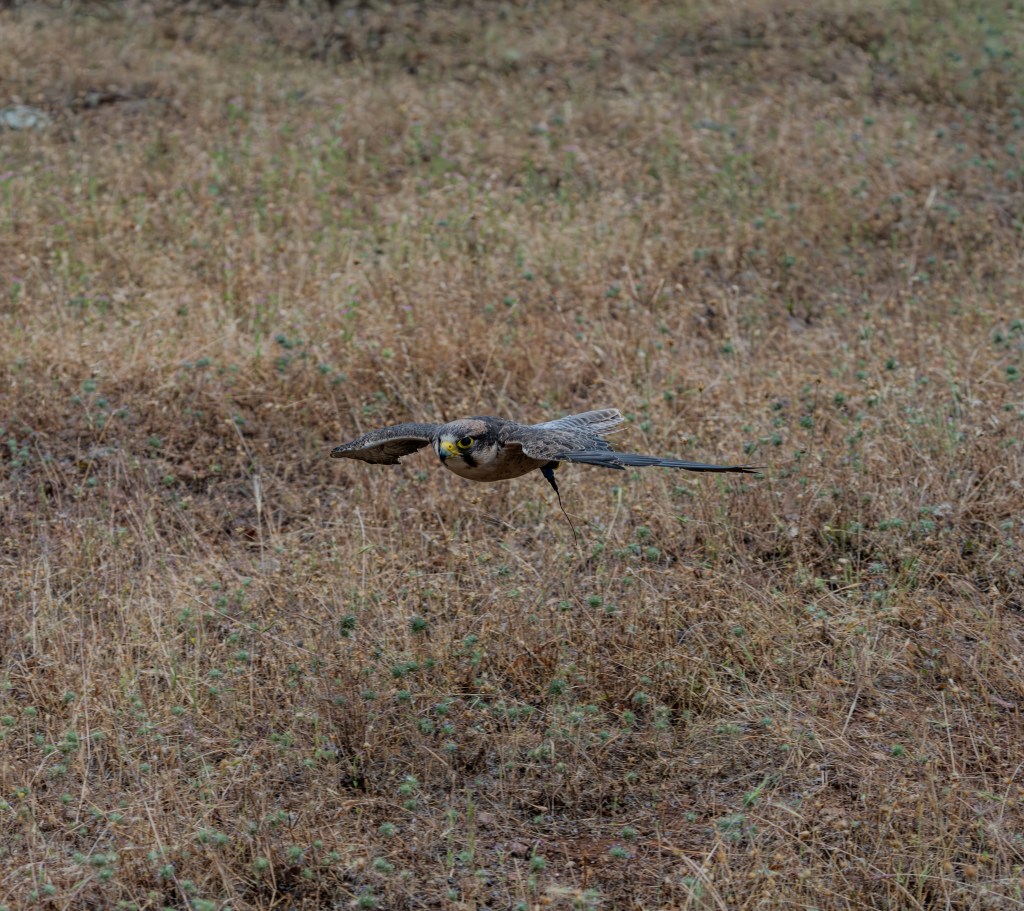
    The next bird they brought out was more of a challenge to photograph – an Aplomado Falcon. Beautiful bird, but really fast. The handler said the bird comes into their glove sometimes at 30MPH. 

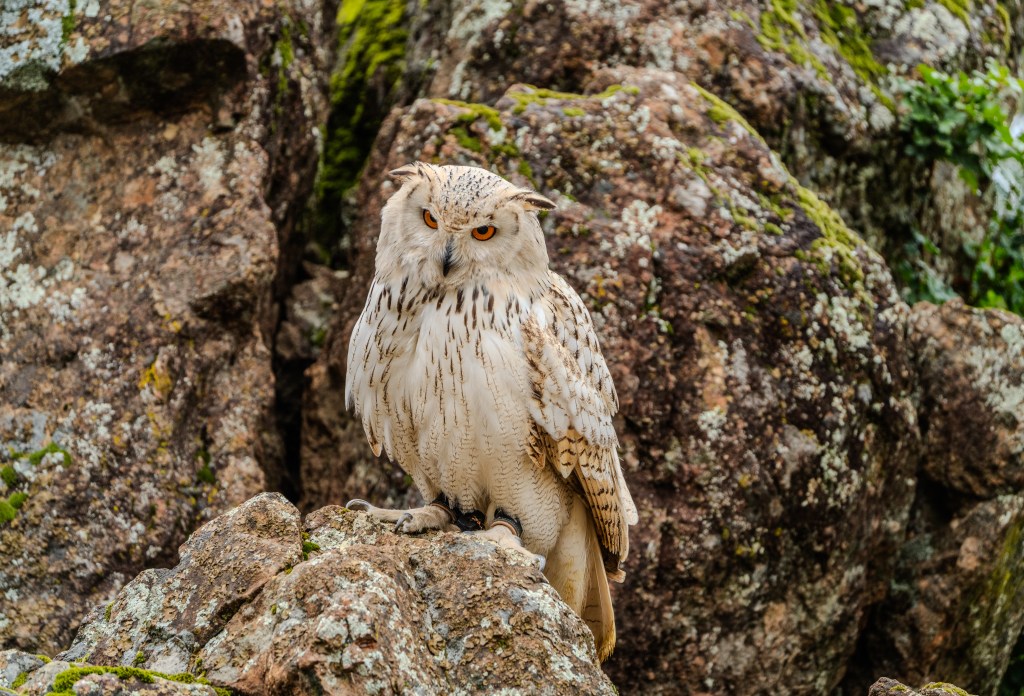
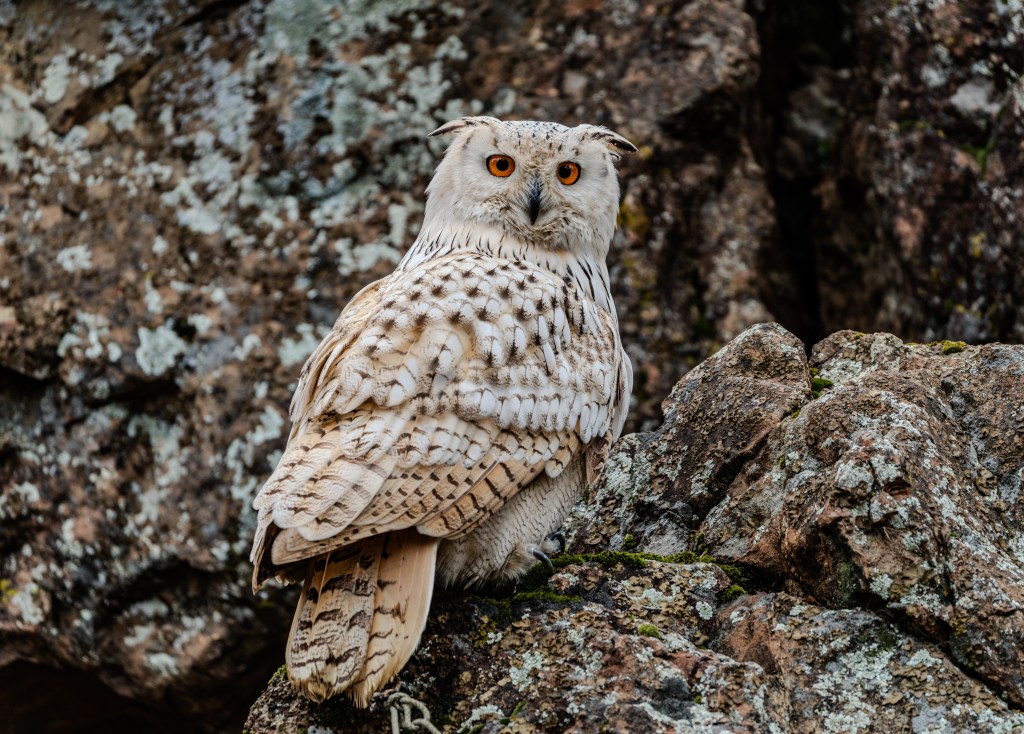
    The next three birds they brought out were for mostly static shots. The birds were tethered to a line, which allowed them fly a bit around the rock outcrop. First was a European Eagle Owl – unbelievably large, beautiful owl.

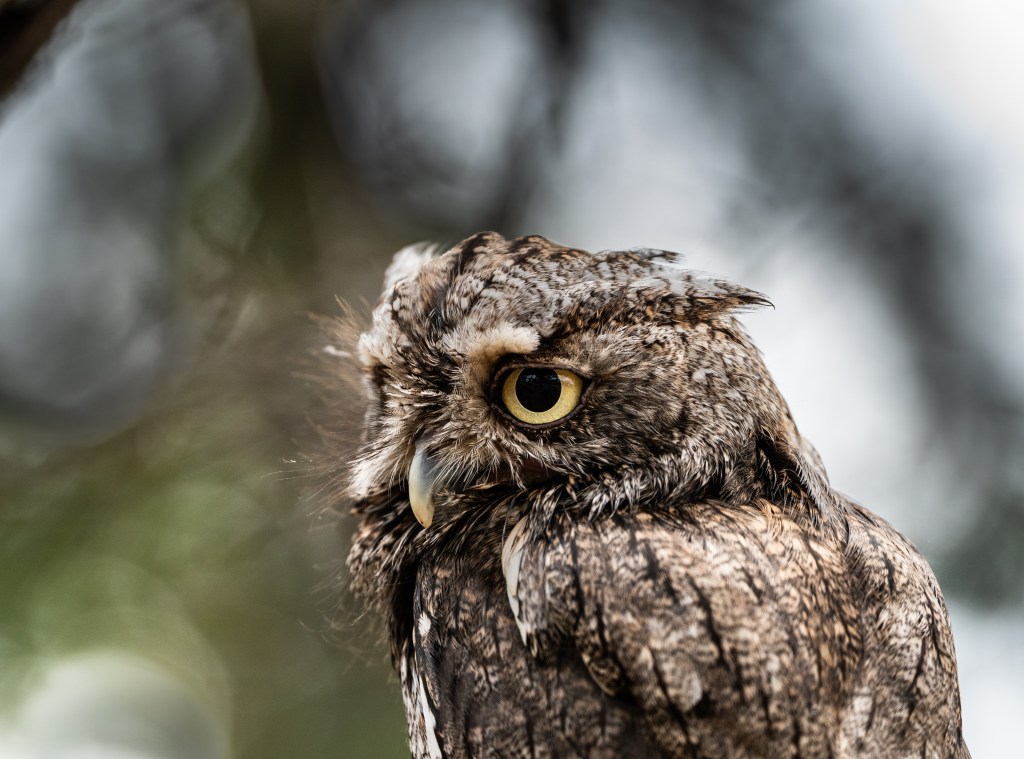
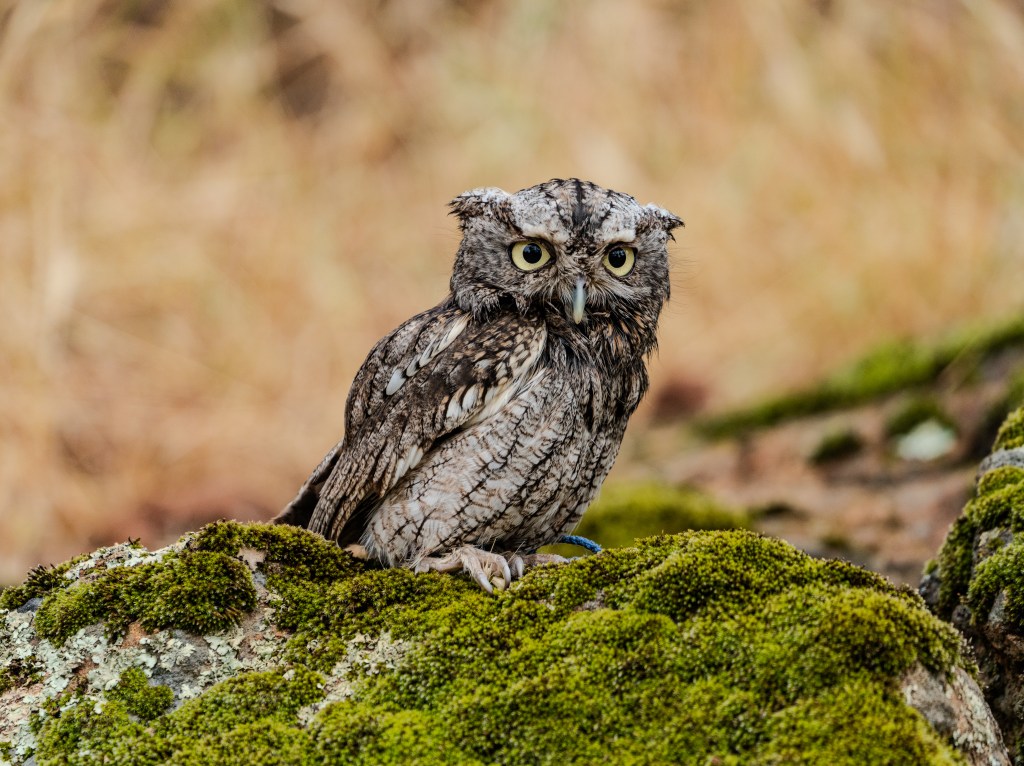
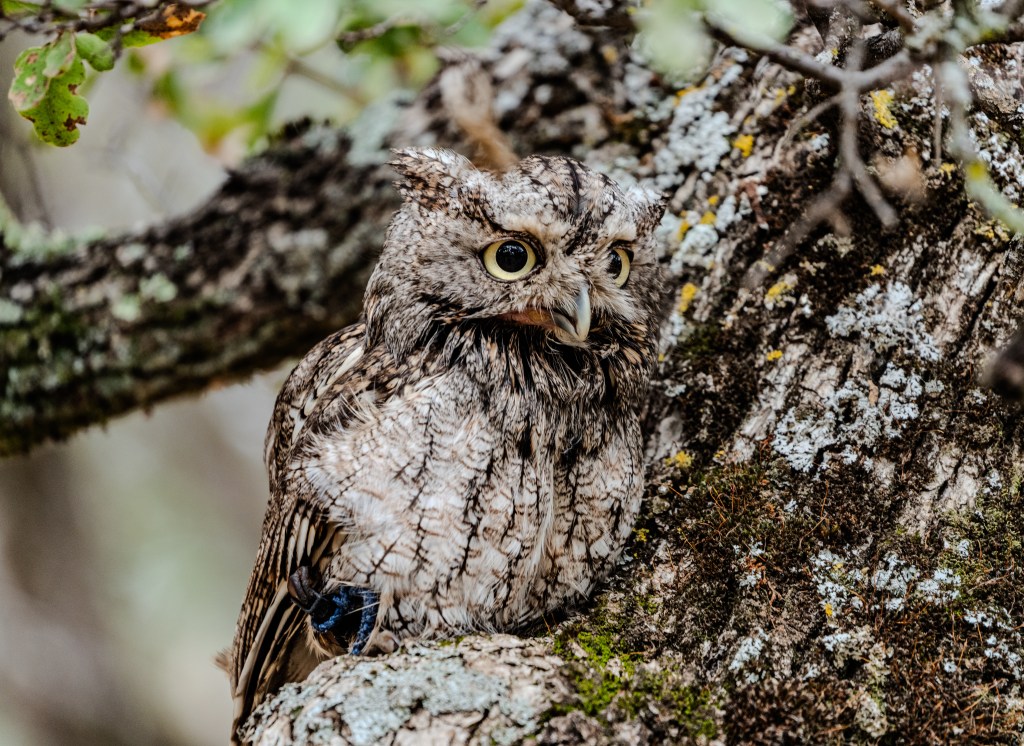
    They followed that one up with my favorite bird- a little Eastern Screech Owl. We have the Western version in the nature areas behind my house – you never see them since they are tiny and blend in with the trees, but their call is this cute sort of chortle. My wife loved to hear them at night. 

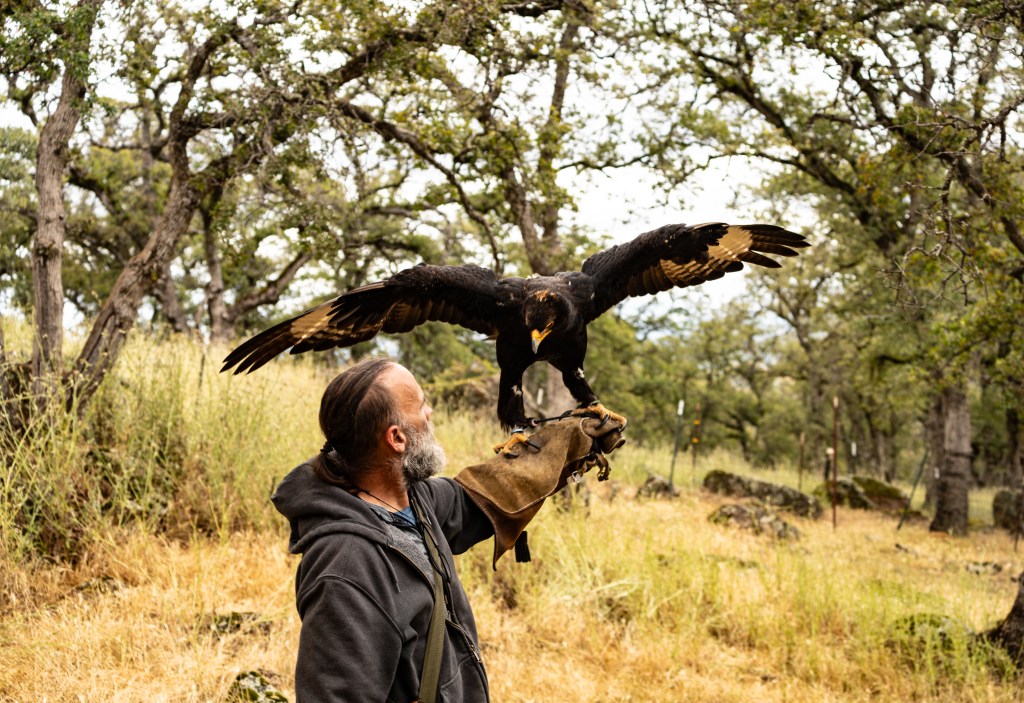
    The last “display” birds were another hawk, and some type of eagle….I think. Whatever…it was huge. I think I was getting tired of standing and holding the camera by then.

    A man in a hoodie stands outdoors, holding a golden eagle on his gloved arm amidst a wooded area.

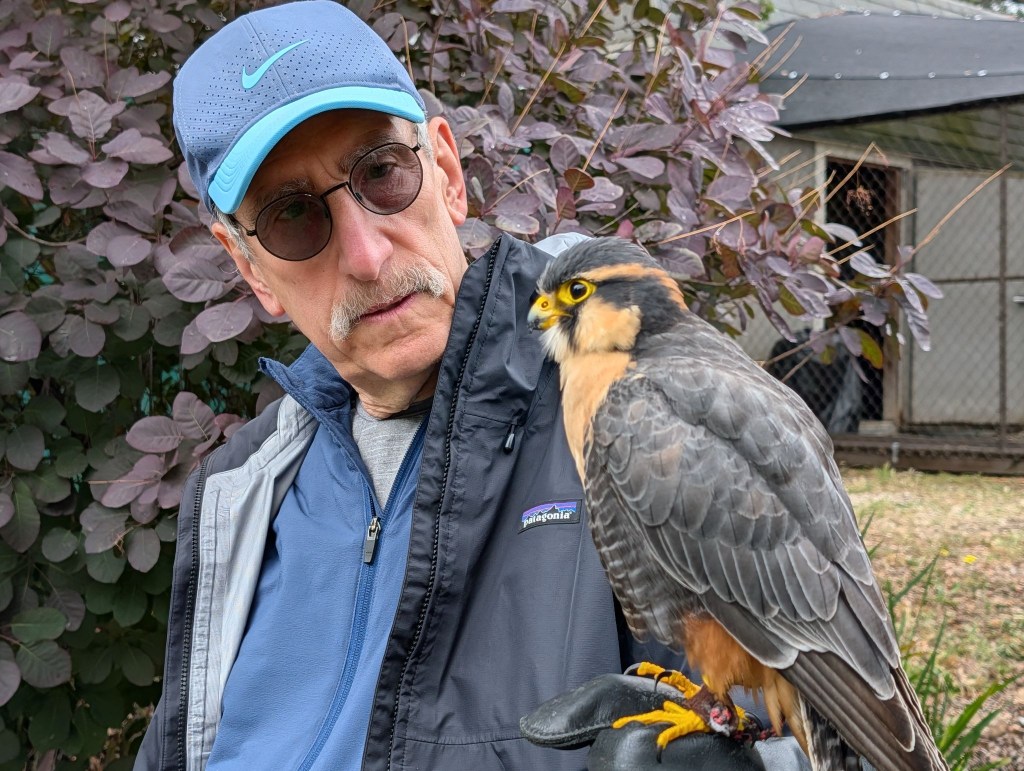
    We wrapped up the day with selfie shots with one of the birds ($20…which goes to buy food for the birds). I chose the falcon. Less chance of having my nose torn off. 

    An older man wearing sunglasses and a blue cap is holding a bird of prey, a falcon, on his glove. The background features purple foliage.
    Me and a new friend

    Overall, a really enjoyable morning, and a great learning experience as well – most of my static shots and close-ups came out the way I wanted them. What did not work was getting crisp shots of the birds in flight – you need a fast lens if you are photographing fast moving objects in relatively low light conditions. I opted for travel weight when I bought the two long lenses, and you give up a stop or two for the lighter, less expensive lenses. Maybe I’ll invest in a really good long lens someday. And then hire someone to carry it for me. 

    One sad note on West Coast Falconry – they had a break-in recently by an animal activist group. The facilities were heavily vandalized, and they released eleven of the birds. Fortunately, most of the birds stayed close to “home”, and were safely retrieved. In my opinion, the activist  group does not seem to understand that most of these animals have never had to fend for themselves in the wild since they were bred in captivity. They are well fed and taken care of by the staff, and most live much longer that they would in the wild.