Tag: Camera-gear

  • Coming soon – Penguins!!

    Created with Google Gemini

    I do have one more trip scheduled in October (another cavern…woot! And more stairs for Moro Rock… boo hiss) but the remaining big one for the remainder of this year is Antarctica, the land of penguins (and a lot of ice). I am really looking forward to this one. But first I have to prepare…..time to gear up once again. And that’s what this post is about. So go take a nap if you are not interested. Or read this to take a nap. Whatever works for you. 

    Sorry, but when you do all kinds of strange trips, you are constantly thinking about the gear you need. My garage now has a row of hooks for the 5 or 6 packs I now own, I have converted one closet into my camera gear storage, another shelf has my four camera bags, and then another few shelves are reserved for the varied gear I need for hiking, kayaking and snorkeling. But now I have to deal with really cold weather, and doing some stuff I have not done for quite a few years – snowshoeing, cross-country skiing, and mucking around in snow. Antarctica is a month away. Yikes. Fortunately, gearing up for Antarctica will also be preparation for another cold weather adventure – Churchill Manitoba in 2027. Really cold – -30F at night.

    The good news is that most of the “expedition” type tours provide at least some of the cold weather gear – National Geographic/Lindblad provides an outer, waterproof insulated shell (with a hood) as well as an inner fleece jacket. Human Habitat provides all the gear other than the base layer. Not much to pack for that trip. These are not free of course – it’s just part of the package. National Geographic/Lindblad also has an outfit that rents a lot of the other gear – the most important of these are the waterproof, insulated boots. I can’t imagine trying to pack those unless you like traveling in heavy boots. Nope. You can also rent waterproof pants, ski poles and other cold weather gear. I’m going to need a lot of that in the future, and some of which I already have – I used to do a lot of winter hiking, climbing, skiing and snow-shoeing in Colorado, so I already have a lot of that stuff:

    • Insulated, water proof gloves/mittens
    • Goofy but waterproof/insulated hats.
    • Heavy boot socks
    • Lots of fleece pull-overs, some from Google (they kept as fed and clothed).
    • Heavy kayak pants (yes, we will be kayaking along the ice shelf).
    • Waterproof gloves for kayaking.

    There were a few missing things from my packing list, so I waited for my trip to Colorado to fill in the few remaining blanks. Why wait for this trip? Denver has a flagship REI which carries has just about everything you would need for any outdoor adventure. What a wonderful store – it used to be the old Forney Transportation Museum, which repurposed the old Denver Tramway Powerhouse building from the early 1900’s. It’s now a wonderland of outdoor gear.
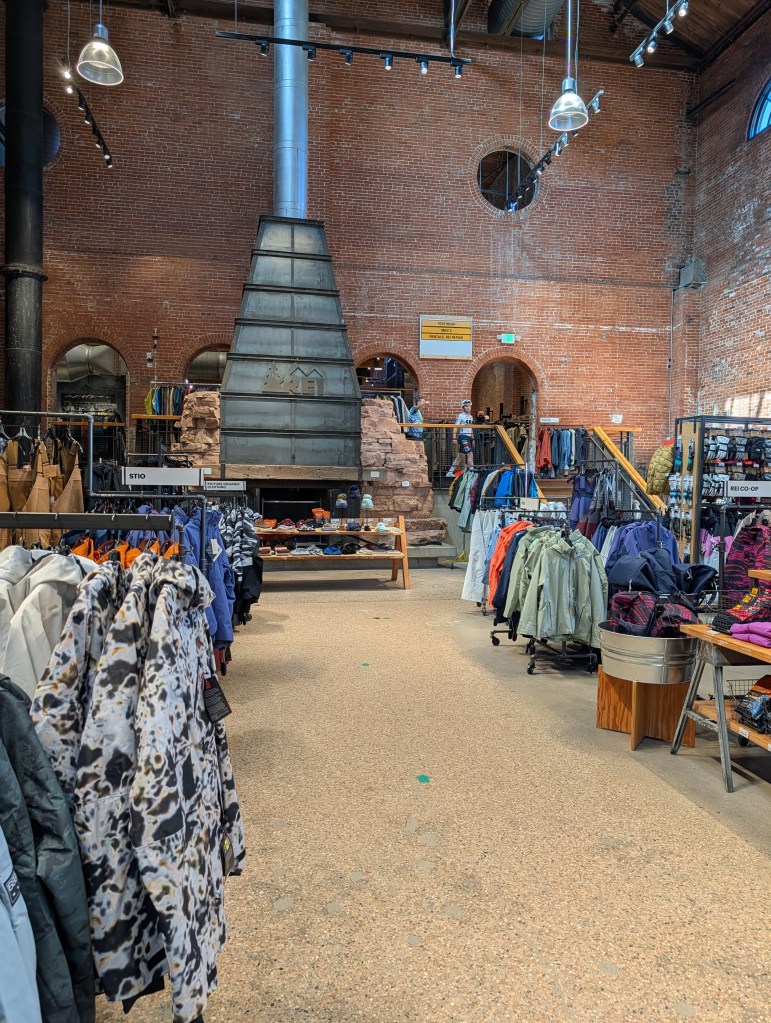
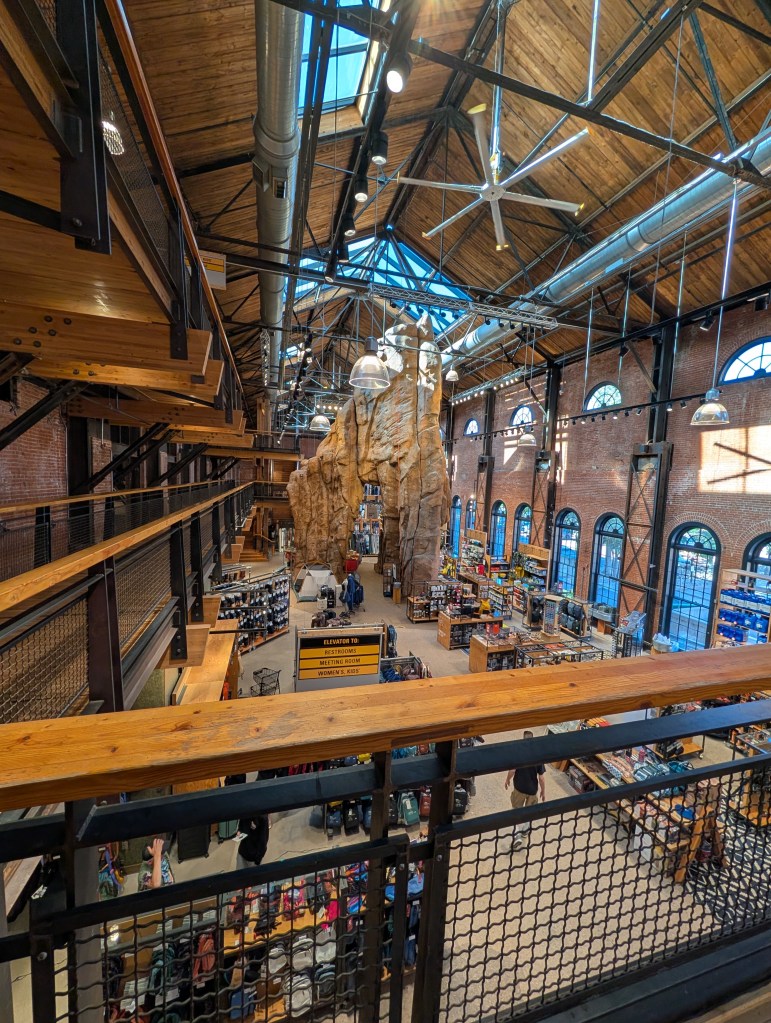
    I spent multiple hours wandering through the store, and eventually found the few things I needed:

    • Insulated shell pants – good for skiing, hiking, maybe even for Zodiac cruising instead of the kayak pants.
    • Heavy fleece pants – wear on board and under outer shell pants
    • Winter buff – I think these used to have a different name. It’s basically a neck warmer. I bought a light-weight one in the Galápagos Islands when all the boat drivers had one. Great for wind, spray and sun protection. Never thought there would be specialized neck warmers before. 
    • Glove liners – you never have too many of those

    The only thing I could not find, was a new pair of hiking/travel shoes in which I could fit my Forest Gump brace and my foot. I tried on 6 different brand shoes and none of them worked. It is really a pain having to bring multiple pairs of shoes since I only had one pair of water/beach shoes which I could use with the brace. The good news is I found two pairs, one for serious hiking, at a Merrill outlet store once I got back to good old boring Sacramento. I doubt if I’ll ever be able to hike without that brace, so all my other shoes and boots will be going to charity (Soles For Souls).

    So that’s about it for Antarctica clothing. All I have to do now is figure out how to fit all this “stuff” into the same suitcase I’ve been using for the past year. I’m rapidly learning how to slim down what I bring on trips – all the ships do laundry, and most of what I bring can be dumped in with underwear. It’s not that expensive and worth it. Another problem with the Antarctica trip are the “free” jackets – you get to take them home at trips end, but how do you stuff them into your luggage? I’d like to reserve enough free space in the suitcase so I have an option to keep them. The other choice is to leave it, and Nat Geo donates them to charities. 

    Some of my other scheduled trips will also have luggage related issues as I’ve mentioned before, so this will be a good time to figure out how to travel light. The Baja trip will really be a challenge – 30lbs in luggage, and 6.5 for carry-on. My camera bag weighs over a pound…most of the camera gear will be in my suitcase. Who needs clothing anyway.

    The other challenge I’ll have with Antarctica is my photography gear – much like Alaska, I’ll definitely want to carry the big lens as well as a second camera body. I’m guessing that there will be times that I’ll need the long 500mm, as well as a shorter lens for closeups of penguins or landscape shots. Switching lenses in the cold, or on a fast moving Zodiac, is not something I really want to do. Way too risky (for the camera, not me).

    And I still have to figure out what to do with my “other” camera – the phone. I had a waterproof case for my Pixel 8, which worked great for bouncing around in small boats or in kayaks. Before I left for Alaska, I bought what seemed to be the perfect solution for the new Pixel 10 XL, though a bit expensive – a flexible plastic sleeve, with a big metal flange and glass lens arrangement that is completely waterproof, and could be used for snorkeling and diving. It was built for regular sized phones, but their support group said it was stretchy material which will fit the larger XL models of phones. This was a lot like a shoe salesman telling you that a wide width size 12 shoe will fit a narrow size 13 foot. Nope. I tried that once and it did not work. Same for phone covers – the metal flange scrapes on the back of the phone. That’s not a good thing. I’m hoping the company (www.Outex.com) agrees. It’s a really nice product, just not meant for larger phones.

    So I’m still working on that problem..

    That’s enough geek talk on gear. I’ve already got my packing list for Antarctica, and with over a month before leaving, I’ve got plenty of time to begin “test packing”. Expect many penguin photo’s in the near future. 
  • Gearing Up for Trips to Alaska and Antarctica

    Gearing Up for Trips to Alaska and Antarctica

    Retiree’s, especially those who have been retired for a long time like myself (9 years) have a problem remembering the current date and sometimes the current day of the week. Once you are out of work, every day seems like Friday. Or Saturday. Or whatever day you like the best. I use to rely on my wife to keep track of important dates – she kept a completely detailed calendar for important social, financial, anniversary dates,  birth dates – pretty much everything scheduled for up to a year ahead. Now that she’s gone, I rely on my Pixel watch – the face clearly has the day and date, so all I have to do is check my wrist. Seriously, I do maintain a schedule, and check it every day, which is why I realized the other day that I’m just 39 days from departing for Alaska, and maybe I should start getting serious about making sure I have everything I need for the trip. The Alaska trip is only 10 days, but it’s chock full of different activities (kayaking, hiking, cruising for wildlife), in a wet and cool location. Kind of different from the trips I’ve been on this past year. So I’ve dedicated the past few days to preparing for the next trip, the Inner Passages of Alaska, and starting to think about Antarctica in November.

    In Search of the Perfect Camera Backpack

    I posted a while back about my never ending struggle with lugging camera gear on my adventures. Every one of the trips I’ve been taking (or planning to take) that requires air travel seem to have somewhat different photography needs, and different airline requirements for carry-on luggage. For example, the Galapagos Island trip had land based wildlife photography plus snorkeling with sea lions and penguins. That’s a lot of gear. My upcoming trip to Alaska is primarily wildlife, but also kayaking and possible close encounters with whales. Long lens, wide angle lens and the GoPro. The next Baja trip will have opportunities for wildlife, and both surface and underwater whale photography – I probably will not need the 500mm lens on that trip, but probably take it anyway.  This large amount of camera gear would not be an issue if I were always flying first class on large planes. But most of these trips have a second flight on smaller, commuter jets, which have limitations on weight and size of carry-on. I’ve also got two trips so far, which have the final leg on single engine prop planes. Very small, with limitations on size and weight of luggage.  I’ll be closing my eyes on take-off and landing, especially the sea plane. 

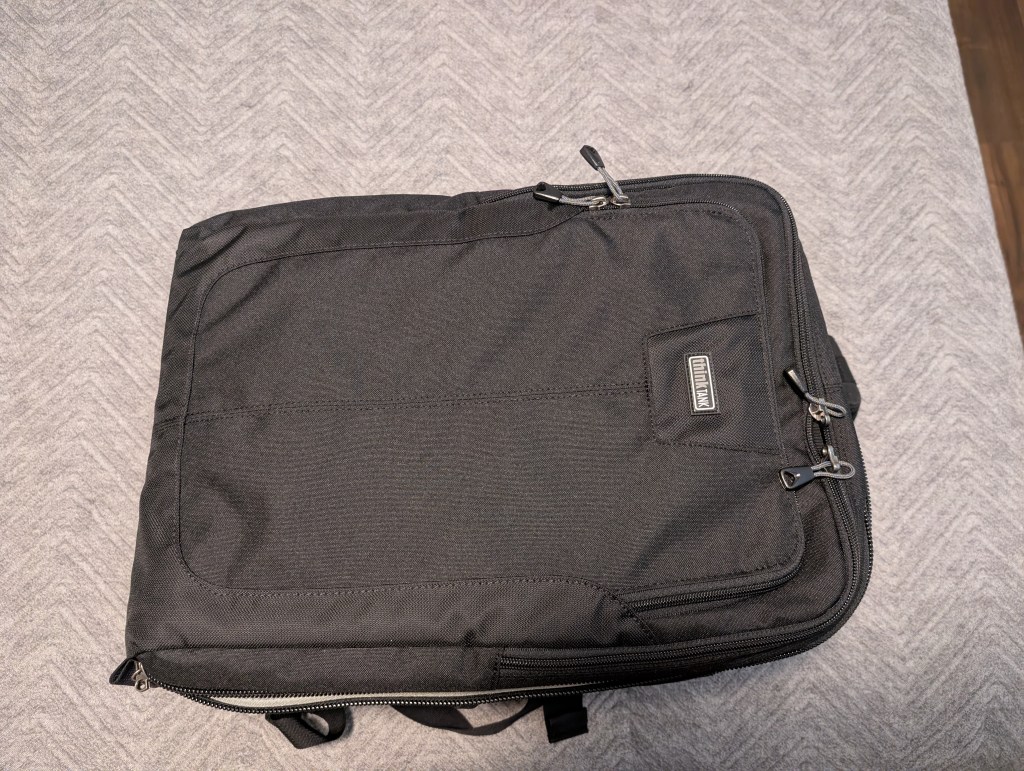
    Now that I have a very large and heavy telephoto lens (150-500), my former go-to camera bag no longer goes. That’s what happens when you try to cut costs. My wife would have said..”just buy the damn bag you need”. But I didn’t. And then a miracle occurred while I was stressing out about what to do for my upcoming Alaska trip, I received two sale advertisements via e-mail, one from Mike’s Camera, and the other from Think Tank, both for the same camera bag – the Airport Commuter backpack. The overall size of this pack is between my giant LowePro backpack, and the smaller Think Tank backpack that I used on my last two trips. It’s also a bit smaller than the roller camera bag I have. It looked absolutely perfect for pretty much anywhere I travel to. So, off to Mike’s Camera, which had one in stock. For once in my life, I did not stand there trying to justify the purchase. I had already done the research on it, so as my wife had recommended at times like these, I just bought the damned thing. 

    The Think Tank backpack is pretty much the last photography related item I’ll be buying for a while, other than a raincoat for the camera. Seriously, they make specialized rain covers for cameras, large enough to cover huge lenses mounted on a tripod/monopod. You can get inexpensive ones which are basically large plastic bags, or spend a lot on waterproof material, sized to fit specific lens types. I opted for the latter – after spending that much on the camera and lens, I’m not going to scrimp on the rain gear. And I even found one made in the USA, from a company (Lenscoat) that specializes in various protective covers for cameras and lenses. It is rare to find any camera gear made in the US – almost all camera and lens makers are foreign, and even tripods/monopods are all made elsewhere. 

    When I got home, I packed all of the gear I could possibly use on a trip into the new pack – there was still plenty of room for other carry-ons like an iPad, books, glasses, etc. And the size really was perfect – it will fit in the overhead of pretty much any plane, and should not be an issue with the small planes either. I won’t be packing much in the way of clothing for those trips. On one trip we live on the beach, the other in a shipping container on a fishing boat. Who cares what I look (or smell) like. I’ll be staying at hotels after each trip, with real showers, and my own bathroom. I am treating both of these like a backpacking trip. I will be looking forward to a long, hot shower when I get to the hotels.

    The Grizzly Bear boat – no frills.

    Expedition Clothing – REI loves me

    And speaking of gear, I’m almost done buying out REI (and other places) for the Alaska trip. I now own waterproof outerwear for kayaking (which I’ll also need in Alaska, Antarctica and Patagonia), kayak gloves, photographers gloves for cold weather, boot socks for the rented waterproof boots, and some new lightweight insulated clothing. My annual REI rewards check should be impressive this year.  Fortunately, you can rent a lot of the bulky stuff you need on some of the trips, like knee high waterproof boots for Alaska and Patagonia, and winter boots for Antarctica – those would be impossible to pack, and really uncomfortable to wear on the plane. National Geographic gives passengers big parkas for the Antarctica trip. I’m not quite sure how I’ll get that home.

    Monopod vs. Tripod

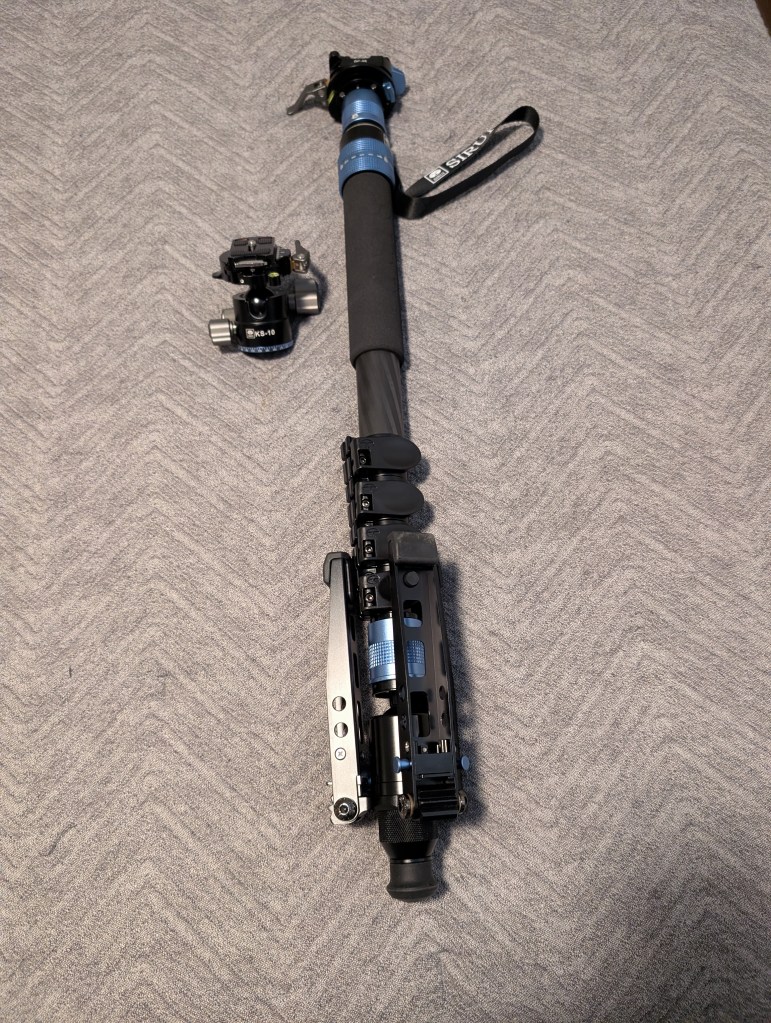
    I mentioned in a previous post that I had purchased a new monopod, which will come in handy for photographing from the National Geographic ships, and the Kodiak converted fishing boat. I have two tripods, which are a must for shooting with heavy cameras and lenses, but both are heavy, and are not allowed onboard smaller ships – these take up too much deck space on smaller ships. Monopods provide some stability, relieving much of the stress and pain of hand-holding heavy gear, and work well when jockeying for space with the other photographers. The Siriu monopod I purchased is made from carbon-fiber, extends to 6’, and has a small set of fold-up feet for added stability. I also bought a ball-joint mount, and a specialized quick release mount for it as well. The mount and feet sections are removable, so it will be easy to pack the thing in my luggage, and it is super light.

    I’ll leave the feet at home for both trips to cut down on weight – I’m not planning on using it like a tripod for the heavy lens and camera. A very nice toy.

    So I think I’m ready for Alaska. I’ll worry about Antarctica in October.

    FYI – you may notice some formatting changes in this post, which I will be applying to my older posts as well. I’m learning more about blogging, and ways to maximize new visitors through Search Engine Optimization (SEO). I’m not considering advertising/monetization at all, which seems to be what most blogs use. But I will have an occassional link to the locations I visit, or for some of the companies I buy gear from – more of a convenience for readers interested in the stuff, and one of the SEO recommendations I’ve read about.