Tag: cameras

  • Gearing Up for Trips to Alaska and Antarctica

    Gearing Up for Trips to Alaska and Antarctica

    Retiree’s, especially those who have been retired for a long time like myself (9 years) have a problem remembering the current date and sometimes the current day of the week. Once you are out of work, every day seems like Friday. Or Saturday. Or whatever day you like the best. I use to rely on my wife to keep track of important dates – she kept a completely detailed calendar for important social, financial, anniversary dates,  birth dates – pretty much everything scheduled for up to a year ahead. Now that she’s gone, I rely on my Pixel watch – the face clearly has the day and date, so all I have to do is check my wrist. Seriously, I do maintain a schedule, and check it every day, which is why I realized the other day that I’m just 39 days from departing for Alaska, and maybe I should start getting serious about making sure I have everything I need for the trip. The Alaska trip is only 10 days, but it’s chock full of different activities (kayaking, hiking, cruising for wildlife), in a wet and cool location. Kind of different from the trips I’ve been on this past year. So I’ve dedicated the past few days to preparing for the next trip, the Inner Passages of Alaska, and starting to think about Antarctica in November.

    In Search of the Perfect Camera Backpack

    I posted a while back about my never ending struggle with lugging camera gear on my adventures. Every one of the trips I’ve been taking (or planning to take) that requires air travel seem to have somewhat different photography needs, and different airline requirements for carry-on luggage. For example, the Galapagos Island trip had land based wildlife photography plus snorkeling with sea lions and penguins. That’s a lot of gear. My upcoming trip to Alaska is primarily wildlife, but also kayaking and possible close encounters with whales. Long lens, wide angle lens and the GoPro. The next Baja trip will have opportunities for wildlife, and both surface and underwater whale photography – I probably will not need the 500mm lens on that trip, but probably take it anyway.  This large amount of camera gear would not be an issue if I were always flying first class on large planes. But most of these trips have a second flight on smaller, commuter jets, which have limitations on weight and size of carry-on. I’ve also got two trips so far, which have the final leg on single engine prop planes. Very small, with limitations on size and weight of luggage.  I’ll be closing my eyes on take-off and landing, especially the sea plane. 

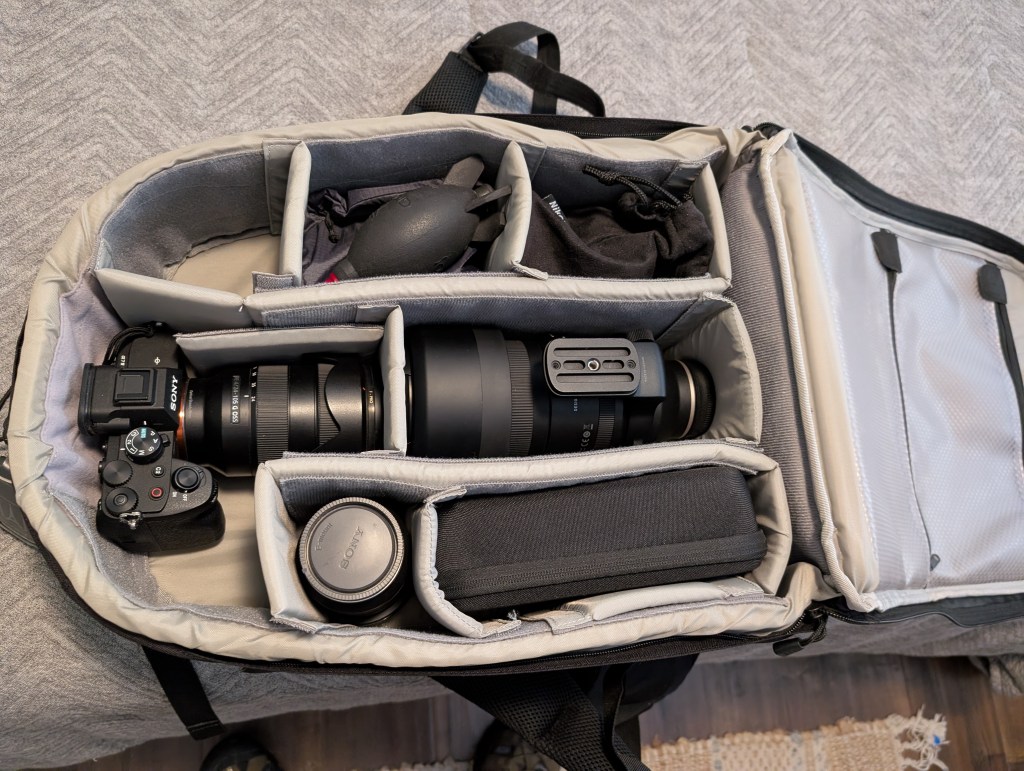
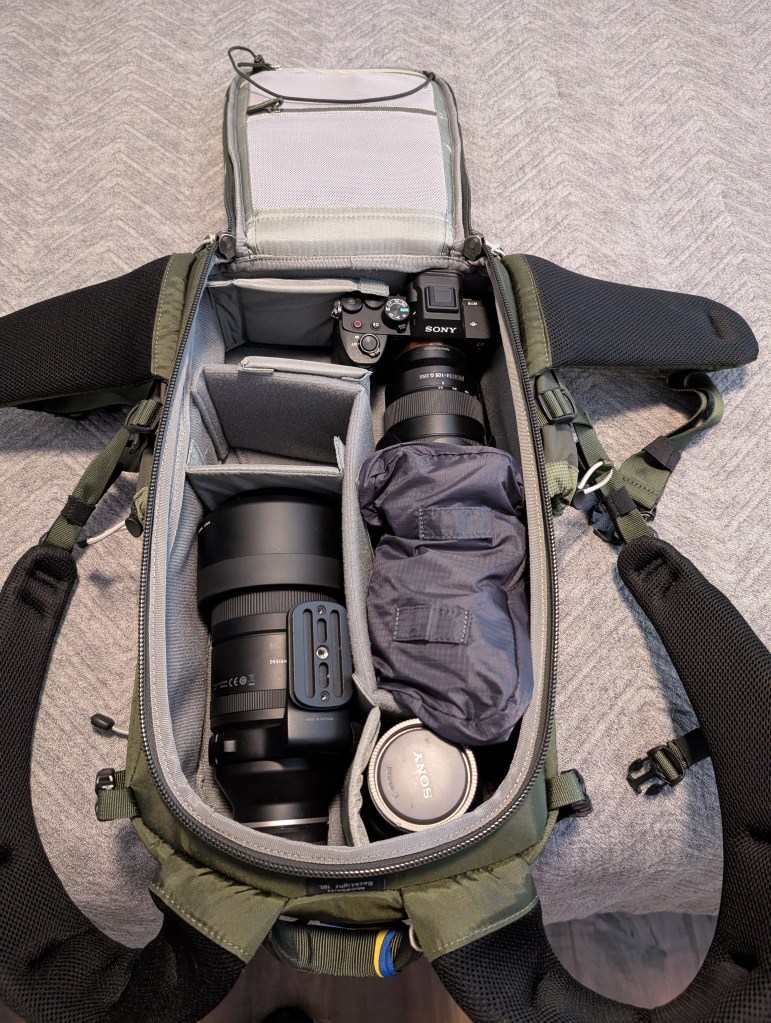
    Now that I have a very large and heavy telephoto lens (150-500), my former go-to camera bag no longer goes. That’s what happens when you try to cut costs. My wife would have said..”just buy the damn bag you need”. But I didn’t. And then a miracle occurred while I was stressing out about what to do for my upcoming Alaska trip, I received two sale advertisements via e-mail, one from Mike’s Camera, and the other from Think Tank, both for the same camera bag – the Airport Commuter backpack. The overall size of this pack is between my giant LowePro backpack, and the smaller Think Tank backpack that I used on my last two trips. It’s also a bit smaller than the roller camera bag I have. It looked absolutely perfect for pretty much anywhere I travel to. So, off to Mike’s Camera, which had one in stock. For once in my life, I did not stand there trying to justify the purchase. I had already done the research on it, so as my wife had recommended at times like these, I just bought the damned thing. 

    The Think Tank backpack is pretty much the last photography related item I’ll be buying for a while, other than a raincoat for the camera. Seriously, they make specialized rain covers for cameras, large enough to cover huge lenses mounted on a tripod/monopod. You can get inexpensive ones which are basically large plastic bags, or spend a lot on waterproof material, sized to fit specific lens types. I opted for the latter – after spending that much on the camera and lens, I’m not going to scrimp on the rain gear. And I even found one made in the USA, from a company (Lenscoat) that specializes in various protective covers for cameras and lenses. It is rare to find any camera gear made in the US – almost all camera and lens makers are foreign, and even tripods/monopods are all made elsewhere. 
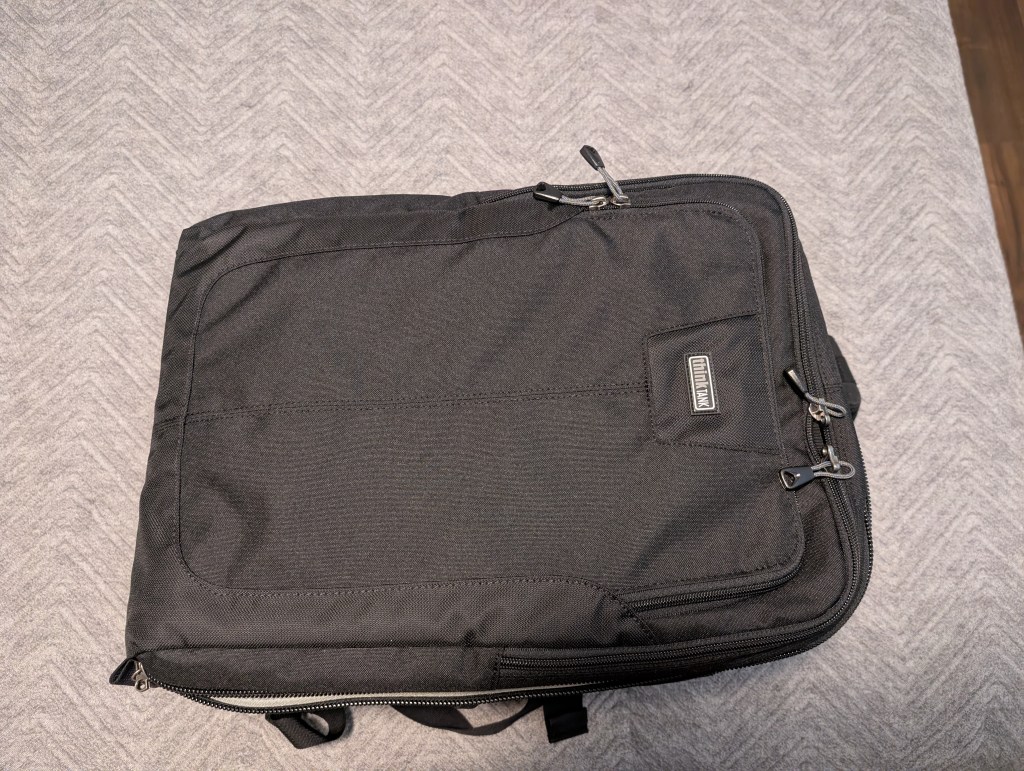
    When I got home, I packed all of the gear I could possibly use on a trip into the new pack – there was still plenty of room for other carry-ons like an iPad, books, glasses, etc. And the size really was perfect – it will fit in the overhead of pretty much any plane, and should not be an issue with the small planes either. I won’t be packing much in the way of clothing for those trips. On one trip we live on the beach, the other in a shipping container on a fishing boat. Who cares what I look (or smell) like. I’ll be staying at hotels after each trip, with real showers, and my own bathroom. I am treating both of these like a backpacking trip. I will be looking forward to a long, hot shower when I get to the hotels.

    The Grizzly Bear boat – no frills.

    Expedition Clothing – REI loves me

    And speaking of gear, I’m almost done buying out REI (and other places) for the Alaska trip. I now own waterproof outerwear for kayaking (which I’ll also need in Alaska, Antarctica and Patagonia), kayak gloves, photographers gloves for cold weather, boot socks for the rented waterproof boots, and some new lightweight insulated clothing. My annual REI rewards check should be impressive this year.  Fortunately, you can rent a lot of the bulky stuff you need on some of the trips, like knee high waterproof boots for Alaska and Patagonia, and winter boots for Antarctica – those would be impossible to pack, and really uncomfortable to wear on the plane. National Geographic gives passengers big parkas for the Antarctica trip. I’m not quite sure how I’ll get that home.

    Monopod vs. Tripod

    I mentioned in a previous post that I had purchased a new monopod, which will come in handy for photographing from the National Geographic ships, and the Kodiak converted fishing boat. I have two tripods, which are a must for shooting with heavy cameras and lenses, but both are heavy, and are not allowed onboard smaller ships – these take up too much deck space on smaller ships. Monopods provide some stability, relieving much of the stress and pain of hand-holding heavy gear, and work well when jockeying for space with the other photographers. The Siriu monopod I purchased is made from carbon-fiber, extends to 6’, and has a small set of fold-up feet for added stability. I also bought a ball-joint mount, and a specialized quick release mount for it as well. The mount and feet sections are removable, so it will be easy to pack the thing in my luggage, and it is super light.

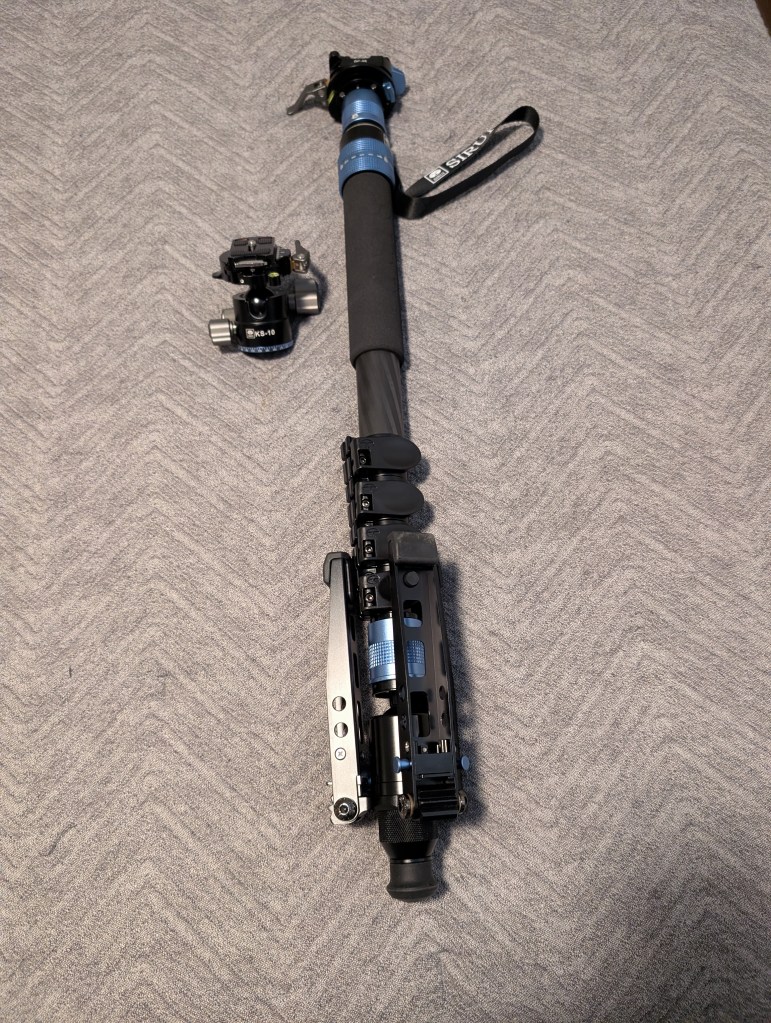
    I’ll leave the feet at home for both trips to cut down on weight – I’m not planning on using it like a tripod for the heavy lens and camera. A very nice toy.

    So I think I’m ready for Alaska. I’ll worry about Antarctica in October.

    FYI – you may notice some formatting changes in this post, which I will be applying to my older posts as well. I’m learning more about blogging, and ways to maximize new visitors through Search Engine Optimization (SEO). I’m not considering advertising/monetization at all, which seems to be what most blogs use. But I will have an occassional link to the locations I visit, or for some of the companies I buy gear from – more of a convenience for readers interested in the stuff, and one of the SEO recommendations I’ve read about.

  • How to fit 50 lbs of stuff in a 25 lb bag

    Most of what I packed for the Road Scholars trip – no problem with a Subaru Forrester!

    As I alluded to in a previous post, this one will take a crack at explaining how I have been cramming everything you need for photography, kayaking, snorkeling, hiking and general purpose living for a long adventure, and meet the stringent baggage rules for airlines, small cruise ships and even worse, single engine planes. Yeah, some of the trips I’ll be going on are in remote places, and the only way to get there is on small planes. I even get to go on a float plane for one trip. That will be a real treat. 

    You have already seen photos of the camera gear I may bring along on a trip. As I mentioned, there is much more than just the cameras and lenses – there are lots of chargers, cables, extra batteries, memory cards, lens cleaning stuff – just a lot of extraneous but thankfully small objects that need to find a place somewhere in the luggage. I have four options now for packing camera gear in carry-on luggage:

    1. A Think Tank camera roller bag, which can hold pretty much all my stuff, including the GoPro, and it fits in all overhead storage, including commuter jets. I will never check in my camera bag – too much temptation for baggage handlers. The problem with this bag, is that I wind up with two roller bags in the airport until the big bag is checked. Awkward at best. The photo below illustrates how much you can fit in this bag – 2 camera bodies, the big lens and 3 others, the GoPro gear with plenty of room to spare for a laptop, books, a sweater. The weight with the gear below comes in at 17.5lbs.
    Think Tank photo roller bag.
    1. A LowePro backpack, which holds the same amount of gear as the roller bag, but it’s a real backpack with great back and shoulder support. It also fits in overhead storage, but weighs more than the roller bag. I have yet to use it, but likely will for the Antarctica trip. As you can see below, the backpack holds even more gear than the roller bag, and is comfortable to carry with padded shoulder straps and a real waste supporting hip belt. It too weighed in at 17.5 lbs. My only fear is that it might not fit in coach overhead compartments on smaller planes. I usually fly business/first class, so hopefully it will fit.
    LowePro Backpack – Tons of room
    1. A mid-sized back pack from Think Tank – this was the latest pack added to my collection, and can hold a limited amount of gear. If I bring the 500MM lens, I can fit one camera body, and maybe 2 other lenses. It also has limited space for the other stuff you like to bring along on carry-on luggage – meds, iPad, maybe a light sweater, batteries. I almost need to bring a second, small carry-on for that stuff. The proverbial small piece of luggage that fits under the seat in front of you. Where my big feet are supposed to go. As you can see in the photo below, there is a lot less room for gear in this pack – I can fit all the regular camera, gear, but not the GoPro case, and there is little room for extra stuff in the front pockets. But, it only weighs in at 14.5 lbs, and easily fits in any overhead compartment. Plus, I can use this as a pack for hiking.
    1. And last and least – a smaller LowePro camera pack, with even less space for cameras than the other bag. Good for a trip requiring only two smaller lenses, or just the 300MM and one camera body. It’s basically a day pack. 

    For my trips to-date; Option 4 worked fine for Colorado, since I only needed one body, and 2 smaller lenses; Option 1 worked best for the Galápagos Islands, where I carried pretty much everything I owned for this spectacular trip, where snorkeling and underwater photography were on the agenda; I struggled with packing for the Baja trip – I wanted to see if I could pack less, and wound up buying the in-between sized pack (Option 3) at the last minute (I like shopping at camera stores, almost better than REI). The new pack really was not large enough, and I wound up carrying all the extra stuff in the luggage, which was really full. But it worked. My next two trips will be easy – I’ll need the big lens and 2 bodies, so I’ll take Option 1 or 2, either of which should fit in overhead for all the flights. I hope. 

    One of the key factors to check for each option is the overall weight of the packed bags. Some international flights limit your carry-on weight. For the flight from Guayaquil Ecuador to the Galápagos Islands, I believe it was 19 lbs. The roller bag (#1) worked, but the big backpack (#2) did not. My trips next year will also be a problem, since both have really small planes to get to the final destination. I have not quite figured that one out yet.

    My solution for the carry-on weight problem, is to pack all the extraneous get (chargers, monopod, extensions sticks…pretty much everything but cameras and lenses, in the checked baggage. That seems to work.

    So how about the rest of the stuff you may ask? That depends on the trip. Life was easier for packing before my wife passed – we had two large checked bags plus two carry-ons, and were able to distribute most everything we needed including SCUBA gear, my large shoes, all of my wife’s fancy clothing (I dressed a little more casually). There was always enough room. She had more shoes than me, but hers fit inside mine. We were a great match. Now I’m limited to one reasonably large bag for everything but the camera gear. Bummer. But, by figuring out how much clothing I really need, I can leave more of the space for hiking/snorkeling necessities. The magic key is “on-board laundry”! We did this on our one long cruise to the South Pacific – we paid for the laundry package, and had clothes cleaned almost every day. That left plenty of room for other things. I did that as well on the last Geographic cruise. It’s not that expensive, and relieves a lot of packing pressure.

    Fortunately, for the trips I’ve been on so far, I have been able to just bring very light layers, enough for getting there and back, and a few days worth on board before I send stuff off for laundering. Plenty of room for fins, mask, wet suit, and other items needed for excursions. Trips to colder climates (Alaska, Antarctica) will not be a problem either since I will not be snorkeling – I’ll just need more layers, and some of my expedition level hats and gloves. National Geographic provides a parka and fleece layer for the Antarctica trip, and their are outfitters that provide boots for both trips. No need to try and pack heavy footware for those trips. I’m not sure how I’ll get the heavy parka home though – shipping from Santiago Chile?

    Here is all I packed for the Galapagos Islands – that included snorkel gear (fins, mask, etc), a thin wet suit + other neoprene things, water shoes, light deck shoes, a hiking stick and enough clothing for 6 days to cover travel back/forth to US and a few days on board. The small backpack fit in the luggage. And I wore my huge hiking boots on the flight.

    For the Baja trip, most everything was the same except I had fewer camera components – no large lens and extra body since I thought the whales would be close (sniff). I also left the Sea Life camera behind, and just brought the GoPro. Which I never used (sniff). I wound up repacking the camera gear in the new mid-sized back (Option 3) instead of the smaller bag shown in the photo.

    And then there are auto trips. No problem packing on those, especially with a large SUV acting as my traveling closet. For the long Road Scholars trip, I basically emptied out my closet into the back of my car. Well, not exactly, but I did have a lot of stuff in the car. Plus I could carry all of my camera gear without worrying about weight restrictions. Same goes for whale watching, hummingbird chasing, and anyplace else I decide to drive to this summer.

    One of my trips in 2026 will be a major packing challenge – Baja Jones. For this trip, I’ll be sleeping in a hut on the beach along Laguna Ojo de Libre, which is in the middle of nowhere, Mexico (I upgraded to a hut with an en-suite shower…woo hoo). To get to this very remote place on the Baja peninsula, I will first drive to San Diego (a favorite place), stay overnight in a hotel, and the tour will begin the next morning with a limo drive to Ensenada, Mexico. Assuming our countries are not at war by then, there we will board a single engine Cessna for a 2.5 hour flight which hopefully will land safely in Guerrero Negro. There is a single runway airport there – it looks like it is paved.  I’m not sure what the weight restrictions will be, but I doubt if I’ll be able to carry too much. I’ll probably have more weight dedicated to camera gear than clothing – no hiking, no snorkeling or swimming, so bare minimum for clothing, enough for four days in the hut. Everyone will probably smell like salt weather and whale breath after a day anyway, so who cares what you wear. I’ll have fresh clothes waiting in my traveling closet when we return to San Diego.

    The Kodiak Island (or How to Not be Eaten by a HUGE Bear) trip will likely be a bit simpler – this is a photographers trip, so they will expect the 8 passengers to be carrying a lot of heavy camera gear. Plus, I’m guessing we can leave a suitcase at the hotel in Kodiak, so I can just bring what’s needws for the four days on the fishing boat. That will be a very strange trip – sleeping in a converted shipping container, with a shared bathroom for four people, and sleeping in bunk beds. Not a lot of room for luggage, or anything else for that matter. No laundry on this trip. I hope my roomate does not snore. Or is an axe murderer. Something else to worry about.

    So, I’m definitely learning the ins and outs of photography travel – I hope to have it down by the end of this year, and continue to slim down what I take for each trip going forward. Maybe someone will come up with spray-on clothing.