Tag: national-parks

  • Gearing Up for Trips to Alaska and Antarctica

    Gearing Up for Trips to Alaska and Antarctica

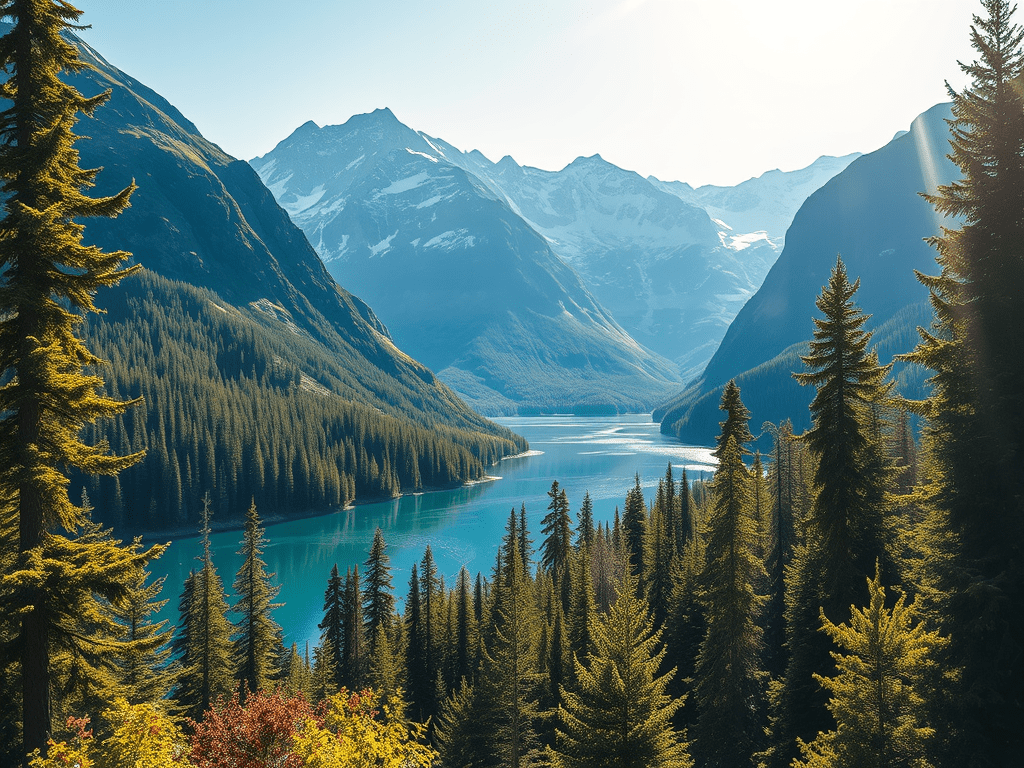
    Retiree’s, especially those who have been retired for a long time like myself (9 years) have a problem remembering the current date and sometimes the current day of the week. Once you are out of work, every day seems like Friday. Or Saturday. Or whatever day you like the best. I use to rely on my wife to keep track of important dates – she kept a completely detailed calendar for important social, financial, anniversary dates,  birth dates – pretty much everything scheduled for up to a year ahead. Now that she’s gone, I rely on my Pixel watch – the face clearly has the day and date, so all I have to do is check my wrist. Seriously, I do maintain a schedule, and check it every day, which is why I realized the other day that I’m just 39 days from departing for Alaska, and maybe I should start getting serious about making sure I have everything I need for the trip. The Alaska trip is only 10 days, but it’s chock full of different activities (kayaking, hiking, cruising for wildlife), in a wet and cool location. Kind of different from the trips I’ve been on this past year. So I’ve dedicated the past few days to preparing for the next trip, the Inner Passages of Alaska, and starting to think about Antarctica in November.

    In Search of the Perfect Camera Backpack

    I posted a while back about my never ending struggle with lugging camera gear on my adventures. Every one of the trips I’ve been taking (or planning to take) that requires air travel seem to have somewhat different photography needs, and different airline requirements for carry-on luggage. For example, the Galapagos Island trip had land based wildlife photography plus snorkeling with sea lions and penguins. That’s a lot of gear. My upcoming trip to Alaska is primarily wildlife, but also kayaking and possible close encounters with whales. Long lens, wide angle lens and the GoPro. The next Baja trip will have opportunities for wildlife, and both surface and underwater whale photography – I probably will not need the 500mm lens on that trip, but probably take it anyway.  This large amount of camera gear would not be an issue if I were always flying first class on large planes. But most of these trips have a second flight on smaller, commuter jets, which have limitations on weight and size of carry-on. I’ve also got two trips so far, which have the final leg on single engine prop planes. Very small, with limitations on size and weight of luggage.  I’ll be closing my eyes on take-off and landing, especially the sea plane. 

    Now that I have a very large and heavy telephoto lens (150-500), my former go-to camera bag no longer goes. That’s what happens when you try to cut costs. My wife would have said..”just buy the damn bag you need”. But I didn’t. And then a miracle occurred while I was stressing out about what to do for my upcoming Alaska trip, I received two sale advertisements via e-mail, one from Mike’s Camera, and the other from Think Tank, both for the same camera bag – the Airport Commuter backpack. The overall size of this pack is between my giant LowePro backpack, and the smaller Think Tank backpack that I used on my last two trips. It’s also a bit smaller than the roller camera bag I have. It looked absolutely perfect for pretty much anywhere I travel to. So, off to Mike’s Camera, which had one in stock. For once in my life, I did not stand there trying to justify the purchase. I had already done the research on it, so as my wife had recommended at times like these, I just bought the damned thing. 

    The Think Tank backpack is pretty much the last photography related item I’ll be buying for a while, other than a raincoat for the camera. Seriously, they make specialized rain covers for cameras, large enough to cover huge lenses mounted on a tripod/monopod. You can get inexpensive ones which are basically large plastic bags, or spend a lot on waterproof material, sized to fit specific lens types. I opted for the latter – after spending that much on the camera and lens, I’m not going to scrimp on the rain gear. And I even found one made in the USA, from a company (Lenscoat) that specializes in various protective covers for cameras and lenses. It is rare to find any camera gear made in the US – almost all camera and lens makers are foreign, and even tripods/monopods are all made elsewhere. 
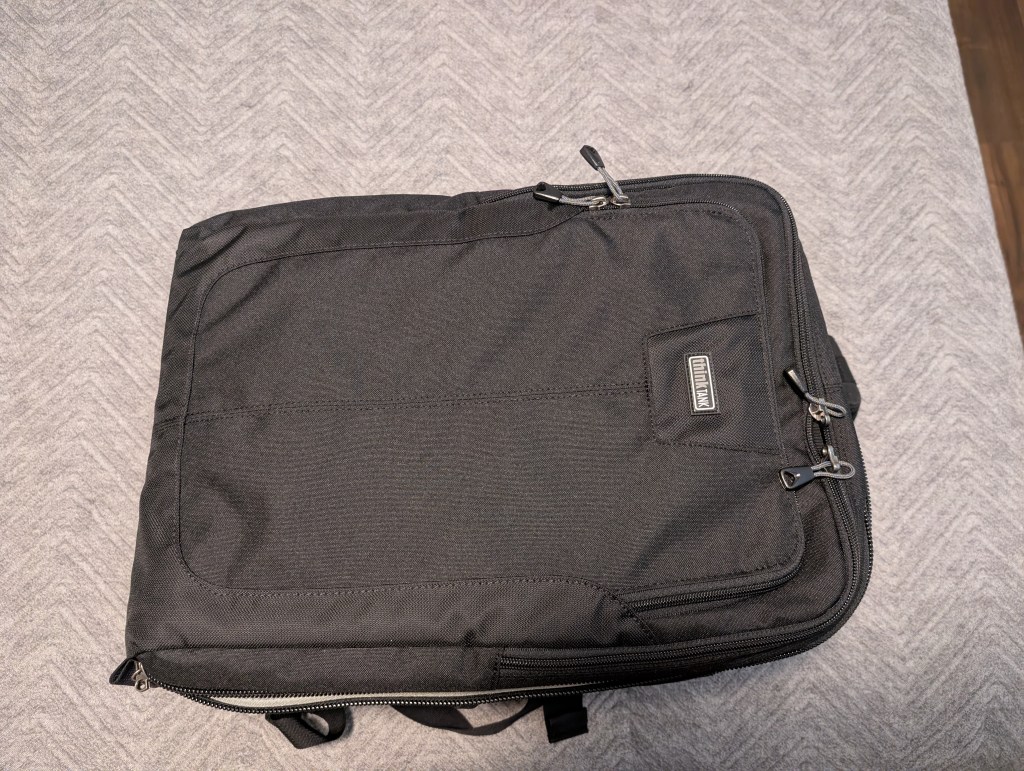
    When I got home, I packed all of the gear I could possibly use on a trip into the new pack – there was still plenty of room for other carry-ons like an iPad, books, glasses, etc. And the size really was perfect – it will fit in the overhead of pretty much any plane, and should not be an issue with the small planes either. I won’t be packing much in the way of clothing for those trips. On one trip we live on the beach, the other in a shipping container on a fishing boat. Who cares what I look (or smell) like. I’ll be staying at hotels after each trip, with real showers, and my own bathroom. I am treating both of these like a backpacking trip. I will be looking forward to a long, hot shower when I get to the hotels.

    The Grizzly Bear boat – no frills.

    Expedition Clothing – REI loves me

    And speaking of gear, I’m almost done buying out REI (and other places) for the Alaska trip. I now own waterproof outerwear for kayaking (which I’ll also need in Alaska, Antarctica and Patagonia), kayak gloves, photographers gloves for cold weather, boot socks for the rented waterproof boots, and some new lightweight insulated clothing. My annual REI rewards check should be impressive this year.  Fortunately, you can rent a lot of the bulky stuff you need on some of the trips, like knee high waterproof boots for Alaska and Patagonia, and winter boots for Antarctica – those would be impossible to pack, and really uncomfortable to wear on the plane. National Geographic gives passengers big parkas for the Antarctica trip. I’m not quite sure how I’ll get that home.

    Monopod vs. Tripod

    I mentioned in a previous post that I had purchased a new monopod, which will come in handy for photographing from the National Geographic ships, and the Kodiak converted fishing boat. I have two tripods, which are a must for shooting with heavy cameras and lenses, but both are heavy, and are not allowed onboard smaller ships – these take up too much deck space on smaller ships. Monopods provide some stability, relieving much of the stress and pain of hand-holding heavy gear, and work well when jockeying for space with the other photographers. The Siriu monopod I purchased is made from carbon-fiber, extends to 6’, and has a small set of fold-up feet for added stability. I also bought a ball-joint mount, and a specialized quick release mount for it as well. The mount and feet sections are removable, so it will be easy to pack the thing in my luggage, and it is super light.

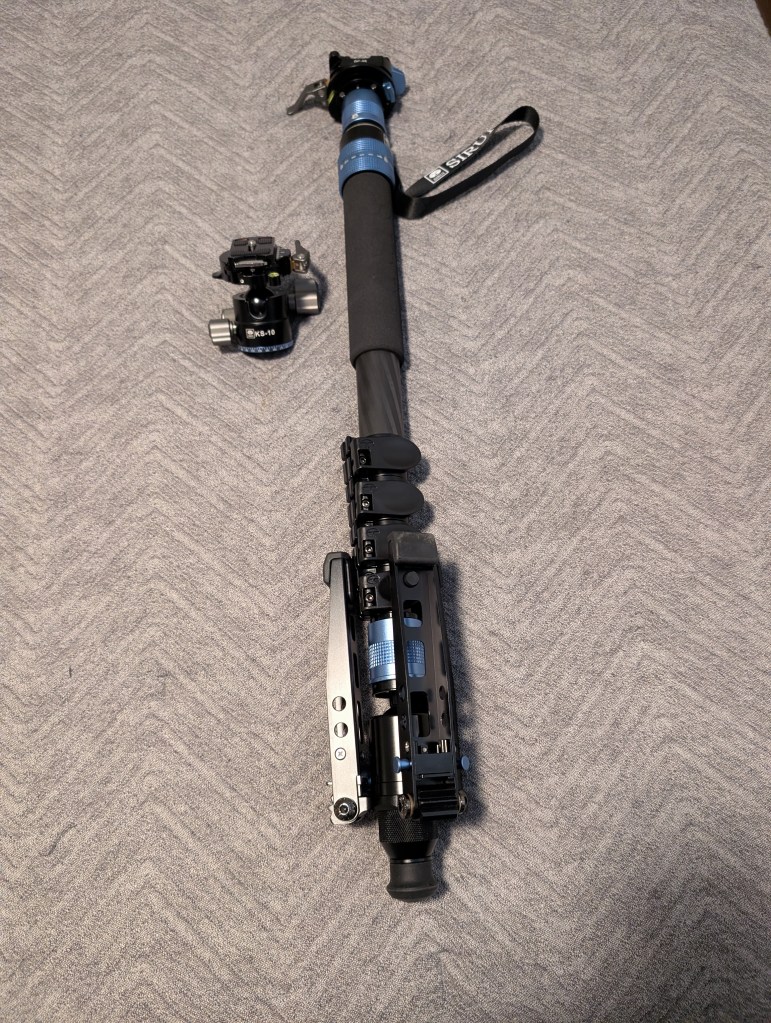
    I’ll leave the feet at home for both trips to cut down on weight – I’m not planning on using it like a tripod for the heavy lens and camera. A very nice toy.

    So I think I’m ready for Alaska. I’ll worry about Antarctica in October.

    FYI – you may notice some formatting changes in this post, which I will be applying to my older posts as well. I’m learning more about blogging, and ways to maximize new visitors through Search Engine Optimization (SEO). I’m not considering advertising/monetization at all, which seems to be what most blogs use. But I will have an occassional link to the locations I visit, or for some of the companies I buy gear from – more of a convenience for readers interested in the stuff, and one of the SEO recommendations I’ve read about.
  • Escape to (and from) Alcatraz

    My big day did not start too well – I tweaked my back somehow walking around, and it hurt pretty bad in the morning. A couple of Ibprofin helped, and I Uber’d over to the Alcatraz Ferry stop (Pier 33) rather than walking again. Good move. And, it was a crummy morning – cold, damp and a bit foggy. It’s summer in the bay, so this is pretty much the norm. The company managing the ferry does a really great job of handling the crowds (it was crowded), managing the groups getting on and off the ferry boats. I was there early, but they let me board a half hour before my allotted time. They have three or four different boats, all with multiple decks and snack bars. The ride was short – maybe 15 minutes.  Once you get to the island, a park ranger gives a welcome spiel, and then you are  pretty much on your own, and that worked fine for me. There is just sooo much to see. You do get a map ($1, optional), and it’s kind of hard to get lost on an island.

    Waiting for a ferry
    Boarding the ferry – lots of people, but well organized.
    Cold, crummy day so far
    Looking back to city…typical summer day

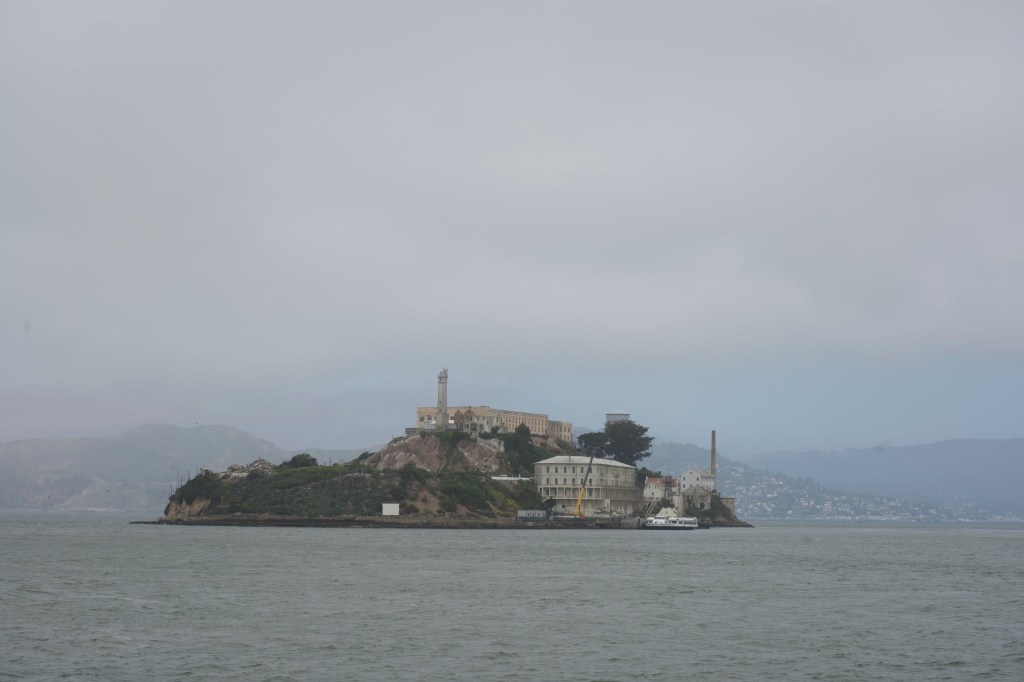
    The next image, as you get close to the island, is a great view of what to expect when you get there. The very top of the hill (The Rock) is the cell block, which includes the lighthouse and warden’s house at one end. So much to wander through. It’s a steep path to the top (and an even steeper stair case on one side). The boat docks by the big building on the shore – an old fort/barracks, and the main entrance. At the other end, below the water tank, is the power plant and beyond that are even more buildings. There are paths circling the entire island as well. Plan to spend some time there, and wear good walking shoes!

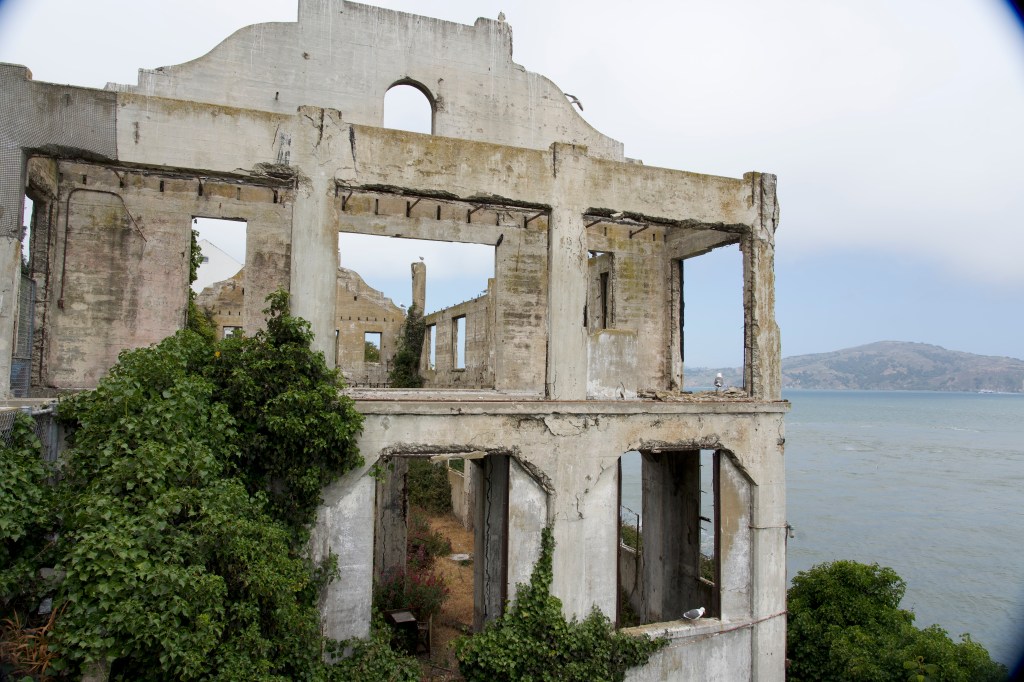
    I had spent a little bit of time checking out the National Park web site for Alcatraz, and knew a little bit about it’s history, but it is still amazing when you set foot on the island, and see all the old buildings, many just ruins. The first building you see when you get off the boat was an old fort turned into barracks (the big white building in the photo above), from the 1860’s. Across from that are the ruins of the officers club, now a hangout for Sea Gulls….which are all over the island. More on that in a bit.

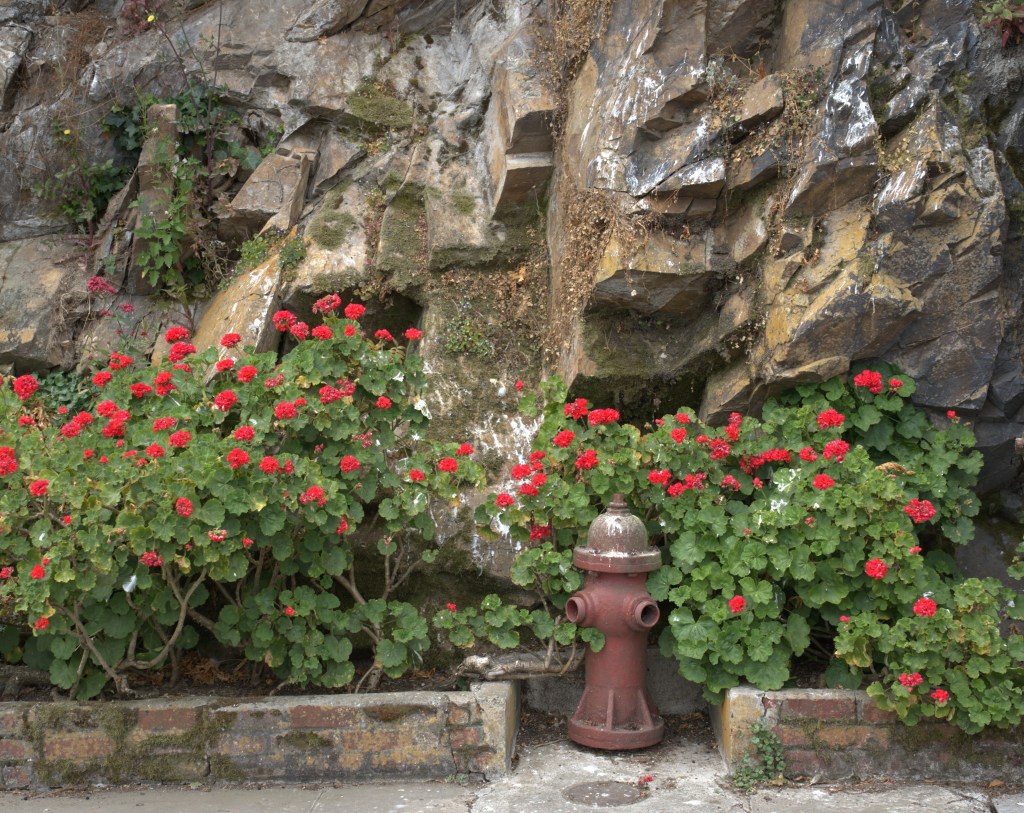
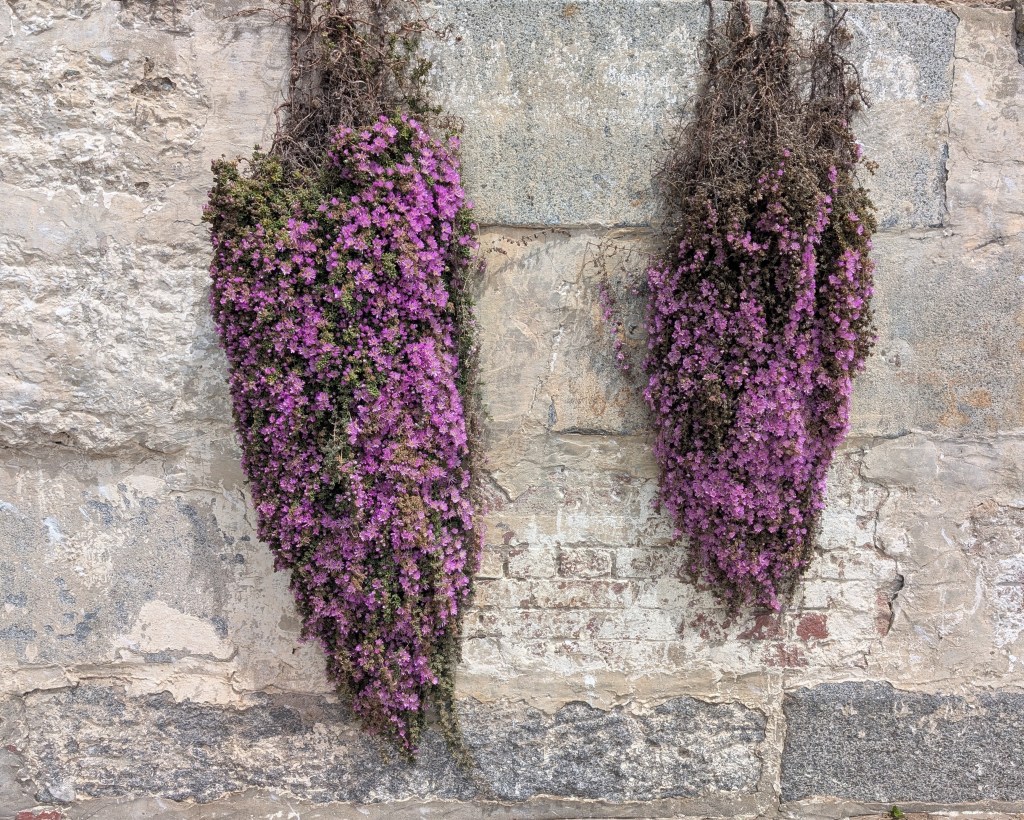
    I was planning to be on the island until there was nothing left to see, so I was in no particular rush to get to the main attraction, the cell block. So after spending some time photographing the ruins of the officers club and checking out an old cannon (a strange obsession of mine), I opted to first visit the Alcatraz gardens since they close off early. What a surprise – the gardens go back a long time, first started by the army – not a huge area, but some really beautiful flowers. Seems so out of place there, but there are gardens all along the island perimeter. 

    Flowers everywhere….it’s a nice climate for growing things that like cool, damp weather.

    And one more…

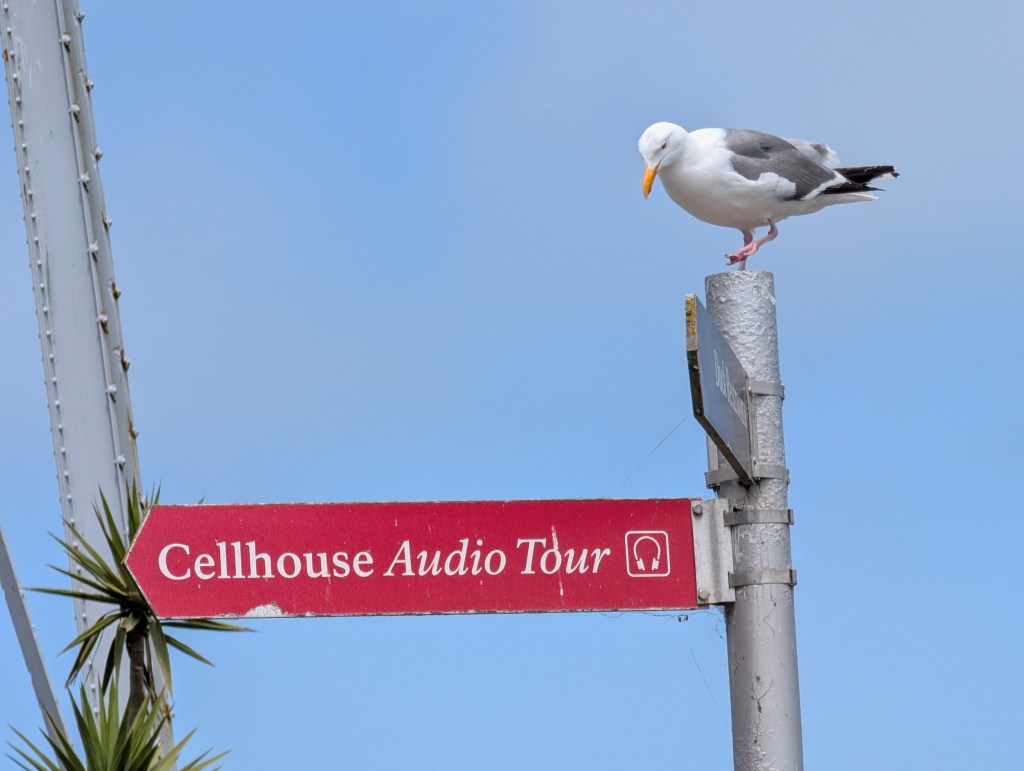
    After that, I worked my way up the hill (very steep, but they do have a shuttle from the dock to the top), aiming for the audio tour of the huge cell block. Lots of signs pointing the way with gulls to provide encouragement.

    A side note here…..the island is a nesting site for a number of birds, mostly gulls and comorents so there are a lot of interesting bird shots in this post. Like this one.

    If you’ve never been to Alcatraz, it is an amazing place, worth adding to your list of parks to visit. The free audio tour is excellent – you get headphones and a small recorder, and it leads you through the tour, with directions, descriptions of what you are seeing, and recordings from former prison guards and prisoners. You sort of forget all the othe people wandering around, and just focus on the narrative. This tour covers most of what you would want to see in the main building – the cell blocks, dining hall, solitary confinement, library, the cells where some of the notorious criminals slept, and where the major escape attempts occurred. All described in detail on the audio. Once you are finished (and might need a break), you turn in the equipment, and you are on your own to wander the island (ending up in the gift shop of course). And there is so much more to see. And yes, there are bathrooms that are not in a cell.

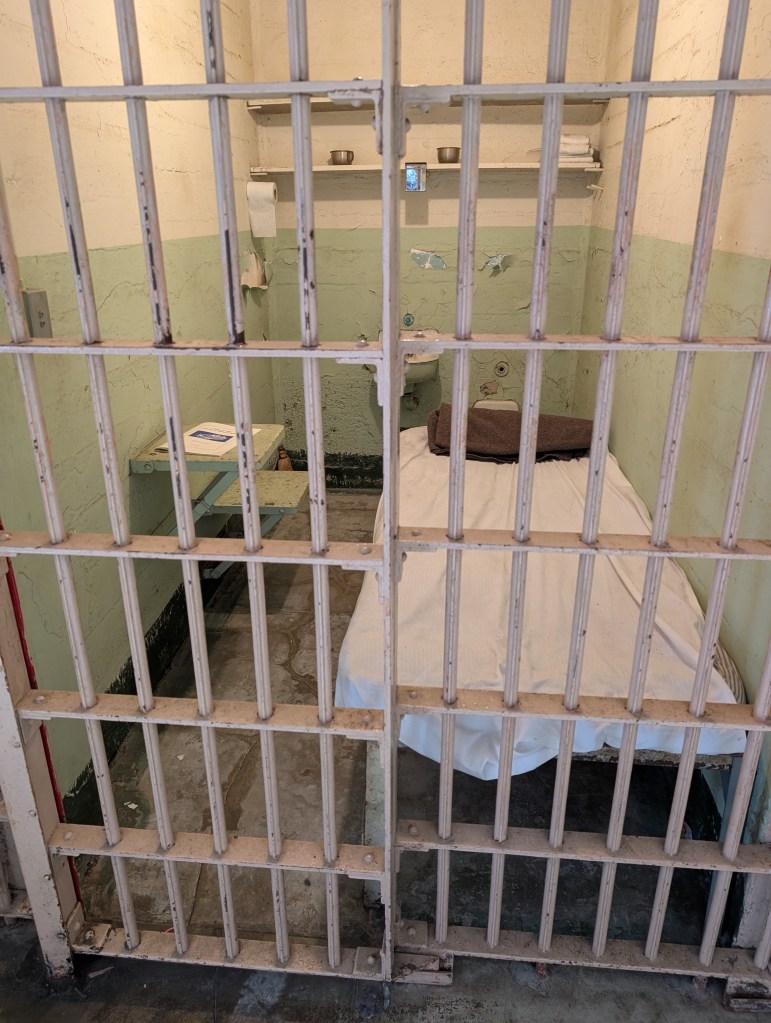
    Typical cell – en suite bathroom
    Fully furnished cell – they even had a built-in radio outlet (just two stations
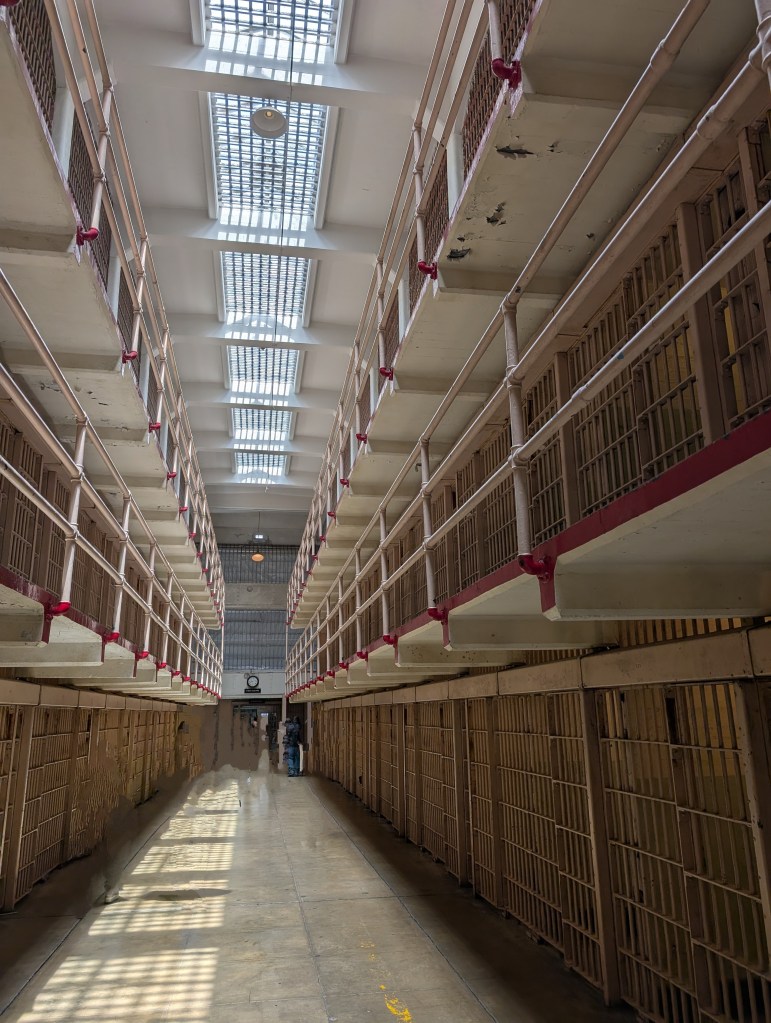
    One of the main blocks (Broadway I think). They all look the same

    Oddly enough, I did not take too many photographs in this building. All the cells kind of looked the same, and the interesting part was the story you heard on the recording about each stop. By the way, the shot above was not a miracle, having it free from the crowds. I used Google Magic Eraser. Poof! People gone (except for shadows)

    I spent about four hours total on the island before I ran out of gas and took the ferry back. It was extremely windy, with all kinds of steep paths and stairways to climb, but all worth it. The views are incredible, and if you can stand the smell, there are some huge bird nesting areas to view.

    In some places, the gulls were nesting right along the path, and you could see little, grey spotted chicks around the nests. Cute. 

    After circling the island, and checking out the power plant and other buildings on the end of the island, I meandered slowly back down to the docks. I had enough. I hopped the next ferry back, found a nice comforable chair by the window, and enjoyed some quiet time, doing absolutely nothing. After disembarking (I love that word), I checked out some of the displays they have in the waiting area for the ferry – some large cannons (huge) from the old army installation on the island (Civil War era), and a big model of the island. I used the people-poofer on this photo as well.

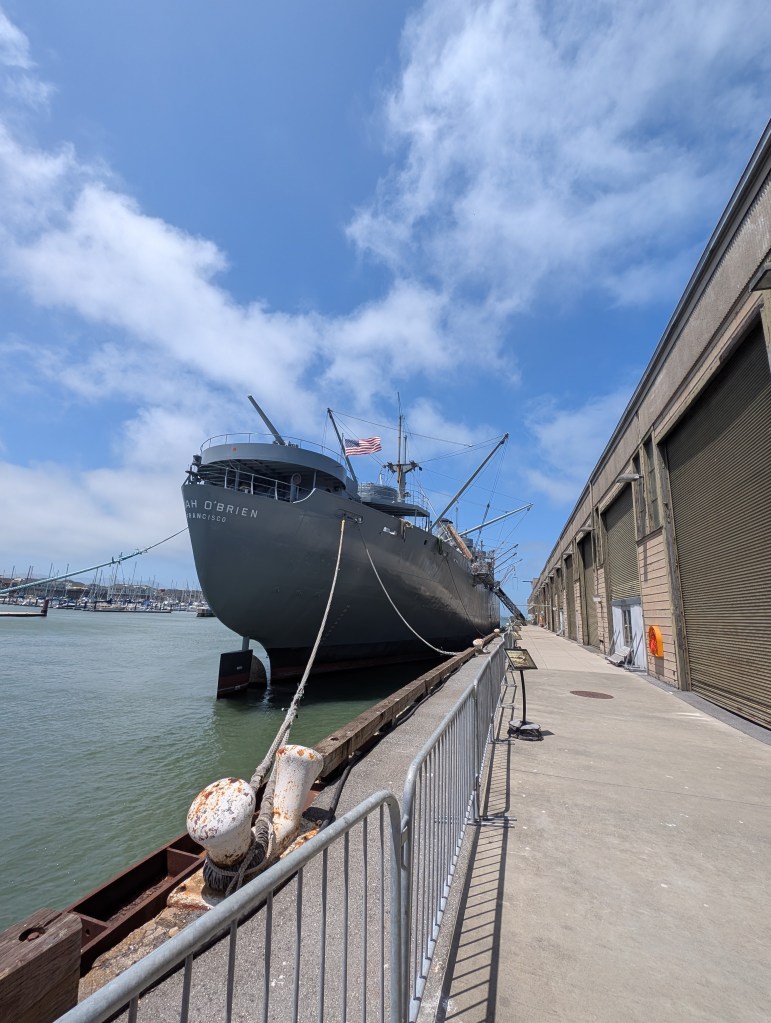
    I was initially pretty much convinced that I would just head back to the hotel on the way back, but then thought about the WWII Liberty Ship, the SS Jeremiah O’Brien, at the next pier. I always wanted to see that, so my day was not quite done.

    I’ve always been something of a history buff when it comes to the Civil War and WWII. Not sure why. I had this thing for fortifications since my early childhood, when we visited Revolutionary War forts in upstate New York. I dragged my wife to a few of these piles of bricks later on – she suffered quietly through this obsession of mine. Growing up in NYC, my father used to take us to Manhattan for the annual Navy fleet weeks, so I’ve scrambled around all kinds of warships as a kid. There are not too many of the old ones left, so I try to visit any that are within striking distance, wherever I have lived. Jan and I did a tour of the USS Hornet a few years ago in the Alameda, and I think she enjoyed that one. Maybe because we visited the Hanger One distillery afterwards. At any rate, I’ve always wanted to tour the WWII liberty ship that’s tied up at Pier 37 in San Francisco and since I was a short walk away, I decided this was the time and place.

    Stern view of the O’Brien – that’s a 3 inch gun barrel sticking out

    I was really tired, and even my good knee was aching. So the first thing I see is a steep gang-plank to get on board. Wonderful.

    Ugh. The only way onboard…sorry knees

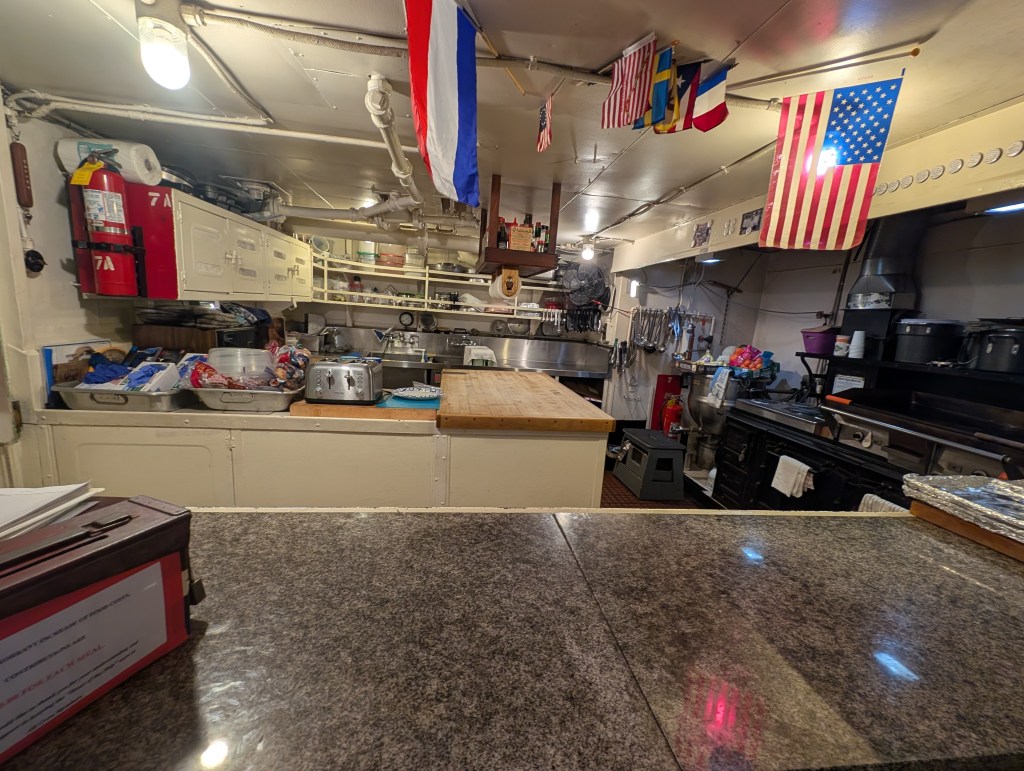
    This is a self-guided tour. You can go just about anywhere on the ship, unless there is signage that says don’t go there. The entire ship is a museum – all the cabins have original gear, and each has a description as who slept there, or what it was used for. You can visit the bridge which is functional, climb up to play with the guns, pretty much go anywhere you want within reason.

    Galley – still functional
    Functional bridge

    Funny thing about the bridge. You always see in films, the captain ordering ‘full speed ahead’, and one of the crew members sets the speed on that big contraption with the pointer. I never quite understood what that does. Now I know – actually nothing. There are chains connected to a similar device in the engine room, and it just sets the pointer on that one. The chief engineer sees that, and yells at the crew to turn the dials, valves, light boiler fires and all the other stuff that makes the ship move. Who knew?

    20MM Cannon
    Looking forward from the bridge

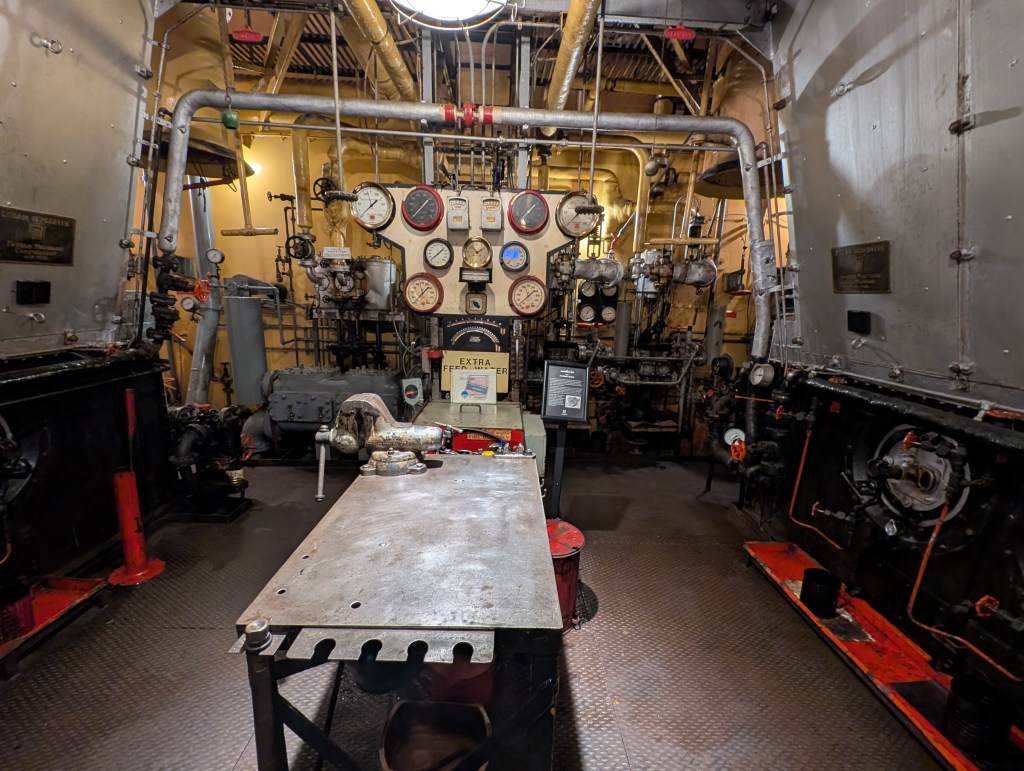
    Absolutely the best exhibit of all, is not an exhibit – you can visit a working engine room. At your own risk – a big sign says so at the first ladder going down, and there are lots of signs saying “HOT – Do Not Touch”. This is a functional ship – everything works, and the ship still cruises around the bay under it’s own power. There are a series of REALLY steep ladders that descend to the lowest level where you can see the boilers and pistons that drive the ship’s single propeller. The engineer who maintains and runs the engine room was there, and enjoys answering just about any dumb question you have. I almost understood some of what he was saying about steam condensers, and somehow got into the equation for determining the amount of pressure in each of the 3 different engine cylinders…something which inclues pi. He lost me after a while. It was like talking to a software engineer at Google.

    Looking down – lots of pipes. Steam driven engines are complicated
    The “crankcase” that drives the propellor shaft
    Boilers on either side, and a lot of guages and dials. Not like a Tesla

    Another of my favorite parts of this tour, was the museum they put together in one of the forward holds (this is a freighter). They have a lot of photographs along the walls, giving the history of the ship and liberty ships in general, plus an interesting film on the history of the ship. There are only two remaining, of the thousands built for the war – hundreds of them were sunk by submarines and aircraft bombs. It was a dangerous job working on these ships. The O’Brien served in both the Atlantic and Pacific theaters of WWII, and carried equipment to support the D-Day landings. Quite a story. Worth watching the whole film (getting into the hold was yet another steep ladder).

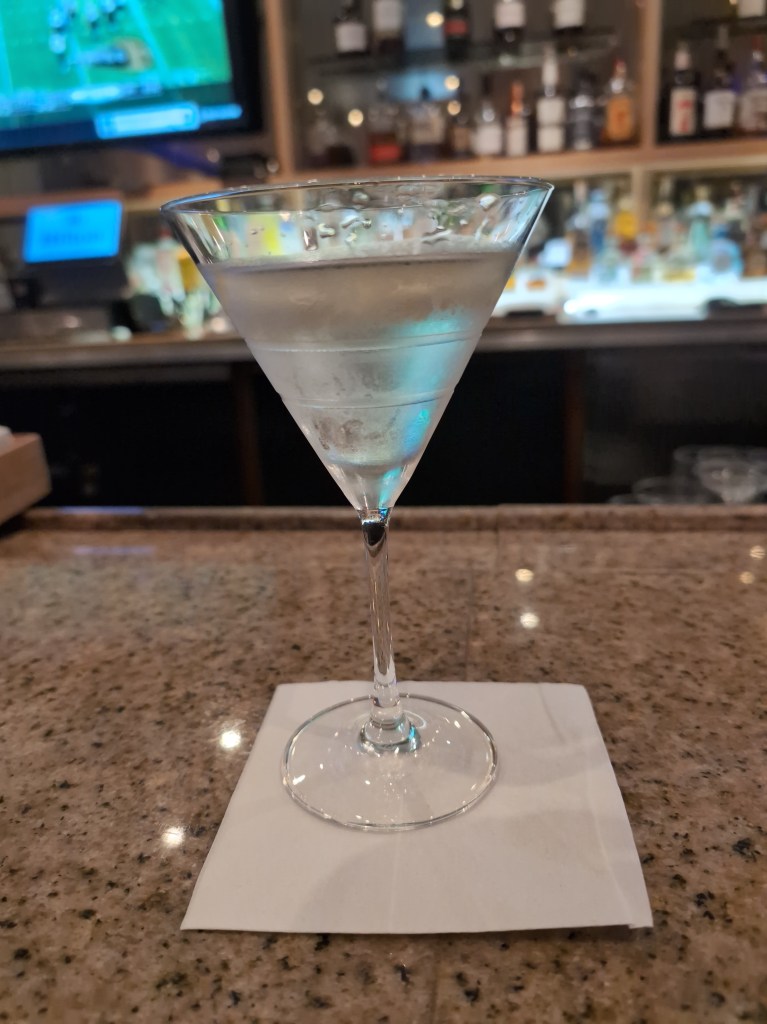
    After a while, my legs were telling me enough climbing up and down ladders. I even opted out of climbing up to play with the big gun (3”) on the bow. It was time to head back to the hotel. I had planned to wander around, maybe hike up to the Coit Tower, but that was no longer an option. It was Uber time. Followed closely by martini time. When I first made the reservations, I had thought about just staying one night, driving home after I was done at Alcatraz. I was so glad I decided to stay the additional night. No way I could have driven home.

    Well deserved, followed by a nice grilled salmon dinner

    So, that was the end of my mini-trip. Check off two entries from my bucket list. A good trip. Except…and here’s the widower part of this blog. It’s really hard going places by yourself when you are so used to being a pair, and then coming home to an empty house. It gets to you after a while. But, I guess you get used to it over time. Or maybe not. Time will tell but I’m not real optimistic of late.

    This may be the last post for a while. I have two full months to kill before my Alaska trip. I’ve got to figure out where to go in-between. I get really bored staying at home. I might go chase whales again, or head up to places I have not been to. Lots of options in California.

    And for those of you who subscribed, I’m sorry if you were surprised to get an e-mail with this post. That’s what you get with subscriptions. You can unsubscribe if you want – check the bottom of the post.

    More information on the liberty ship and Alcatraz can be found on their respective Websites:
    https://ssjeremiahobrien.org/?v=0b3b97fa6688
    https://www.nps.gov/alca/index.htm