After relaxing and doing pretty much nothing (other than eating and drinking) for my first two days in Colorado, Thursday was the first with planned activities requiring some level of effort (other than eating and drinking). I had reservations for the Cave of the Winds, and The Seven Falls, both in Colorado Springs – about a 90 minute drive from where I’m staying.
I’ve known of the existence of both of these tourist stops in the Springs, but never managed to visit either in the 38 years we lived in Colorado. I was too occupied with activities that risked significant injury (or worse) like rock and ice climbing, and cave tours or boutique hiking just seemed so tame and boring. But now that I’m old and decrepit, the Seven Falls park seemed like a perfect warmup for the Manitou Incline since there were steep stairs to climb, and it’s just too hard to turn down cave opportunities after doing six of them this past summer. Let’s start with the cave.
Cave of the Winds

It’s kind of surprising that there are not a lot of caves in Colorado which have been developed into public tourist attractions. There is certainly enough limestone here, and there are hundreds of caves but only two have been open to the public. That may have something to do with mining – in Colorado, it was all up in the hard-rock mountains, so you did not have miner’s poking around in every hole in the ground like you had in California where gold was first discovered in streams in the foothills. If an entrepreneurial miner found a cave near the California Sierra, where there was no possibility of finding gold, they made a profit by selling tickets to climb around with candles and ropes. At any rate, I decided to do half of the public caves in Colorado. This one is located up a fairly spectacular canyon, cut into the limestone formation – there are trails going down there, but I did not explore them.

Once you drive up the winding road to the parking lot, there’s a short walk over to the visitor center….and you get to see all the usual kiddie attractions that all caves seem to have. This one even had a climbing wall and one of the adventure climbing things. All for children. Not interested anyway.
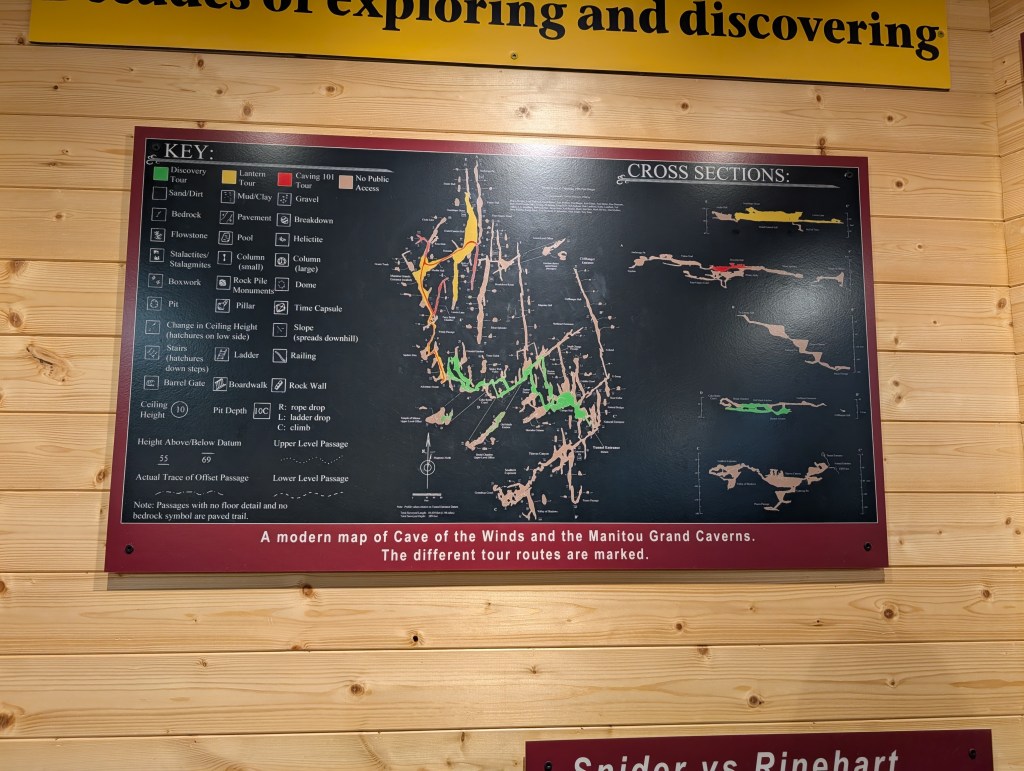
So, on to the tour. The COW (Cave Of The Winds without the T) offers four different tours – a standard one hour tour through about a half mile of the cavern, a Lantern tour which covers some of the Manitou Cavern which is connected to the COW, most of which is unlit and muddy. Wandering around in the dark with candle lanterns did not seem like a lot of fun to me. They also have children education tour (obviously not for me) and an adventure tour, which is another opportunity to crawl through muddy, extremely low/narrow passages. I opted for the more civilized tour.
I won’t go into too much detail, since there was nothing outstanding at this cave that I have not already seen in the last six caves in California. There were some nice features, and the tour meandered through a lot of very narrow and low passages which made things interesting and potentially painful at times. There was one point along the path called the Ping-Pong, a narrow, low spot where visitors bang their head against one side, and bounce over to the other. I ducked and avoided the experience. The tour guide pointed out some interesting features, like one smooth and shiny stalactite which was the product of too many visitors running their hands on it – that’s a major faux pas in caves. Any time you touch the walls or a feature, you are leaving oils on the rocks which over time builds up so that water simply sheets off of it. Once that happens, you no longer get mineral build up. More information than you ever wanted to know.
It turned out to be a nice, enjoyable hour or so – my only issue was the lack of down-lighting along many of the passages. While the tour path was paved most of the way, the light was dim in the narrow passages, and it was hard to see floor, especially when you were trying to avoid smashing your head on a low overhead. For me, with my balance issues, this was really a problem. Most of the other caves had lighting focused down on the trail, which I think is safer. I guess that’s just a sign of aging for me.
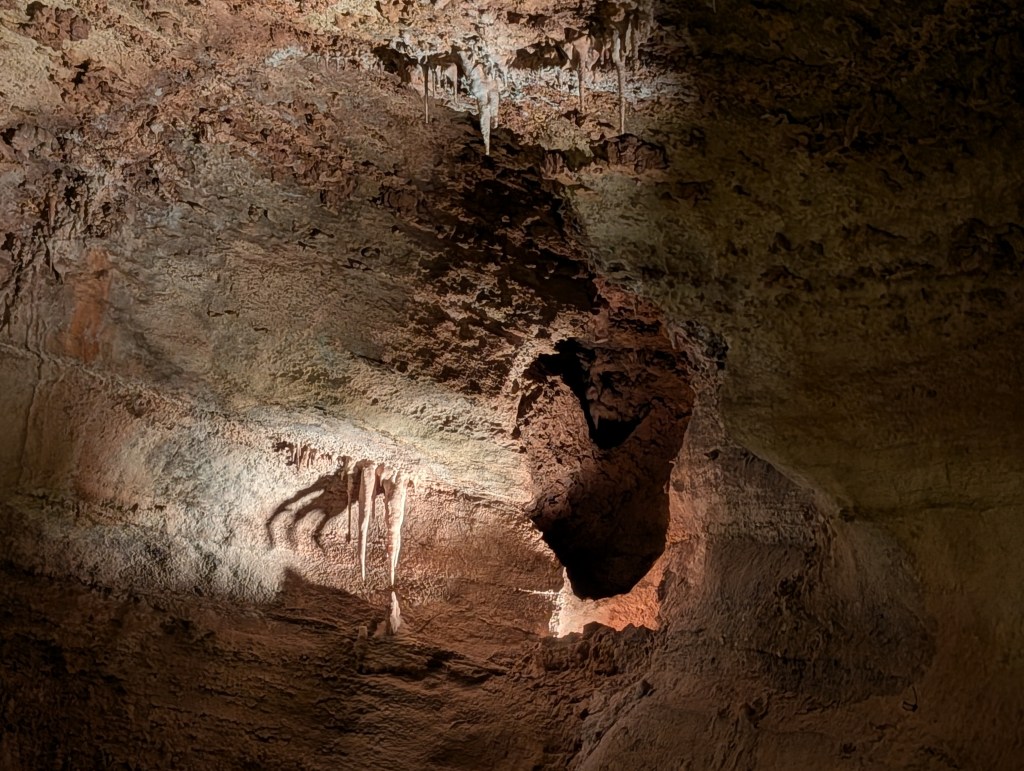
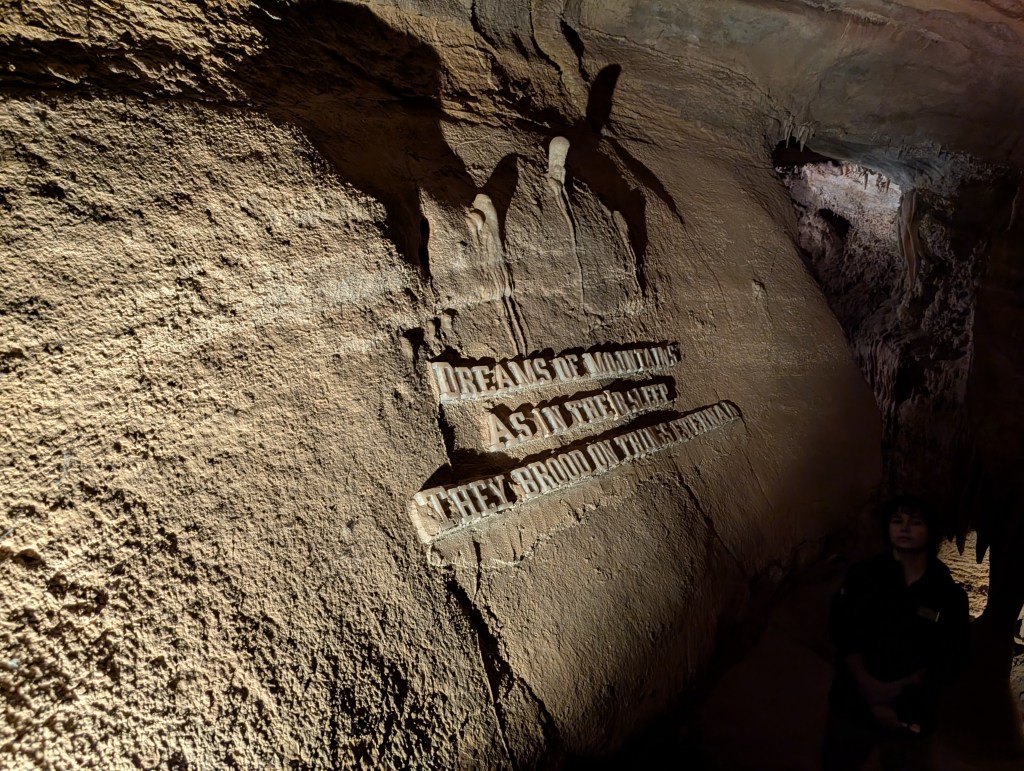
And here are a couple of photos from the cave tour – all with my new phone.



The Seven Falls (eight actually)
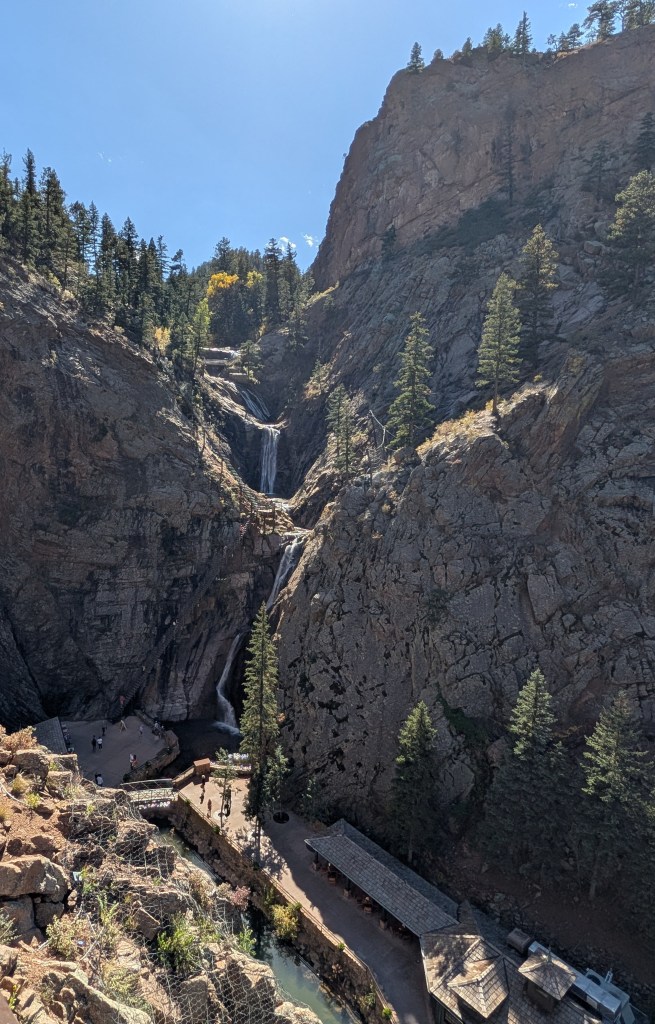
The Seven Falls is hard to describe – it’s basically a private mountain park, owned and managed by the Broadmoor Hotel. The property has been private since the 1800’s, and visitors have been charged to hike in to see the waterfalls at the end of the box canyon. Now, there is a high-end restaurant at the base of the falls, an elevator to get up to a viewing area, a place to buy ice cream and frozen fruit bars (more on that later), and lots of helpful workers who can cart you out to the shuttle stop if you are worn out from climbing stairs.
You start your adventure at another Broadmoor location, where you park your car and take the shuttle to the main gate of the park. The bus driver tells you there is a very short walk from there to the base of the falls. I asked him the distance. He said 20 minutes top. Uh…that’s not distance. I was not going to argue with him because he told us he was an ex-Navy Seal. Thank you for your service.
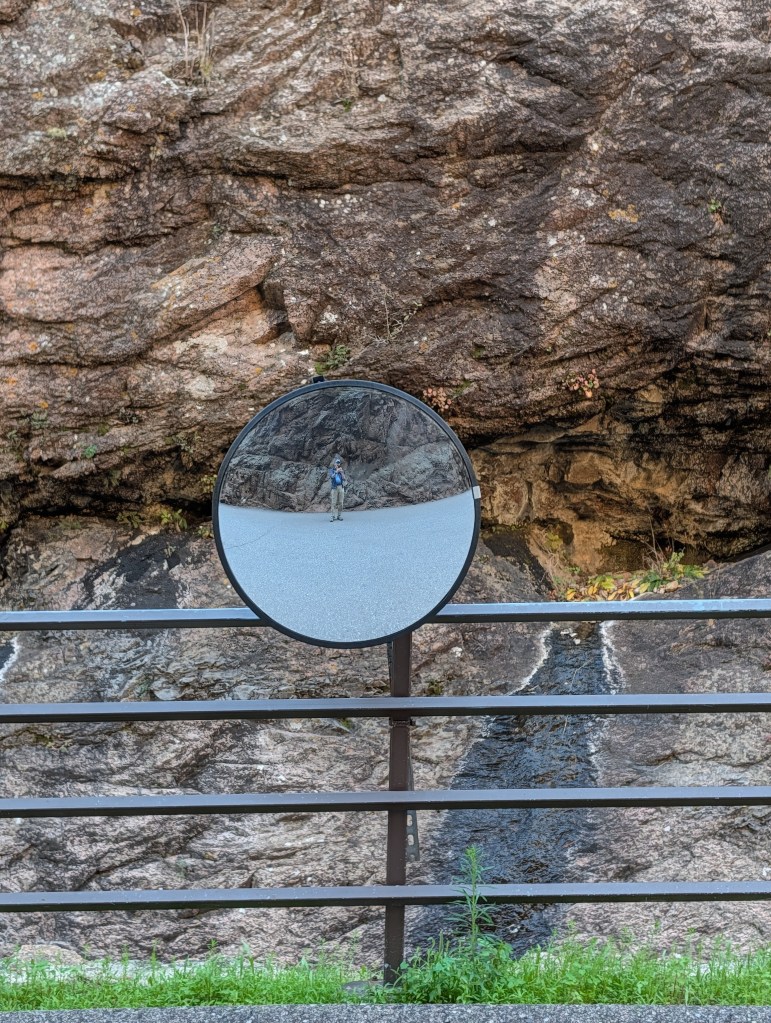
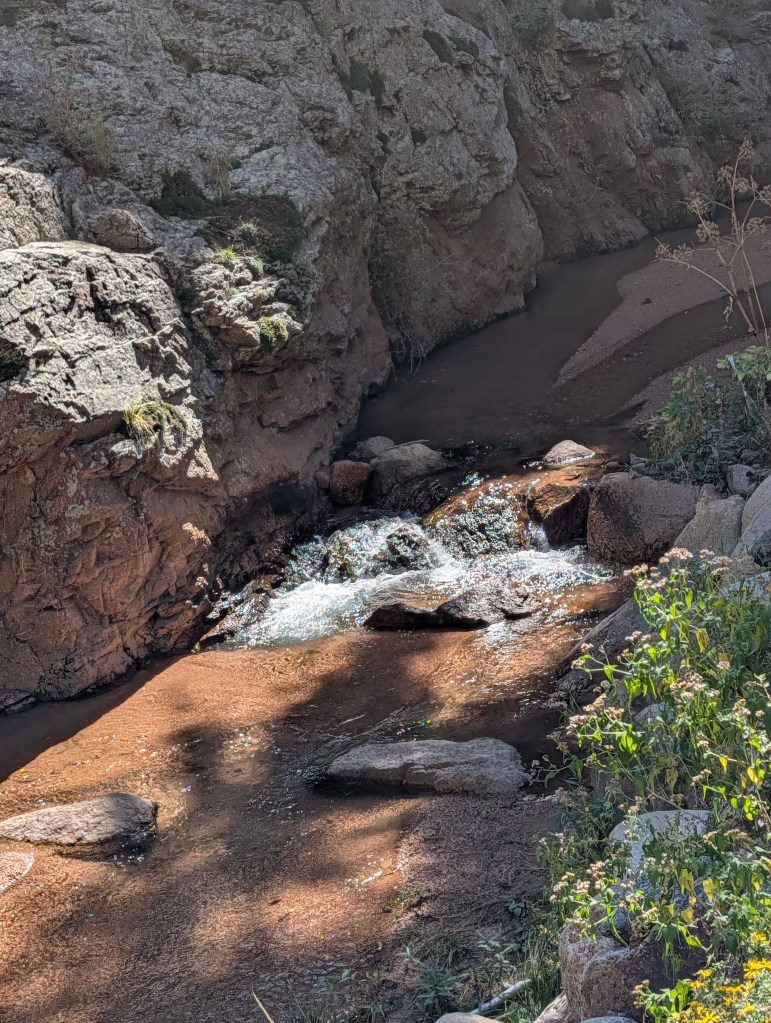
The walk was actually .75 miles, but it is on a wide road, with rest stops, bathrooms, lots of flowers, and lots of photo ops of the creek and canyon walls. A very pleasant walk.

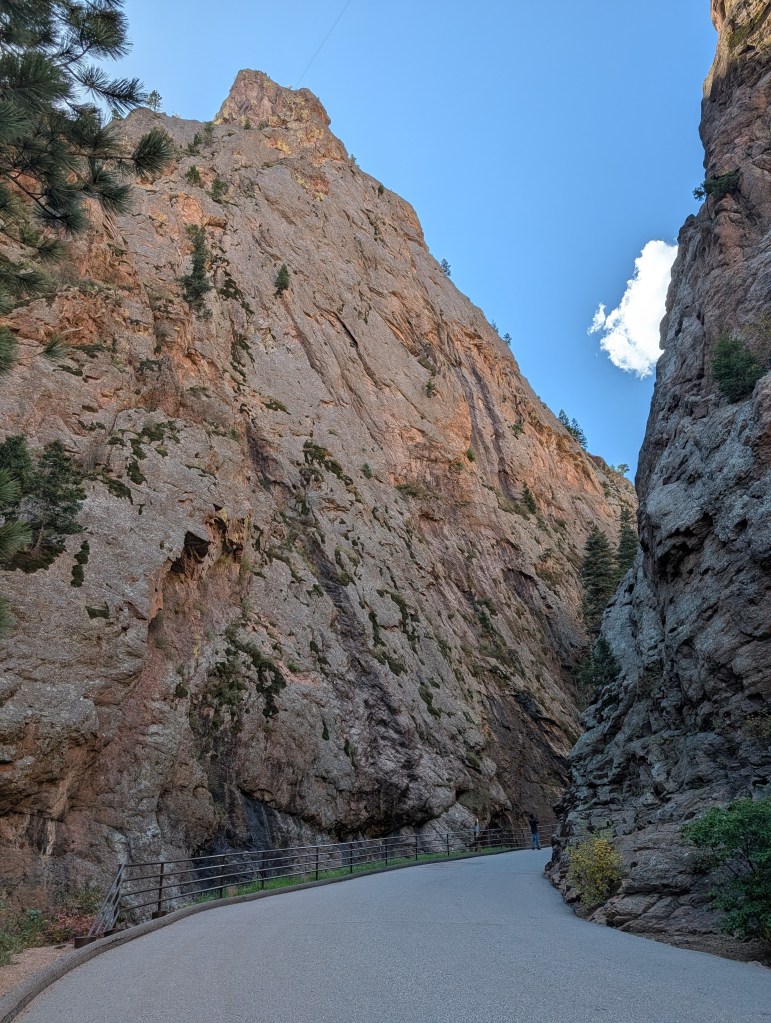

As you approach the end of the canyon you first see one of the options available for adventure seekers – a zip line way up on the cliffs. Nope. Not for me.

Just before you reach the restaurant, you pass by a small gift shop, which also sells frozen pops and ice cream. The stairs and elevator for the viewing platform start there as well. After my .75 mile short hike, tacked on to wandering around in a cave for an hour, made the popsicle sound like a really good reason for taking a break. I highly recommend the mango.
After my break, I walked the rest of the way to the base of the falls, where they have a really nice covered viewing area, filled with rocking chairs. I think they target old folks for that area. Since I am in that targeted demographic (old), I tried out a rocking chair for a while, pondering my fate – do I really want to do this?

Of course I did! Old but not obselete.
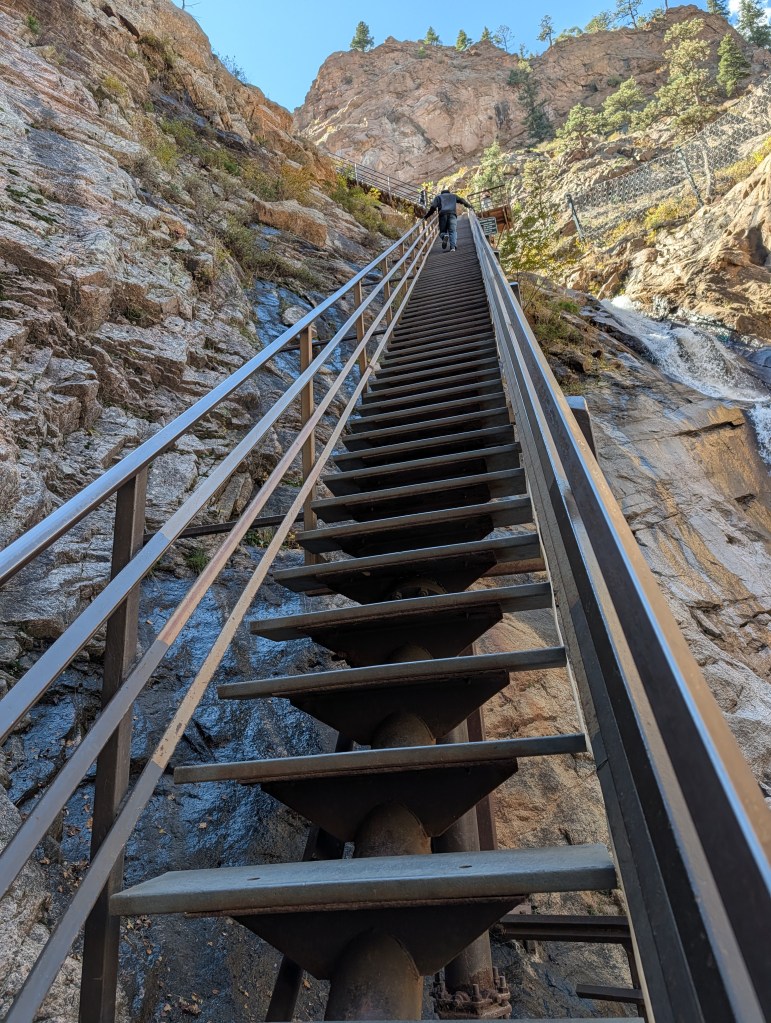
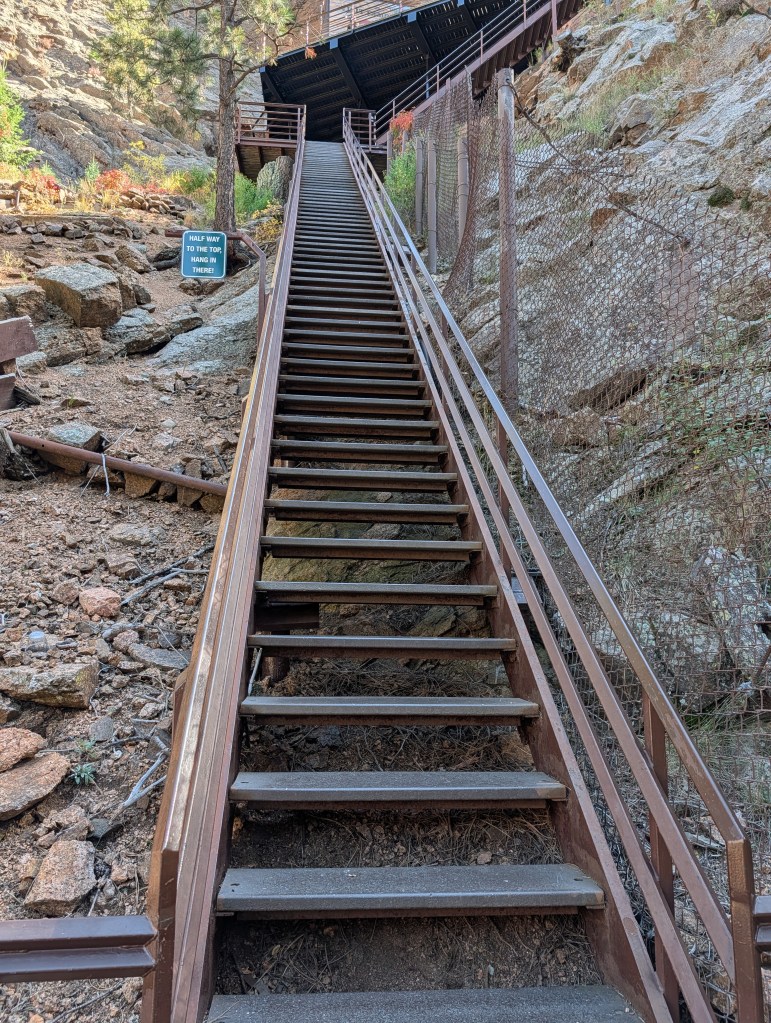
It really was not that bad – the first set of stairs were the longest, and I just needed one rest stop before getting to the top. With the railings on either side, it reminded me of going up Half Dome. Without the risk of falling thousands of feet down. Looking down the stairs from the first platform, you can see the where everyone sits on the rockers, deciding whether to head up. You also get some nice views of the falls from that platform.

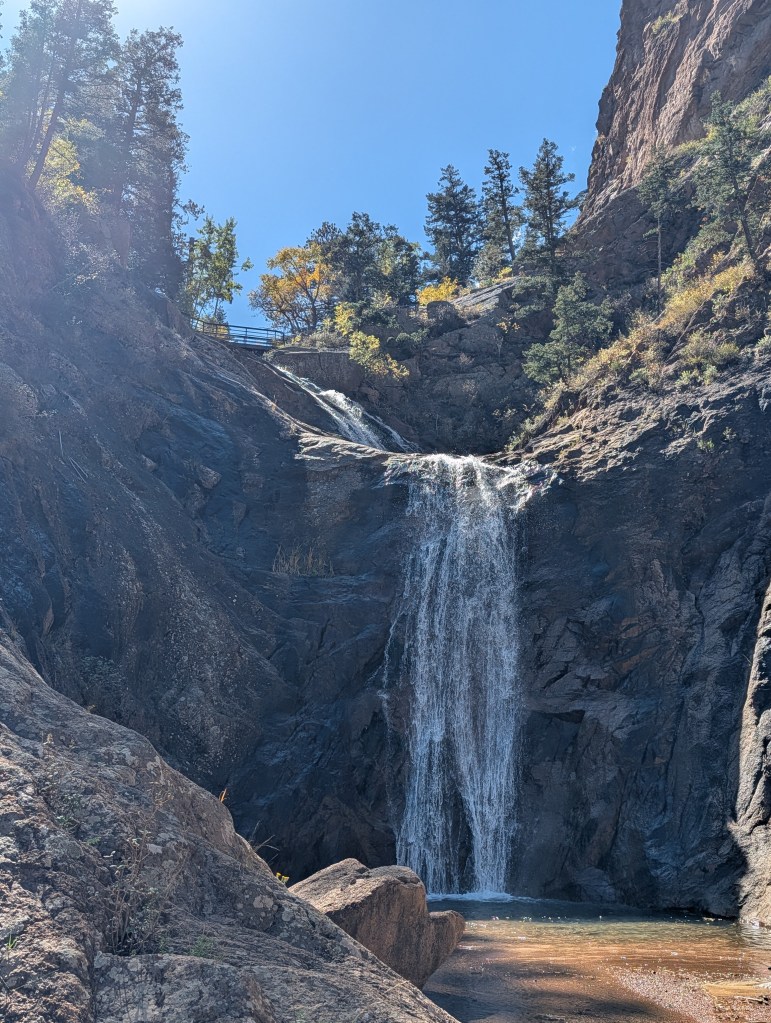
Once you negotiate the last few sets of stairs (270+), there are a couple of well marked trails you can take. One goes to an overlook, about a mile of hiking in the sun. The other goes off in the forest to the last waterfall, a half mile hike in the shade. I opted for the shade. This trail was quite nice, but made me realize that I should have brought along a better pair of hiking boots. I wanted to use my Forest Gump brace, which only fits in what are really water/beach shoes, and were not meant for hopping around on rocks. But, I managed to stay upright and made it to the falls, and then back to the top of the stairs.
I had recently bought the latest Google Pixel phone (Pixel 10), and decided to just use it instead of my heavy Sony A7 for this excursion, so the waterfalls were a great place to try out some of the features of my new toy. Plus, it was nice not having to carry the extra weight climbing up the stairs.
Oddly enough, the way down the stairs was not too difficult – my bad knee did not seem to mind, and I made it down to the rocky chairs in just a few minutes. And then sat for a while. I was getting a bit tired at that point. As I headed back down the road, I figured I might as well do the other stair climb – it was only another 175 steps up to the viewing area. But I did take the elevator down – that was a nifty bit of engineering since they had to blast that through the rock.


Since I was right next to the gift shop, I thought it would be best to re-energize with another of those wonderful fruit popsicles again. The orange cream was excellent.
All that remained was to hike the short .75 miles back to the shuttle stop. As I was limping along, one of the golf carts pulled up, and the very pleasant driver asked if I needed a lift? She was just so nice so I could hardly turn her down. Hey, I’m old and decrepit. I’m allowed to cheat once in a while. But I only hitched part way. I wanted to take a few photos on the way back.
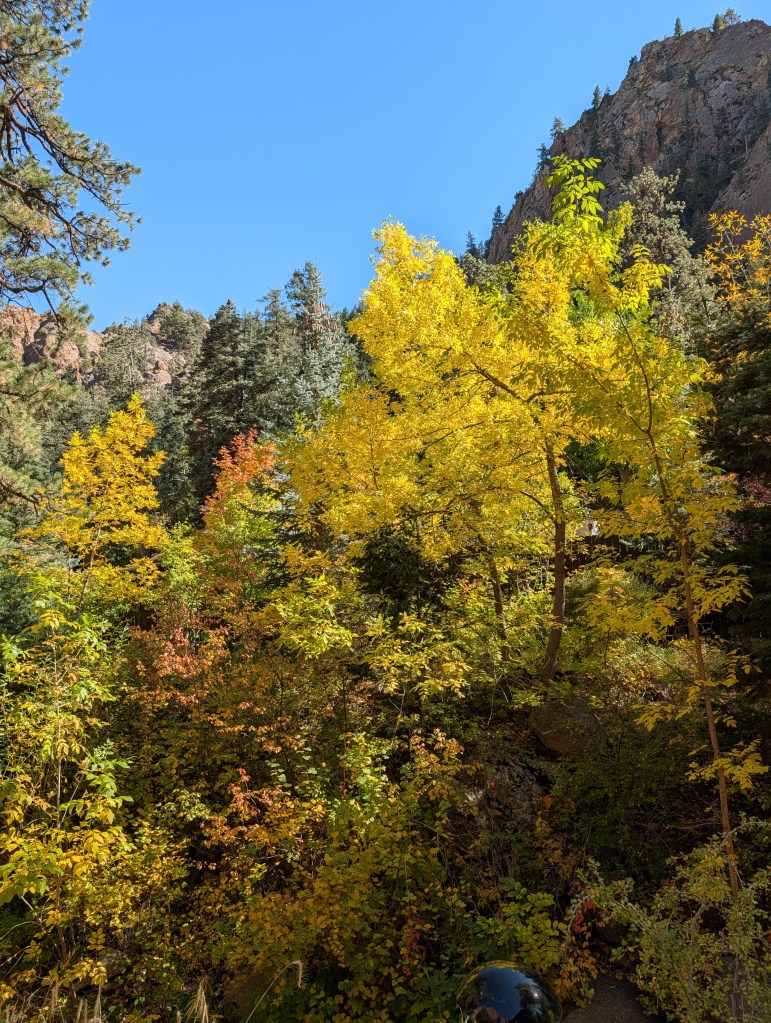
This turned out to be a really nice day – perfect weather, I survived a few miles of hiking at high altitude, wandered through a cave without falling, made it through climbing and descending a few hundred steep stairs, and made it back without injuring myself. What more can you ask for? (A new knee would be a good start).






 The Traveling Widower