Tag: whale-watching

  • The Long Way Down – Baja Part II

    February 23, 2026

    A whale skeleton displayed outdoors, surrounded by a wooden fence, with a building visible in the background under a clear blue sky.
    Grey Whale Skeleton outside the Whale Watch Visitor Center

    I’ve only been to Mexico two times – the first time was when Jan and I did our first international trip (we did live in Texas for a while….that’s sort of another country) and it was quite an experience. Puerto Vallarta, in 1982. Another strange story to tell some other time. Traveling there by plane was pretty simple. We did not even need a passport. This time of course, a passport was required, and driving requires going through Mexican customs, which I had heard could be a harrowing experience

    A soldier in camouflage uniform and a helmet stands outside a building, holding a military rifle.

    Our group was spread into two vans, and we drove off together for the short trip to the border from the hotel. Thankfully, It was a quick and uneventful experience – there were a few armed soldiers standing around, but all we had to do was have our luggage x-rayed and our passports stamped, and off we went. No different than what they do in any international or domestic airport.

    We then headed off to Ensenada, driving along on a really nice highway through parts of Tijuana, and then along the beautiful coast. It was interesting seeing “The Wall”, and then the strange mix of beautiful expensive housing interspersed with more ramshackle types of dwellings close by. I wish I could have taken a few pictures – there was one house we passed that looked like it was made of stacked plywood, three stories high, and had a nice table with chairs up on the very small roof. No railings. Great view, just make sure you don’t lean back.

    Welcome sign to Ensenada in Spanish, with palm trees and a clear blue sky in the background.

    It was a short ride to Ensenada, maybe an hour – really pretty along the coast, and then into the city. The airport is, well, not much of an airport. It’s a military base, with a very small terminal that services a puddle-jumper airline, ASG, that flies to all the small villages in Baja. This was not quite LAX – no conveyer belts, no kiosks, no lounges, restaurants, bars, or anything else. Just a shack with a 100 year old scale to weigh your baggage, and a small terminal with seating and bathrooms that had not been cleaned in a few weeks. 

    Passengers waiting outside a small metal building labeled "Aerotransport ASG Guerrero" with luggage and backpacks, surrounded by trees.
    Check-in line. No kiosks, no conveyer belts
    View of a military airbase building with blue accents and large windows, featuring an airplane wing in the foreground, under a clear blue sky.
    Ensenada Airport Terminal

    We had been assigned two planes, one a single engine Caravan which can carry 12 or so passengers  – this was the regularly scheduled plane and carried some locals who were returning to Isla Cedros with their purchases from Costco. Either that or snacks for the flight. Myself, and five others, were on a small two-engine plane, chartered specifically for our group. I think it was a Cessna 402, not that it matters. It flew and landed. That’s all that counted for me.

    A small aircraft with a black and white design parked on an airport tarmac, with a control tower and green fields in the background.

    I have not flown on a small plane since graduate school, over fifty years ago – I recall one of the students kissing the ground after we landed. I seemed to have blanked the rest of that trip from memory (something to do with geoanticlines) but still have a fear of flying in anything smaller than a 737. But, it was the only fast way to Guerrero Negro, so I said a few prayers, and boarded the plane. Luckily, I got the seat by the very narrow entry hatch – sort of like having the emergency exit row in a regular plane – extra leg room. Once we were all settled in, the pilot fired up the two engines, and we headed down the runway. I decided to capture the moment on my phone 

    It was an exciting take off, banking quickly over the beach and out over the ocean. The view was quite nice – I quickly forgot why I was so afraid of the flight, and settled in (there was no seat back) to enjoy the view of the Baja coast as we headed south. I think everyone was waiting for the food and drink service to begin. Now where was the flight attendant?

    Interior view of a small plane with four passengers seated and engaged in conversation, showing the cockpit area in the front.
    Seating was cozy…I was in First Class. I blurred the faces.

    The flight went by fast (it was a faster plane than the Caravan) – after about 2 hours, we turned inland over the lagoon – really interesting views of the wind-swept dunes. The area surrounding the town of Guerrero Negro was pretty much desolate – I thought that the cavern I visited last year in the Mojave Desert was the middle of nowhere. This would be the end of the road to nowhere

    The airport was about what you would expect for a small town in a remote location – a runway (sort of paved), a small hanger, a couple of outhouses, and a small cafe. More than what Ensenada had. 

    The van from the whale camp was waiting for us – the staff loaded up our luggage on top, and we managed to cram everyone in. I drew the short straw, and had to hang half on the edge of one seat. Not exactly comfortable for a long drive on unpaved roads leading through the salt ponds down to the beach. Ouch. I guess I should mention something about the salt ponds. The main source of income and employment for this town is salt production – there are large evaporation ponds along the edge of the Ojo de Liebre lagoon, and the dried salt is scraped up and processed locally, for distribution around the world. It’s a big business – the largest industrial sea salt operation in the world. Really. 

    The road eventually reached the whale watch visitor center (more on that later), and we continued down the road, passing the rental camping spots, each of which had a porta-potty and a thatched roof, open sided hut. And each had some sort of recreational camping vehicle with the owners sitting in beach chairs, adult beverages in hand. Very strange. They all drive down here to see the whales, and watch the sunsets I guess. They all looked pretty relaxed. I was half expecting to see all these folks wearing tie-dyed t-shirts, dancing to Grateful Dead music.

    Finally, after another mile of driving, we reached the whale camp. What an amazing setup. The owner, Keith Jones, has been doing this for 30 years – extending and improving the camp along the way. There are a variety of “cabins”, each made of plywood and tarps, some located along the edge of the beach, others scattered along the trail leading up to the communal dining/kitchen structure. There are porta-potties in a few places, open washing areas (hands, brushing teeth), a couple of communal showers, and paths marked with solar lights. There were also a few larger lights, powered by generators. The amazing thing about the camp is that it has to be torn down after the whale season is over – every structure is disassembled, and stored away locally until the next season. That’s a lot of work. Each cabin is on the primitive side – two very comfortable beds, a small table, and a very small electric heater (only for a few hours in the AM and PM). I upgraded to a cabin + shower – it looked like a Tuff Shed with another plywood shed added to it. Primitive but functional and surprisingly comfortable. My wife would never have done this, but I’m OK with roughing it once in a while. 

    An orange-colored cabin with a brown door, situated on sandy terrain under a clear blue sky.
    My cabin – the add-on section is the shower room. The path on the left leads up to the dining building.

    Here are a few photos of the camp

    After the van was unloaded, we met the camp staff and had a brief orientation – we then wandered off to our assigned cabins, and then made our way up to the dining building. This was another pop-up structure – lots of tables and basic seating (plastic or folding chairs), a bunch of games, books on whales and Baja geology and most important of all, a really nice bar – the woman doing the bartending made excellent margaritas. I was supposed to avoid alcohol for a while, but what the heck. It was a long trip. The staff was wonderful, and it was a really interesting group – mostly from California, but a few who traveled a long way to get here. All really nice, very friendly and a lot of fun. Things were looking up for the trip after the almost disastrous beginning for me. My heart seemed to be behaving normally – I had been checking my pulse (on the watch) regularly during the trip, and the BPM was pretty much normal most of the time.

    After dinner, everyone wandered off to their huts – the staff placed small, rechargeable lamps in every cabin, along with a camping toilet – very important for those of us who make a regular trip to the bathroom at 3 in the morning. Once the generators go off at night, the place is absolutely silent. Falling asleep was not a problem.

    Oh…and of course there were beautiful sunsets there.

    A serene sunset over a calm body of water, with silhouettes of distant mountains in the background.

    Breakfast was at 6:30, and we were leaving for the boats at 7:30 sharp – I had all the camera gear and my clothing ready to go. It was a long, very strange trip, but I was finally going to see the whales up close and personal. 

  • A trip to Moss Landing – Whale Snot and Otters

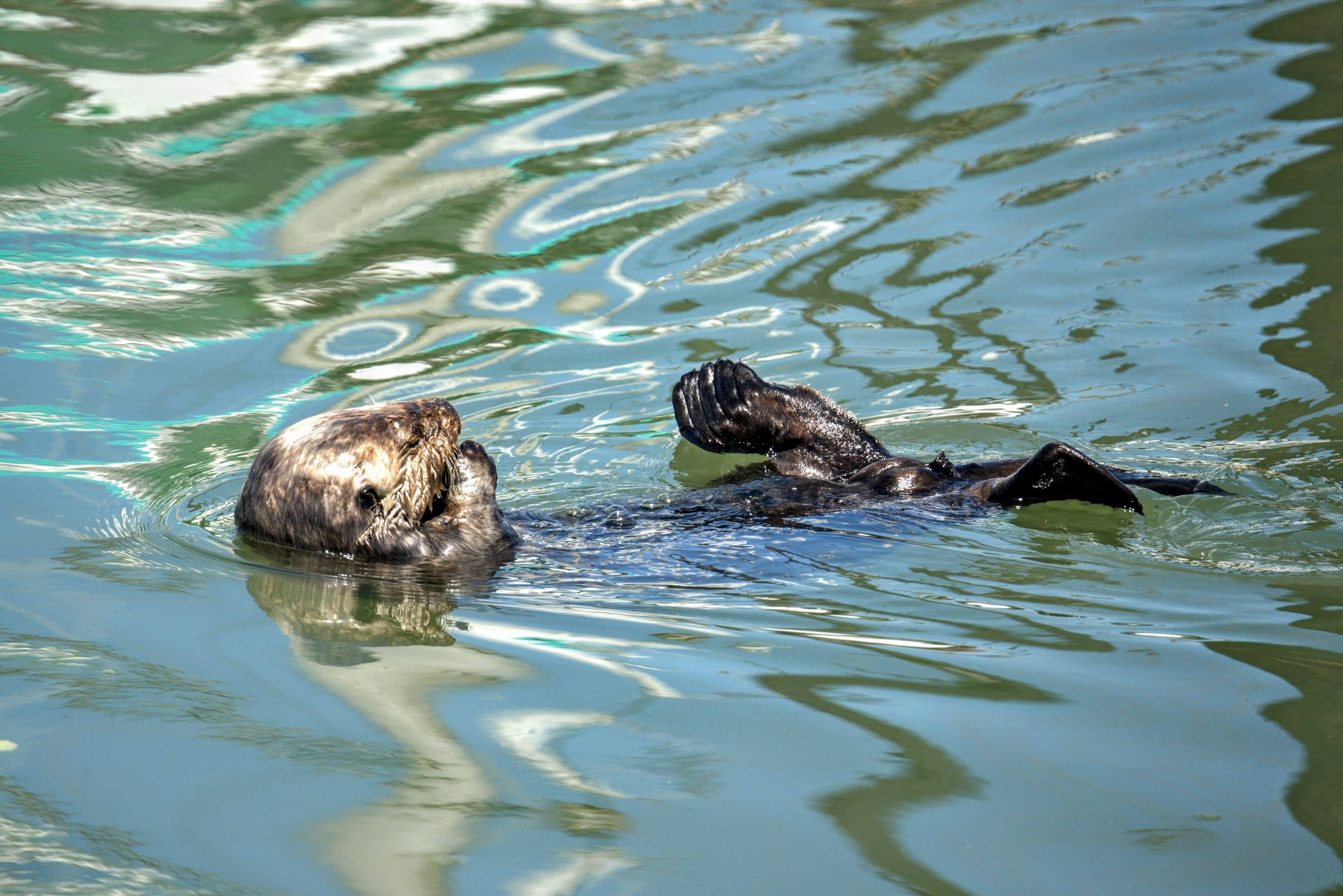
    photo of a sea otter in Elkhorn Slough

    The problem with choosing wildlife photography as a hobby, is that you invest a lot of $$$$ and time in the pursuit of perfection. For humpback photography, you are hoping for spectacular shots of whales flying through air, closeups of their eyes, or group photos of lunge feeding. My dream opportunity would be to photograph them underwater….I’m still working on that one. The problem with going out on most of the commercial tours in Monterey Bay, is that the vast majority of what you’ll see are whales spouting and diving, since they are primarily packing on blubber for their migration to Mexico in the fall. If you are lucky, as I was last April, you might catch them doing all the amazing things you really want to see – breaching, tail slapping, pectoral fin slapping, lunge feeding or coming up to the boat for people watching. That does happen quite a bit. The whales do like to have some fun. But the hit-or-miss opportunities here are one of the reasons why my wife and I started traveling to Maui each spring, to watch and photograph the whales while they are focused on mating rituals.  Everywhere you turn in the waters off of Maui, there are whales flying through the air. Here in California, it’s pure luck. 

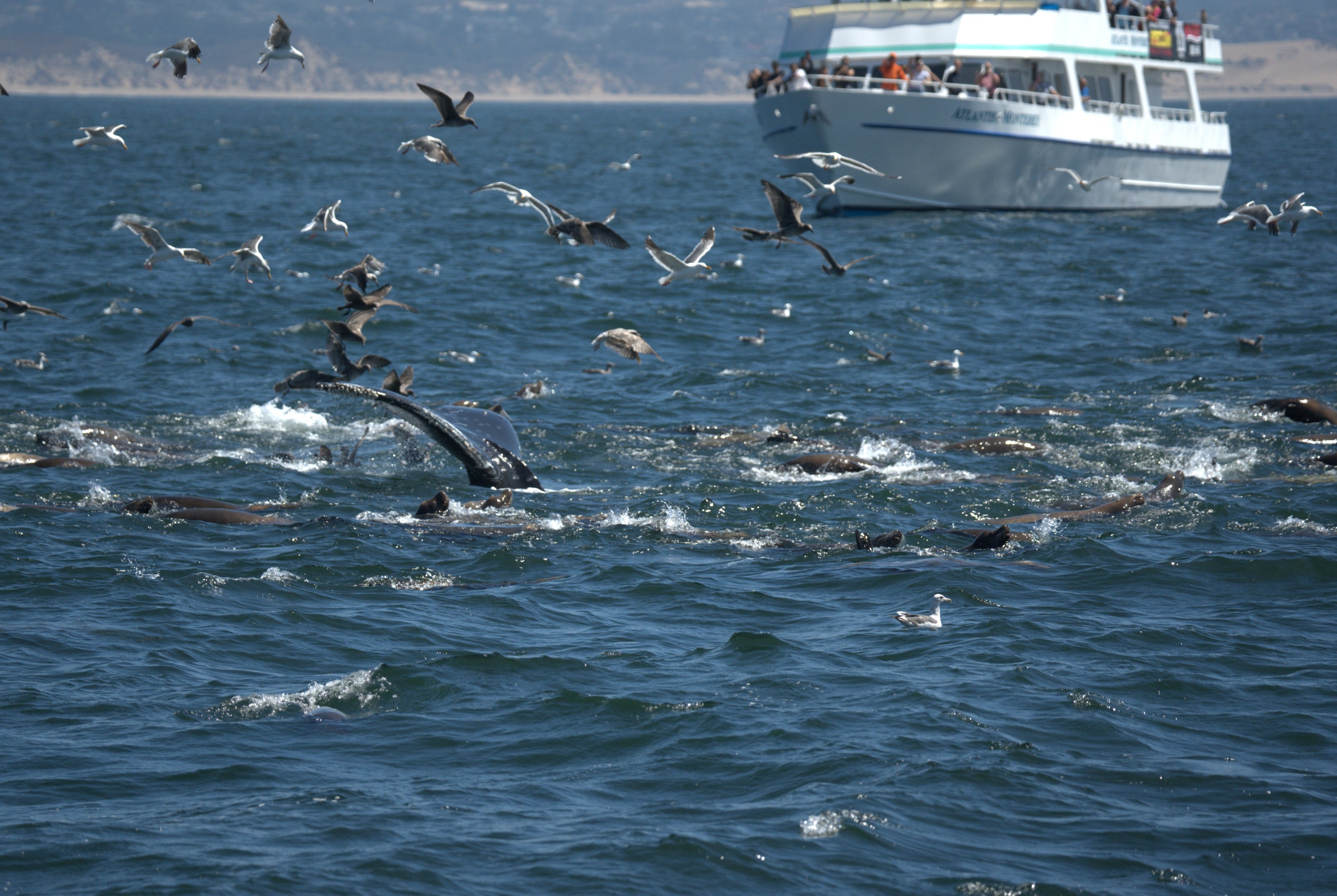
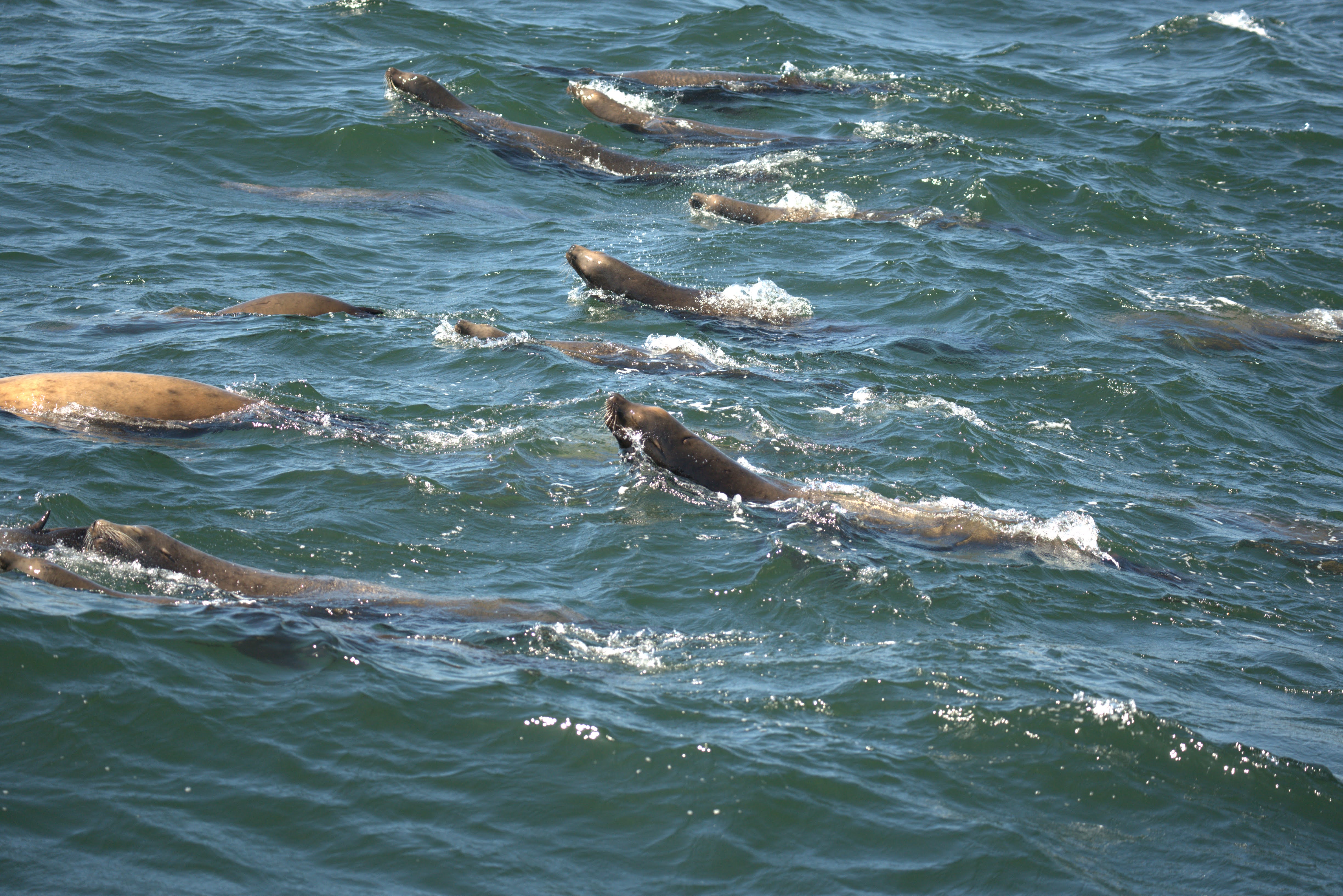
    On this particular trip, my luck ran out. There were large pods of whales, gorging on very large “bait balls” of anchovies. There were swarms of sea lions, following the whales as they all gorged on the anchovies. 

    Photo of sea lions in feeding frenzy
    Sea Lion feeding frenzy

    The whales did not have to dive deep, so all you would see are the spouts as they surfaced in the midsts of the sealions, and then a fluke as they dove back down. That gets ‘oohs’ and ‘aahs’ from most of the passengers, but not from semi-serious photographers Iike myself. All told, I probably shot about 25 photos. I usually have a few hundred when the whales are performing ( I can set the camera for 10 frames per second). 

    It was a pleasant afternoon, and definitely a nice distraction to focus on something other than my 50th anniversary. It’s always nice to be out on Monterey Bay on a beautiful sunny day. But a disappointment in terms of photography expectations. I still had high hopes for the next day, which was a pontoon boat tour of Elkhorn Slough. An “Otter Safari”.

    A bit of background if you’ve never heard of Moss Landing or the Elkhorn Slough (pronounced ‘slew’). Moss Landing is a fishing community (I use that term loosely) in between Santa Cruz and Monterey. The harbor is fair sized, filled with lots of commercial and private boats, as well as some large research vessels. The Monterey Aquarium has a research center there. All for a good reason – the harbor entry happens to be at the head of the Monterey Canyon, an underwater version of the Grand Canyon which is a giant smorgasbord of seafood for large marine mammals…like Humpback Whales. Along with a lot of sea lions, killer whales and many kinds of fish, so the harbor is home to a number of eco touring outfits. The harbor is also the entry for a very large marine estuary – the Elkhorn Slough, which is home to a variety of interesting birds, a sheltered resting place for harbor seals, and a feeding ground for sea otters. The slough is protected, accessible only by kayaks and a couple of licensed eco tours, which take groups out in open air, pontoon boats. Nice and comfy. The main channel goes quite a ways inland, surrounded mostly by farm land. And dominated by the giant stacks from a now defunct power plant.

    Photo of the Moss Landing Power Plan stacks
    Stacks for the old power plant

    My wife and I once rented a kayak there and did some exploring up the slough – absolutely beautiful and peaceful. Easy paddling unless a strong tide is coming in or out. There is also a nice protected area by the harbor entry, where the otters used to rest in large clusters (called a raft) – we always made a point of stopping there just to watch the critters rolling around.  

    A smiling woman in a life jacket stands on a wooden dock by the water, holding a kayak paddle with kayaks in the background.
    Jan did all the paddling…I steered and took pictures

    We never considered booking one of the pontoon boat “safari” rides – they just seemed so touristy. I had been planning on renting a kayak to photograph the otters, but was concerned about handling my big camera while I’m paddling around – way too risky. And then a friend told me that the pontoon tours were worth taking – no paddling required, and you have a nice stable platform to take pictures. Sold.

    This was quite a different experience from the whale watch tour I did the day before. The boat holds about 24 people, plus the boat driver and a naturalist. You just sort of step onto the boat, grab a seat on one of the benches, and they take off through the harbor. It’s very informal – the driver and naturalist keep a dialog going throughout the tour, pointing things out, answering questions. You can move around on the boat which was great for photography – unlike the whale tours, you don’t have  people camped out along the railings, blocking the view. There were only 8 passengers so there was plenty of room to move around. I was also able to finally use the fancy monopod I bought a few months ago – there’s too much vibration on the larger whale tour boats, but it was perfect for stabilizing the big lense on the pontoon boat.

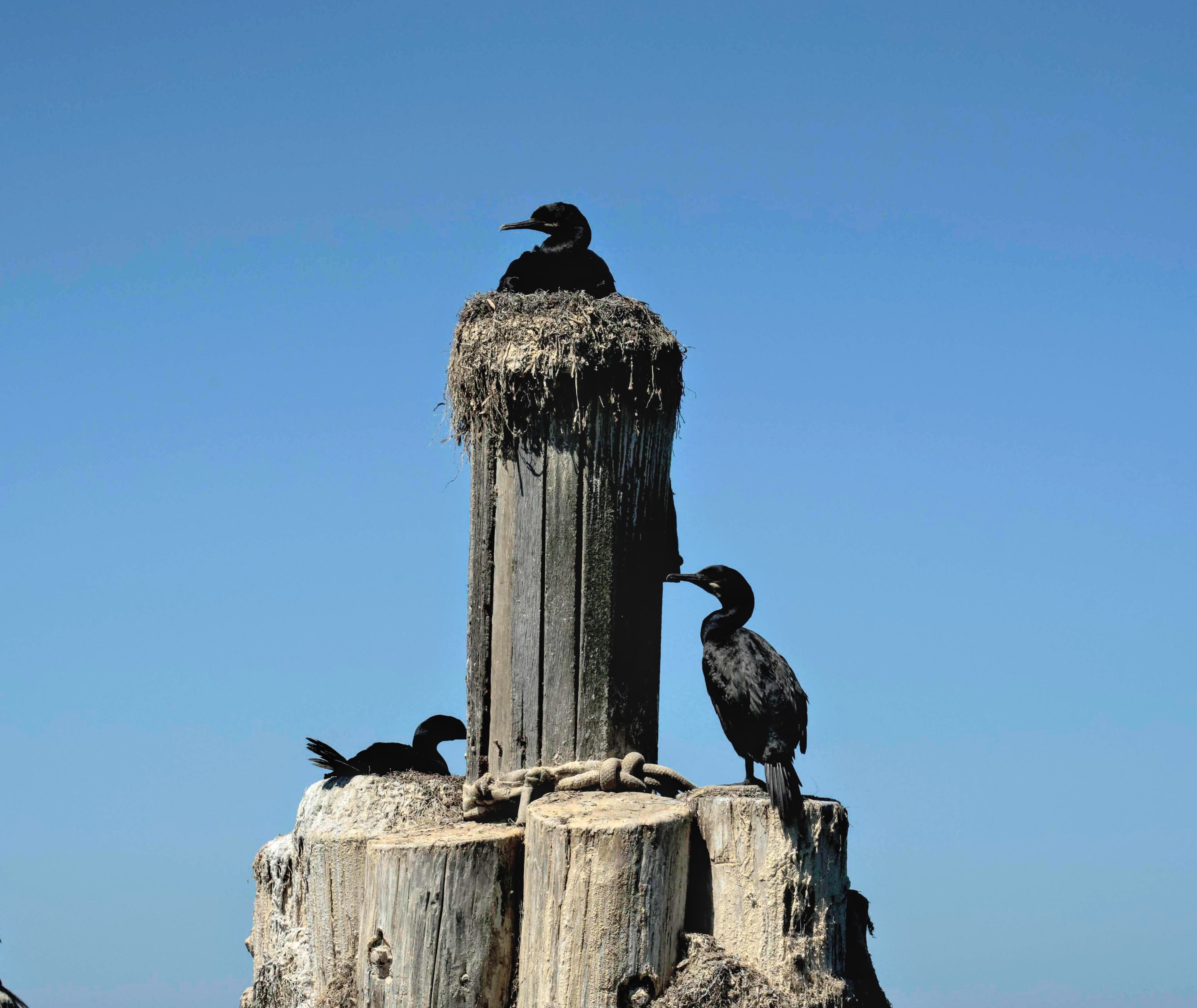
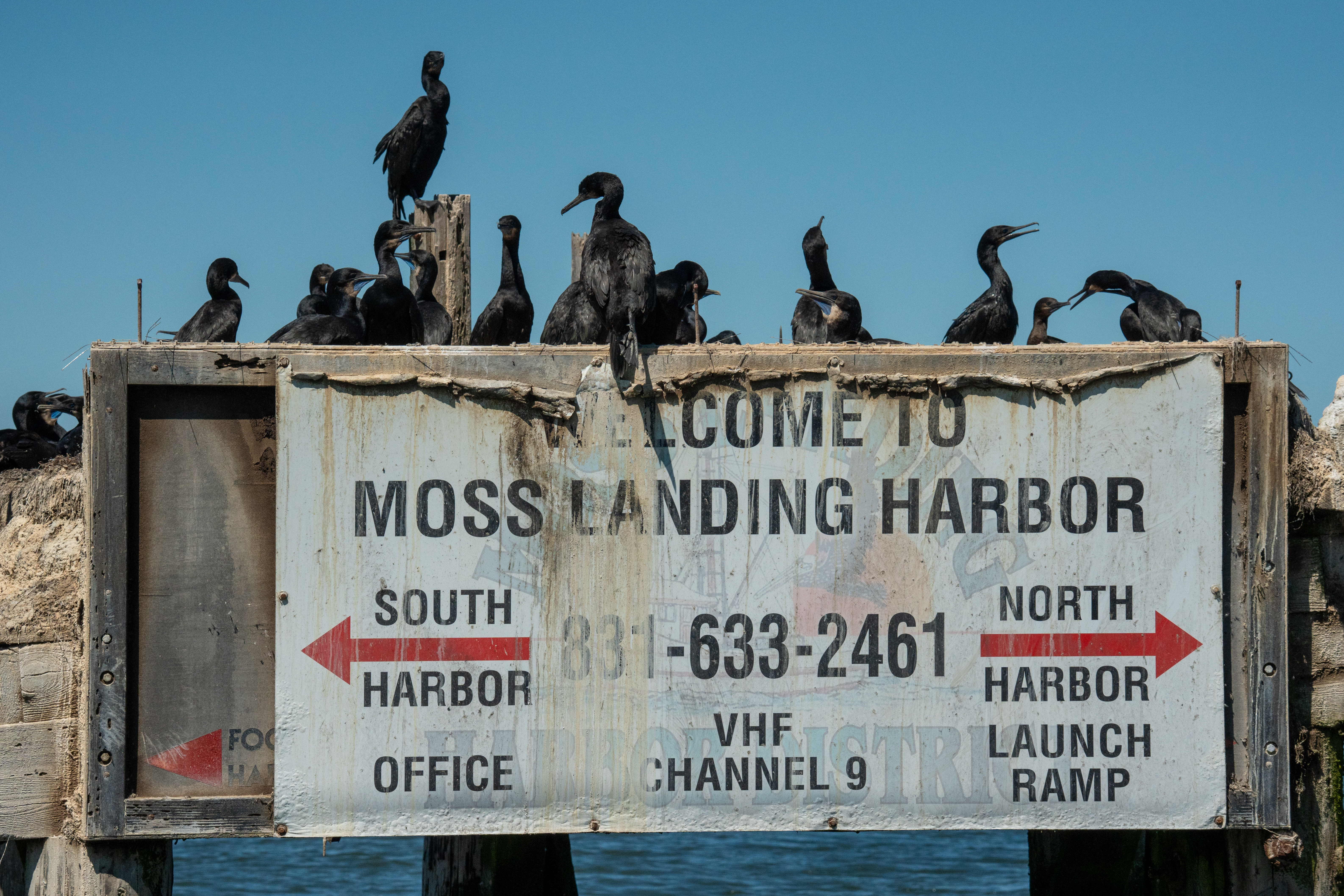
    It was nice taking a slow ride through the harbor – there is lots to see with sea lions camped out on the piers (any any boat they can climb onto), and a good sized colony of cormorants nesting on the old pilings and channel markers. 

    Once we turned into the slough, the driver just wandered back and forth along the main channel, slowing down when we saw anything of interest, which was pretty much all the time. There was an abundance of birds including squadrons of pelicans flying just overhead – not being a birder, I do not recall the names of all the other ones the naturalist spotted. There were harbor seals resting on the shore and best of all….lots of otters. A few photo’s below:

    BTW – if you click on any of the photo’s, you’ll get a full frame expansion. The mother with a very large pup is my favorite.

    The tour was relatively short – only about 90 minutes, but it was well worth it. I finally got to try out the monopod (no hand cramps this time), and learned a few lessons about using the new camera with fast moving, wet objects. Otters are really difficult to get the correct exposure – for one thing, they move around a lot, their fur is shiny when wet, and you wind up with photographs of a mess of wet fur, whiskers and the big webbed paws and feet since they do not hold still too often. I also forgot to reset some of the settings I used for the whale tour. But I still managed a couple of good photos and most important of all, I had fun.

    Here are a couple of links if you are interested in going to Moss Landing for either whale tours or the slough tour:

    My personal favorite for whale tours: https://www.blueoceanwhalewatch.com/
    Elkhorn Slough tour: https://elkhornslough.com/
    General Information: https://elkhornslough.org/

    You can also hike around on some trails and boardwalks, but these all start at the research center, which is only open from Wednesday-Sunday. Darn. Maybe next time.