June 23, 2026
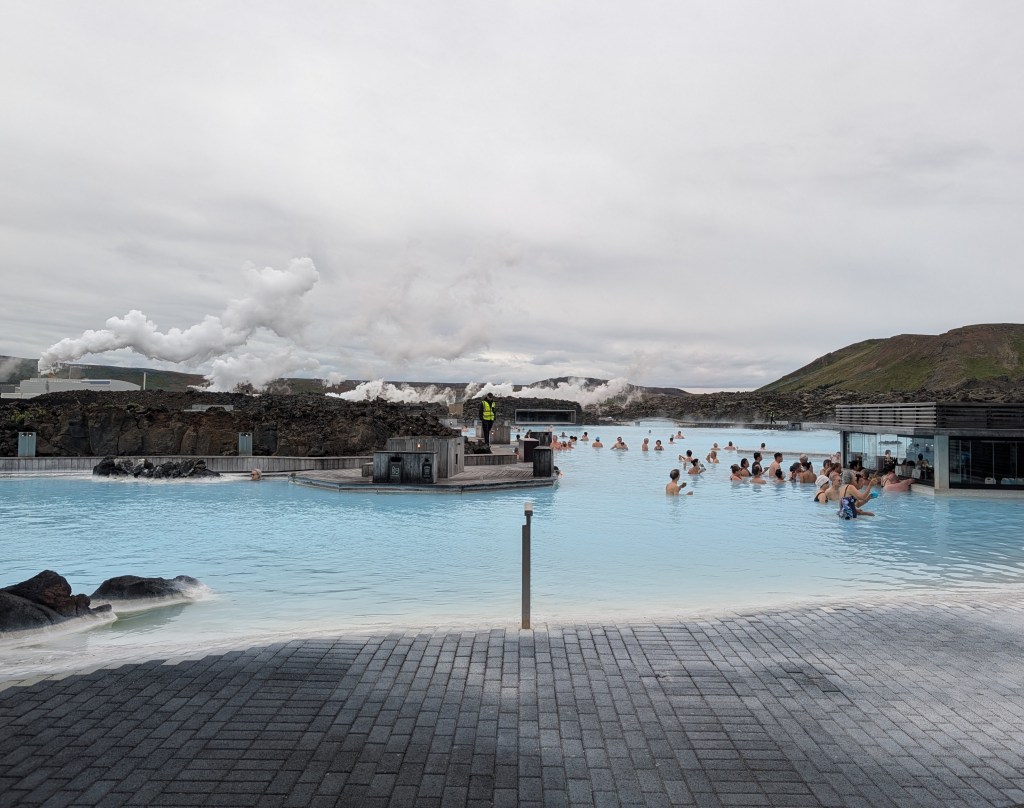
The Blue Lagoon is likely (and arguably) the most popular tourist attraction, along with the Golden Circle, in Iceland (I doubt if the Penis Museum is in the top 10). Every tour agency has advertisements plastered around town, and it’s easy to find one to get you there and back. You can even find tours that take you directly from the airport to the Lagoon, and then on to Reykjavik to your hotel – not a bad way to unwind after a long flight. Maybe I’ll do that next year.
I was never very interested in visiting the lagoon – I’ve been to a couple of geothermal pools before, but sharing crowded locker rooms and a huge spa with hundreds of strangers was never high on my list of places to visit. And this one is gigantic. But, a dip in the pool and dinner was part of the Nat Geo tour, and I was still really sore from the volcano hike so what the heck….let’s give it a try.
The history of the lagoon is interesting – given that Iceland exists due to it’s proximity over an oceanic rift zone, it’s not too surprising that there’s a lot of hot water in the ground. Most of Iceland’s electricity is generated by geothermal plants – cheap power for people and industry. A power plant was built at this location, and dumped the water from the turbines into settling ponds, where the water filtered back into the lava fields. The water in this area had a very high silicon content, and locals who started bathing in the ponds discovered that the water had some medicinal qualities for skin diseases. Sounds like a good reason to create a spa resort and attract international visitors. And that’s what happened.
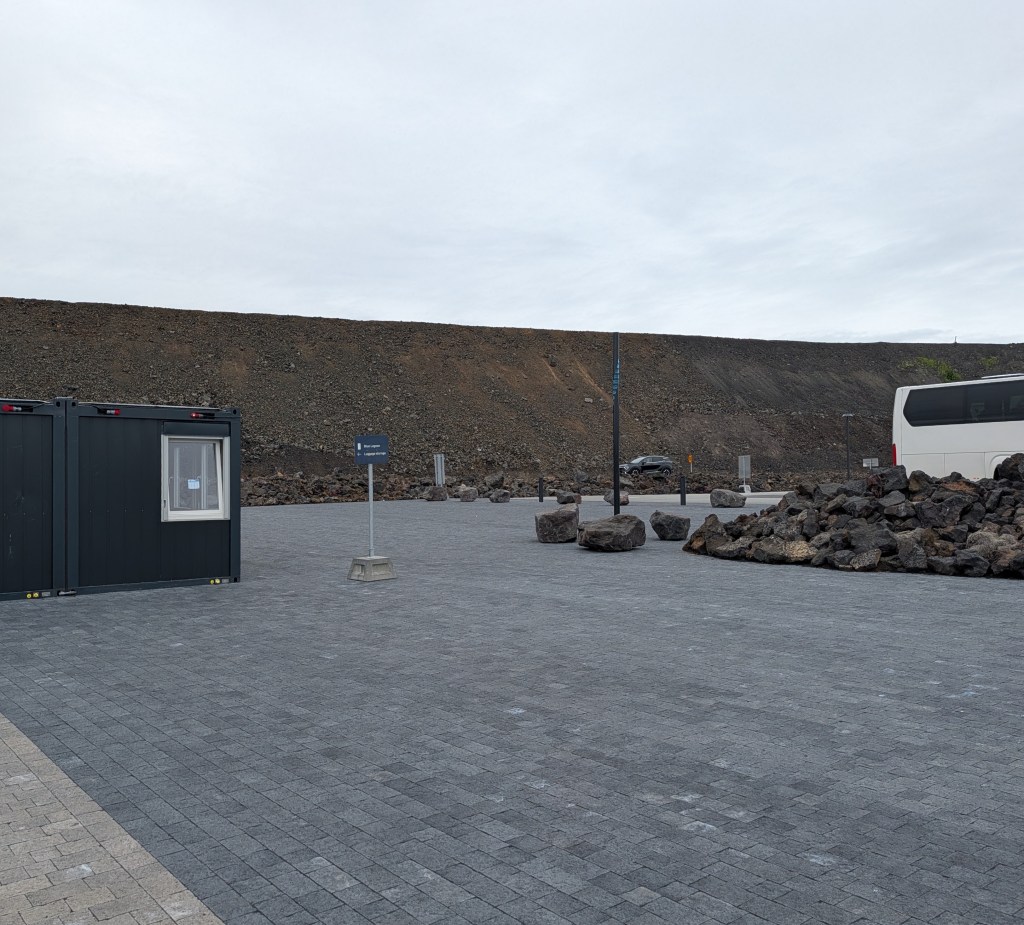
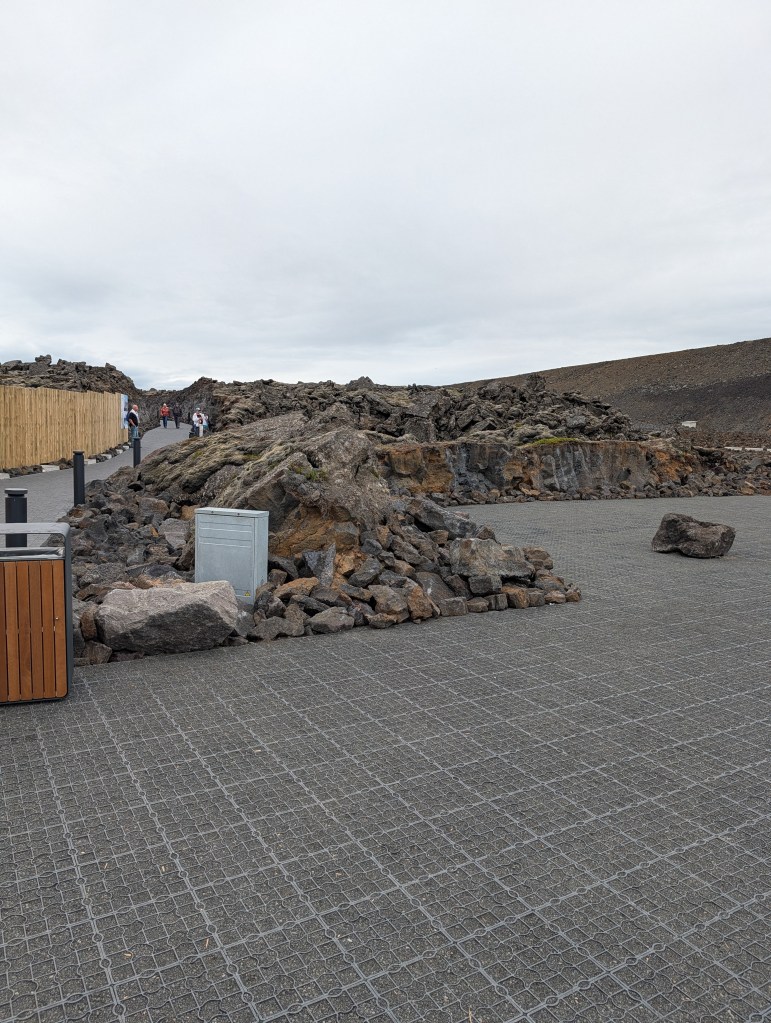
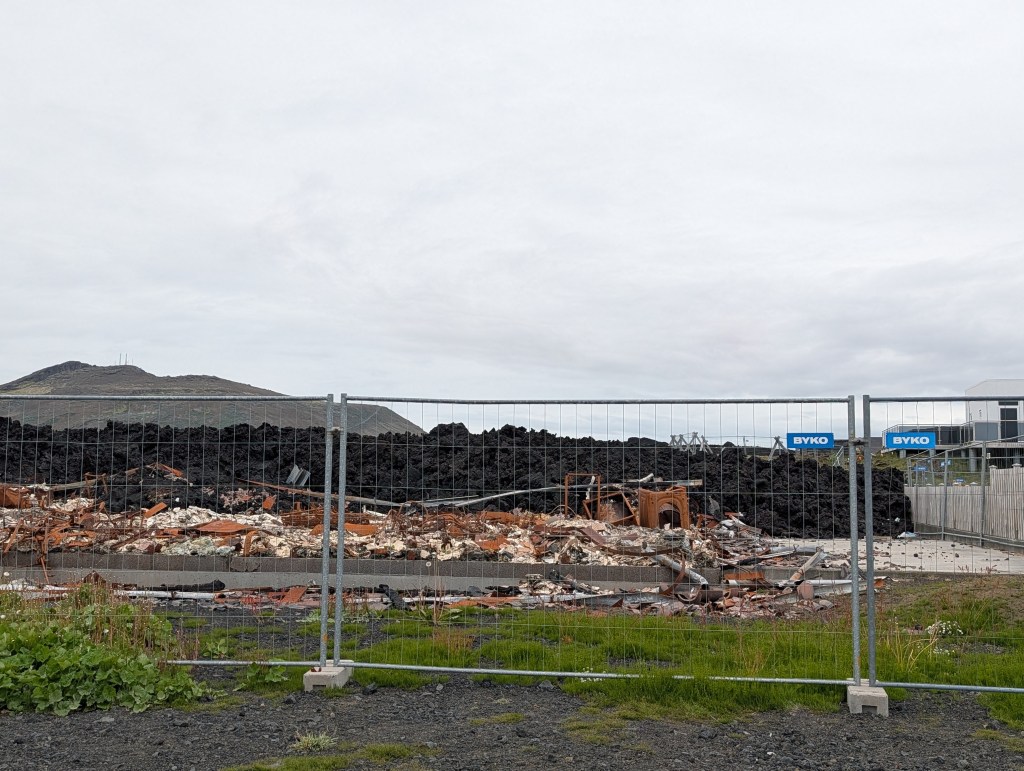
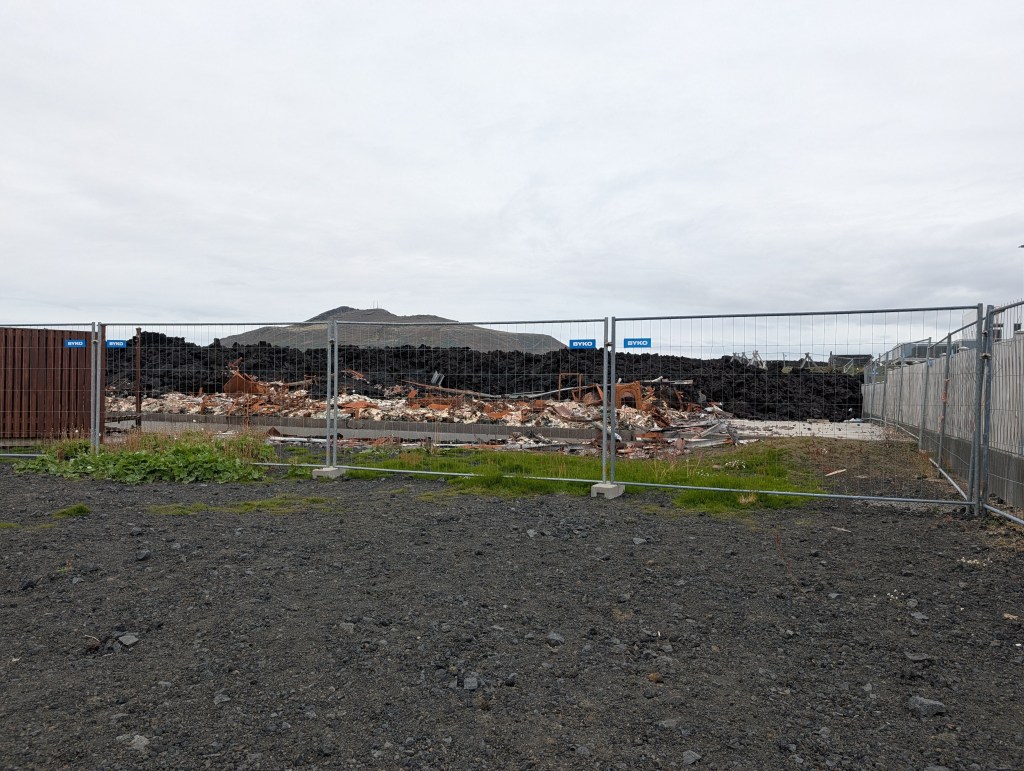
One minor problem with this location – there is still volcanic and seismic activity. A few years ago, a new fissure opened and a huge lava flow headed towards the Blue Lagoon. A huge berm was built to try and redirect the lava away from a town, the power plant and the Lagoon – it was mostly successful. The town was evacuated (a few house were destroyed, and the parking lot for the resort was buried. The lagoon was opened and closed frequently during this eruption for obvious reasons. You can see the new lava fields, and the long fissure, as you approach the resort – fortunately, it’s been inactive for a while.
OK, enough history. You can look it up on Google if you want to know more.
This was the first event on the National Geographic tour – the tour leader is a native Icelander (he can trace is family back to Viking days), and is a walking encyclopedia of Icelandic history. And a really nice guy as well. He pointed out the fissure and recent lava fields as we approached the resort. The berm that was built to protect the geothermal plant was obvious – it’s huge. You cannot stop a lava flow, but you can direct it, so it did work. You park in the new parking lot and then walk through a path carved through the lava that covered the old parking lot. Very strange.
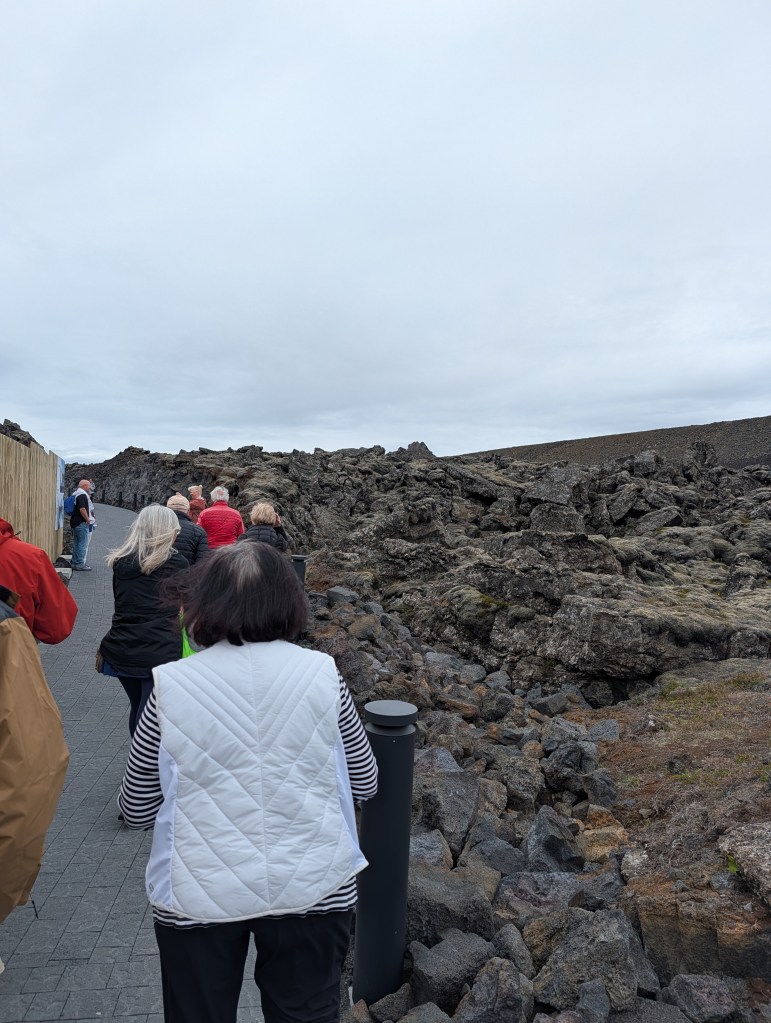
The resort is pretty much everything I dislike about these types of tourist traps, but it is well run. It would have to be with the hundreds of thousand tourists who visit each year. You get a wrist band with a chip, which you need to open/close a locker – the locker rooms are a maze of sections of lockers, and private shower stalls. The signage is good, and there is a device you can use to find your locker if you forget the number. Once you find your way through the maze, you exit out to the pool, and wade in from a ramp. It is not very deep, just 3 or 4 feet at most, so you either float or crab walk to stay covered. The water is actually light blue, and there is so much particulate matter (mostly silica) that you cannot see beyond an inch from the water surface. Don’t drop anything, you’ll never find it.
There are all kinds of pool-side stands to visit – a drinks bar, a steam room, and the facial bar where you can get different concoctions to smear on your face. The pool surface is compacted silica mud – a little slippery, but hard packed so nothing sticks to your feet. The water temperature varies – I found the hot spots and just floated – it felt really good on my sore legs.
I lasted a little over an hour, talking with some of the other NatGeo tour members, and just paddling around the pool. Once my hands were completely wrinkled, I figured it was time to get out.
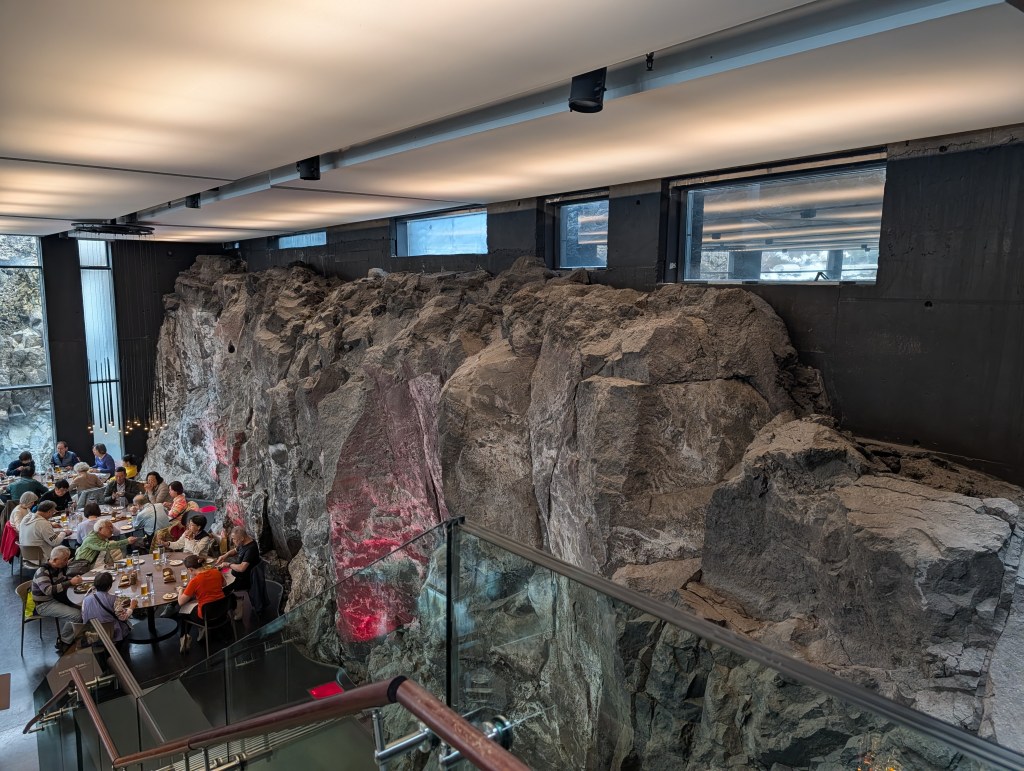
Our evening included dinner at the resort restaurant which was excellent – a beautiful dining room, surrounded by lava walls. No surprise there.
After dinner, our leader gave us a guided tour along the lava field and berm, to the town that was abandoned after the last eruption. The lava reached the edge of town, and burned out a few homes. There are also cracks in the earth throughout the town, so the government bought out all the home owners and condemned the entire town. It’s just not safe to live there.
This was our last night in Reykjavik – on to new and exciting adventures.
Peace
 The Traveling Widower
Leave a comment