June 24th, 2026
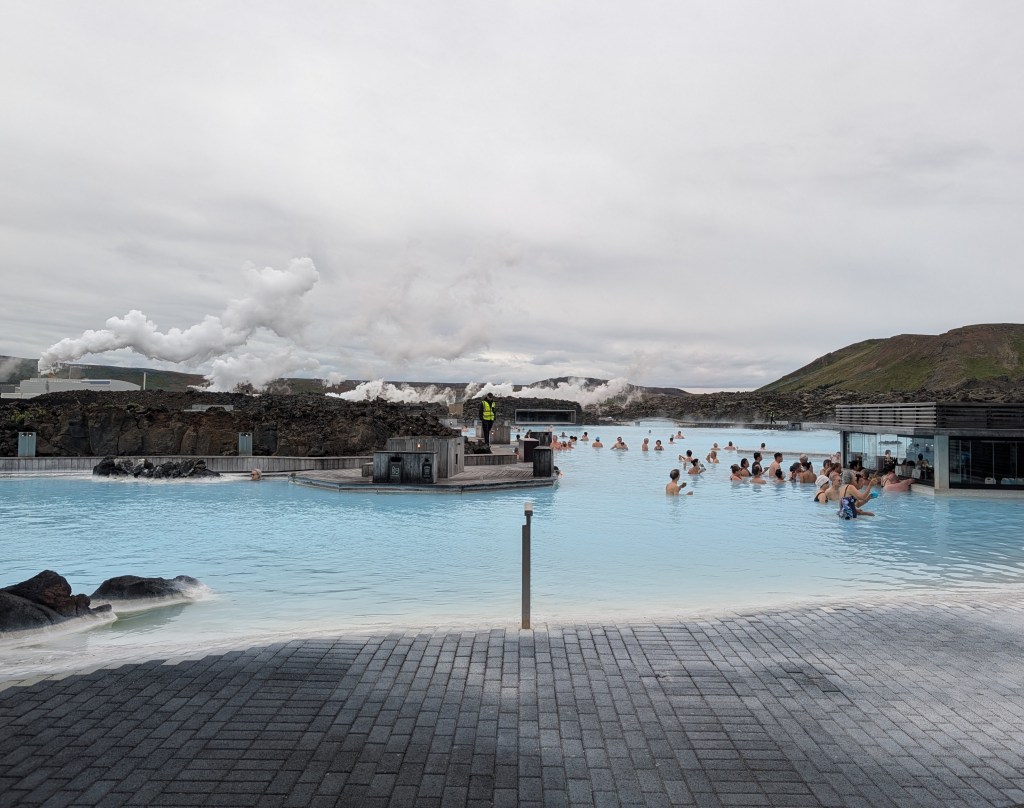
This was day two of the NatGeo trip, and fourth overall. I was quite pleased overall with the trip so far, and after the dip in the Blue Lagoon, was not in as much pain as the day before. I was ready for more adventures.
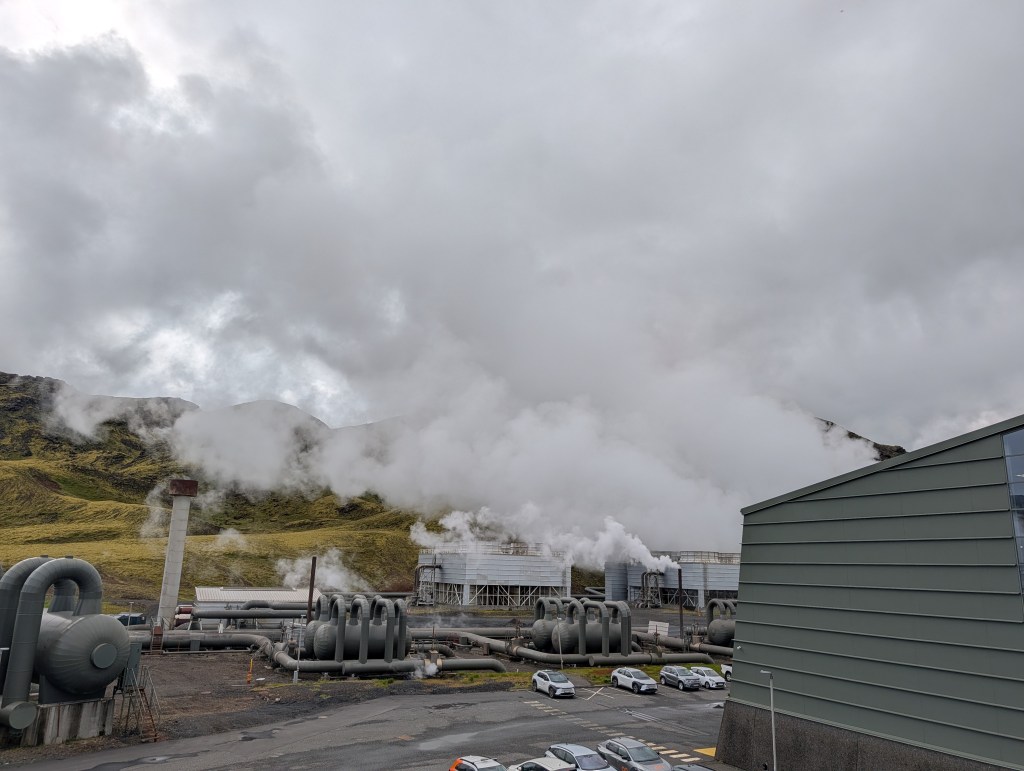
The day started out with an easy stop at Iceland’ largest geothermal power station, Hellisheidavirkjun. Sounds boring, right? It was actually fascinating. Iceland get 100% of their electricity from renewable sources – geothermal, hydro and wind. No beautiful, clean coal or oil on this island. They also heat most of the homes from geothermal – 100% of Reykjavik is heated from hot water from this plant, or from wells. Pretty much every home in Iceland has a geothermal source for their heat and hot water. Amazing. The tour of this facility was short, but the display in the lobbies were incredibly informative, including a great display of the different igneous rock type. Our NatGeo naturalist also gave an interesting lecture on how humans have changed Iceland – when it was first settled, a very high percentage of the island was forested. Now it’s down to about 5%. Who knew? Now they are trying to reforest, and reclaim the soil that was lost due to erosion.
We then headed to the South shore of Iceland – I was really surprised by the amount of pasture and farmland between the mountains and coast line – there were farms perched along the sides of volcano. Seriously. All along the way, our guide, who was from this area, gave a running narrative about the area, including a lot of funny stories about his family. Interesting guy.
Now for the fun part. Our first outing was the glacier hike, something I was sort of dreading. I have a lot of ice related experience from my stupid days in Colorado – climbing frozen waterfalls, winter mountain climbing and long glacier hikes in Wyoming. That was 35 years ago – been there, done that. But, it was on the itinerary, with a mixed group of people who have never touched an ice axe or worn crampons before. How bad could it be?
It was gray and misting when we pulled into the parking lot at the base of the glacial lake (Solheimajokull Glacier) and met our guide. This is apparently a fairly popular tourist attraction, with a number of guided tours you can sign up for – the guides provide all the important gear. He fitted the group out with crampons, axes, harnesses and helmets – the harnesses were required in case we fell into a crevasse, and had to be rescued. Once that was done, we headed off down the trail, which was a black lava rock glacial moraine. This glacier has been receding for years and what is now a lake, used to be ice. The thickness of the glacial front has also been drastically reduced, which made it easier to climb up. A good view of the results of global warming. After about a mile of easy hiking, we started climbing to the start of the glacial ice, and strapped on our crampons. The view of what was ahead was foreboding in the mist – I was beginning to doubt my sanity. Plus, I had to pee.
Two of our group decided not to go any further, and our leader walked them back to the parking lot. I decided to give it a go. Once I started walking with the crampons, muscle memory kicked in – it wa actually fun, even the steep section. We did not go too far, but climbed high enough to get some spectacular views.
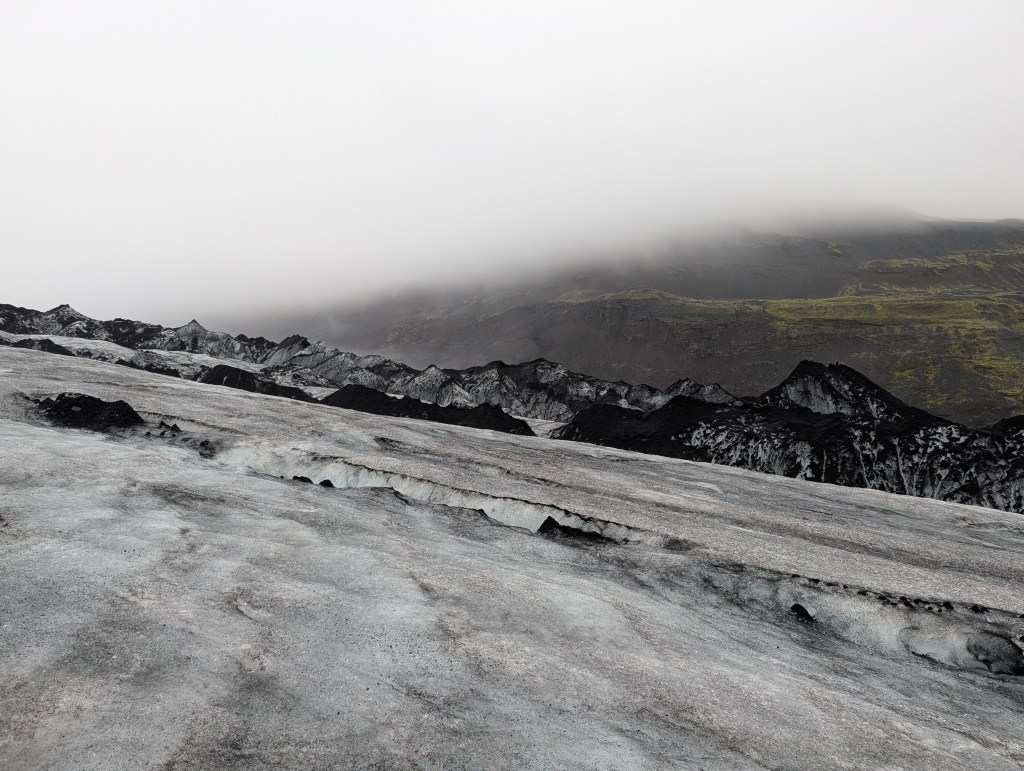
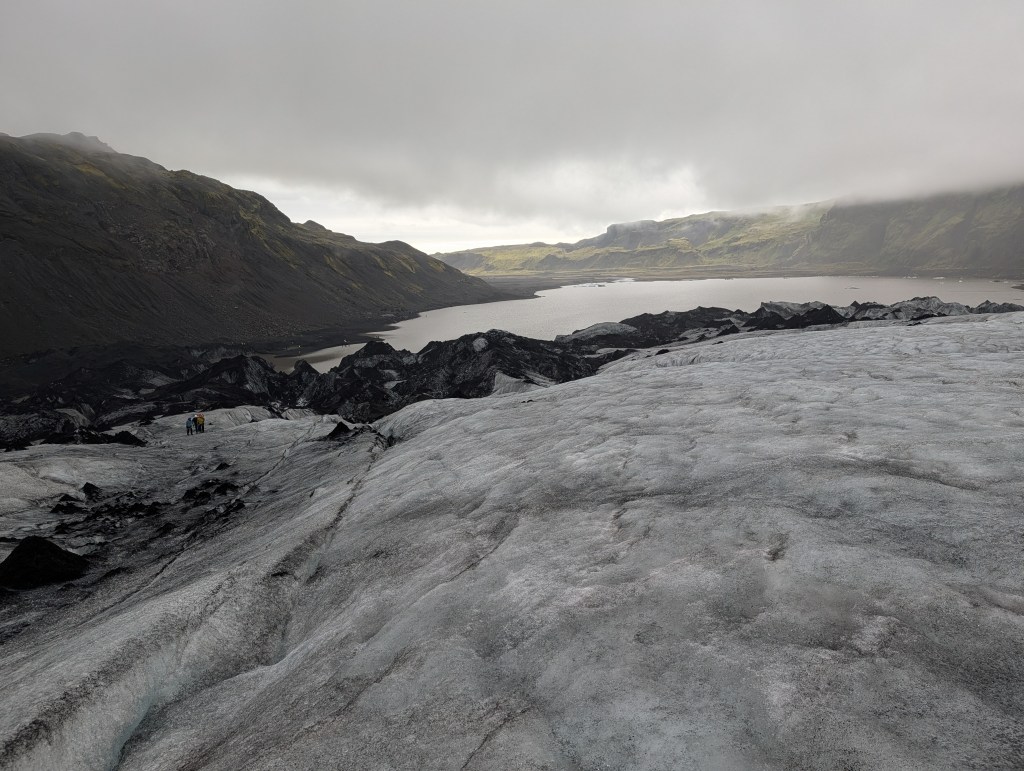
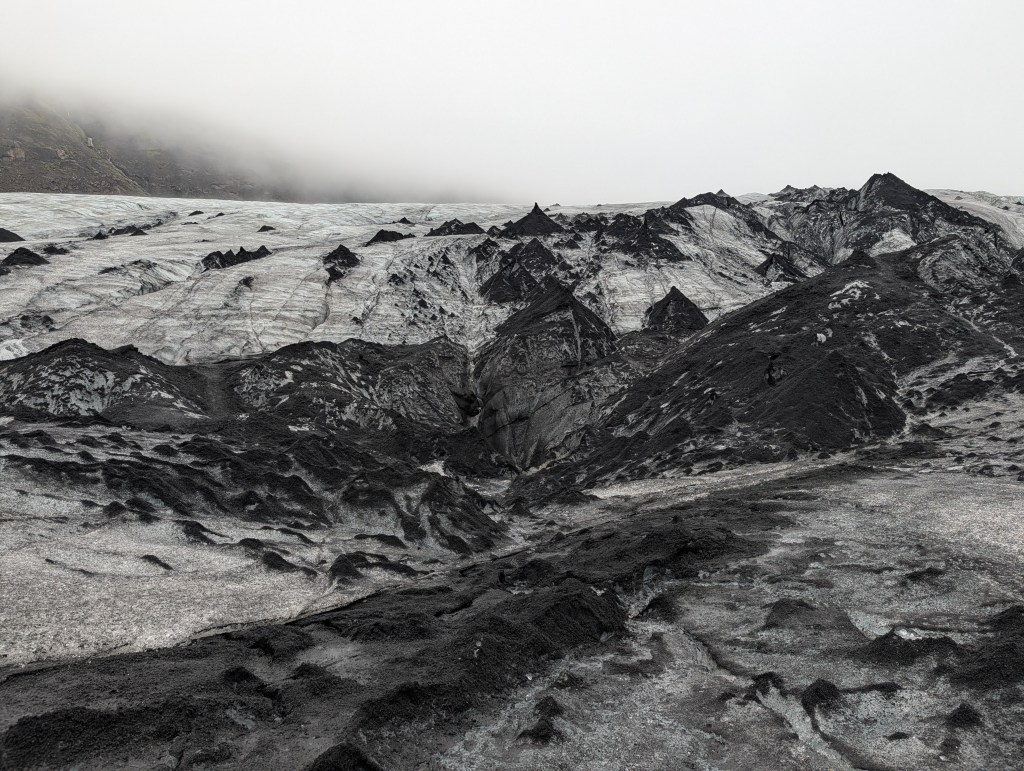
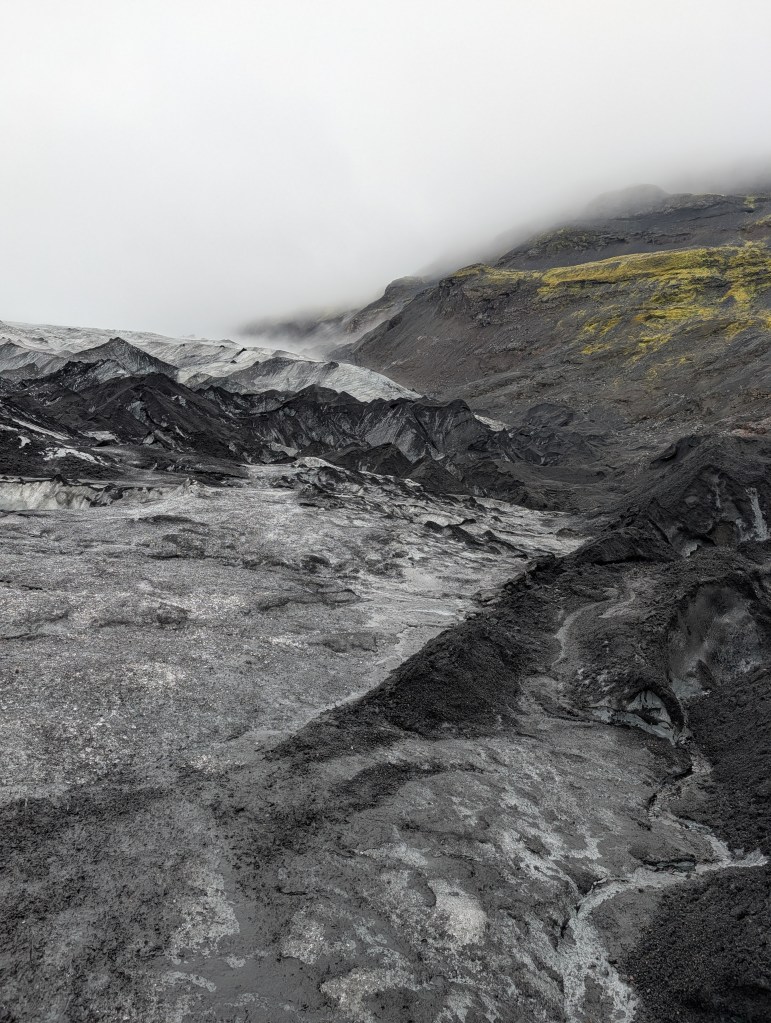
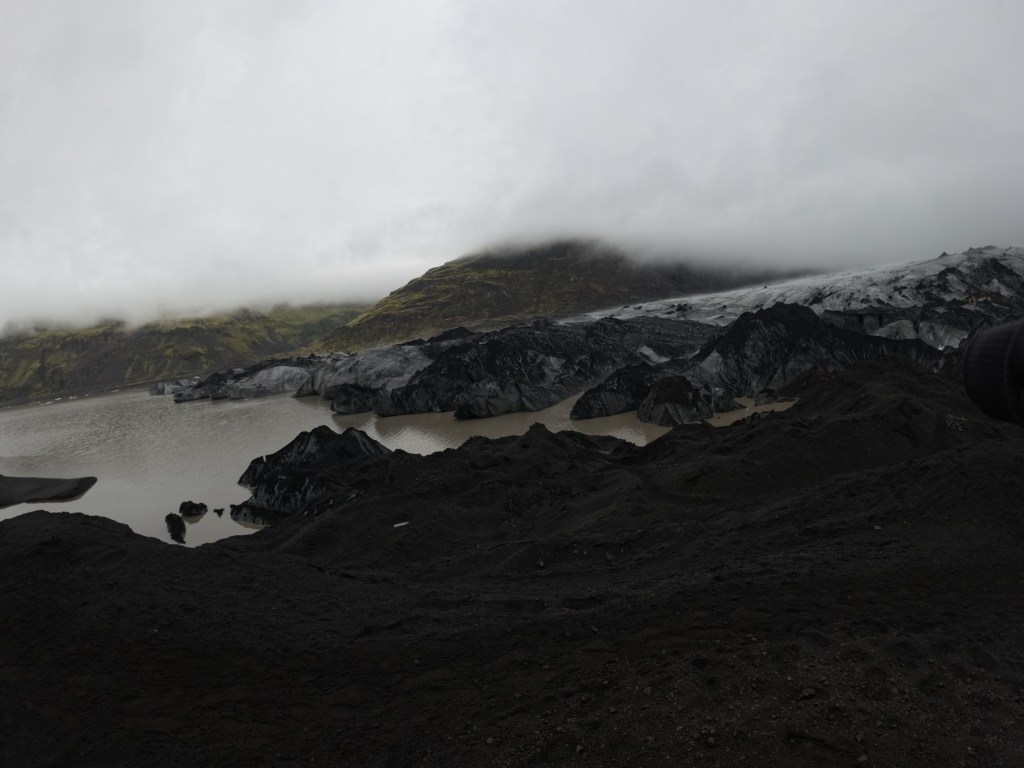
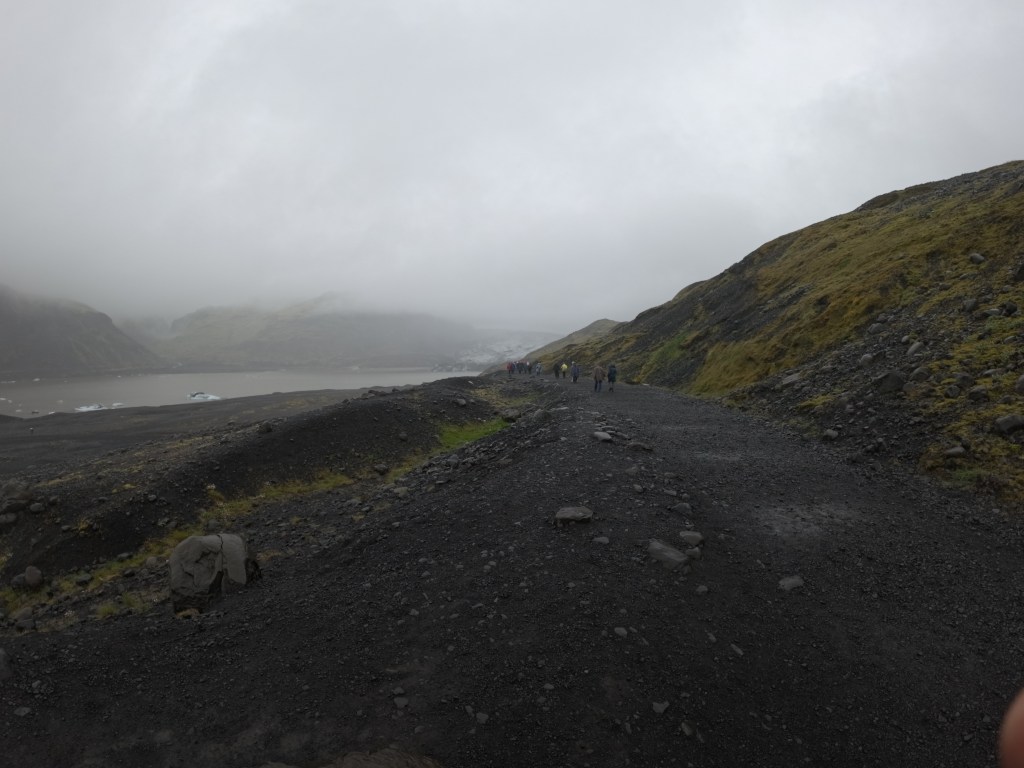
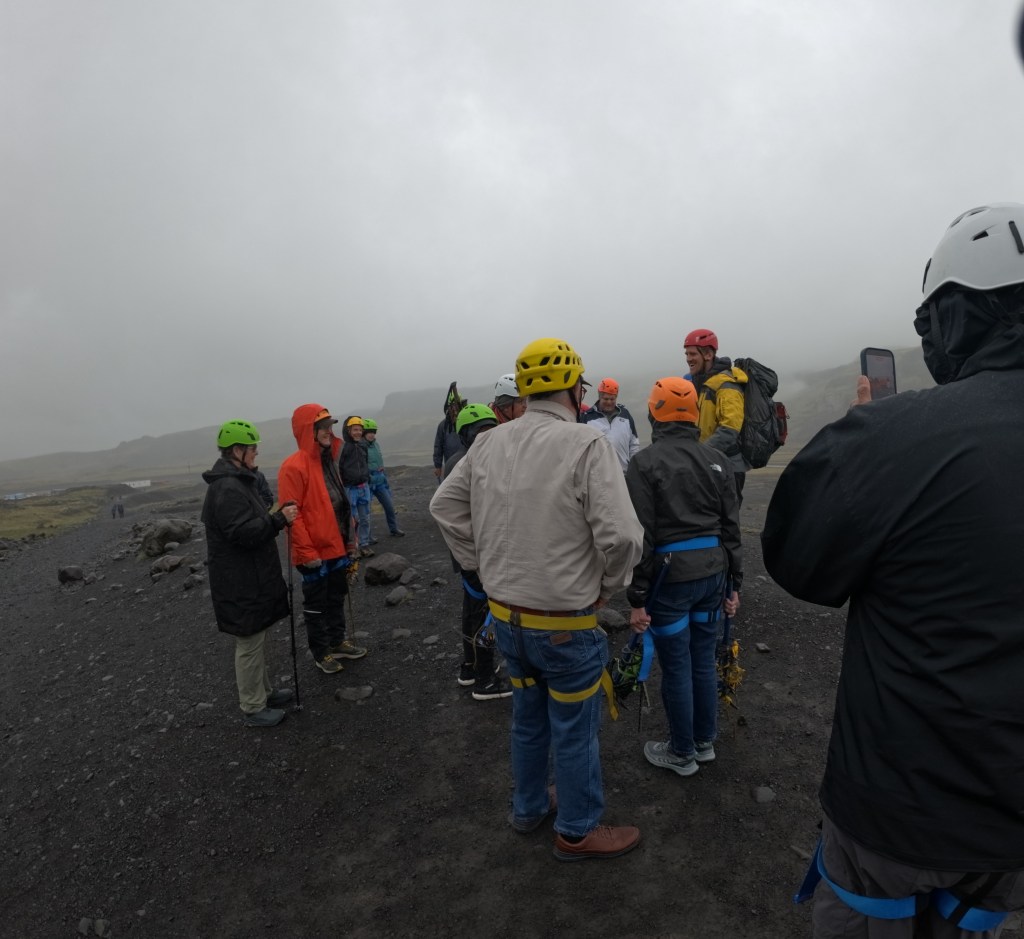
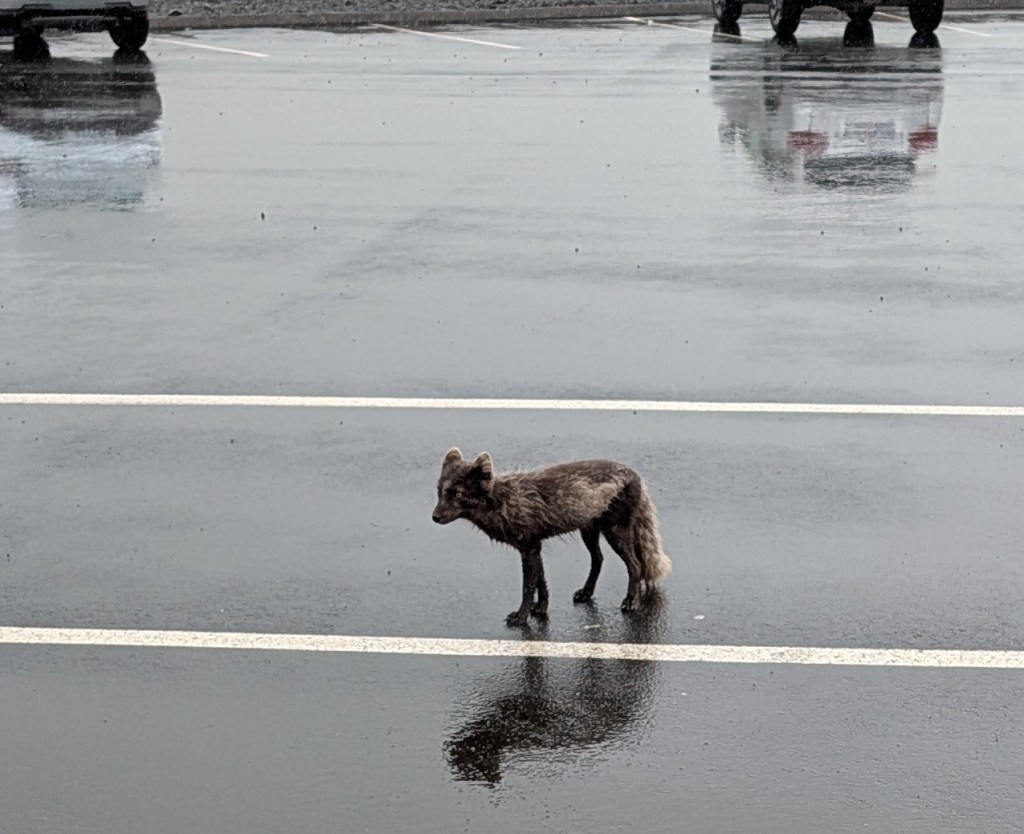
The photos were not shot in black and white – that all basalt sand and gravel, from meltwater washed down on the glacial surface. Very dirty.
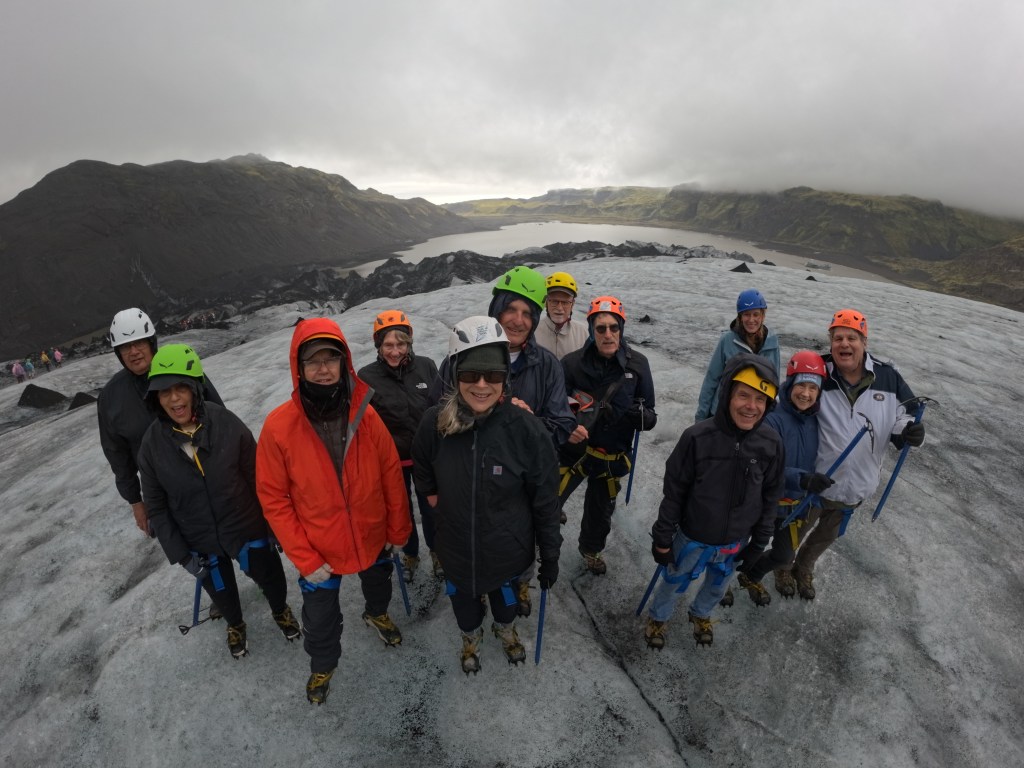
We hung around a took a group picture or two and then headed back down. Woo hoo! I did it! Seriously, I was quite pleased with myself for not chickening out (same as TACO’ing?). I did a mental evaluation on the risks, how I felt body wise, and made the decision to just focus on enjoying the moment.
We had passed two of the well known waterfalls on the way to the glacier, and now we were going to work our way back, and stop at both. I had brought a monopod along specifically to photograph waterfalls in slow motion, and was finally going to get a chance to use it. The second waterfall was the one where you can walk behind the falls – that’s where the new GoPro comes in. It was still raining a bit, so I kept my rain gear on.
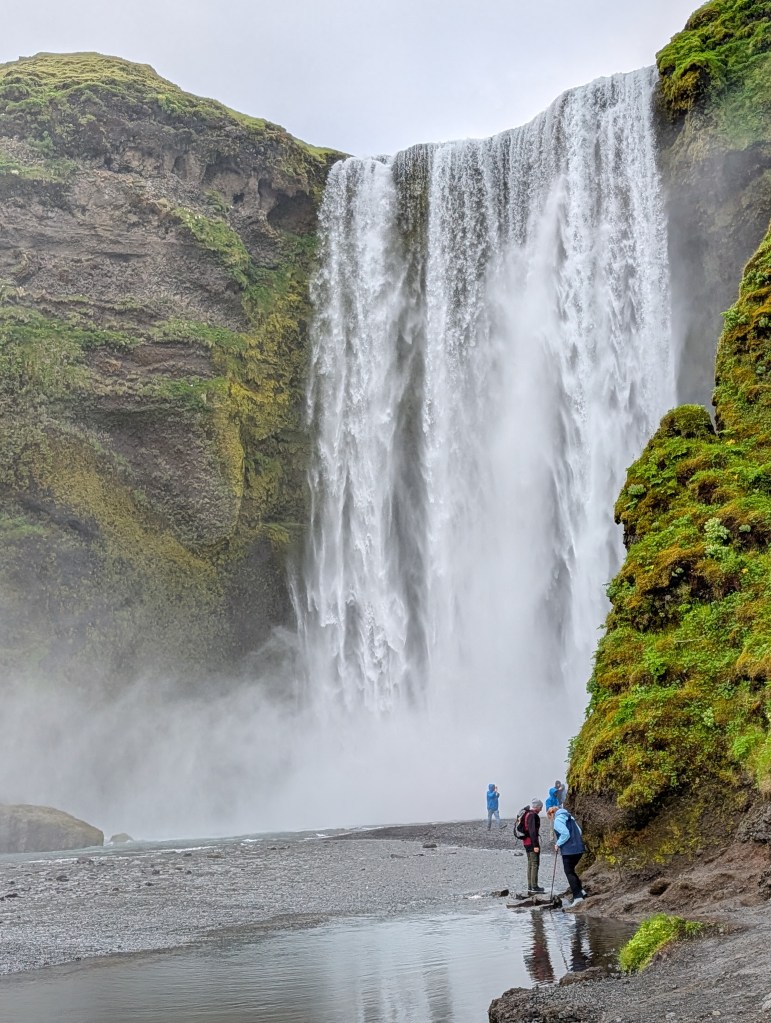
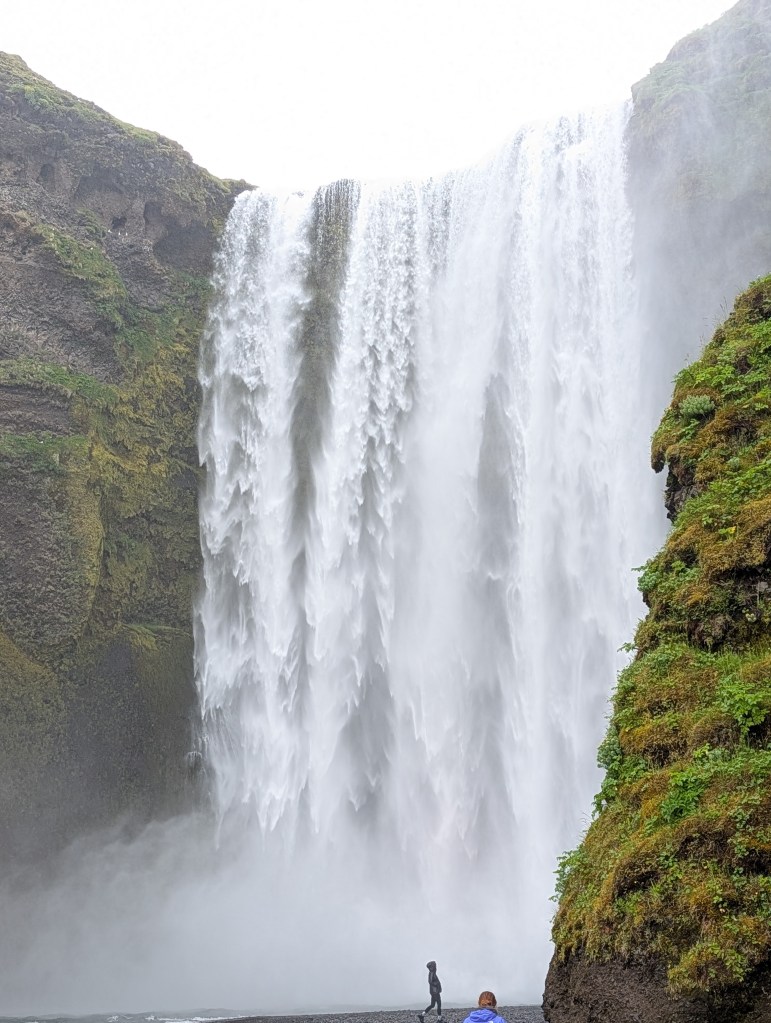
The first waterfall, Skogafoss, is one of the highest and most popular tourist attractions. Unless you get there early in the morning, you can expect to have gobs of tourists doing selfies on all the trails (or even standing in front of the falls. That was the case when we arrived unfortunately. But, I walked down to the falls with the camera mounted on the monopod. The trail was packed as expected but including people dancing in front of the falls. But, I had the gear, so I setup the monopod, mounted the camera, and turned the Sony on. Nothing. Dead battery. I left the camera on earlier in the day, and the battery drained. And I left the spares back in the bus. No big deal – I just enjoyed the experience of seeing the beautiful water falls, ignored the people screaming in front of the falls, and headed back to the bus.
The next (and last stop of the day was the Seljalardsfoss falls, which is the one with the path behind the falls. That one was fantastic – there were still a lot of tourists there, but not as many behind the falls. I left the big camera behind and just brought my phone and GoPro. It was fantastic! I did the entire route, much to the chagrin of the trip lead….I was the last one to get back to the bus. Mea culpa.
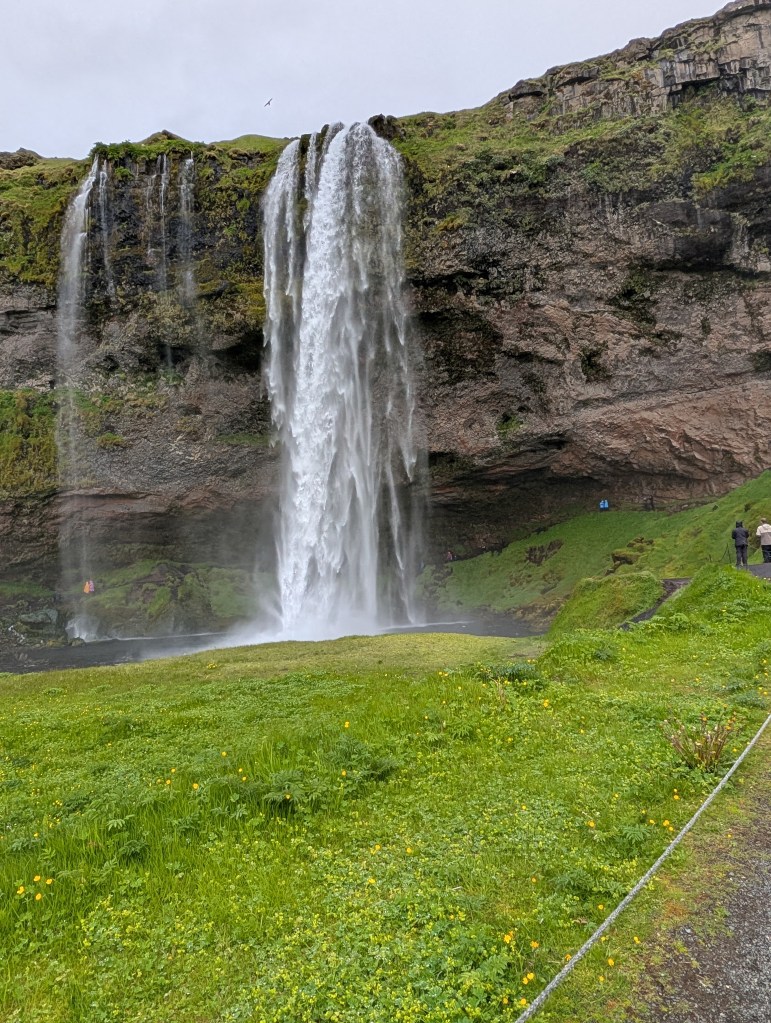
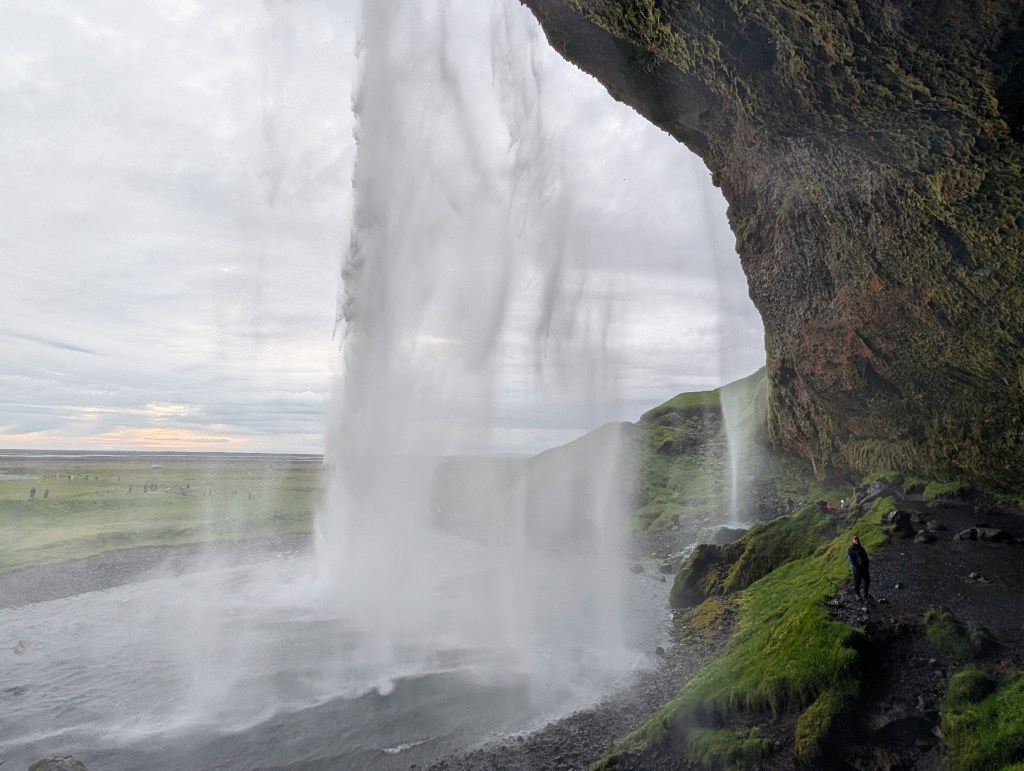
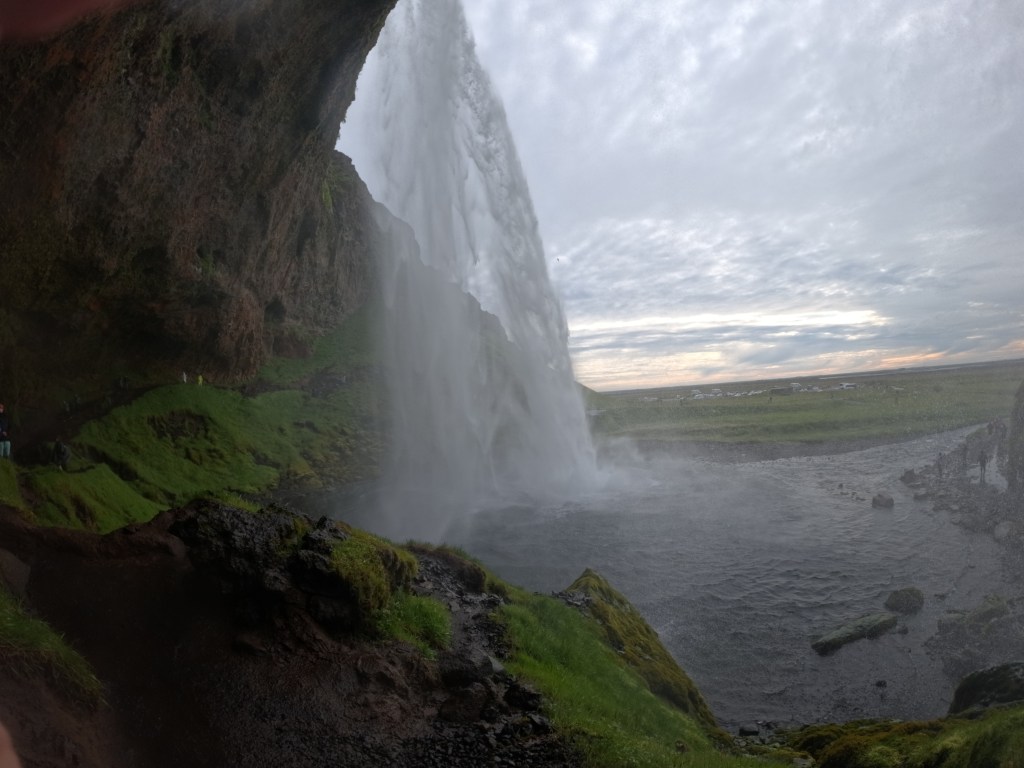
We made it to our hotel at 9:00, checked in (great hotel in the Icelandic version of the middle of nowhere, Landhotel), had a great dinner, and then I collapsed in bed. That was a very long, but great day.
One more comment on the trip – this is that time of the year in place like Alaska, Northern Canada and Iceland, where the sun never really sets all the way. At 11PM, it’s still bright out. That’s great if you like to stay out till the wee hours of the morning, but not so great if you are tired and really want to get some sleep. Best to look for hotels with really good black-out curtains, or don’t mind sleeping with eye shades on.
Peace
 The Traveling Widower