Tag: california-coast

  • Exploring Ano Nuevo: A Elephant Seal Adventure on the California Coast

    January 13th/14th, 2026

    View from Capitola cliffs
    View from Capitola

    After a full month of boredom at home, I really needed to get out of Dodge for a while. I had considered going to Yosemite, but decided to head to the coast to see the Elephant Seals at Ano Nuevo State Park. It was snowing quite a bit in the mountains, and I just did not feel like dealing with a long drive in winter conditions. I have chains for the Subaru, but really don’t want to use them. Wimp.

    I had visited Ano Nuevo many years ago, when we lived in the South Bay – I remembered the long walk to the beach, and wandering around the huge seals which were sprawled around the trails. I did recall that it was a complete waste of time in terms of photography, but that it was amazing seeing the huge seals up close. So, I went ahead and booked two guided walks, and try to figure out a better way to photograph these weird beasts. And while I’m in the neighborhood, visit some friends I have not seen in a while. 

    It was a relatively short, 30 mile drive from the hotel I stay at in Scotts Valley to the park, along an incredibly beautiful stretch of US 1 Highway. But then again, almost all of US 1 is beautiful. 

    The park is open all year long, but access to the beach is restricted during the pup/mating and molting seasons, when there are just too many seals on the beach to allow visitors to wander around unattended. The males are enormous – about the size of a mid-sized SUV. You just don’t want to have tourists flattened by one of these behemoths. So you have to reserve a guided, docent tour to get down to see the seals. 

    The guided tour is about 2.5 hours, and requires 6 miles round trip of walking, mostly on graded trails. It’s a pleasant walk down to the shelter where the tour starts. 

    And sometimes if you are lucky, you might see some other creature other than seals.

    Black Tail Deer having breakfast

    The docents take you the last 2 miles along the beach trails, which get you up close and personal with the seals. It’s pretty amazing. There are hundreds of male, female and newborns pups scattered around the beach, with some of the huge alpha males hauled up on the trails. It’s quite noisy with the big males trumpeting, and the pups all shrieking to be fed. From a photography viewpoint, it’s pure chaos. The seals are pretty much sand colored, except for the black pups, and they cover themselves with sand to maintain their temperature when the sun is shining. So most of what you see are masses of large, tubular, sand colored bodies lying on sand, and throwing sand on themselves.

    Once in a while, the weird males prop themselves up and start trumpeting, and then flop back onto the sand. If you are really lucky, you get to see the big males fighting – sort of looks like dun colored sumo wrestlers, bashing against each other. 

    If you are more than just a casual photographer, this mess of seals and sand is a real challenge, and if it’s a beautiful sunny day, the lighting will be awful. As it was the first day. Even in the morning, the glare from the ocean is intense.

    A serene beach scene with gentle waves lapping at the shore under a clear blue sky.

    The seals pretty much do nothing most of the time – the pups move around a bit, and the adults throw sand up every now and then. Not exactly photogenic or very exciting. I did learn my lesson from my last experience to:

    1 – Use a tripod/monopod

    2 – Look for interactions between the females and juvenile males – they are all more active then the huge alpha males. The females get into arguments over the pups, which make for interesting action shots. 

    3 – Focus on the pups – the newborns are tiny, and scattered all over the place. Most of them are sheltered next to their mothers, so you can get interactions between them.

    4 – Head shots of the males are interesting if you can get their eyes open. On the other hand, blob shots are not interesting. 

    And my plan to experiment on day one, and make some approach changes on day two worked out well. Granted, the seals were more active on Wednesday, but I also changed some camera settings, and set up the monopod before we got to the viewing points on the trail. I have spent some time curating some of the images with Adobe Lightroom, mostly just cropping and changing exposure setting. Here are some of the results (double-click on an image to expand it):

    And a few more…

    After the tour on Tuesday, I decided to visit Capitola, hoping to get a few shots on the beach, but more importantly, visit the ice cream shop (Polar Bear Ice Cream) in the village. I was pretty tired from the hike, but I always enjoy wandering along the beach there. But…tragedy. The ice cream shop was closed! They only open on weekends in the winter. I was really bummed. I wound up heading back up to the car, and stopped at a Diary Queen instead. A Blizzard was not really what I wanted, but it tasted pretty good. And I did get to climb some stairs once again. It has become an obsession.

    Steep stairs at Capitola Village

    The second day I was more successful with my post-hike extensions. I stopped at the wonderful gelato shop in Los Gatos. A successful and tasty end to this little adventure.

    Great gelato at Dolce Spazio Gelato, in Los Gatos.

    Cappacino chip and vanilla bean from Dolce Spazio Gelato. A million calories and worth every one.

    This turned out to be a pleasant, short trip – perfect weather, two nice hikes on the beach, and met with friends I have not seen in a while.

    And if you ever wander through the Westfield Valley Fair shopping center in San Jose (went to a restaurant there), you might walk by one of the strangest store displays I’ve ever seen.

    There is more strange stuff inside, including a robot which was dozing when I wandered through. Apparently, she does get quite animated.

    If you are wondering what this place sells….upscale eye glass frames. Sorry, I’ll stick to Warby Parker.

  • A trip to Moss Landing – Whale Snot and Otters

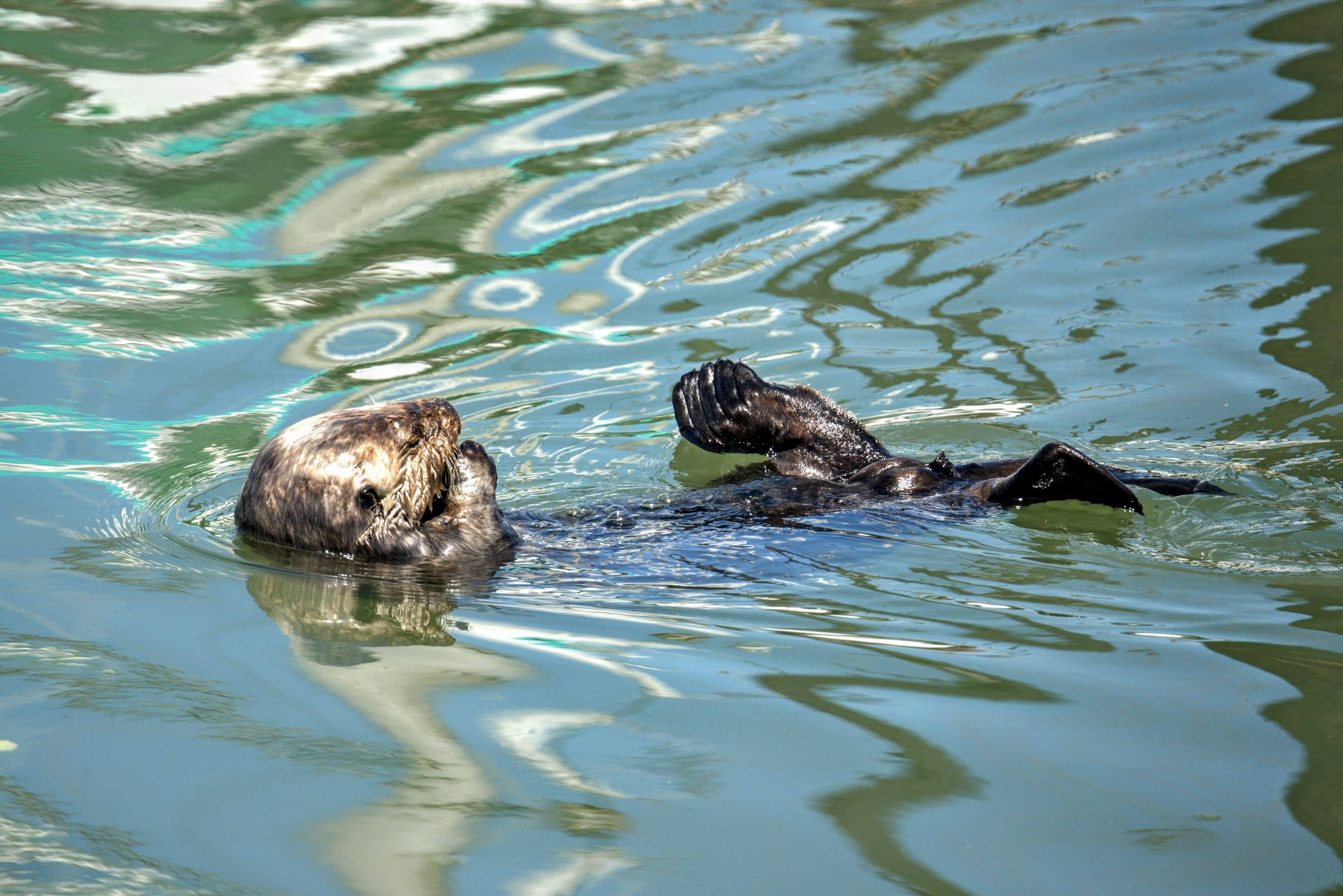
    photo of a sea otter in Elkhorn Slough

    The problem with choosing wildlife photography as a hobby, is that you invest a lot of $$$$ and time in the pursuit of perfection. For humpback photography, you are hoping for spectacular shots of whales flying through air, closeups of their eyes, or group photos of lunge feeding. My dream opportunity would be to photograph them underwater….I’m still working on that one. The problem with going out on most of the commercial tours in Monterey Bay, is that the vast majority of what you’ll see are whales spouting and diving, since they are primarily packing on blubber for their migration to Mexico in the fall. If you are lucky, as I was last April, you might catch them doing all the amazing things you really want to see – breaching, tail slapping, pectoral fin slapping, lunge feeding or coming up to the boat for people watching. That does happen quite a bit. The whales do like to have some fun. But the hit-or-miss opportunities here are one of the reasons why my wife and I started traveling to Maui each spring, to watch and photograph the whales while they are focused on mating rituals.  Everywhere you turn in the waters off of Maui, there are whales flying through the air. Here in California, it’s pure luck. 

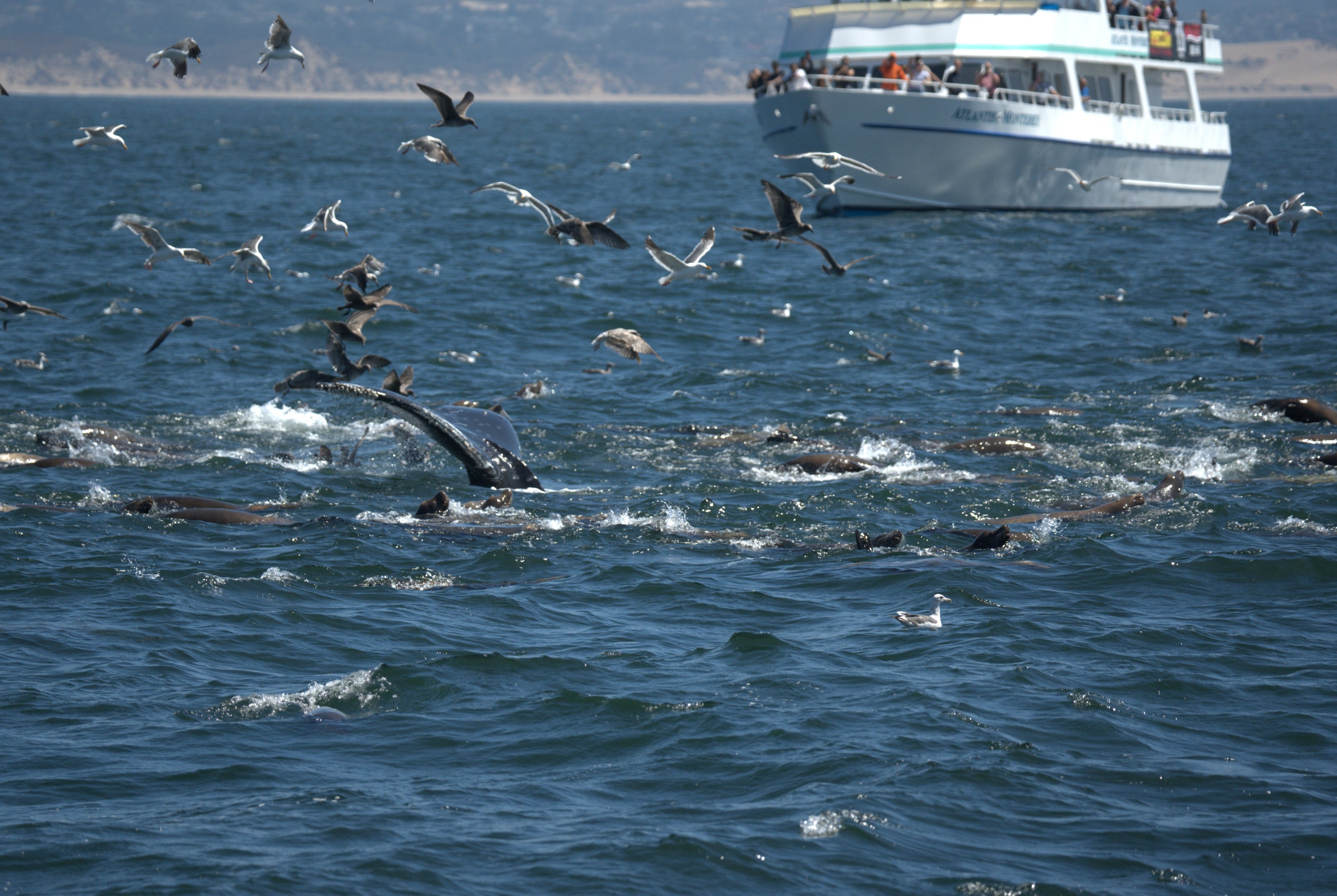
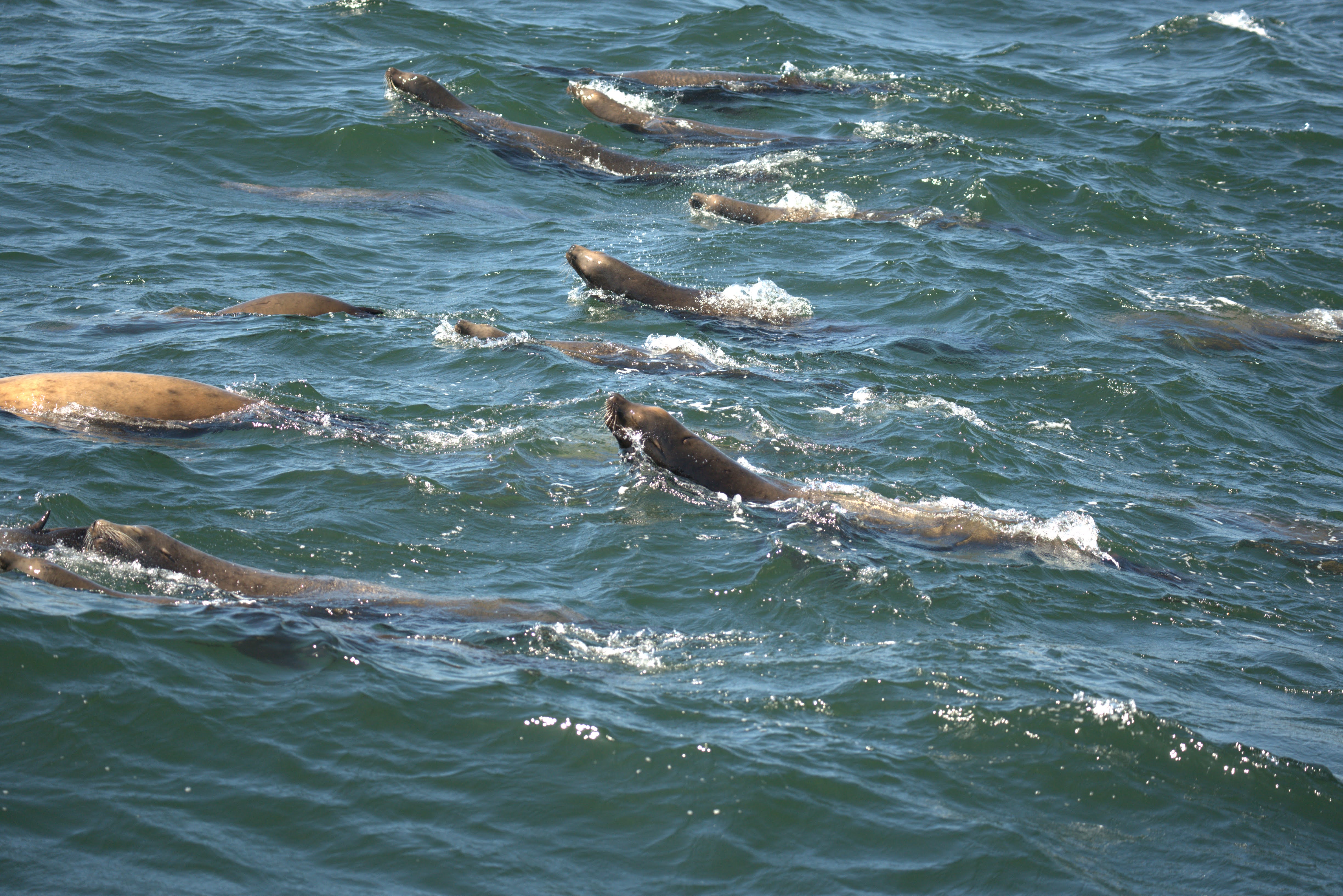
    On this particular trip, my luck ran out. There were large pods of whales, gorging on very large “bait balls” of anchovies. There were swarms of sea lions, following the whales as they all gorged on the anchovies. 

    Photo of sea lions in feeding frenzy
    Sea Lion feeding frenzy

    The whales did not have to dive deep, so all you would see are the spouts as they surfaced in the midsts of the sealions, and then a fluke as they dove back down. That gets ‘oohs’ and ‘aahs’ from most of the passengers, but not from semi-serious photographers Iike myself. All told, I probably shot about 25 photos. I usually have a few hundred when the whales are performing ( I can set the camera for 10 frames per second). 

    It was a pleasant afternoon, and definitely a nice distraction to focus on something other than my 50th anniversary. It’s always nice to be out on Monterey Bay on a beautiful sunny day. But a disappointment in terms of photography expectations. I still had high hopes for the next day, which was a pontoon boat tour of Elkhorn Slough. An “Otter Safari”.

    A bit of background if you’ve never heard of Moss Landing or the Elkhorn Slough (pronounced ‘slew’). Moss Landing is a fishing community (I use that term loosely) in between Santa Cruz and Monterey. The harbor is fair sized, filled with lots of commercial and private boats, as well as some large research vessels. The Monterey Aquarium has a research center there. All for a good reason – the harbor entry happens to be at the head of the Monterey Canyon, an underwater version of the Grand Canyon which is a giant smorgasbord of seafood for large marine mammals…like Humpback Whales. Along with a lot of sea lions, killer whales and many kinds of fish, so the harbor is home to a number of eco touring outfits. The harbor is also the entry for a very large marine estuary – the Elkhorn Slough, which is home to a variety of interesting birds, a sheltered resting place for harbor seals, and a feeding ground for sea otters. The slough is protected, accessible only by kayaks and a couple of licensed eco tours, which take groups out in open air, pontoon boats. Nice and comfy. The main channel goes quite a ways inland, surrounded mostly by farm land. And dominated by the giant stacks from a now defunct power plant.

    Photo of the Moss Landing Power Plan stacks
    Stacks for the old power plant

    My wife and I once rented a kayak there and did some exploring up the slough – absolutely beautiful and peaceful. Easy paddling unless a strong tide is coming in or out. There is also a nice protected area by the harbor entry, where the otters used to rest in large clusters (called a raft) – we always made a point of stopping there just to watch the critters rolling around.  

    A smiling woman in a life jacket stands on a wooden dock by the water, holding a kayak paddle with kayaks in the background.
    Jan did all the paddling…I steered and took pictures

    We never considered booking one of the pontoon boat “safari” rides – they just seemed so touristy. I had been planning on renting a kayak to photograph the otters, but was concerned about handling my big camera while I’m paddling around – way too risky. And then a friend told me that the pontoon tours were worth taking – no paddling required, and you have a nice stable platform to take pictures. Sold.

    This was quite a different experience from the whale watch tour I did the day before. The boat holds about 24 people, plus the boat driver and a naturalist. You just sort of step onto the boat, grab a seat on one of the benches, and they take off through the harbor. It’s very informal – the driver and naturalist keep a dialog going throughout the tour, pointing things out, answering questions. You can move around on the boat which was great for photography – unlike the whale tours, you don’t have  people camped out along the railings, blocking the view. There were only 8 passengers so there was plenty of room to move around. I was also able to finally use the fancy monopod I bought a few months ago – there’s too much vibration on the larger whale tour boats, but it was perfect for stabilizing the big lense on the pontoon boat.

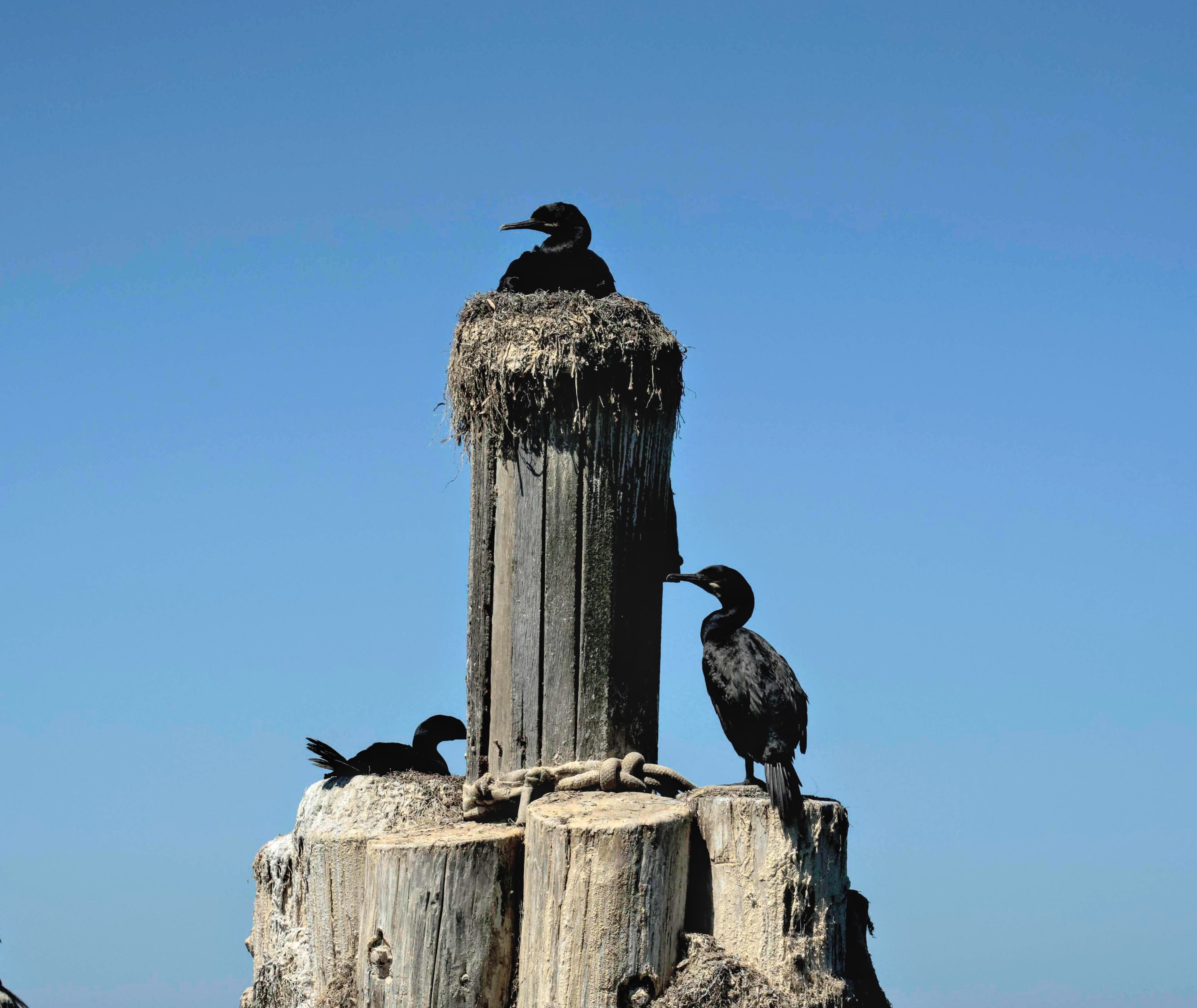
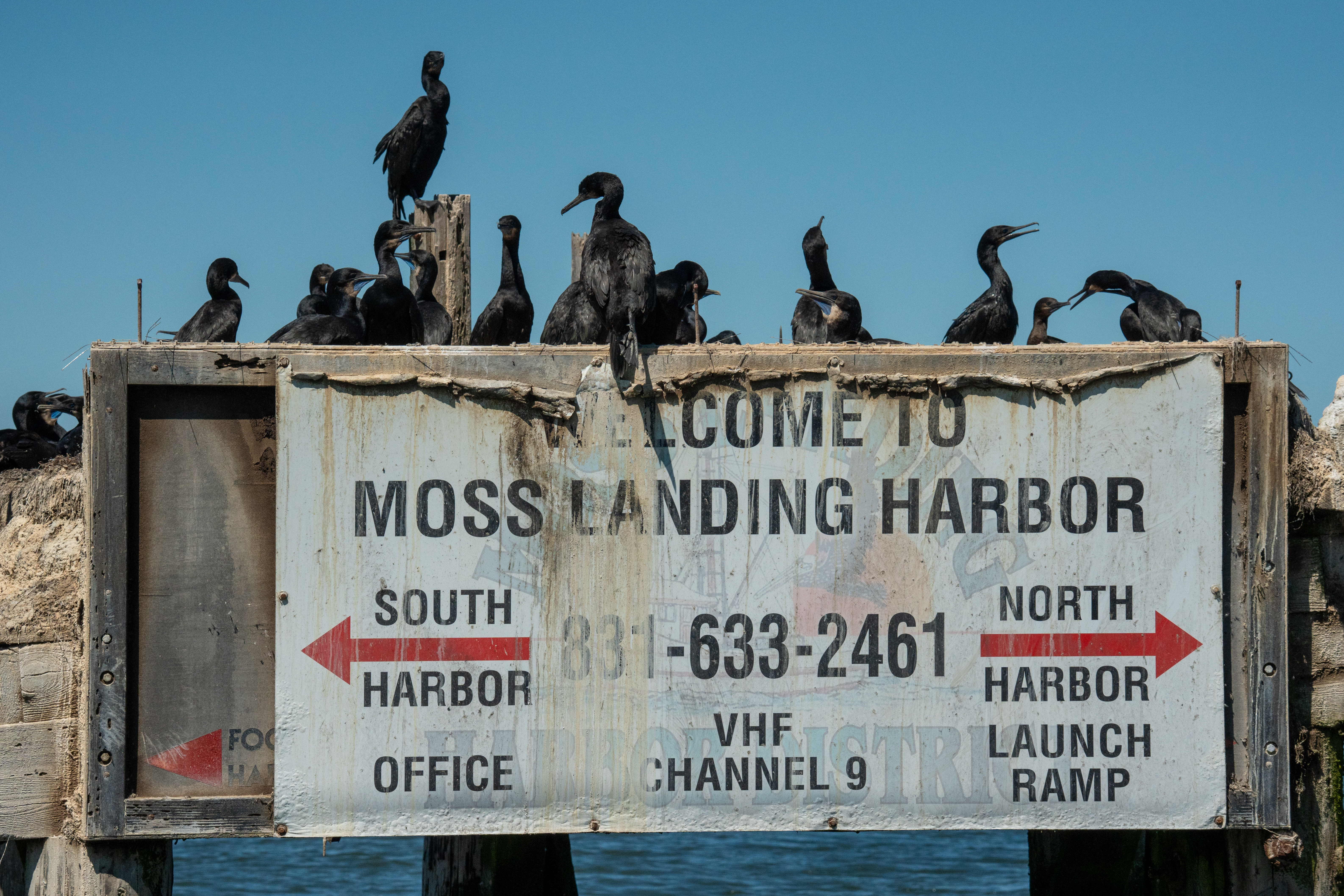
    It was nice taking a slow ride through the harbor – there is lots to see with sea lions camped out on the piers (any any boat they can climb onto), and a good sized colony of cormorants nesting on the old pilings and channel markers. 

    Once we turned into the slough, the driver just wandered back and forth along the main channel, slowing down when we saw anything of interest, which was pretty much all the time. There was an abundance of birds including squadrons of pelicans flying just overhead – not being a birder, I do not recall the names of all the other ones the naturalist spotted. There were harbor seals resting on the shore and best of all….lots of otters. A few photo’s below:

    BTW – if you click on any of the photo’s, you’ll get a full frame expansion. The mother with a very large pup is my favorite.

    The tour was relatively short – only about 90 minutes, but it was well worth it. I finally got to try out the monopod (no hand cramps this time), and learned a few lessons about using the new camera with fast moving, wet objects. Otters are really difficult to get the correct exposure – for one thing, they move around a lot, their fur is shiny when wet, and you wind up with photographs of a mess of wet fur, whiskers and the big webbed paws and feet since they do not hold still too often. I also forgot to reset some of the settings I used for the whale tour. But I still managed a couple of good photos and most important of all, I had fun.

    Here are a couple of links if you are interested in going to Moss Landing for either whale tours or the slough tour:

    My personal favorite for whale tours: https://www.blueoceanwhalewatch.com/
    Elkhorn Slough tour: https://elkhornslough.com/
    General Information: https://elkhornslough.org/

    You can also hike around on some trails and boardwalks, but these all start at the research center, which is only open from Wednesday-Sunday. Darn. Maybe next time.