April 18th, 2026
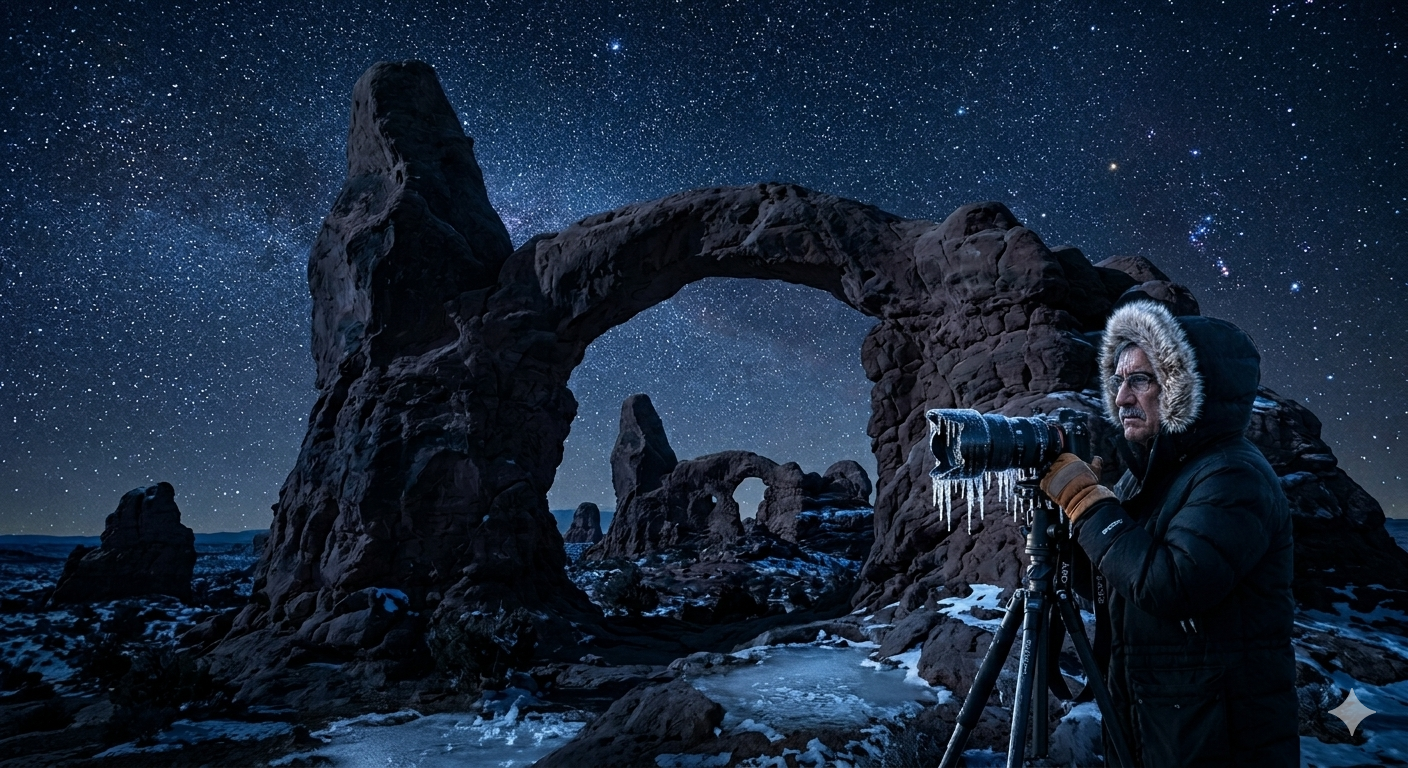
Yesterday was my first real introduction to the world of astrophotography. Maybe I get a badge for that. My first impressions were:
- The night sky is amazing in places like Arches National Park
- It’s very dark out there
- It can also be freezing cold
- You spend most of your time standing around waiting for stars to move around
- The technology is complicated, and you have to chanage a lot of things in the dark with numb fingers.
- And..you have to take on vampire hours.
The plan for the evening was for a very long one, starting with sunset photos and then moving around to different locations to try out star tracking, and then photograph the Milky Way as it rises above the horizen. We would be out from 6:30PM to 5:30AM. Yawn.
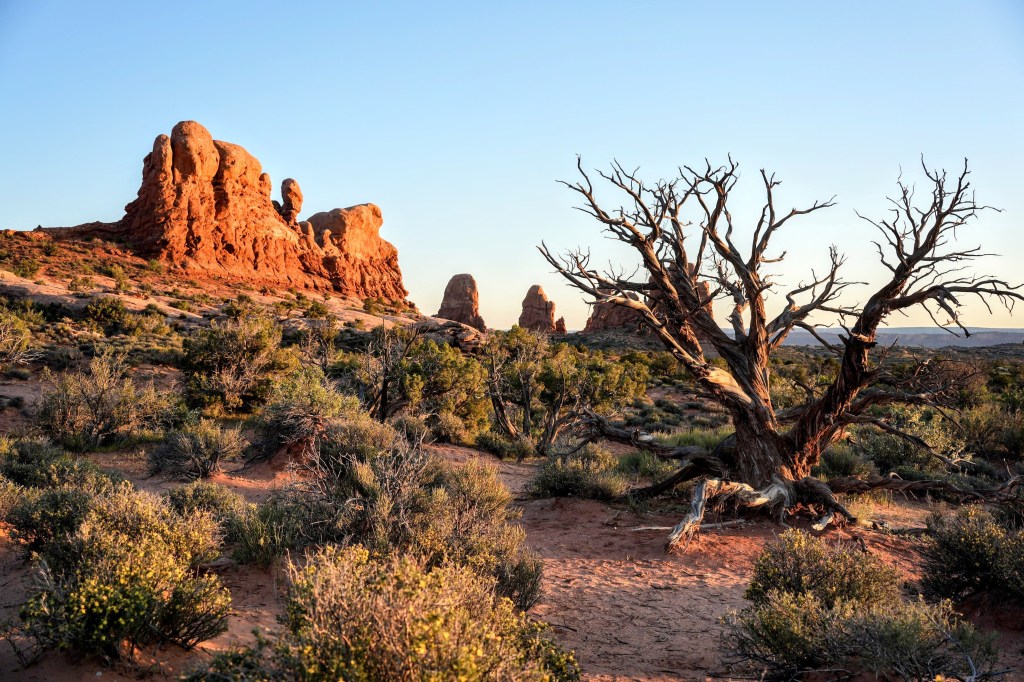
The sunset stop was at the Windows area, which I had been to the day before when the weather was windy and cloudy. This time, it was perfect, and the images have much more color and depth to them
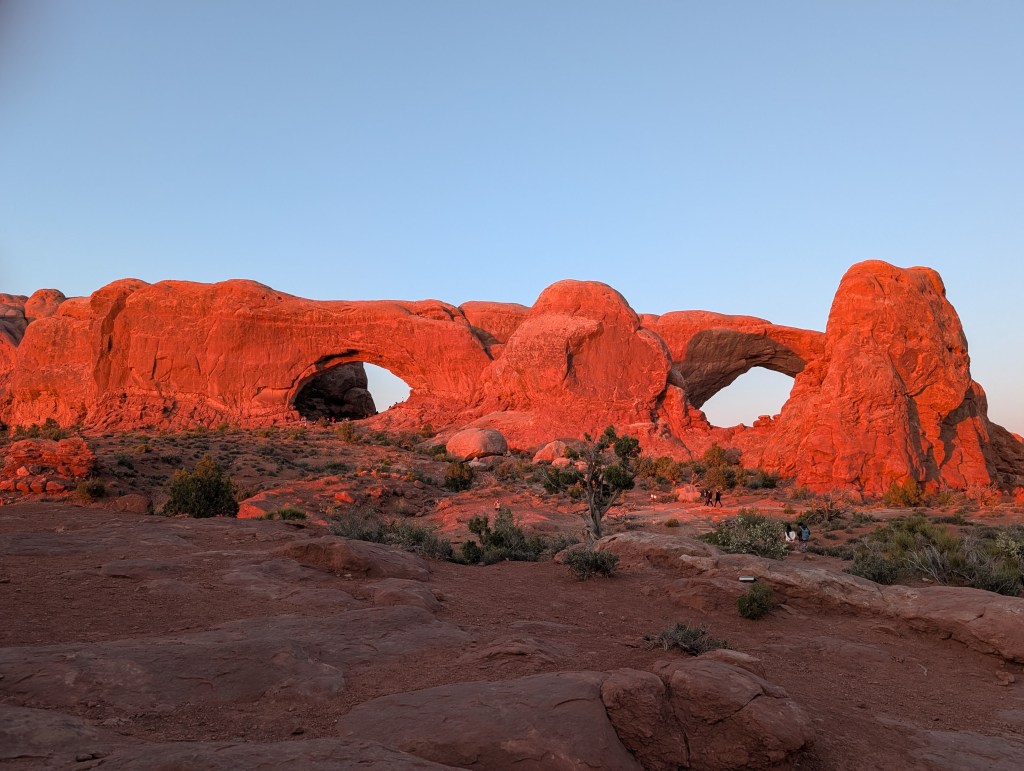
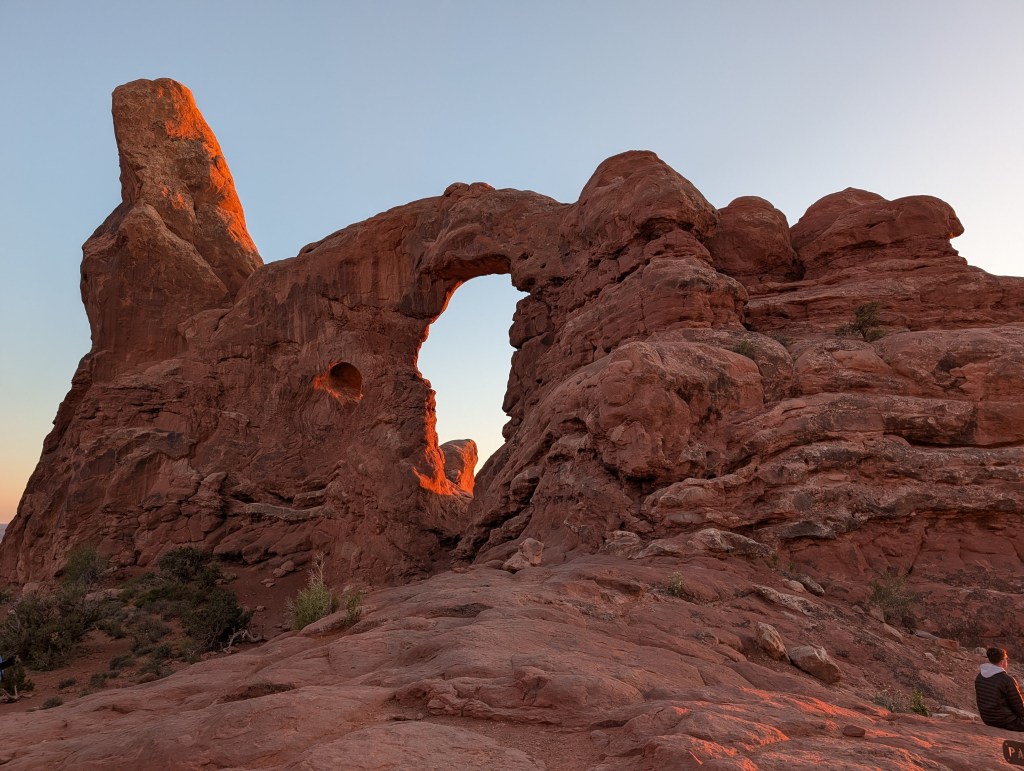
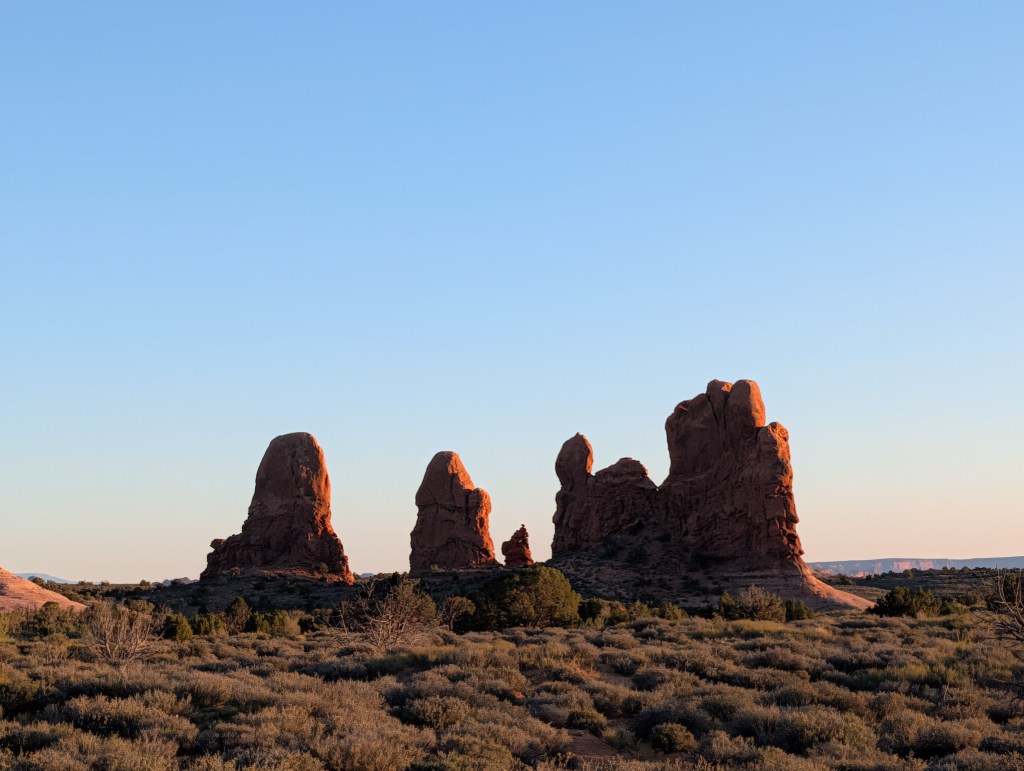
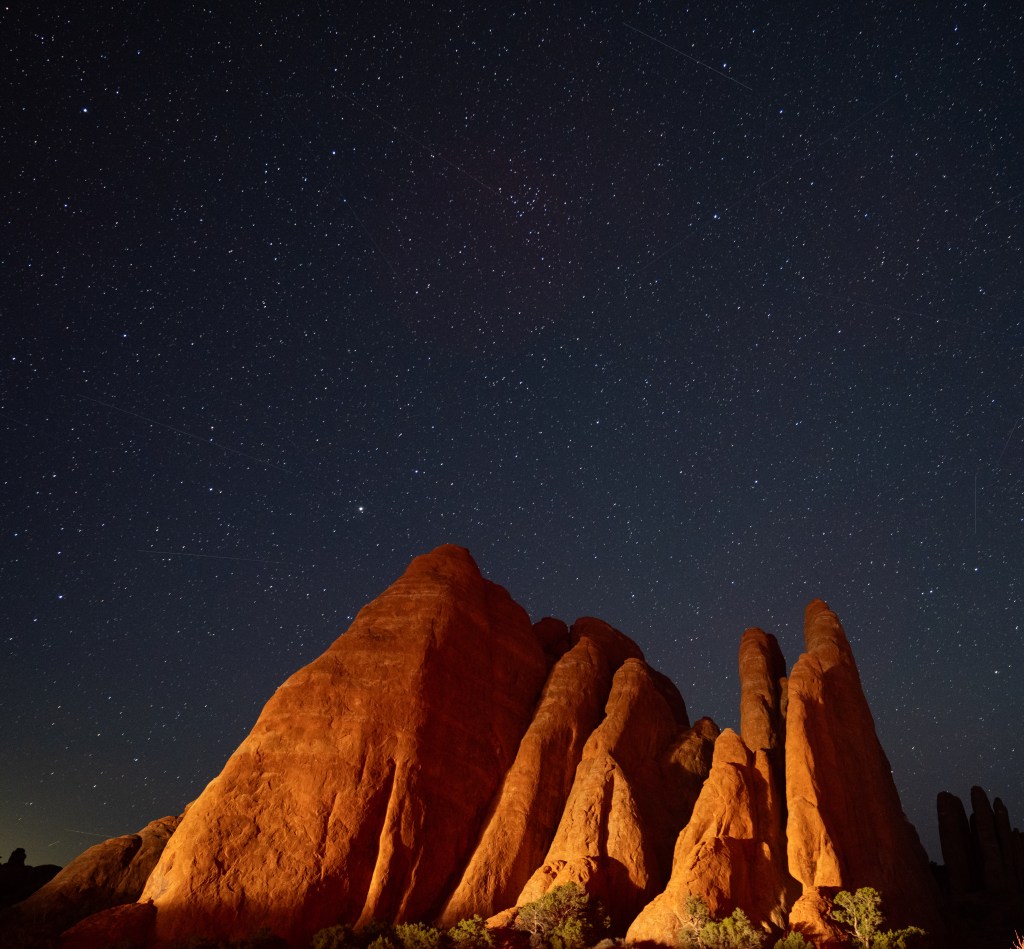
Once the sunset, we headed over to the first stop of the night, further down the road at the Fins rock where would try our hand at star tracking – this where your create one of those cool images of a whorl of stars, by creating interval photos at the same point. You then use specialized software to stack the images together.
By this time, it was absolutely pitch black – the red light headlamps give you just enough light to navigate easy trails and parking lots and fortunately, we were shooting from the parking lot. It was getting very cold by now, and the setup for shooting the trails takes quite a while, doing test shots and tweaking settings. I had mine perfect, and when the trip lead said go ahead and start, I depressed the shutter, closed off the view screen to conserve battery strength, and headed carefully over to the car to stay warm. Someone called out to me to question whether my camera was working since everyone else left their views screens open, but I was sure it was OK. I huddled in the car for an hour, noticing a big flash as a meteor fireball passed overhead…big deal, I’ve got it on camera. After an hour, it was time to go so I ventured out carefully to retrieve my gear, and quickly check to see if I had caught the meteor. Well not only did I not have that, but I had nothing but the very first picture. There should have been 500. So much for all the preparation. I figure out what happened later that evening – I have a remote shutter control, which I kept in my pocket. When I reached for the car keys I probably pressed the shutter release, which terminated the process. Oh well, maybe next time.
We made two more stop afer that, with the temperature dropping rapidly to freezing. By the time we reached the second one, which I had been to when I first arrived in Moab, my legs and hands were numb, and my baloance was way off. We wound up on a dark, rocky trail, setting up on a curved rock with lots of smaller rocks all over the place. Someone was bound to fall. Fortunately it was not me, but the person who did trip and fall did some damage – tore up her hand and had a huge bruise on her head. We had someone with a first aide kit who helped to patch her up, and she was OK a bit later, but it turned out she did have a concussion. I’m going to be even more careful the rest of the trip.
I got some nice photos at the last stop, and decided I had enough and returned to the hotel around 4AM, while the rest of the group went on to the last stop. I was cold and exhausted. I slept until close to noon. Ready for the next outing.
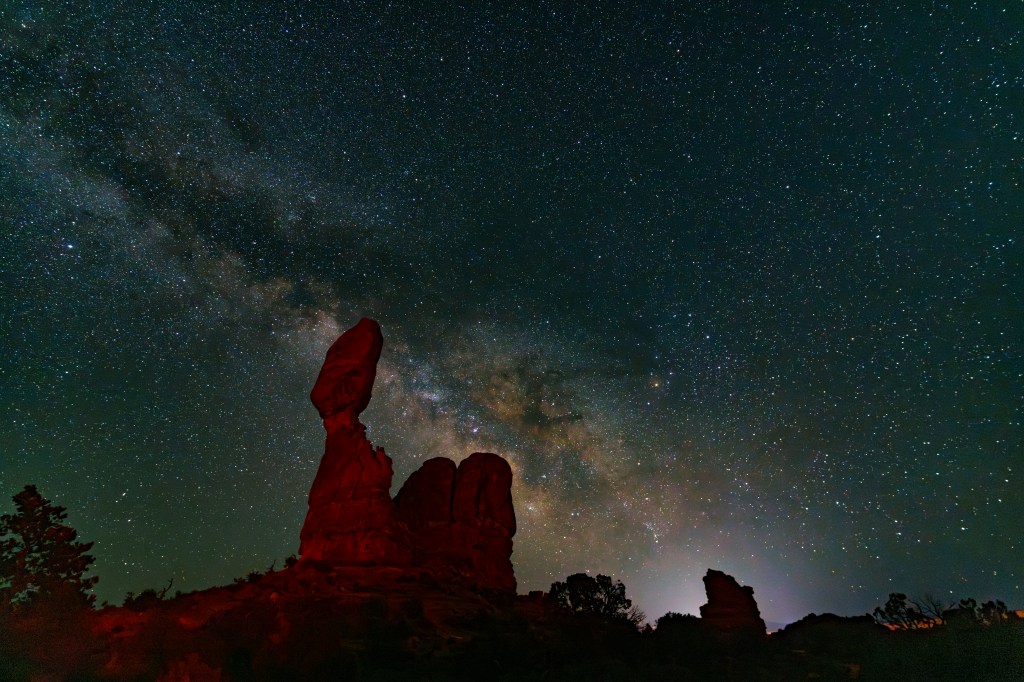
I did capture a few good shots, including a few with the Milky Way – I need to do much more processing with Adobe Lightroom before I post most of them.
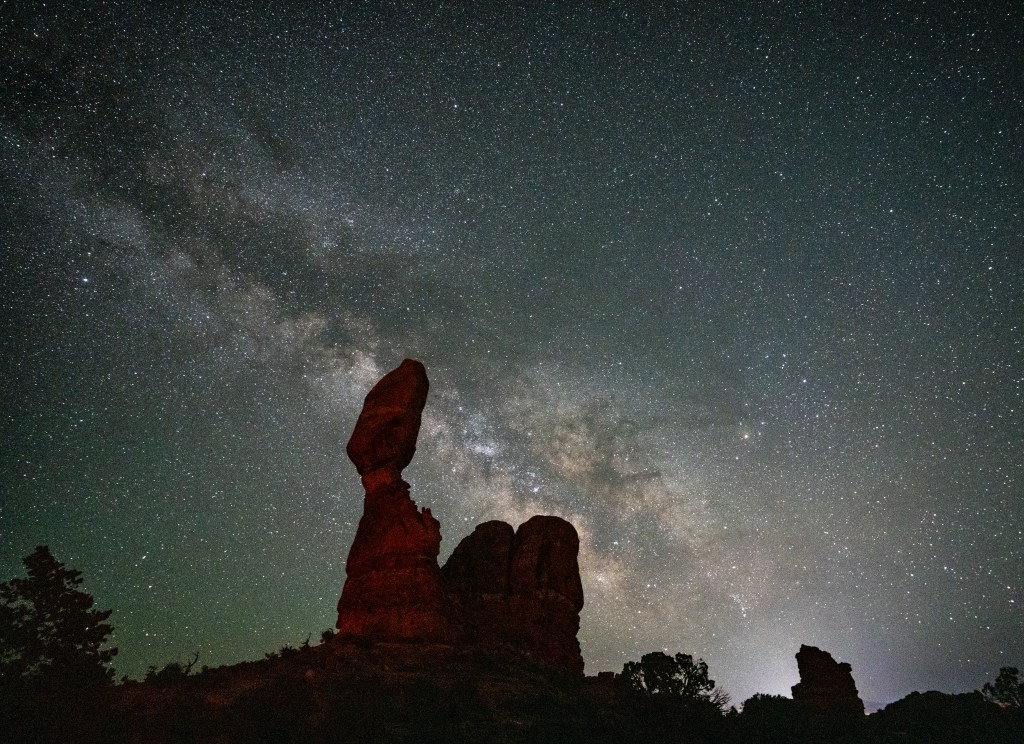
The trip lead gave a presentation on Lightroom Classic this afternoon, using my Milky Way photo for the demonstration – amazing software. This is what he came up with – I hope to be able to replicate that.
Peace
 The Traveling Widower
Leave a comment